
REVIEW · COMMUNISM & WWII HISTORY TOURS
WWII/WW2 Prague with a Local Historian Semi Private Tour
Prague’s wartime story is written into its streets. This small-group WWII tour links occupation, resistance, rescue, liberation, and bombing across six meaningful sites, with local guides Hana and Jiří Klůc bringing personal research and human stories to the pavement. I especially like the focus on Nicholas Winton and Operation Anthropoid, two subjects that often get only a brief mention on standard city tours.
The group is capped at six, which should make it easier to ask questions and keep the conversation personal. I also like the route’s ending at Dancing House, but you should know that much of the experience takes place outdoors, public transportation costs an extra €1.30, and the subject matter is often grim.
In This Review
- Key points at a glance
- Why this Prague WWII walk feels different
- Wenceslas Square and the first days of occupation
- The National Theater area and Prague’s 1945 uprising
- Praha hlavni nadrazi and the story of Nicholas Winton
- Operation Anthropoid at the Heydrich memorial
- Dancing House and the bombing of Prague
- Petschkův palác and the Gestapo
- How much history fits into two and a half hours
- The guide’s approach and the value of local research
- Price, timing, and who will get the most from it
- Should you book this WWII tour in Prague?
- FAQ
- How long does the WWII Prague tour last?
- How many people can join the tour?
- What language is the tour offered in?
- Where does the tour begin?
- Where does the tour end?
- Is public transportation included?
- What happens if the tour is canceled because of bad weather?
Key points at a glance
- Small group of six maximum: The limited size gives the guide room to answer questions and adjust the discussion to your interests.
- Six sites across central Prague: The route connects Wenceslas Square, the National Theater area, the main railway station, the Heydrich memorial, Dancing House, and Petschkův palác.
- Operation Anthropoid is the emotional center: You visit the church and crypt where the resistance fighters hid after the assassination of Reinhard Heydrich.
- Nicholas Winton’s rescue work gets real attention: At Praha hlavni nadrazi, you hear about the 669 mainly Jewish children he helped save by train.
- Local voices shape the tour: Jiří Klůc’s research and Hana’s personal, warm guiding style add more than a basic timeline.
- Good value for serious history fans: At $62.47 per person for about two and a half hours, the price is fair if you want focused WWII history rather than general sightseeing.
Why this Prague WWII walk feels different
Prague can sometimes seem untouched by the twentieth century’s worst events. Its elegant squares, restored facades, and busy cafés can hide the tension, fear, and courage that shaped the city during Nazi occupation and the final months of the war.
This experience pulls those stories into view. Instead of giving you a broad survey of Prague from medieval times onward, it follows a clear wartime thread. You move from the start of occupation to resistance, rescue, liberation, bombing, and repression.
That narrow focus is the main reason to book it. You are not simply passing famous buildings while hearing a few dates. You are asked to look at specific places and understand what happened there.
The tour lasts about two hours and thirty minutes. That is long enough to build a connected story without turning into an all-day march. Since the group can have no more than six people, you get a better chance to stop for questions or ask Hana to explain a point in more detail.
Hana receives especially strong praise for being warm, approachable, and able to explain difficult material clearly. She also adjusts the conversation to the group’s interests. Jiří Klůc’s historical work forms another important part of the experience, with stories based on research and firsthand testimony.
More communism and wartime history tours:
- Prague: Communism History and Nuclear Bunker Guided Tour
★ 4.7 · 2,417 reviews - Prague Communism History and Nuclear Bunker Tour
★ 5.0 · 1,742 reviews - Communism & Nuclear Bunker Tour + 70s Canteen Lunch (own expense)
★ 5.0 · 1,036 reviews
Wenceslas Square and the first days of occupation
The meeting point is the statue of Saint Wenceslas at Wenceslas Square. This is a practical place to begin because it is central, easy to reach by public transportation, and already tied to major Czech political events.
You spend about 25 minutes here. The subject is the beginning of Nazi occupation and the events that unfolded around the square and its historic surroundings.
The value of this opening stop is context. Before you reach the more famous resistance sites, you first get a sense of how the occupation changed public life. The guide’s stories center on the actual places where events occurred, which makes the history easier to follow than a lecture in a museum room.
Wenceslas Square is also a busy modern setting. You may need to pay close attention while pedestrians, trams, and city traffic carry on around you. That contrast is part of the experience, but it means this is not a quiet memorial visit.
If you are new to Czech history, listen closely here. The opening discussion gives you the political background needed for the later stories about resistance and liberation.
The National Theater area and Prague’s 1945 uprising
The next stop is in the National Theater Opera area, where the discussion turns to the liberation of Czechoslovakia in 1945. You spend about 20 minutes here.
This section includes the advance of the U.S. Army under General George S. Patton in western Bohemia and the dramatic events of the Prague Uprising. The guide draws on historical research and firsthand accounts, so the focus is not only on military movements. It also considers what those events meant for people in the city.
The Prague Uprising is an important part of the story because it shows the city in active revolt during the war’s final stage. You get a sense of how rapidly events could change in 1945, when the end of German rule was near but the danger had not yet passed.
The stop is short, so do not expect a full military history of the liberation. Instead, think of it as a bridge between occupation and the final struggle for control of Prague.
One practical point: the tour covers several locations, so the route involves movement between stops. The details provided do not specify the exact walking distance or transport arrangement for every section. You should budget the extra €1.30 listed for public transportation.
Praha hlavni nadrazi and the story of Nicholas Winton
At Praha hlavni nadrazi, Prague’s main railway station, the tour shifts from military history to rescue. You spend about 30 minutes learning about Sir Nicholas Winton and the 669 mainly Jewish children he helped save through train transports.
This is one of the most distinctive parts of the experience. Winton’s story is now better known because of the film One Life, but standing at a railway station connected to the rescue effort gives the subject a stronger sense of place.
The guide also brings personal research to this stop. She had the rare chance to interview some of the children Winton rescued, so the story is not treated as a distant statistic. The number 669 matters, but the human details matter more.
This stop should work well for anyone who prefers history told through individual lives. You learn about a large rescue operation, but the focus remains on the children, their journeys, and the decisions that made those journeys possible.
It is also a useful reminder that wartime history is not only about armies and political leaders. A railway station can become part of a story about family separation, danger, hope, and survival.
Because the station remains an active transport hub, you should expect a public urban setting rather than a silent memorial. Keep an eye on the guide and allow a little patience if the area feels crowded.
A few more trips of this kind worth comparing:
- Prague Old Town: Private Tour
★ 5.0 · 1,223 reviews - Prague Airport Private Arrival Transfer
★ 4.5 · 991 reviews - Prague Airport Private Departure Transfer
★ 4.5 · 780 reviews - Discover Prague Private Tour – 3 hours
★ 5.0 · 705 reviews
Operation Anthropoid at the Heydrich memorial
The emotional core of the tour is the National Memorial to the Heroes of the Heydrich Terror. You spend about 45 minutes here, the longest single stop.
The focus is Operation Anthropoid, the assassination of Reinhard Heydrich, followed by the search for the resistance fighters who took refuge in the church and crypt. You can see bullet holes and enter the church connected to this final stand.
This part of the route has a direct physical force. The bullet holes are not an abstract reminder. They connect the walls to the last hours of the people hiding there and to the violent response that followed the assassination.
The church and crypt also create a quieter, more solemn pause after the earlier city-center stops. Hana’s style suits this material well. Her approach is warm and thoughtful, but she does not make light of the human cost.
If you have already read about Operation Anthropoid, you will appreciate seeing the places in person. If the subject is new to you, the guide provides enough background to explain why the assassination mattered and why the memorial site remains so important.
This stop may be difficult for younger children or anyone who prefers lighter sightseeing. The tour does not treat wartime violence as an adventure story. It asks you to consider courage, sacrifice, retaliation, and loss.
Allow yourself time after this section. The tour continues, but this is the point where many people will want a quiet moment to take in what they have seen.
Dancing House and the bombing of Prague
The route continues to Dancing House for a 15-minute discussion about the American bombing of Prague in 1945. The building is a striking modern landmark, but here it becomes a setting for a wartime story.
This stop shows how familiar places can carry more than one layer of meaning. You may know Dancing House as a popular photo stop, yet the surrounding area also connects to the city’s experience of air raids and wartime destruction.
The short time here keeps the tour moving. Do not expect a long architectural visit or time inside the building. The stop is about the bombing story and the city’s final wartime months.
Ending near Dancing House is convenient if you want to continue along the river afterward. The official end point is Jiráskovo náměstí, at Dancing House. From there, you can carry on with your own Prague plans without needing to return to the starting point.
Petschkův palác and the Gestapo
The final historical stop is Petschkův palác, identified with the Gestapo headquarters. You spend about 15 minutes here.
The building gives the tour another change of tone. Operation Anthropoid shows resistance in action, while Petschkův palác points toward the machinery of interrogation and repression used during the occupation.
This stop is brief, but it helps complete the picture. A serious account of wartime Prague should not focus only on heroic resistance. It must also explain the systems used to intimidate, arrest, and punish people.
The tour’s sequence works well here because you have already heard about occupation, uprising, rescue, and assassination. Petschkův palác reinforces the reality that ordinary people faced organized state violence, not simply isolated acts of cruelty.
As with several other stops, the experience takes place from the street rather than inside a large museum collection. That is a strength if you want the city itself to be your classroom, but a limitation if you prefer displays, artifacts, and extended indoor interpretation.
How much history fits into two and a half hours
The route covers a lot. In roughly 150 minutes, you move through six stops and several major themes:
- The early Nazi occupation
- The Prague Uprising
- The 1945 liberation of Czechoslovakia
- General Patton’s advance in western Bohemia
- Nicholas Winton’s rescue trains
- Operation Anthropoid
- The aftermath of Heydrich’s assassination
- The American bombing of Prague
- Gestapo repression
That is a serious amount of material. The guide must keep the story moving, and you should not expect every subject to receive equal treatment.
Operation Anthropoid gets the most time, with 45 minutes at the memorial. Winton’s rescue work also receives a substantial stop. The occupation, uprising, bombing, and Gestapo headquarters are covered in shorter sections.
I like this balance because the tour gives special weight to the two stories with the strongest personal and physical connection to Prague. Still, anyone seeking a detailed military study of the Western Front or a full account of Czech political history should treat this as an introduction, not a final word.
The small group makes a difference here. A large crowd can turn a sensitive historical walk into a listening exercise. With no more than six people, you have a better chance of discussing the details that interest you most.
The guide’s approach and the value of local research
Hana is praised for her warmth, clear explanations, and ability to answer questions. She also brings knowledge of Czech life, past and present, which helps place the war within the country’s broader experience.
That local perspective is useful. You can ask about Czech culture as well as the specific wartime sites, and the conversation can move beyond dates and names.
Jiří Klůc is also connected to the tour’s historical content. His accounts center on Wenceslas Square and its historic area, and the experience draws on research and firsthand testimony.
The strongest feature here is the human scale. You hear about people rescued by train, resistance fighters hiding in a church, civilians caught in an uprising, and the effects of occupation on a city. Those stories make the sites easier to remember.
Hana has also provided further reading, films, food suggestions, and places to visit to people who wanted to continue exploring Prague afterward. That kind of follow-up can be useful if the tour sparks a larger interest in Czech history.
Price, timing, and who will get the most from it
At $62.47 per person, the tour is not the cheapest way to spend two and a half hours in Prague. The value comes from its narrow subject, small group limit, and local research rather than from admission-heavy attractions.
Most of the stops are free. Admission is included for the National Memorial to the Heroes of the Heydrich Terror, and all fees and taxes are covered. You pay an additional €1.30 per person for public transportation.
I consider the price fair for someone who wants a guided WWII experience with room for questions. A general walking tour may cost less, but it will not give the same attention to Winton, Anthropoid, the Prague Uprising, and the Gestapo.
You should book this if you:
- Have read about Operation Anthropoid and want to see the locations
- Want a focused account of Prague during World War II
- Prefer a small group to a large scheduled walk
- Like local stories and firsthand testimony
- Are comfortable with serious subjects
- Want a guide who can answer questions about Czech life as well as wartime events
You may want a different activity if you prefer architecture, food, light entertainment, or a relaxed sightseeing pace. The material is dark, and much of the experience is outdoors. The tour also depends on good weather and a minimum number of participants.
Confirmation arrives at booking. Service animals are allowed, and the route is near public transportation. Most people can take part, but the supplied information does not give a detailed accessibility description, so ask the provider about walking and site conditions if that matters to you.
Free cancellation is available up to 24 hours before the start time. Late cancellations and changes are not accepted, and poor weather or an unmet minimum can lead to a new date, another experience, or a full refund.
Should you book this WWII tour in Prague?
I would book it if Prague’s wartime story is one of your main interests. The combination of a six-person limit, Hana’s personal guiding style, Jiří Klůc’s research, and the powerful Heydrich memorial makes this more focused than a standard city walk.
The best reason to choose it is the connection between places and people. You are not just told that events happened in Prague. You visit a station linked to Winton’s rescue trains, a church tied to the resistance, a square shaped by occupation and public life, and sites connected with repression and bombing.
The main caution is pace and subject matter. You cover a great deal in two and a half hours, and some stops are short. If you want a slower visit with time for museums and private reflection, plan an additional history-focused activity.
For a serious, personal introduction to Prague in World War II, this tour earns its strong reputation. It is especially worthwhile for anyone who wants the city’s difficult past explained by someone who treats the people involved as more than names in a textbook.
FAQ
How long does the WWII Prague tour last?
The tour lasts approximately 2 hours and 30 minutes.
How many people can join the tour?
The maximum group size is six participants.
What language is the tour offered in?
The tour is offered in English.
Where does the tour begin?
The tour begins at the Statue of Saint Wenceslas on Wenceslas Square, Václavské náměstí, Prague 1.
Where does the tour end?
The tour ends at Dancing House, Jiráskovo náměstí 1981/6, Prague 2.
Is public transportation included?
Public transportation is not included. The stated cost is €1.30 per person.
What happens if the tour is canceled because of bad weather?
You can choose a different date or receive a full refund if poor weather causes the experience to be canceled.
Just added around Prague
- Private Day trip from Prague to Kutná Hora★ 5.0 · 3 reviews
- PRAGUE AIRSOFT SHOOTING GAMES★ 4.7 · 3 reviews
- Private 4-hour City Tour of Prague with driver & official guide w/ Hotel pick up★ 5.0 · 3 reviews
- Glass blowing in Prague★ 4.6 · 3 reviews
- Prague to Karlovy Vary Private Transfer★ 4.5 · 3 reviews
- Disney’s Tarzan Musical★ 5.0 · 3 reviews
- Prague Private Tour★ 5.0 · 3 reviews
- Private Bohemian Glass and Czech Crystal Tour with lunch included★ 5.0 · 3 reviews
Communism & WWII History Tours, compared.

Communism History and Nuclear Bunker Guided Tour
Read our review →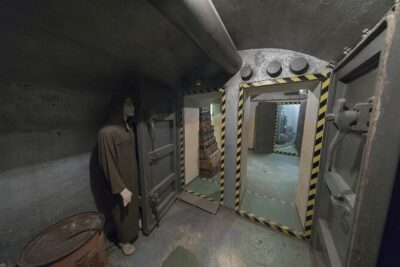
Prague Communism History and Nuclear Bunker Tour
Read our review →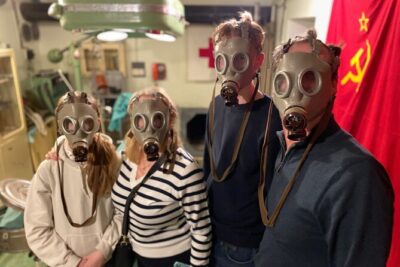
Communism & Nuclear Bunker Tour + 70s Canteen Lunch (own expense)
Read our review →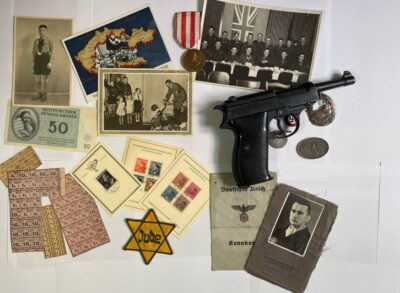
WWII Guided Tour & The Crypt of Operation Anthropoid
Read our review →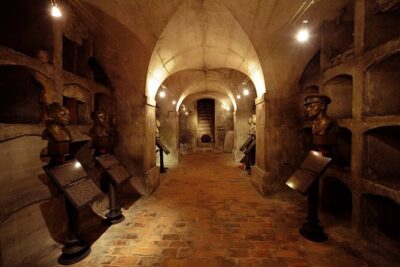
WWII in Prague Tour & The Crypt of Operation Anthropoid
Read our review →
Communism and Bunker Tour with 70s Canteen Lunch
Read our review →
Small-Group World War 2 & Operation Anthropoid Tour in Prague
Read our review →
World War 2 and Operation Anthropoid Walking Tour
Read our review →Browse the lists this tour appears in