
REVIEW · COMMUNISM & WWII HISTORY TOURS
Small-Group World War 2 & Operation Anthropoid Tour in Prague
Prague’s wartime story is easy to miss. This three-hour walk brings it into focus through real streets, resistance hideouts, Gestapo offices, and the church where Operation Anthropoid ended. I like the way the tour connects the Nazi occupation to ordinary Czech life, and I especially like its final visit to the St. Cyril and St. Methodius Cathedral crypt. Guides such as Allen, Daniel, Dana, Martin, and Richard have been praised for their clear English, strong command of the subject, and personal passion. The main drawback is that much of the experience is a talking tour beside modern buildings, not a string of preserved wartime sights.
I also like the small-group format, which gives you room to ask questions and makes a difficult subject feel more human. At $33.88, the price is fair for roughly three hours with entry to the church and memorial included. Still, you should expect plenty of standing and walking, and the subject includes executions, torture, betrayal, and mass murder. It is not a light family outing, particularly for small children.
In This Review
- Key points to know before you book
- Why Prague’s WWII story needs a guided walk
- From the Treaty of Versailles to Nazi control
- Old Town Hall and the Prague Uprising
- Resistance safehouses and Operation Anthropoid
- Hotels, Gestapo offices, and betrayal
- New Town, bombing, and the road to the cathedral
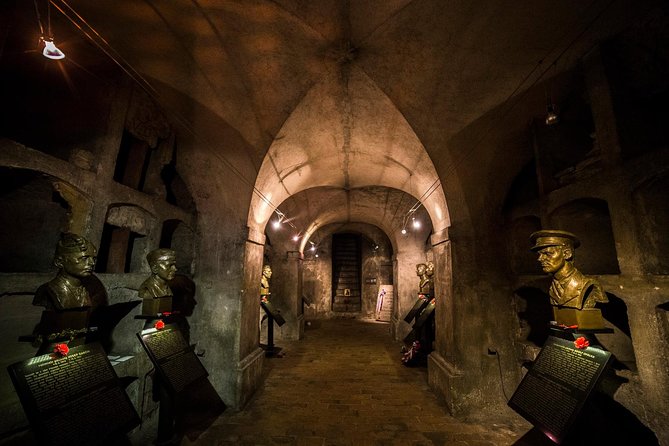
- The cathedral crypt is the tour’s strongest stop
- Guide quality, group size, and the style of storytelling
- Is $33.88 a good price?
- Practical advice for choosing this walk
- Should you book the Operation Anthropoid tour?
- FAQ
- How long does the World War II and Operation Anthropoid tour last?
- Where does the tour begin?
- Where does the tour end?
- Is admission to the cathedral and crypt included?
- Is the tour suitable for children?
- What is the cancellation policy?
Key points to know before you book
- The tour follows Operation Anthropoid from planning to sacrifice, including resistance safehouses, Reinhard Heydrich’s assassination, and the final stand in the cathedral crypt.
- You see the Gestapo headquarters at Petschek Palace, where thousands of Czechoslovaks were interrogated, tortured, and killed.
- The 1945 Prague Uprising gets proper attention, including the damaged Old Town Hall and the barricades that helped end the occupation.
- The church and crypt are the emotional center, with about 35 minutes set aside for the cathedral and National Memorial to the Heroes of the Heydrich Terror.
- This is a history-first walking tour, so photographs, maps, and storytelling do much of the work where wartime buildings have changed.
- The $33.88 cost buys a useful introduction to Prague’s WWII story, especially if you would otherwise walk past these locations without knowing what happened there.
Why Prague’s WWII story needs a guided walk
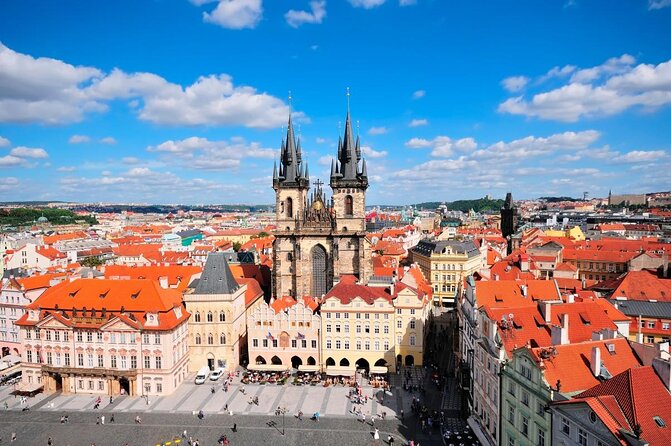
Prague can look almost untouched by the war. Its Gothic towers, grand squares, and polished streets often give little hint of occupation, resistance, and fear. That is exactly why this tour helps. The city’s wartime story is spread across central Prague, and many important places look ordinary unless someone points them out.
The tour begins at Týnská 627/7 in Prague 1 at 1:30 pm. You meet outside the McGee’s Trips & Tickets building, not inside the shop. That detail matters because the meeting point is easy to misunderstand if you are expecting a ticket desk or a large tour sign.
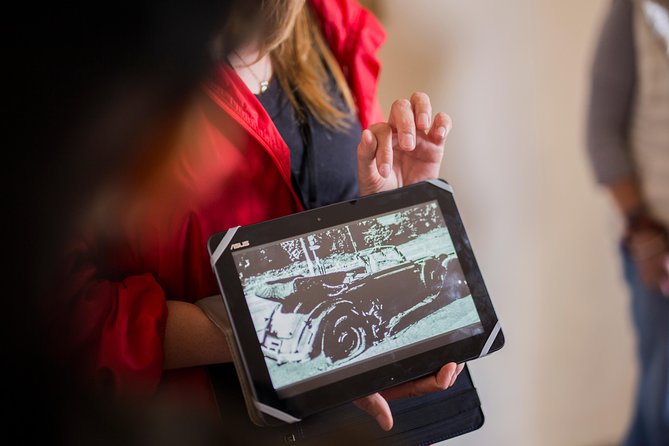
From there, you walk through the Old Town and New Town before ending at Resslova 9a, outside the Orthodox Cathedral of Saints Cyril and Methodius. The route is not designed as a museum crawl. It is a chain of locations linked by the guide’s explanation, old photographs, and accounts of the people caught in the occupation.
That format works best if you enjoy listening while moving through a city. If you want large exhibits at every stop, you may find parts of the walk thin. One stop lasts only three minutes, and several others involve looking at an exterior while the guide explains what happened inside.
More communism and wartime history tours:
- Prague: Communism History and Nuclear Bunker Guided Tour
★ 4.7 · 2,417 reviews - Prague Communism History and Nuclear Bunker Tour
★ 5.0 · 1,742 reviews - Communism & Nuclear Bunker Tour + 70s Canteen Lunch (own expense)
★ 5.0 · 1,036 reviews
From the Treaty of Versailles to Nazi control
The early stops provide the political background. At U Budovce, the guide explains how the Treaty of Versailles, the breakup of old empires, the creation of new countries, runaway inflation, the Great Depression, and rising nationalism helped create the conditions for another European war.
This section takes about eight minutes, but it gives the later events a needed frame. You hear how economic distress and political anger helped Hitler gain support. You also learn about the creation of Czechoslovakia and the difficult years between World War I and World War II.
At the Stone Bell House, the story moves toward the Sudeten German Party and the Munich Agreement. The guide then explains the creation of the Protectorate of Bohemia and Moravia, the Nazi-controlled territory that replaced independent Czech rule.
These stops do not offer dramatic wartime remains. Their value is explanatory. Without this background, Heydrich’s appointment and the resistance campaign can feel like isolated episodes. With it, you understand how political pressure, foreign concessions, and occupation narrowed Czech choices.
You also pause near a Gothic church that has dominated this part of the Old Town since the 14th century. The exact building is less important here than the contrast: medieval Prague continues around you while the guide describes the modern political disaster that overtook the country.
Old Town Hall and the Prague Uprising
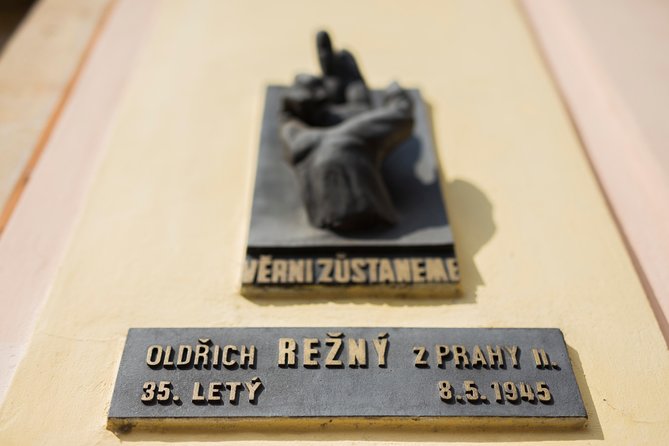
At Staroměstská radnice, you see the section of the Old Town Hall damaged during the Prague Uprising in May 1945. This is one of the tour’s better examples of connecting a visible place to an event. The building does not simply represent Prague’s old civic power. It also carries a scar from the final days of German occupation.
The guide explains daily life during the war, then turns to the uprising that began in May 1945. Barricades, improvised resistance, and street fighting helped bring the occupation toward its end on May 8.
The stop lasts about eight minutes. You should not expect a preserved battlefield or a large memorial installation. Instead, you get a street-level explanation of how the city’s residents used familiar streets and buildings during a desperate final push.
Celetná Street adds another layer. Here, you hear about November 17, 1939, when Czech students were executed and the country’s universities were closed. The guide also discusses Konstantin von Neurath’s tenure and the way the Czech lands were absorbed into the Third Reich.
Reinhard Heydrich’s appointment on September 27, 1941, marks the next major turn. He became the Nazi security chief in the Protectorate, and his arrival brought a sharper campaign of repression. The tour makes clear that Operation Anthropoid did not appear out of nowhere. It grew from years of occupation and an organized resistance network.
Resistance safehouses and Operation Anthropoid
At Melantrichova, the narrative becomes more personal. You hear about the government in exile in London and covert operations including Benjamin, Silver A, and Silver B. These names can come quickly, so pay attention or ask the guide to repeat them.
You also see the building connected with the apartment of Josef and Marie Svatoš. It served as an important resistance hideout. The building itself may not look remarkable, but that is part of the lesson. Resistance work often took place behind normal doors, in rooms that had to appear entirely unremarkable to neighbors and patrols.
This is where guides such as Allen and Daniel appear to make a real difference. Their strongest praise centers on their ability to explain the Czech struggle before, during, and after the war, rather than reducing the story to one assassination. Richard, described as a Prague history student, was also praised for clear English and strong storytelling.
The tour then reaches the Baťa department store. This site is tied to the aftermath of Heydrich’s assassination because objects found at the scene were displayed there. The stop lasts around five minutes.
The word assassination can make the event sound simple. It was not. The operation required paratroopers to reach occupied Czechoslovakia, make contact with resistance networks, plan an attack, and escape from an intense German search. The walk explains the planning and the people who helped make it possible.
At Wenceslas Square, the subject turns to Lidice. On June 10, 1942, the village’s men were executed and its women were sent to concentration camps. Lidice was destroyed after the Nazi response to Heydrich’s killing.
This is one of the tour’s hardest moments. The square is a major Prague thoroughfare, yet the guide asks you to hold in mind a village that ceased to exist. The story shows how the Nazi response reached far beyond the men who carried out the attack. It also introduces the terrible risks faced by anyone suspected of helping the resistance.
A completely different kind of day out in Prague:
- Prague: 50-Minute Sightseeing Evening Cruise
★ 4.2 · 33,780 reviews - Prague: Medieval Dinner with Unlimited Drinks
★ 4.4 · 19,847 reviews - Prague: Castle Tour with Local Guide and Entry Ticket
★ 4.6 · 10,422 reviews - Prague Castle 2.5-Hour Tour Including Admission Ticket
★ 4.7 · 8,927 reviews
Hotels, Gestapo offices, and betrayal
The Esplanade Hotel takes only about three minutes. It was a favorite hotel of Nazi officials during the occupation. This is a brief exterior stop, but it adds a social detail often missing from military accounts. Occupation was not only conducted in offices and prisons. It also occupied the city’s hotels, restaurants, and public spaces.
Petschek Palace is a more serious stop. The building served as Gestapo headquarters, where thousands of Czechoslovaks were interrogated, tortured, and killed. The tour also tells the story of Karel Čurda, who entered the building on June 16, 1942, and betrayed his fellow resistance fighters.
This episode changes the tone of the Anthropoid story. The attack was an act of extraordinary courage, but the network supporting it depended on secrecy and trust. Once that trust broke, the German search accelerated.
The stop also shows why a guide is useful here. You are not simply looking at a palace and being told it once had a Nazi role. You are connecting the building to a specific person, date, and decision with devastating consequences.
New Town, bombing, and the road to the cathedral
On Vodičkova, the guide discusses two covert operations, Tin and Bioscop. Both were unsuccessful, adding a wider view of resistance efforts beyond the better-known Anthropoid mission.
This section may feel more abstract because the street offers no large memorial tied to those operations. Still, it helps prevent a common mistake: assuming the Czech resistance was defined by one event alone. The occupation produced repeated attempts at sabotage, intelligence work, and armed action, many of which ended badly.
At Karlovo náměstí, you hear about the bombing of Prague in 1945. The tour’s history is not limited to 1942 or to the Heydrich operation. It follows the city into the final year of the war, when Allied bombing and the Prague Uprising brought new destruction and danger.
The route ends at St. Cyril and St. Methodius Cathedral. Admission is included, and the guide accompanies you inside. Allow about 15 minutes for the cathedral visit, followed by about 20 minutes at the National Memorial to the Heroes of the Heydrich Terror.
The cathedral crypt is the tour’s strongest stop
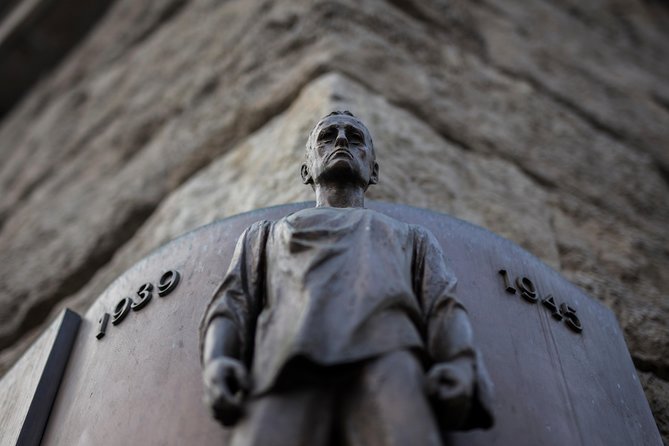
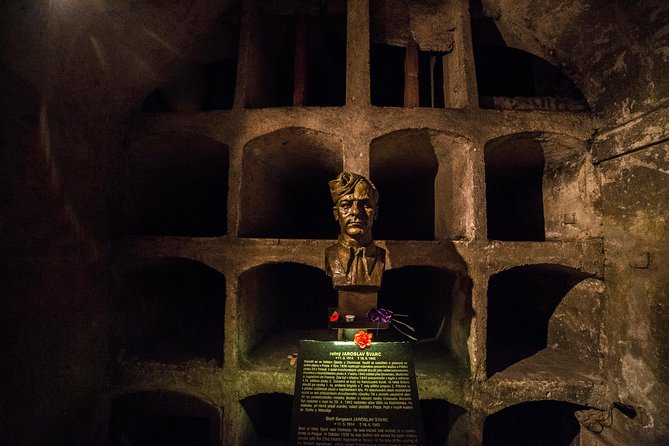
The church is where this experience becomes most powerful. After Heydrich’s assassination, Czech and Slovak paratroopers involved in the operation hid in the cathedral. German forces eventually discovered them, and the crypt became the setting for their final resistance.
The memorial includes the crypt where the paratroopers paid the ultimate price. The space is atmospheric and personal in a way that the outdoor stops cannot match. You are no longer looking at a changed façade or a modern street. You are standing in the place tied directly to the last hours of the men who carried out the mission.
The memorial visit is short enough to fit a busy itinerary, but it deserves your attention. The tour concludes here, rather than returning to Old Town. From the start point to the cathedral, the route crosses a meaningful portion of central Prague, so wear comfortable shoes and expect to stand outdoors.
The crypt is also accessible independently, according to one unhappy customer who left the tour early and visited it alone. That is useful to know, but it misses the larger benefit of the walk. The memorial gives you the physical setting. The earlier stops explain the network, the political setting, and the consequences that led you there.
Guide quality, group size, and the style of storytelling
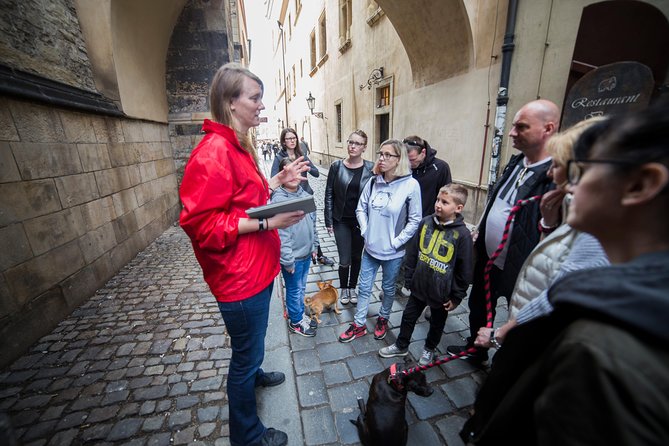
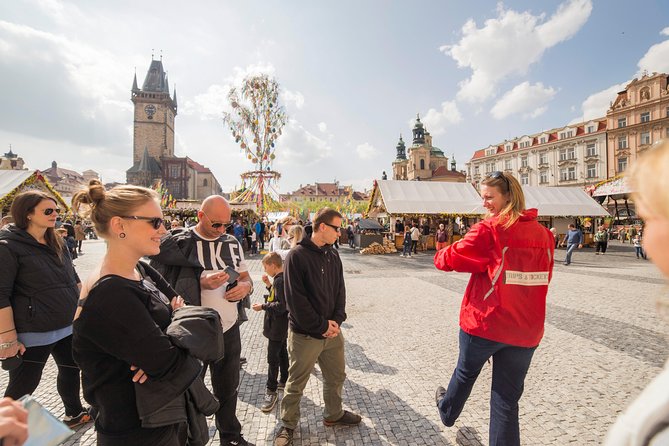
The experience is offered in English, with a maximum of 30 people. That is small enough for a personal walk when the group is not full, though 30 people can still make hearing difficult on a busy street.
The guides receive especially strong praise for passion and subject knowledge. Allen is repeatedly described as enthusiastic and well informed. Daniel is praised for detailed explanations of the war and Operation Anthropoid. Dana is described as patient, friendly, and able to maintain a steady flow of facts for three hours. Pablo, Robin, Martin, and Rafek also receive warm comments for their storytelling and care.
Rafek’s handling of snowy weather is worth noting. With only two people on that departure, he adapted the route to help them reach a concert afterward. That does not guarantee the same flexibility on every departure, but it suggests that a small group can make the day easier to adjust.
The experience is not perfect for every guide or every listener. One person found the opening too slow and the delivery too monotone, leaving after about 20 minutes. Another felt the tour included too many names and facts. A separate comment asked for a closer link between each location and the story being told.
Those points are fair warnings. This is a serious historical walk, not a theatrical performance. If you need constant visual action, you may lose interest. If you enjoy careful explanations and old photographs, the format should suit you well.
Is $33.88 a good price?
At $33.88 per person, I consider this a solid-value tour for anyone interested in 20th-century European history. You get about three hours with a local English-speaking guide, a route through multiple central Prague locations, and admission to the cathedral and memorial.
The value is not in paid entry at every stop. Most locations are viewed from outside, and the guide does the work of interpretation. You are paying to connect scattered places that would otherwise look like ordinary streets, offices, shops, and hotels.
You could walk to the cathedral alone and read its memorial displays. You could also visit Old Town Hall, Wenceslas Square, and Karlovo náměstí without a guide. What is harder is understanding how those locations relate to one another and remembering the names, dates, operations, and betrayals that shaped the story.
The price is strongest if this is your first serious look at Prague during the Nazi occupation. If you have already taken another WWII tour covering the same background, some material may repeat. One person specifically found overlap with a previous tour, though still considered the guide’s work good.
Practical advice for choosing this walk
Book this if you want:
- A focused introduction to Czech history before, during, and after World War II
- The full Operation Anthropoid story, not just the assassination itself
- A guide who can point out resistance locations that are easy to miss
- A moving visit to the cathedral and crypt
- A three-hour activity that fits into an afternoon
Think twice if you want:
- A tour with many indoor exhibits
- Little walking or standing
- A cheerful sightseeing experience
- A route centered on major battles or wartime ruins
Prague did not experience the same kind of sustained street fighting, ghetto system, or widespread wartime destruction seen in some other European cities. That is why the tour relies so heavily on narration. Its subject is occupation, secrecy, political pressure, and resistance rather than a long list of ruined monuments.
Children up to age six go free, but the experience is not recommended for small children because of the historical subject matter. Children must be with an adult. Service animals are allowed, and the route is near public transportation. A moderate level of fitness is advised.
The tour has free cancellation up to 24 hours before the 1:30 pm start. Cancellations or changes made later are not refunded or accepted. The activity also requires a minimum number of people, so a cancellation for low enrollment may result in another date, another experience, or a full refund.
Should you book the Operation Anthropoid tour?
I would book this tour if Operation Anthropoid, the Czech resistance, or the Nazi occupation of Prague is a major reason you want to learn more. The final cathedral and crypt visit gives the walk a clear purpose, while the earlier stops explain the people and decisions that brought the paratroopers there.
I would not book it expecting a fast-moving attraction with dramatic ruins at every corner. You will spend much of the time listening beside buildings that now serve ordinary modern purposes. But that ordinary setting is also the point. Prague’s wartime past is often hidden in plain sight.
For the price, the route, and the consistently strong guide feedback, this is a worthwhile choice for history-minded visitors. Arrive early at Týnská 627/7, confirm you are waiting outside, wear good walking shoes, and leave room in your afternoon for a serious, sometimes painful story.
FAQ
How long does the World War II and Operation Anthropoid tour last?
The tour lasts approximately three hours, including the walking route, the cathedral visit, and the memorial and crypt visit.
Where does the tour begin?
It begins at 1:30 pm in front of the building at Týnská 627/7 in Prague 1. The meeting point is outside McGee’s Trips & Tickets.
Where does the tour end?
The tour ends at the Orthodox Cathedral of Saints Cyril and Methodius and the National Memorial to the Heroes of the Heydrich Terror at Resslova 9a in Prague 2.
Is admission to the cathedral and crypt included?
Yes. The local guide, the visit to St. Cyril and St. Methodius Cathedral, and admission to the National Memorial to the Heroes of the Heydrich Terror are included.
Is the tour suitable for children?
The experience is not recommended for small children because it covers Nazi occupation, executions, torture, and other difficult WWII subjects. Children up to age six are free, and all children must be accompanied by an adult.
What is the cancellation policy?
You can cancel up to 24 hours before the experience starts for a full refund. Cancellations and changes made less than 24 hours before the start time are not accepted or refunded.
Just added around Prague
- Private Day trip from Prague to Kutná Hora★ 5.0 · 3 reviews
- PRAGUE AIRSOFT SHOOTING GAMES★ 4.7 · 3 reviews
- Private 4-hour City Tour of Prague with driver & official guide w/ Hotel pick up★ 5.0 · 3 reviews
- Glass blowing in Prague★ 4.6 · 3 reviews
- Prague to Karlovy Vary Private Transfer★ 4.5 · 3 reviews
- Disney’s Tarzan Musical★ 5.0 · 3 reviews
- Prague Private Tour★ 5.0 · 3 reviews
- Private Bohemian Glass and Czech Crystal Tour with lunch included★ 5.0 · 3 reviews
Communism & WWII History Tours, compared.

Communism History and Nuclear Bunker Guided Tour
Read our review →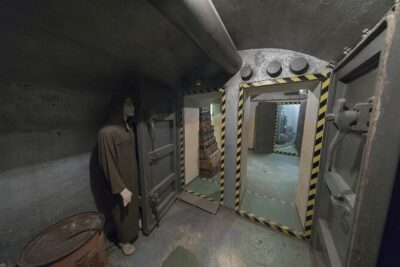
Prague Communism History and Nuclear Bunker Tour
Read our review →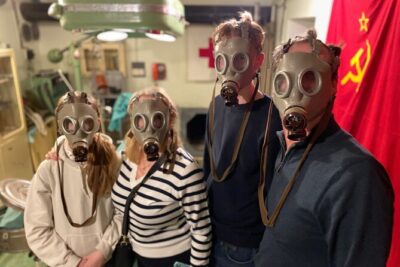
Communism & Nuclear Bunker Tour + 70s Canteen Lunch (own expense)
Read our review →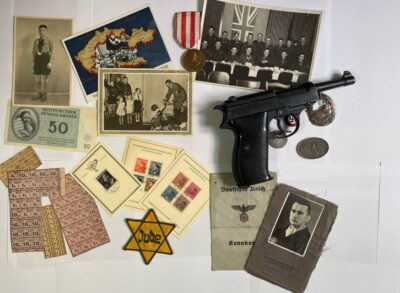
WWII Guided Tour & The Crypt of Operation Anthropoid
Read our review →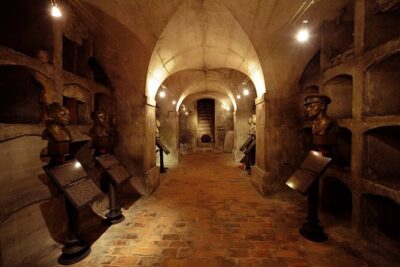
WWII in Prague Tour & The Crypt of Operation Anthropoid
Read our review →
Communism and Bunker Tour with 70s Canteen Lunch
Read our review →
World War 2 and Operation Anthropoid Walking Tour
Read our review →
Browse the lists this tour appears in