
REVIEW · COMMUNISM & WWII HISTORY TOURS
Communism & Nuclear Bunker Tour + 70s Canteen Lunch (own expense)
Prague keeps its Cold War secrets underground. This 3.5-hour walk links major events with ordinary life, from the 1918 birth of Czechoslovakia to the Velvet Revolution of 1989. I like the small groups of no more than 10 and the chance to visit a real 1950s nuclear shelter rather than only view old photographs. I also like the stop at a working-class canteen, where you can try Kofola or a Czech lunch at your own cost. The main caution is simple: the bunker has narrow spaces, and the walking route is not ideal if you dislike enclosed areas or have mobility concerns.
The tour begins at the Powder Tower and ends high on Wenceslas Square. Guides including Klara, Clara, Leo, and Stan are praised for making difficult political history easy to follow, often adding family memories and practical help with food choices. Lunch and drinks are extra, but the 10 EUR bunker admission is included in the $35.07 price.
In This Review
- Key Points Before You Book
- Why This Tour Adds Something New to Prague
- Starting at the Powder Tower and Republic Square
- Old Town Square and the Era of Fear
- Wenceslas Square and the Prague Spring
- A Czech Lunch at a 1970s Canteen
- Entering the Nuclear Shelter Beneath Wenceslas Square
- What the Guide Adds
- Price, Timing, and Overall Value
- Who Should Choose This Tour
- Should You Book the Communism and Bunker Tour?
- FAQ
- Where does the tour begin?
- Where does the tour end?
- Is the nuclear bunker admission included?
- Are lunch and drinks included?
- How large is the group?
- Is the tour suitable for someone with claustrophobia?
Key Points Before You Book
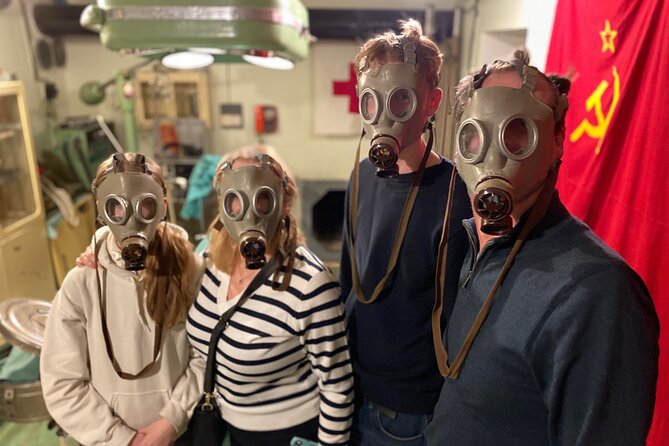
- A real 1950s nuclear bunker: The final hour takes you below Wenceslas Square into a Cold War shelter with period exhibits and interactive elements.
- History tied to actual streets: You visit Old Town Square, Narodni Street, Bartolomejska Street, and Wenceslas Square while hearing what happened in each place.
- A 1970s-style canteen stop: You can order Kofola, beer, or a proper Czech worker’s lunch, with food and drinks paid separately.
- Small-group format: The maximum group size is 10, which leaves room for questions and personal stories.
- A useful modern-history lesson: The tour covers Nazi occupation, the postwar Soviet period, the Prague Spring, and the Velvet Revolution.
- Look for the blue umbrella: That is the guide’s meeting-point marker at the Powder Tower.
Why This Tour Adds Something New to Prague
Prague is easy to admire through medieval towers, Baroque churches, and handsome squares. That version of the city is real, but it leaves out much of the 20th century. This tour shifts your attention to the political shocks that shaped modern Czech life.
I like the way the route connects broad events to places you might otherwise pass without a thought. A square becomes the site of a Communist victory rally. A shopping center recalls the controlled consumer world of state socialism. A quiet street points to the work of the secret police.
You do not simply hear a list of dates. You follow a chain of cause and effect. The guide explains why Czechoslovakia became vulnerable after World War II, why the Communist Party gained power, how Soviet control affected daily life, and why the regime finally collapsed.
The experience is especially useful if you have already seen Prague’s traditional sights. It gives you another way to read the city. If this is your first activity in Prague, it can also supply political context for the rest of your visit.
More communism and wartime history tours:
- Prague: Communism History and Nuclear Bunker Guided Tour
★ 4.7 · 2,417 reviews - Prague Communism History and Nuclear Bunker Tour
★ 5.0 · 1,742 reviews - Prague: WWII Guided Tour & The Crypt of Operation Anthropoid
★ 4.7 · 1,030 reviews
Starting at the Powder Tower and Republic Square
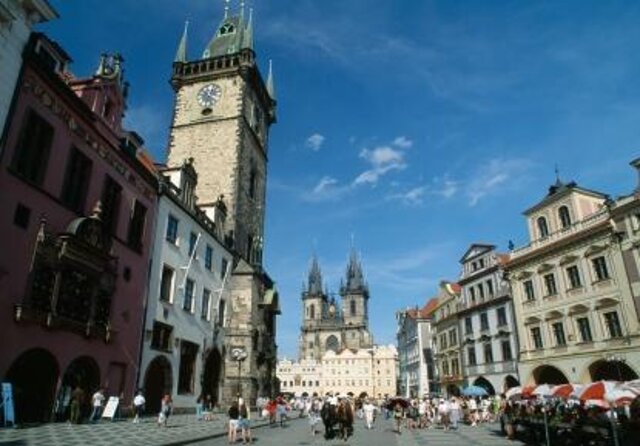
Meet your guide at the Powder Tower on Republic Square. The tower marks the edge of Prague’s Old Town, while the square leads naturally toward the newer parts of the city. Look for the guide holding a blue umbrella.
The opening section covers the creation of Czechoslovakia in 1918. You hear how the new republic emerged after the collapse of the Austro-Hungarian Empire and why Adolf Hitler wanted to take control of the country early in his expansion across Central Europe.
The guide also explains how World War II shaped what followed. Nazi occupation, liberation by the Soviet Red Army in 1945, and the unsettled postwar years all help explain why the Communist Party did well in the 1946 elections.
This is a useful beginning because it avoids treating Communist rule as an isolated event. You get the political setting first. War damage, fear of Germany, hopes for social reform, and Soviet influence all form part of the explanation.
The stop lasts about 15 minutes. It is mostly an orientation, so you should not expect a long visit inside a monument. The value comes from learning how to interpret the streets ahead.
Old Town Square and the Era of Fear
At Old Town Square, the guide points out where Communist Party leaders celebrated their victory in 1948. The setting matters. This is one of Prague’s grandest public spaces, surrounded by monumental buildings and familiar sightseeing landmarks. Against that backdrop, the guide explains how power shifted from parliamentary politics to one-party rule.
The discussion then moves into the 1950s, often called the Era of Fear. You learn about political trials, manipulated verdicts, labor camps, collectivization, and the secret police. These subjects can sound abstract in a classroom, but the walking format keeps them tied to the city.
You also hear about daily life behind the Iron Curtain. The tour does not focus only on presidents and party officials. It looks at the pressures ordinary people faced, including restricted choices, official propaganda, and the need to be careful about what you said and to whom you said it.
The guide points out where Prague’s enormous Stalin monument once stood. That detail helps show how public spaces were used to display loyalty to the Soviet model. The monument was later removed, but its former location still carries political meaning.
Allow about 20 minutes here. The stop is outdoors, so dress for the weather. Old Town Square is often crowded, and you may need to stay close to the blue umbrella while the guide speaks.
Wenceslas Square and the Prague Spring
The tour then reaches Wenceslas Square, the long boulevard that has repeatedly served as Prague’s political stage. In August 1968, this area became one of the main centers of resistance when Soviet-led forces invaded to end the Prague Spring.
The Prague Spring was a reform movement that sought a less rigid form of socialism and greater freedom. The guide explains what happened when the Soviet army crushed those hopes, including the official claim that the intervention was a form of peaceful assistance.
You also hear about the November 1989 demonstrations that led to the Velvet Revolution. Nearby Narodni Street is linked to the police attack on student demonstrators on November 17. That moment helped trigger the wider protests that brought Communist rule to an end.
The guide places Vaclav Havel and other important figures into this story. The result is a clear account of how public anger grew, how demonstrations spread, and how the political system changed.
This section takes around 30 minutes. Wenceslas Square is broad and busy, but the guide helps you focus on the key locations rather than treating it as just another shopping street. I find this part particularly helpful because the events of 1968 and 1989 are easier to understand when you are standing in the places where people gathered.
A few more trips of this kind worth comparing:
- Prague Guided Walking Tour and Cruise with Authentic Czech Lunch
★ 5.0 · 3,627 reviews - Prague: Vltava River Lunch Cruise in an Open-Top Glass Boat
★ 4.5 · 2,865 reviews - Prague: Hard Rock Cafe with Set Menu for Lunch or Dinner
★ 4.4 · 1,487 reviews - Full-Day Prague Tour with Prague Castle, Lunch and Vltava Cruise
★ 4.0 · 921 reviews
A Czech Lunch at a 1970s Canteen
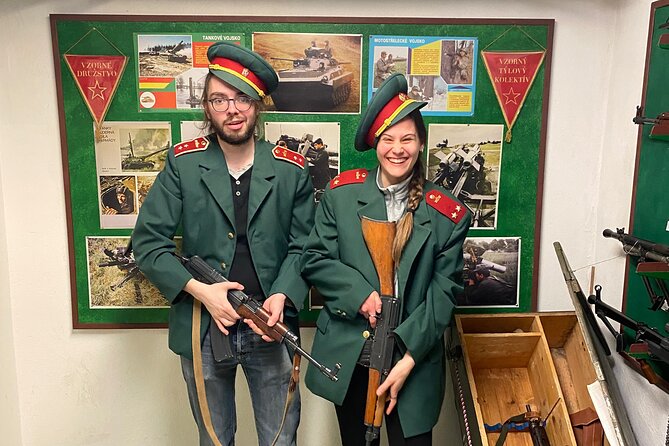
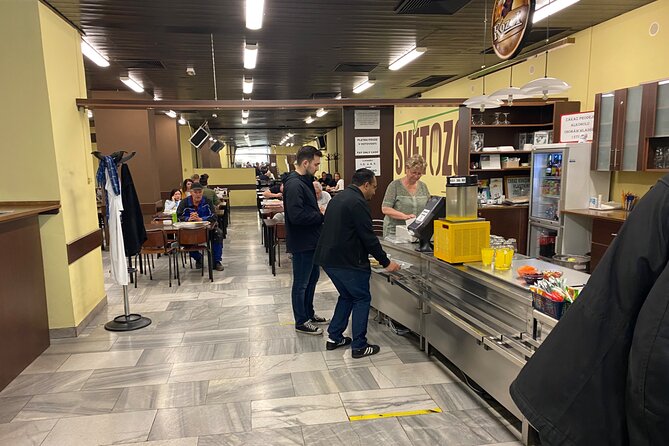
The canteen stop gives the tour a welcome change of pace. Instead of another monument or political location, you sit down in a setting associated with working life during the Communist period.
Food and drinks are not included, so bring money for what you want to order. You can have a beer, try Kofola, the popular Czech soft drink, or choose a proper working-class meal. Past menus have included familiar dishes such as pork on paprika with potatoes, though you should treat the exact choices as dependent on what is available that day.
The guide can help you choose. This matters because a traditional Czech canteen may not work like a tourist restaurant, and the names of dishes may not tell you everything. The stop also gives you a chance to ask more questions in a relaxed setting.
The lunch break lasts about 30 minutes. That is long enough for a drink or quick meal, but not a leisurely restaurant visit. If you want a full lunch, plan your pace accordingly.
I like this part because it connects political history with material life. You see how a period is remembered through food, interiors, and ordinary routines. It is also one of the few chances on the tour to sit down, so it helps break up the walking.
Do not assume lunch is covered by the ticket. The $35.07 price includes the guide, the small-group format, and the bunker admission, but food and drinks are your responsibility.
Entering the Nuclear Shelter Beneath Wenceslas Square
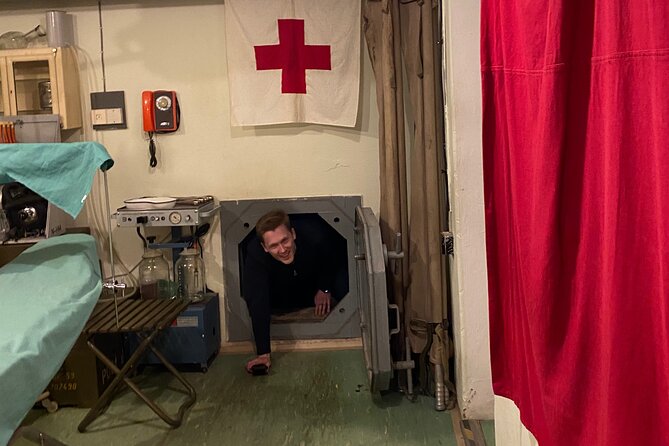
The final stop is the tour’s main physical attraction: a nuclear shelter dating from the 1950s. It is located in the upper part of Wenceslas Square, and the experience lasts about one hour.
The shelter gives you a sense of the Cold War’s practical fears. The rooms, displays, and Soviet-era objects show how the city prepared for a possible nuclear conflict. It is not simply a room with a few signs. The exhibits create a more direct sense of how officials imagined an emergency and how people might have been expected to respond.
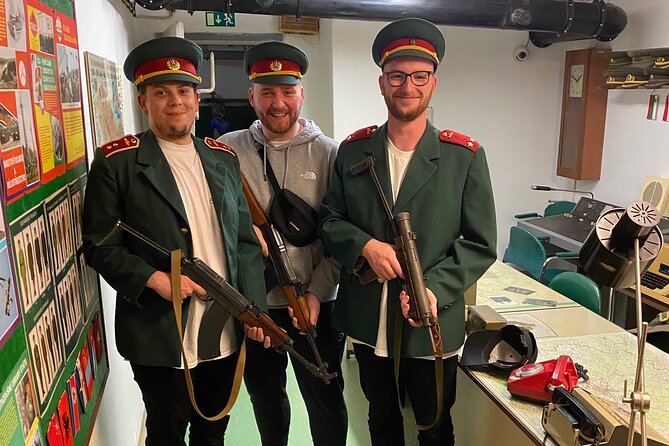
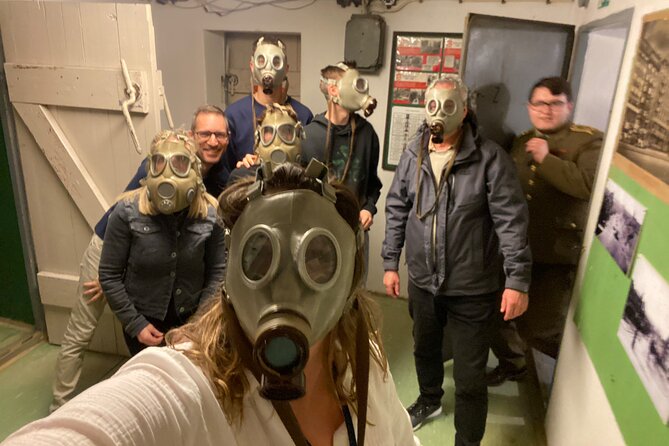
Interactive touches make the visit more memorable. You may have the chance to handle a gas mask, take part in a mock secret-police interrogation, or examine equipment connected with life in the shelter. Some experiences also include handling replica or historical military equipment under supervision.
The bunker is where the tour becomes most unusual. Prague has many museums, but walking through a functioning Cold War shelter gives the subject a physical scale. You can see the confined corridors and rooms instead of trying to picture them from a description.
There is a practical limit. The shelter is not a good choice if you are claustrophobic. The guide explains that visitors take an elevator down one level and then walk roughly 30 steps to a second level below. Some mobility is required, even though the route is manageable for many people.
The tour ends inside or at the bunker area in the upper section of Wenceslas Square. You are already in a central part of Prague, so the finish is convenient for continuing your sightseeing.
What the Guide Adds
The guide is central to the quality of this experience. Names associated with the tour include Klara, Clara, Leo, and Stan. The strongest guiding style here is conversational rather than theatrical. You get a clear account of events, but you can also ask questions and explore how the past affected ordinary families.
Klara is often praised for using personal memories and photographs to explain Communist-era life. That kind of detail can make a major difference. You learn not only what the state did, but how people adapted, what they feared, and how they managed daily routines.
Leo is described as especially strong at explaining the country’s path through Communism and its later political changes. He is also noted for handling questions about current affairs, which can help connect the Cold War period with the Czech Republic you see today.
The small size makes this possible. With a maximum of 10 people, you can usually hear the guide more easily and ask questions without holding up a large crowd. A group of only two or three may receive an especially personal experience, though the exact group size depends on bookings.
The tour has even gone ahead with only two people. That suggests a useful level of flexibility, but you should still rely on the confirmation you receive for the exact arrangements.
Price, Timing, and Overall Value
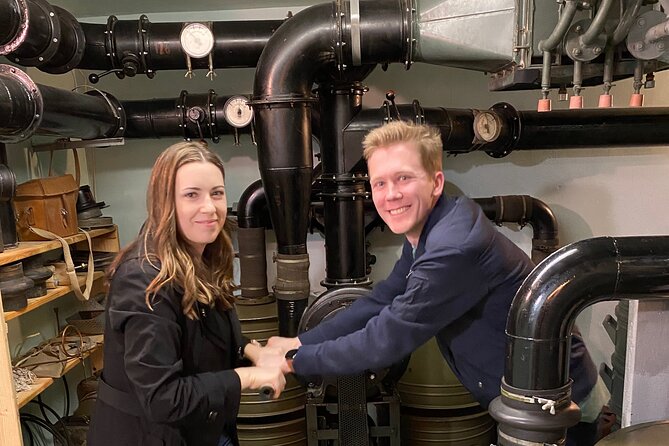
At $35.07 per person, this is fairly priced for a 3.5-hour guided experience in central Prague. The value improves because the 10 EUR nuclear bunker admission is included. You are paying for a substantial walking route, a guide, a small group, and a specialized site that is not part of a standard city tour.
The canteen meal costs extra, but that is reasonable. You choose how much to spend, from a simple soda to a full lunch. The stop is more useful when you treat it as an optional meal with local context rather than a promised included feature.
The tour is offered in English and includes a mobile ticket. It begins at a very easy-to-find location near public transportation and finishes at Wenceslas Square, another central point. You do not need to arrange a return transfer.
The main cost is your time and attention. The route covers a serious amount of political history, and the subject includes occupation, repression, imprisonment, and violence. If you want a light sightseeing walk, this may feel heavy. If you want to understand modern Prague, the time is well spent.
The experience is booked well ahead, with an average booking lead time of about 40 days. I would reserve early if your Prague dates are fixed, especially because the group is capped at 10.
Who Should Choose This Tour
I would recommend it to you if you enjoy modern European history, Cold War politics, or guided walks that explain what happened behind the postcard views. It is also a good fit if you want to understand the Czech Republic beyond castles, churches, and medieval lanes.
Solo visitors may appreciate the social side of a small group. You have a natural chance to meet other people, and the canteen stop gives the group a shared activity rather than another short talk on a street corner.
Families with older children and teenagers may find the bunker’s hands-on elements engaging, though the political material is serious. The tour works best when you are willing to listen, ask questions, and think about how government policy affected real lives.
I would skip it if you want a relaxed route with little walking, if enclosed spaces make you uncomfortable, or if you prefer architecture and art to political history. The bunker is not a quick photo stop. It is the final hour and a major reason to book the experience.
Should You Book the Communism and Bunker Tour?
Book it if you want a personal, well-paced look at Prague’s 20th-century story, especially if the bunker and canteen appeal to you. The strongest features are the small group, the guide’s personal approach, the clear connection between places and events, and the chance to eat in a setting you might not find on your own.
Before paying, make sure your booking includes the bunker visit and the canteen stop you want. The 10 EUR shelter admission is included in the stated price, but food and drinks are not.
Bring comfortable shoes, allow 3.5 hours, and arrive at the Powder Tower in time to find the blue umbrella. If you can handle some stairs, narrow spaces, and serious subject matter, this is a worthwhile addition to a Prague visit.
FAQ
Where does the tour begin?
The tour begins at the Powder Tower, Náměstí Republiky 5, in Prague’s Old Town. Look for the guide holding a blue umbrella.
Where does the tour end?
It ends in the upper part of Wenceslas Square, Václavské náměstí, in Prague’s New Town.
Is the nuclear bunker admission included?
Yes. The 10 EUR Cold War Museum admission is included in the tour price.
Are lunch and drinks included?
No. Food and drinks at the 1970s-style canteen are paid for separately. You can choose beer, Kofola, or a Czech meal.
How large is the group?
The tour has a maximum of 10 people.
Is the tour suitable for someone with claustrophobia?
It is not recommended for people with claustrophobia because the bunker has narrow enclosed areas. You also walk about 30 steps to a second level below the entrance level.
Just added around Prague
- Private Day trip from Prague to Kutná Hora★ 5.0 · 3 reviews
- PRAGUE AIRSOFT SHOOTING GAMES★ 4.7 · 3 reviews
- Private 4-hour City Tour of Prague with driver & official guide w/ Hotel pick up★ 5.0 · 3 reviews
- Glass blowing in Prague★ 4.6 · 3 reviews
- Prague to Karlovy Vary Private Transfer★ 4.5 · 3 reviews
- Disney’s Tarzan Musical★ 5.0 · 3 reviews
- Prague Private Tour★ 5.0 · 3 reviews
- Private Bohemian Glass and Czech Crystal Tour with lunch included★ 5.0 · 3 reviews
Communism & WWII History Tours, compared.

Communism History and Nuclear Bunker Guided Tour
Read our review →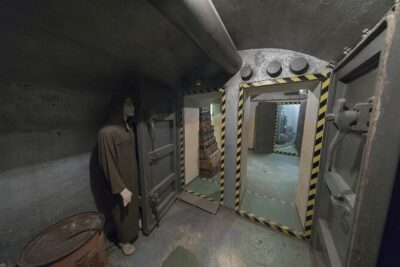
Prague Communism History and Nuclear Bunker Tour
Read our review →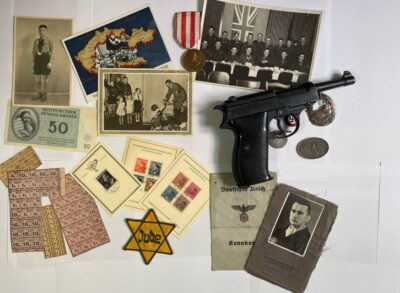
WWII Guided Tour & The Crypt of Operation Anthropoid
Read our review →
WWII in Prague Tour & The Crypt of Operation Anthropoid
Read our review →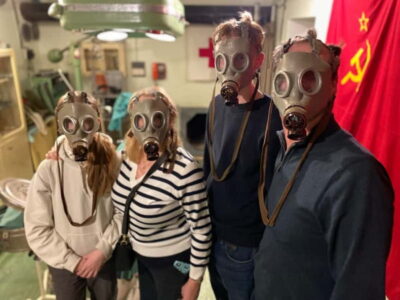
Communism and Bunker Tour with 70s Canteen Lunch
Read our review →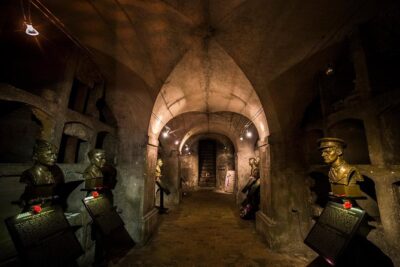
Small-Group World War 2 & Operation Anthropoid Tour in Prague
Read our review →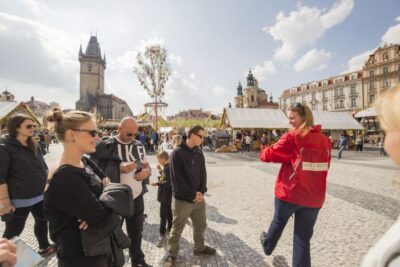
World War 2 and Operation Anthropoid Walking Tour
Read our review →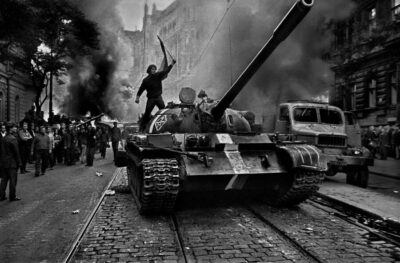
Browse the lists this tour appears in