
REVIEW · COMMUNISM & WWII HISTORY TOURS
Prague: World War 2 and Operation Anthropoid Walking Tour
Prague’s wartime story ends in a church crypt. This three-hour walk connects Operation Anthropoid, the 1942 assassination of Reinhard Heydrich, with the streets, buildings, and memorials that shaped Prague during Nazi occupation. I like the strong sense of place, and I like that the tour goes beyond one famous event to cover the student uprising, local resistance, early wartime Prague, and the Prague Uprising.
The final visit to the Church of St. Cyril and Methodius gives the tour real emotional weight. Guides such as Allen, Daniel, Martin, Pablo, and Robin have been praised for clear explanations, visual material, and lively storytelling. The main drawback is the amount of walking, with several outdoor stops that can feel cold or tiring in poor weather.
In This Review
- Key points at a glance
- Why Operation Anthropoid matters in Prague
- Starting behind Týn Church at Týnská 627/7
- Dům U Kamenného zvonu and Celetná
- Wenceslas Square and the student uprising
- Petschek Palace and the machinery of occupation
- Charles Square and the route toward the final battle
- Church of St. Cyril and Methodius
- How the guides shape the experience
- Is $32 a fair price?
- Weather, walking, and practical planning
- Who should book this Prague history walk?
- Should you book it?
- FAQ
- How long does the Prague World War II and Operation Anthropoid tour last?
- How much does the tour cost?
- What language is the tour offered in?
- Where does the tour begin?
- Where does the tour finish?
- Is hotel pickup included?
- Is the Church of St. Cyril and Methodius included?
- Is the tour wheelchair accessible?
- Can I bring a stroller or service animal?
- Can I cancel for a full refund?
- Is a private group available?
Key points at a glance
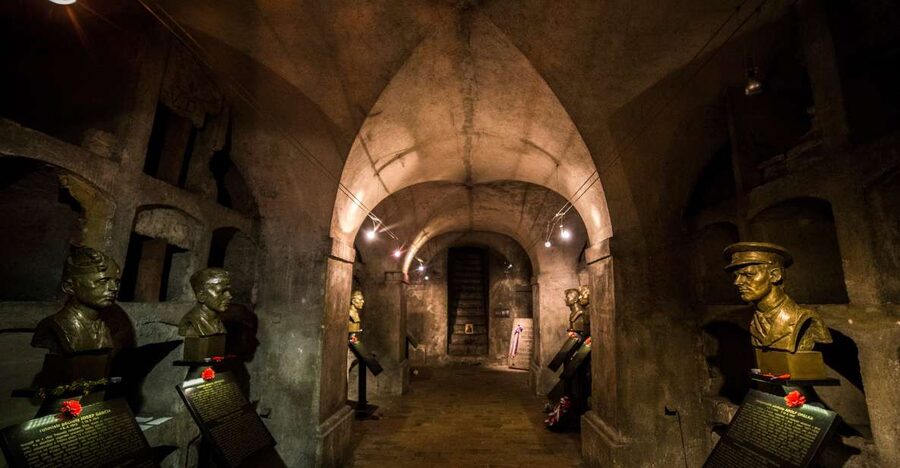
- The tour ends at the actual last refuge of the Czech paratroopers, inside the Church of St. Cyril and Methodius.
- You see WWII sites across central Prague, including Wenceslas Square, Petschek Palace, Celetná, and Charles Square.
- The story covers more than the assassination, including the student uprising, resistance networks, Nazi reprisals, and the Prague Uprising.
- Guides often use maps, photographs, and diagrams, which help explain events that are difficult to picture from street-level landmarks alone.
- The $32 price is strong value for a three-hour private or small-group history walk with entry to the church memorial.
- Comfortable shoes matter. This is a genuine walking tour, and it is not suitable for wheelchair users.
Why Operation Anthropoid matters in Prague
Operation Anthropoid was the Allied-backed mission to assassinate Reinhard Heydrich, one of Adolf Hitler’s senior officers and the Nazi official who controlled occupied Bohemia and Moravia. Two Czechoslovak paratroopers, Jan Kubiš and Jozef Gabčík, carried out the attack in Prague in May 1942.
The operation did not end when Heydrich was wounded. The men involved had to disappear, and a network of local helpers risked torture and execution to shelter them. The last stand took place at the Church of St. Cyril and Methodius, where the surviving resistance fighters held off German forces before they were killed or took their own lives.
That is the central thread of this walk, but the guide also places it within the wider Czech experience of the war. You hear about the occupation, the actions of students and civilians, the local resistance, and the final days of German control in Prague.
I find this broader approach useful. If you know only the basic outline of the assassination, the tour fills in the human and political detail. If you already know the story well, the street-by-street setting gives familiar events a clearer shape.
More communism and wartime history tours:
- Prague: Communism History and Nuclear Bunker Guided Tour
★ 4.7 · 2,417 reviews - Prague Communism History and Nuclear Bunker Tour
★ 5.0 · 1,742 reviews - Communism & Nuclear Bunker Tour + 70s Canteen Lunch (own expense)
★ 5.0 · 1,036 reviews
Starting behind Týn Church at Týnská 627/7
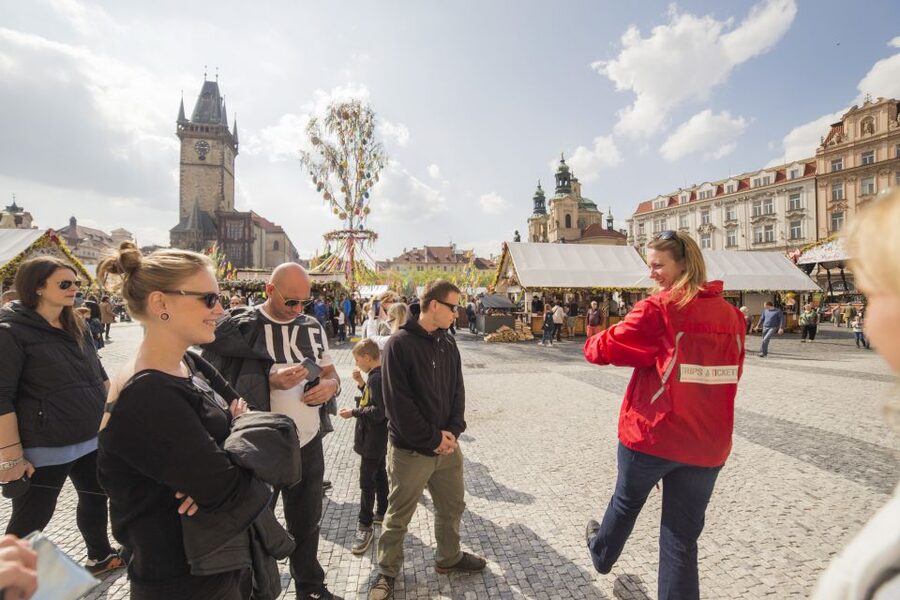
The meeting point is at Týnská 627/7, behind Týn Cathedral in the Old Town. Once you are behind the cathedral, turn left onto Týnská Street and look for the wooden door of house number 7.
This is worth checking carefully before you leave your hotel. One person arrived at the wrong church, and two other people made the same mistake. The Church of Our Lady before Týn, with its two tall towers, is not the same building as the Church of St. Cyril and Methodius, which comes at the end of the walk.
The tour begins in one of Prague’s most historic parts, but the subject quickly shifts away from medieval architecture. Your guide sets the scene for the early years of World War II and explains who the key people were. This opening is important because the later stops make more sense once you understand the political pressure on Czechoslovakia and the nature of German rule.
The group may be small. The tour runs with at least two guests, and private groups are available. Small numbers make it easier to ask questions, which is particularly helpful here because the story involves several military units, resistance members, churches, and changing political forces.
Dům U Kamenného zvonu and Celetná
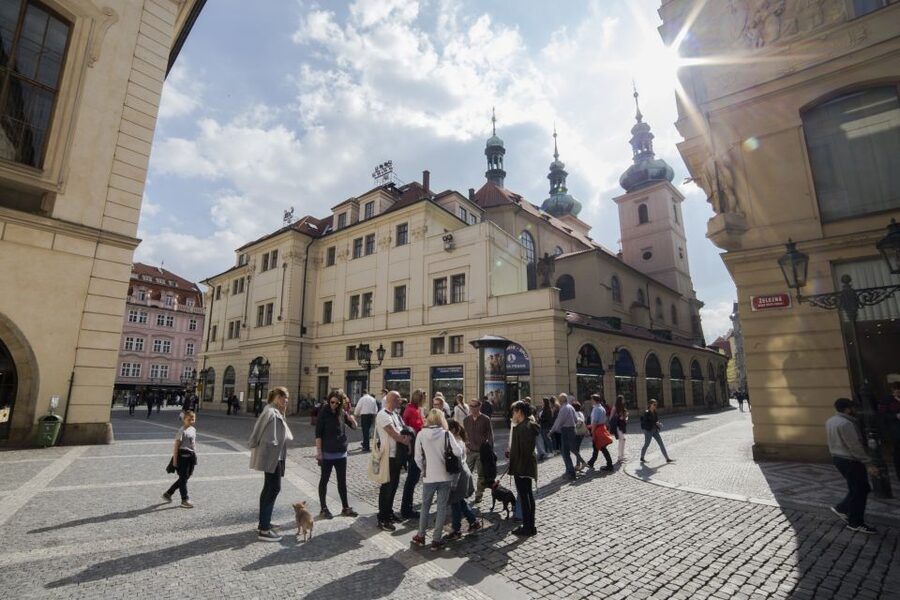
The early stops around Dům U Kamenného zvonu and Celetná help place wartime events in the middle of everyday Prague. You are not being taken to a single museum room with labels and glass cases. Instead, the guide uses the city itself as the setting.
At Dům U Kamenného zvonu, expect a guided explanation rather than a long independent visit. The value is in hearing how this part of central Prague relates to the occupation and the people moving through it. Celetná continues that approach, with the guide pointing out buildings and landmarks connected to World War II.
This part of the route can feel less dramatic than the church at the end. That is normal. The tour is building a map in your head, showing how the resistance story was spread across the city rather than confined to one battlefield.
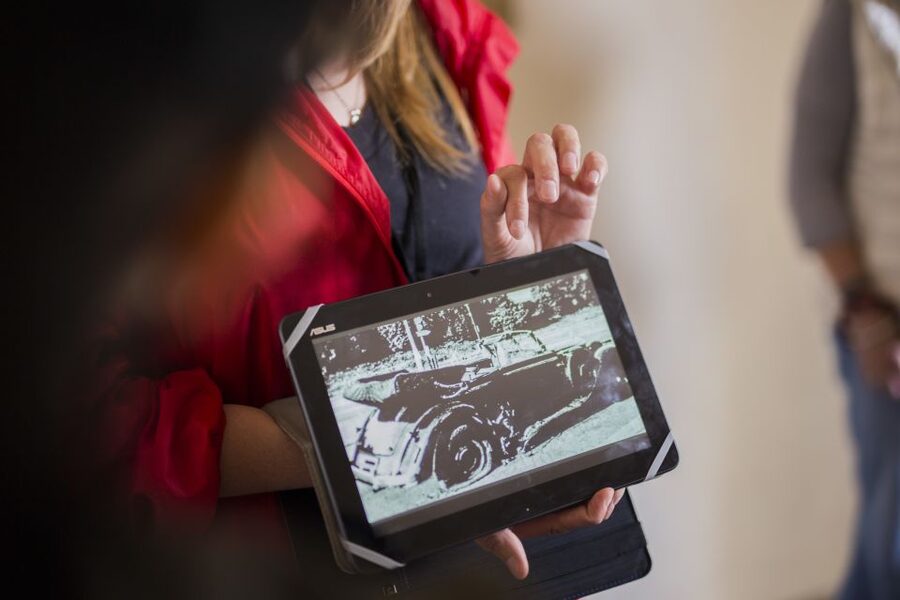
Guides vary, but several have been praised for using photographs, maps, and diagrams on a tablet. That extra visual material helps. A modern street rarely looks exactly as it did in 1942, so a photograph can show you the missing pieces and make an otherwise ordinary corner easier to understand.
Wenceslas Square and the student uprising
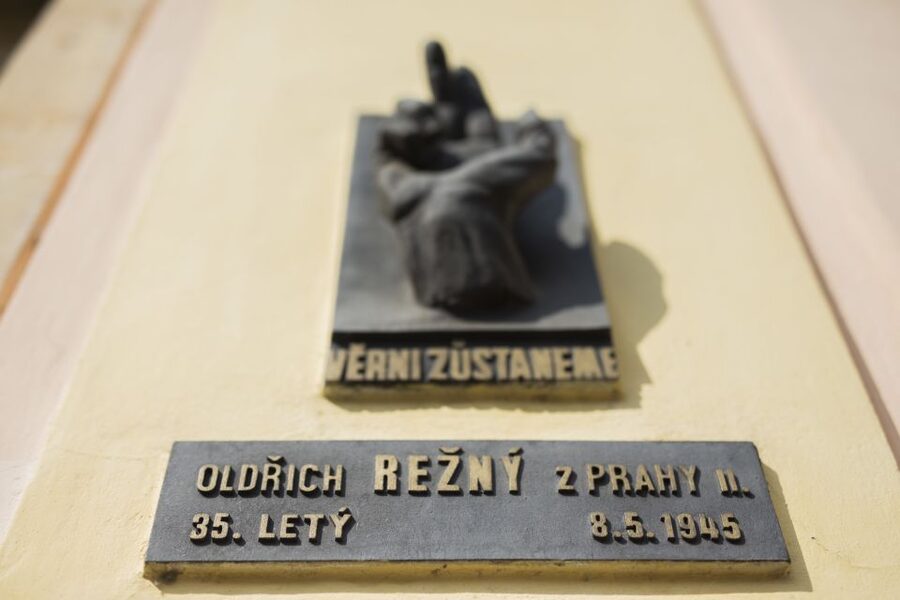
Wenceslas Square adds a public dimension to the story. This huge central space is closely tied to political protest and public action, and the tour uses it to discuss the student uprising and the early days of the war.
You learn how the occupation affected ordinary people and how students became part of the political story. The guide also explains how public places in Prague could carry different meanings at different points in the war. A square could be a place of daily life, official display, protest, or confrontation.
I especially like this part for visitors who want more than a military account. The tour does not treat World War II as a sequence of generals and operations alone. It looks at how students, residents, resistance workers, and soldiers responded to events around them.
Wenceslas Square is also a busy city space, so you should expect urban noise and foot traffic. That can make it harder to hear, particularly if the group is large. Small groups have an advantage here, since the guide can keep everyone close and respond to questions without losing the thread.
More walking tours:
- Prague: 3-Hour Walking Tour of Old Town & Prague Castle
★ 4.7 · 5,696 reviews - Prague: Ghost Walking Tour Where Legends Come To Life
★ 4.4 · 5,253 reviews - Prague: Jewish Quarter Walking Tour with Admission Tickets
★ 4.7 · 3,729 reviews - Prague Guided Walking Tour and Cruise with Authentic Czech Lunch
★ 5.0 · 3,627 reviews
Petschek Palace and the machinery of occupation
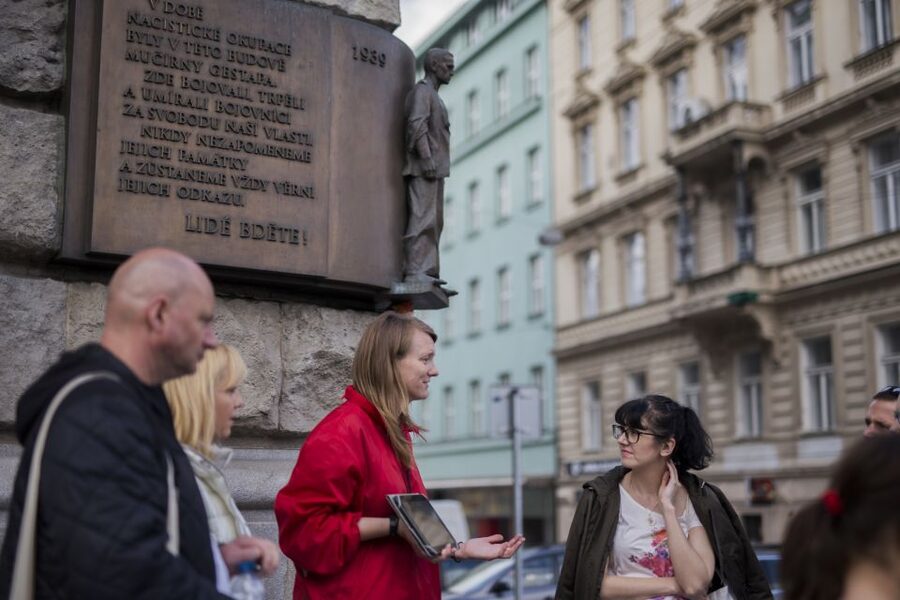
Petschek Palace is one of the most important stops for understanding the darker side of Nazi control in Prague. The building is associated with interrogation and the enforcement of German power during the occupation.
Your guide explains the role of the palace and connects it with the risks faced by members of the resistance. This gives the operation a sharper human context. Hiding a paratrooper was not a minor act of assistance. It could bring arrest, torture, and death to the people providing food, shelter, messages, or transport.
The stop works best when you pay attention to the contrast between the building’s formal appearance and the events linked to it. From the outside, it may look like another grand city structure. The guide’s account shows how a familiar Prague address could become part of a system built on fear.
This is also where a strong guide makes a real difference. Allen has been praised for clear and enthusiastic explanations, while Daniel and Martin have been noted for answering questions beyond the narrow subject of Operation Anthropoid. That wider knowledge helps when the conversation turns to Czech politics, religion, or the changing power of European states.
Charles Square and the route toward the final battle
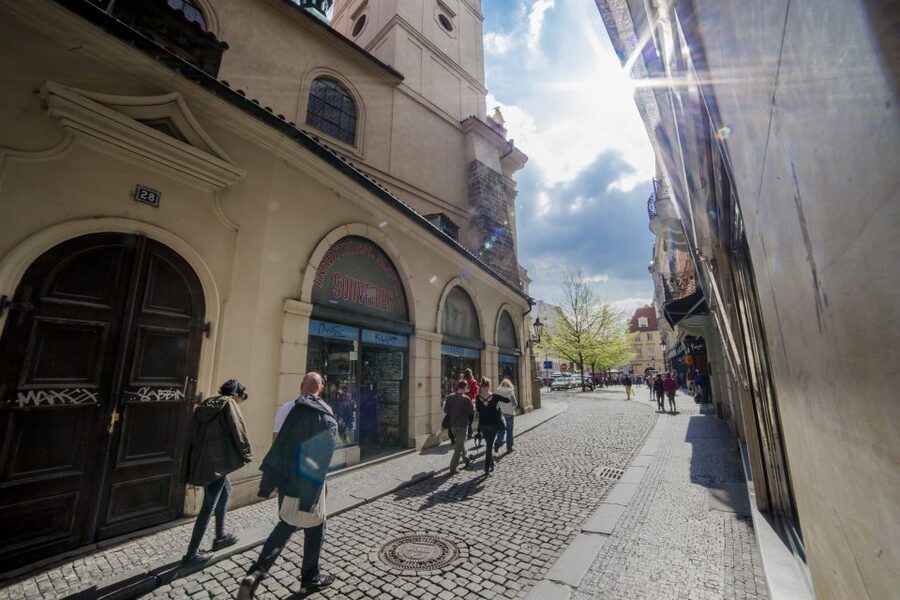
The walk continues to Charles Square, another useful point for connecting the resistance story with the geography of Prague. By this stage, you have covered a fair distance and heard a good deal of information, so comfortable footwear is not optional advice.
The route is not a brisk march from one famous attraction to the next. It is a steady history walk with stops for explanation. The exact pace will depend on the guide, the group, and the number of questions, but plan for three hours on foot with much of the time outdoors.
That makes the tour a better fit for people who enjoy learning while walking than for anyone seeking a short sightseeing circuit. One person found the amount of walking manageable, even in cold weather. Others made clear that the distance could be a concern for anyone with mobility problems.
As you approach the church, the story becomes more focused. You have heard about the attack on Heydrich, the effort to hide the paratroopers, and the danger faced by their supporters. The final location is no longer an abstract ending. It becomes the place where those decisions reached their last, violent stage.
Church of St. Cyril and Methodius
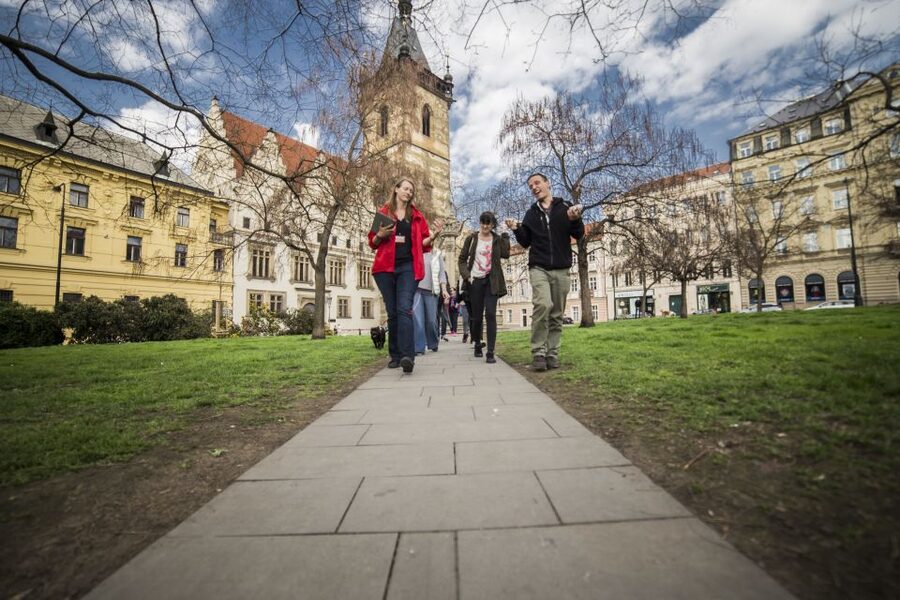
The Church of St. Cyril and Methodius is the emotional center of the tour. It served as the last hiding place of the Czech paratroopers involved in Operation Anthropoid and other resistance members.
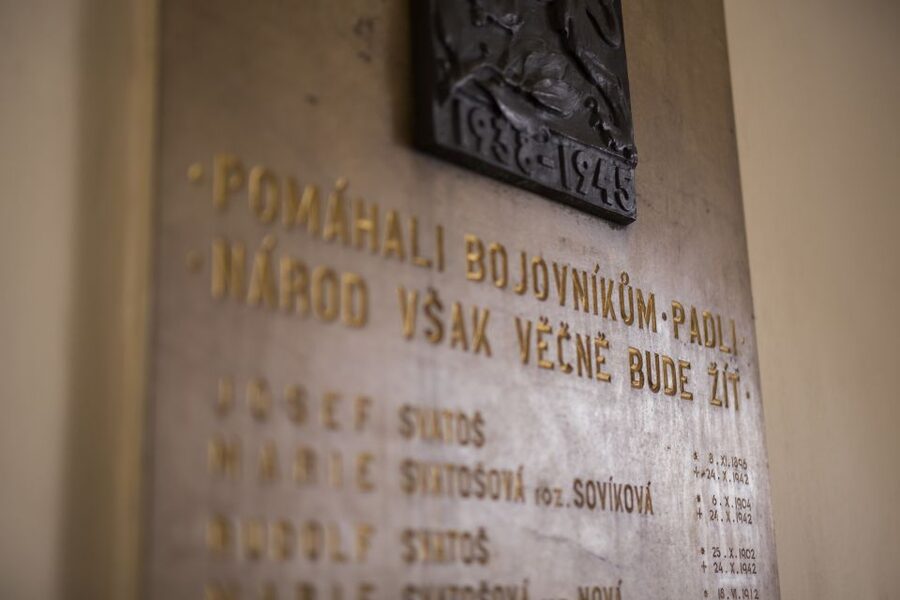
The visit includes the church and the National Memorial to the Heroes of the Heydrich Terror. The memorial now honors the victims of the Third Reich and preserves the memory of the final resistance. The crypt is a particularly moving part of the visit, with the cramped underground setting bringing home how desperate the situation had become.
This is not a triumphant ending. The soldiers fought, but the resistance network was exposed and many people connected with it were killed. The church invites a quiet pause after the walking and explanation. You can spend time considering the courage of the soldiers and the civilians who helped them, as well as the terrible cost of the operation.
Several guides have been praised for handling this final stop with care. Robin, for example, has been described as friendly and attentive, while Martin was praised for giving a detailed account of the paratroopers’ final hours. The best guides do not rush through the church or turn it into a theatrical finale. They let the location carry some of the weight.
You should also remember that this is a place of remembrance, not simply a sightseeing stop. A respectful attitude is appropriate, especially in the crypt and memorial areas.
How the guides shape the experience
The guide is the main reason this tour works. Much of the route involves streets and buildings that you could pass without knowing their connection to the war. The quality of the explanation determines whether those locations feel meaningful or merely incidental.
The strongest guide reports praise passion, clear English, storytelling, and the ability to answer questions. Allen, Daniel, Martin, Pablo, Radek, Dana, Robin, and others have each been singled out for those qualities at different times. The guide assigned to your booking may vary, so you should not book expecting one named person unless the provider confirms it.
Visual aids are a real advantage. Maps show how people moved through the city, photographs reveal the wartime appearance of important locations, and diagrams can clarify the sequence of Operation Anthropoid. For a complicated subject, this is much better than relying on spoken dates and names alone.
I also like that the guides appear willing to discuss more than the planned script. Questions about Czech society, religion, politics, and the wider war can add depth. The risk is that a very talkative guide or an active group may spend longer at some stops, but the three-hour length gives reasonable room for discussion.
Is $32 a fair price?
At $32 per person, this is good value if you have a serious interest in WWII or Czech history. You receive a local English-speaking guide, a three-hour route through central Prague, and a visit to the Church of St. Cyril and Methodius memorial.
The price compares well with the amount of context provided. You are not simply paying for admission to a church. You are paying for the links between several locations, plus the explanation that turns them into one connected story. One booking was noted as costing about half the price of a similar experience offered through a river cruise company.
A private group is available if you want a more personal pace or have family and friends who prefer to ask many questions. A shared group can also work well, especially when numbers stay low. The minimum is two guests, which means the tour can operate with a very small party.
The main value warning is simple: this is not a general Prague highlights tour. If your main goal is architecture, cafés, or the city’s medieval sights, another walk may suit you better. Here, the history is the point.
Weather, walking, and practical planning
Wear comfortable walking shoes. You will cover several central neighborhoods and spend time standing while the guide speaks.
Cold weather deserves extra thought. The tour operates outdoors for much of its route, and one useful suggestion was to hold stops out of the wind or use building lobbies where possible. Prague’s winter cold can make a three-hour walk feel much longer, even when the distance itself is manageable.
A stroller can be used, and service animals are allowed. The tour is not wheelchair accessible, so it is unsuitable for wheelchair users. Anyone with walking difficulties should consider the route carefully before booking.
Hotel pickup is not included. You need to reach Týnská 627/7 on your own, and you should allow time to find the correct door behind Týn Cathedral.
The tour is offered in English. It lasts three hours, and available starting times depend on the date you choose. You can cancel up to 24 hours before the start for a full refund, and the reserve-now, pay-later option helps if your Prague plans are still shifting.
Who should book this Prague history walk?
I would choose this tour if you enjoy WWII history, resistance movements, military decisions, or the stories of ordinary people placed under extreme pressure. It is also a good choice if you have seen Prague’s main sights and want a more serious look at the city.
You do not need to be an expert. The guides explain the background, identify the key players, and build the story step by step. The tour can work especially well for families with older children, history students, and anyone who wants to understand the Czech experience rather than only visit attractive buildings.
I would hesitate if you dislike long walks, standing outdoors, or emotionally difficult subjects. The final church visit can be upsetting, and the tour deals with occupation, executions, interrogation, and sacrifice. That weight is part of its value, but it is not light entertainment.
Should you book it?
Yes, if Operation Anthropoid interests you, this is one of the better-value history walks in Prague. The route gives you the city context, the guides add maps and photographs, and the ending at the Church of St. Cyril and Methodius is powerful in a way no classroom account can match.
Book it early in your Prague stay if you want its historical background to inform later sightseeing. Just confirm the meeting point, wear good shoes, prepare for outdoor walking, and leave room for a quiet visit at the memorial.
FAQ
How long does the Prague World War II and Operation Anthropoid tour last?
The tour lasts three hours.
How much does the tour cost?
The listed price is $32 per person.
What language is the tour offered in?
The live tour guide speaks English.
Where does the tour begin?
It begins at Týnská 627/7 in Prague’s Old Town. The building is behind Týn Cathedral, on Týnská Street.
Where does the tour finish?
It finishes at the Church of St. Cyril and Methodius, also written as Chrám svatých Cyrila a Metoděje.
Is hotel pickup included?
No. You need to make your own way to the starting point.
Is the Church of St. Cyril and Methodius included?
Yes. The tour includes a visit to the church, the location of the Czech paratroopers’ last resistance.
Is the tour wheelchair accessible?
No. The tour is not suitable for wheelchair users.
Can I bring a stroller or service animal?
The tour is stroller accessible, and service animals are allowed.
Can I cancel for a full refund?
Yes. You can cancel up to 24 hours in advance for a full refund.
Is a private group available?
Yes. A private group option is available, and the tour requires a minimum of two guests.
Just added around Prague
- Private Day trip from Prague to Kutná Hora★ 5.0 · 3 reviews
- PRAGUE AIRSOFT SHOOTING GAMES★ 4.7 · 3 reviews
- Private 4-hour City Tour of Prague with driver & official guide w/ Hotel pick up★ 5.0 · 3 reviews
- Glass blowing in Prague★ 4.6 · 3 reviews
- Prague to Karlovy Vary Private Transfer★ 4.5 · 3 reviews
- Disney’s Tarzan Musical★ 5.0 · 3 reviews
- Prague Private Tour★ 5.0 · 3 reviews
- Private Bohemian Glass and Czech Crystal Tour with lunch included★ 5.0 · 3 reviews
Communism & WWII History Tours, compared.

Communism History and Nuclear Bunker Guided Tour
Read our review →
Prague Communism History and Nuclear Bunker Tour
Read our review →
Communism & Nuclear Bunker Tour + 70s Canteen Lunch (own expense)
Read our review →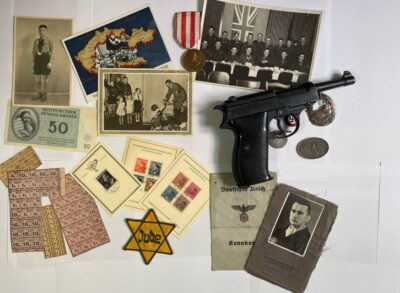
WWII Guided Tour & The Crypt of Operation Anthropoid
Read our review →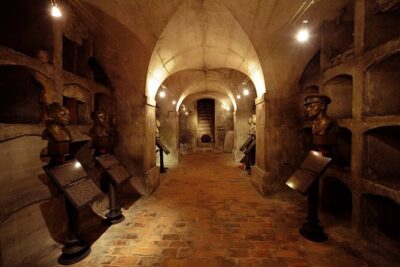
WWII in Prague Tour & The Crypt of Operation Anthropoid
Read our review →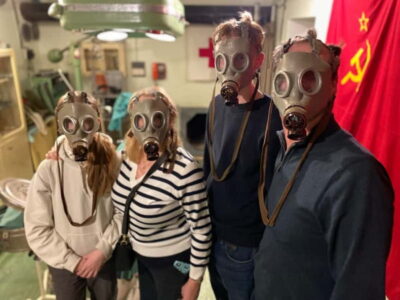
Communism and Bunker Tour with 70s Canteen Lunch
Read our review →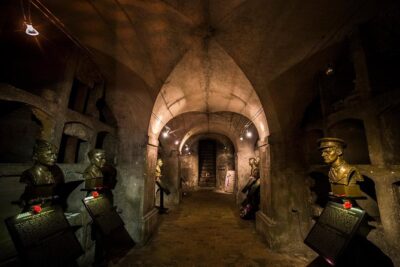
Small-Group World War 2 & Operation Anthropoid Tour in Prague
Read our review →
Browse the lists this tour appears in