
REVIEW · COMMUNISM & WWII HISTORY TOURS
Prague: World War II and Communist History Tour
History feels different when you walk through it. I like this tour for its clear journey from Nazi occupation to Communist rule, and for the way local stories connect grand political events with ordinary Czech life. I also like the strong guides, including Adam, Tony, Zach, and Amanda, who have been praised for making difficult subjects vivid and easy to follow.
The main drawback is that this is not a stop-heavy sightseeing walk. Much of the experience depends on the guide’s storytelling, since several locations offer little visible evidence of what happened there. You will also cover a fair amount of ground in 150 minutes, so wear sensible shoes and do not schedule a tight appointment afterward.
In This Review
- Key Points to Know Before You Go
- Why Prague’s Recent Past Deserves Its Own Tour
- Starting at Týnská 639/4 in Old Town
- Municipal House and the Collapse of Democratic Prague
- The Jewish Quarter and the Human Cost of Occupation
- Resistance, Assassination, and the Church Crypt
- Wenceslas Square and the Communist Coup
- The Dancing House and a City in Transition
- The Velvet Revolution and the Return of Public Hope
- How the Walking Route Feels in Practice
- The Guides Make or Break the Experience
- Is $34 a Fair Price?
- Who Should Book This Tour?
- My Verdict: Book It for Context, Not Just Sights
- FAQ
- How long does the Prague World War II and Communist History Tour last?
- What language is the tour conducted in?
- Where does the tour meet?
- How much does the tour cost?
- Which parts of Prague does the tour visit?
- Does the tour cover Operation Anthropoid?
- Does the tour cover the Velvet Revolution?
- Is public transportation included?
- Can I cancel the booking?
Key Points to Know Before You Go
- A 150-minute walk through modern Prague: The tour links Old Town, the Jewish Quarter, Wenceslas Square, the Dancing House, and other important places.
- The story runs from Nazi occupation to 1989: You follow the Nazi takeover, Czech resistance, Communist coup, Prague Spring, Warsaw Pact invasion, and Velvet Revolution.
- Operation Anthropoid is a major highlight: You learn about the assassination of the Nazi head of security services and the resistance fighters who later hid in a church crypt.
- The guide matters greatly: Past guides such as Zach, Tony, Adam, Daren, Sean, and Amanda were praised for humor, clarity, and strong storytelling.
- This is history with political weight: The tour covers persecution, resistance, censorship, cultural dissent, and the failures of both Nazi and Communist rule.
- The price is strong value: At $34 per person, the tour offers two and a half hours with a live English-speaking guide, plus the convenience of a carefully linked route.
Why Prague’s Recent Past Deserves Its Own Tour
Prague is often sold through its medieval lanes, Gothic towers, and elegant Baroque buildings. Those sights are worth your time, but they can make the city’s 20th-century story easy to miss.
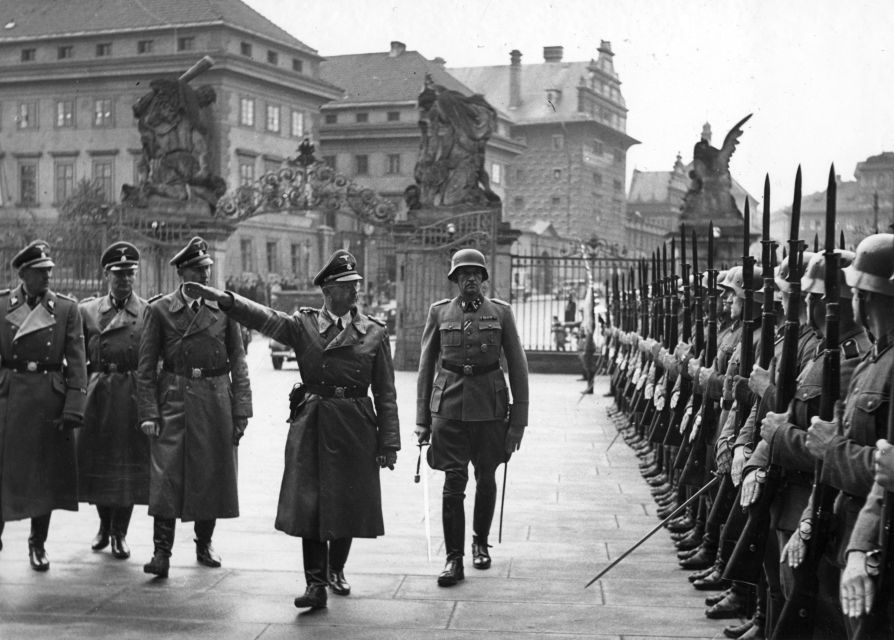
This tour shifts your attention to the years when Czechoslovakia moved from democratic promise to Nazi terror, then from liberation into Communist control. You will hear how the country’s industrial strength and progressive culture were crushed under occupation, and how the postwar years brought new political pressure rather than a simple return to normal life.
I value that broad time frame. Instead of treating World War II and Communism as separate subjects, the tour shows how one period shaped the next. The Czech uprising, the Communist coup, the Prague Spring, the invasion by Warsaw Pact forces, and the Velvet Revolution become parts of one long national story.
That approach also helps explain why the events of 1989 mattered so much. The Velvet Revolution did not appear from nowhere. It grew from years of disappointment, fear, public courage, artistic resistance, and the work of people such as Václav Havel and the Charta 77 dissidents.
More communism and wartime history tours:
- Prague: Communism History and Nuclear Bunker Guided Tour
★ 4.7 · 2,417 reviews - Prague Communism History and Nuclear Bunker Tour
★ 5.0 · 1,742 reviews - Communism & Nuclear Bunker Tour + 70s Canteen Lunch (own expense)
★ 5.0 · 1,036 reviews
Starting at Týnská 639/4 in Old Town
The meeting point is at Týnská 639/4 in Staré Město, Prague 1. This puts you in a very central part of Prague, close to the Old Town streets and the Jewish Quarter.
Arrive with enough time to locate the address. The tour begins in a part of the city many people already visit for its historic architecture, which makes the change in subject especially effective. You begin among postcard Prague, then learn how these same streets were caught up in war, occupation, propaganda, and political upheaval.
The guide sets out the basic chronology before the walking begins in earnest. That matters because the tour covers a lot of ground in a short time. If you know the order of events, each later stop has a clearer purpose.
The English-language guides have generally been the strongest part of the experience. Adam was praised for answering questions and adding humor, while Tony was described as patient, friendly, and clear. Zach was especially admired for building the story gradually, rather than dropping isolated facts on the group.
Municipal House and the Collapse of Democratic Prague
The Municipal House is one of the early landmarks connected with the city’s political life. Its grand setting gives the guide a useful place to explain the Czechoslovak state before the Nazi occupation and the forces that made the takeover so devastating.
The key point is contrast. You are not simply looking at a beautiful civic building. You are considering a country that had been among Europe’s more progressive and industrialized states, then watching that confidence turn into fear under Nazi rule.
Expect the guide to focus on the political background and the effect of occupation on daily life. The emphasis is less on decorative details and more on how Prague’s institutions and citizens were forced to respond to a brutal new order.
This is an important early stop, but it also reveals one limitation of the tour. You are usually learning through the guide rather than through a large memorial or preserved wartime interior. If you prefer museums filled with original objects and labels, you may want to add a separate museum visit.
The Jewish Quarter and the Human Cost of Occupation
The route skirts the old Jewish area, bringing the Nazi period into sharper human focus. Prague’s Jewish Quarter already has its own major sights, but this tour frames the area within the wider story of persecution and occupation.
That context is useful if you have visited the synagogues or cemetery on your own. A self-guided visit can tell you what a building is, while this tour helps place it within the political machinery and social atmosphere of the period.
The subject matter is painful, and the tour does not try to make it comfortable. One especially strong feature is the refusal to sanitize the behavior of politicians, institutions, or citizens during dark years. You should expect serious material, but the storytelling is often balanced with local anecdotes and occasional humor.
This section may feel less dramatic in physical terms than a memorial site. There may not be a single obvious object or scene that explains everything. The value comes from the connections the guide makes between place, power, and human consequences.
More history tours:
- Prague: Oldtown, Medieval Underground & Dungeon History Tour
★ 4.2 · 8,244 reviews - Prague Old Town, Medieval Underground and Dungeon Historical Tour
★ 4.5 · 3,227 reviews - Prague: Historic City Center Bus Tour with Top Sights
★ 4.4 · 2,360 reviews - Prague Historic Pub Tour with Drinks Included
★ 5.0 · 2,084 reviews
Resistance, Assassination, and the Church Crypt
The most gripping part of the World War II story concerns the Czech resistance and the plot to assassinate the Nazi head of the security services. The tour explains the operation, the resistance fighters involved, and the terrible retaliation that followed.
This is where Prague’s wartime story becomes intensely personal. You are no longer hearing only about governments and military decisions. You are following people who took enormous risks, knowing that failure could bring punishment not only on themselves but also on families and communities.
A church connected with the resistance is among the most meaningful places associated with this part of the tour. Several past visitors singled out the crypt where Czech resistance soldiers hid, and one guide took the group to the Cyrill church. Another tour group visited an Operation Anthropoid museum during the walk.
Because the exact museum or interior access can vary, you should treat entry as something to confirm when booking rather than as a guaranteed feature. Even if the group remains outside, the guide’s account gives the site unusual force. The church is not merely an old religious building. It becomes the final refuge of people who had helped strike at the Nazi command structure.
This stop is likely to appeal most to anyone interested in Operation Anthropoid, wartime resistance, or military history. It can also be moving for visitors who usually prefer cultural sightseeing, because the story is tied so closely to an actual place.
Wenceslas Square and the Communist Coup
The tour then moves into the postwar period and the Communist takeover. Wenceslas Square is central to this part of the story because it has long served as a stage for public gatherings, political demands, protest, and national celebration.
Here, the guide explains the Communist coup and the growing gap between political promises and everyday reality. The tour does not treat the postwar years as a simple change from one system to another. Instead, you hear about the hopes attached to liberation, followed by disappointment and tighter control.
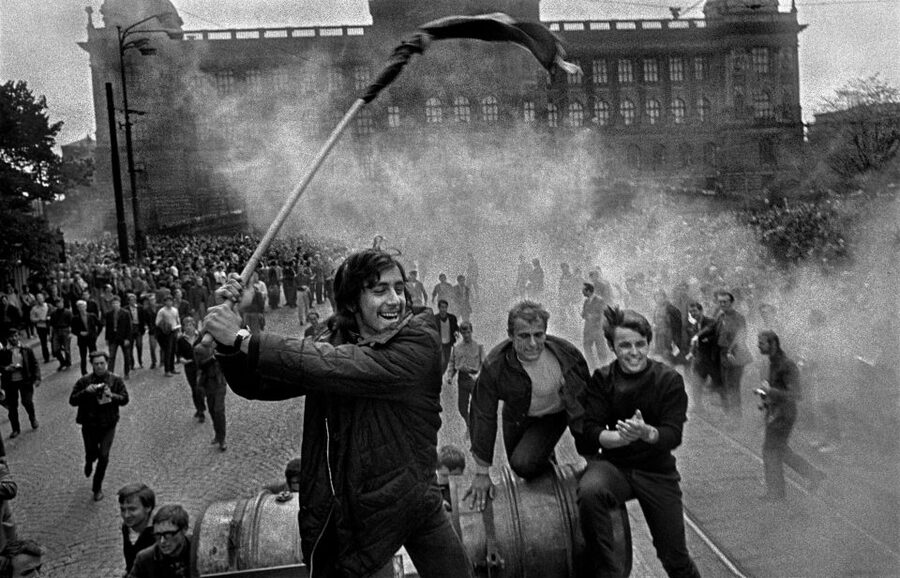
Wenceslas Square also helps you understand the physical scale of public protest. It is broad, central, and highly visible. That makes it an effective setting for discussing the large demonstrations that later challenged Communist power.
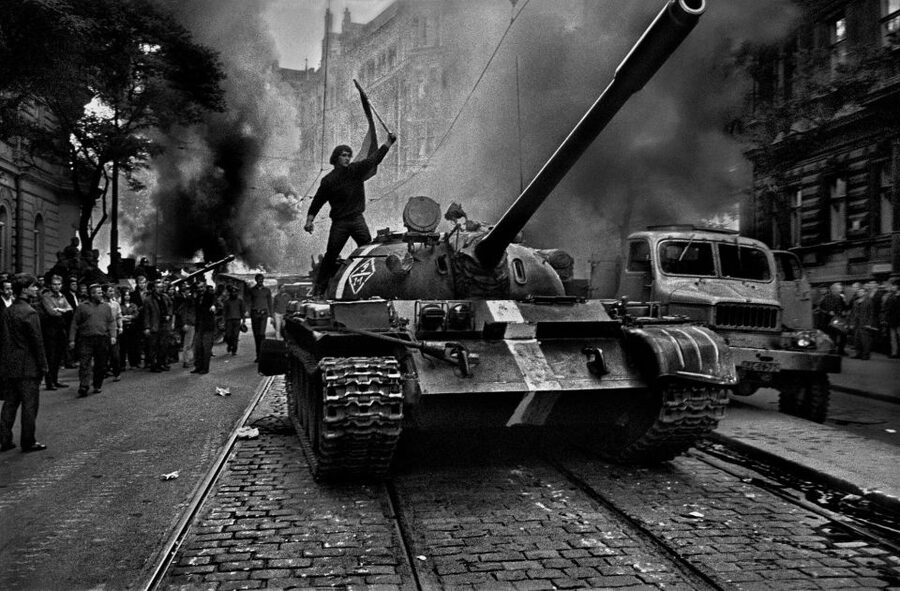
You will likely hear about the Prague Spring, the brief attempt to create a less rigid form of socialism, and the trauma of the Warsaw Pact invasion. These events are often reduced to a few textbook lines. A good guide restores the human element: the euphoria, the confusion, and the sense of betrayal when reform was crushed.
The square is also tied to the years leading up to the Velvet Revolution. By the time you reach that part of the story, it feels less like a generic city plaza and more like a place where public courage finally overcame political fear.
The Dancing House and a City in Transition
The Dancing House provides a change of mood and setting. Its modern design points toward a different Prague, but the tour uses the area to continue the story of Communist rule, the years of Normalization, and the gradual growth of dissent.
Normalisation brought political obedience after the Soviet-led invasion. The regime sought to suppress the hopes of the Prague Spring and restore control over public life, culture, and employment. The tour explains how this affected people beyond the headlines.
One especially valuable topic is the persecution of the Plastic People of the Universe, an underground band whose treatment helped bring dissidents together. The story shows how music and culture could become political acts when the government tried to regulate acceptable behavior.
You will also hear about Charta 77 and the wider dissident movement. Václav Havel is an important figure here, but the tour does not present him as a lone hero. Instead, it shows how an eclectic group of writers, artists, musicians, workers, and activists helped challenge the system.
This part of the walk is strongest when the guide explains the link between culture and politics. It gives you a better sense of how resistance can grow through small networks, private gatherings, samizdat writing, and public solidarity.
The Velvet Revolution and the Return of Public Hope
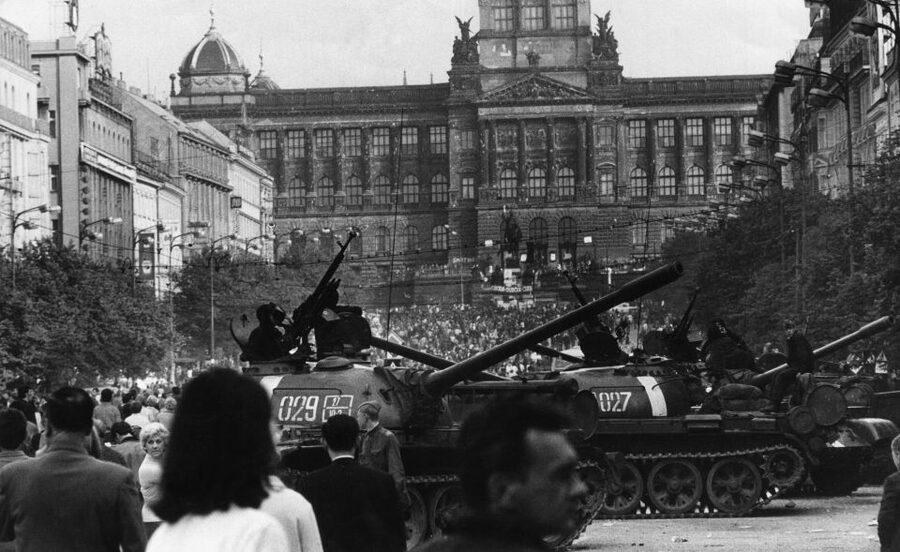
The final part of the route focuses on the Velvet Revolution of 1989. The tour explains how years of Communist rule ended with mass demonstrations and the peaceful transfer of power.
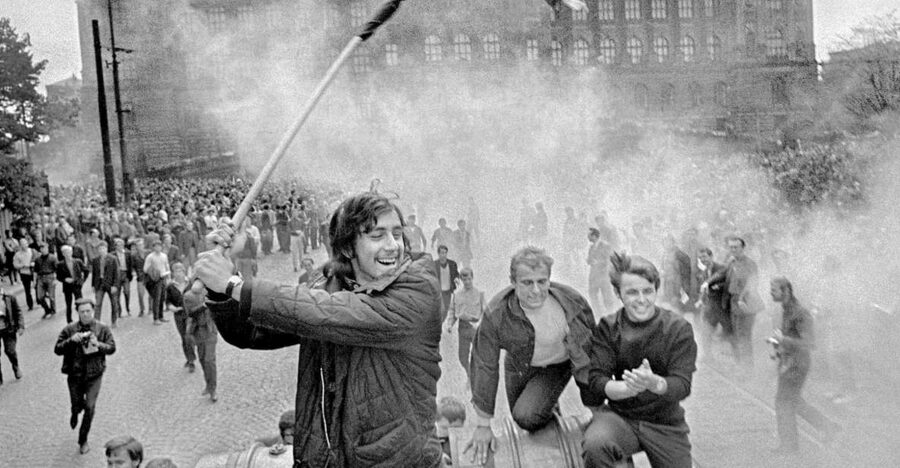
The word velvet can make the revolution sound gentle. The tour helps correct that impression. The change was peaceful compared with many revolutions, but the years of pressure behind it were not easy, and public courage still carried real risks.
Havel and the dissidents are presented as part of a wider movement rather than as distant political symbols. This is one reason the tour works well for first-time visitors. You do not need a detailed knowledge of Czech politics before you arrive. The guide builds the story in plain language and answers questions along the way.
By the end, Prague’s squares and streets have acquired another layer. The city is still beautiful, but you have also seen it as a place of occupation, surveillance, protest, artistic defiance, and sudden political change.
How the Walking Route Feels in Practice
The tour lasts 150 minutes, and that is enough time to cover a large amount of material without turning the experience into a full-day commitment. Still, it is a brisk history walk rather than a relaxed stroll.
You will move through several parts of central Prague, including the Old Town, the Jewish Quarter, Wenceslas Square, and the area around the Dancing House. One past group received a tram ticket to save time, which suggests that public transport may occasionally be used to connect sections of the route. Do not assume this is included every time, but be ready for more than a simple point-to-point walk.
The pace seems to work best in a small group. Several people described the groups as small enough to ask plenty of questions and, at times, almost like a private tour. Group size can change, so I would not book solely on the promise of an intimate experience.
Weather is worth taking seriously. A guide continued through pouring rain, while another led a group through freezing December conditions. The tour can operate in difficult weather, but your enjoyment will depend on a waterproof layer, warm clothing, and comfortable shoes.
Some groups finished later than the advertised time, so I would leave a little space afterward. That is not necessarily a problem, especially if the guide is answering questions, but it matters if you have a restaurant booking or another timed activity.
The Guides Make or Break the Experience
This tour’s subject matter is serious, but the guide’s delivery keeps it from becoming a dry lecture. The strongest guides use humor carefully, explain complicated politics in everyday language, and tell stories in a way that makes each location matter.
Adam was praised for energy, warmth, and a huge store of historical detail. Tony was repeatedly described as enthusiastic, patient, and good at answering questions. Zach was noted for his strong command of the subject and his ability to build suspense through the route.
Other guides have included Daren, Sean, Kevin, Analisa, Alissia, and Amanda. Analisa was especially praised for presenting the material as one connected story rather than as scattered facts. Amanda was remembered for combining personal anecdotes, energy, and humor even on a cold winter afternoon.
The guide roster can change, so you cannot guarantee a particular person. What you can reasonably expect is an English-speaking guide who focuses heavily on explanation and storytelling.
Is $34 a Fair Price?
At $34 per person, I consider this good value for Prague. You receive a live English-language guide and two and a half hours of focused interpretation across several major sites.
The price looks even better if you are comparing it with private tours. One past visitor specifically found it much cheaper than other options while still receiving a strong presentation and a full route.
The value is not mainly in admission tickets. The basic inclusion is the walking tour itself, and museum access or tram use may not be part of every departure. You are paying for the guide’s ability to connect places and events, which is exactly what gives the tour its purpose.
If you want a long list of interiors, monuments, and included entries, this may feel less generous. If you want a clear explanation of Prague’s modern political past, the price is reasonable.
Free cancellation up to 24 hours before departure and the option to reserve now and pay later also make it easier to fit into a changing schedule. These policies are useful, but the real buying decision is simple: do you want interpretation, or are you mainly looking for sightseeing?
Who Should Book This Tour?
I would choose this tour if you want to understand Prague beyond medieval architecture. It suits history fans, readers of European political history, and anyone interested in World War II resistance, Soviet influence, or the 1989 revolutions.
It is also a smart follow-up to a general Old Town or Castle tour. One past visitor used it as a supplement to broader sightseeing and a self-guided visit to the Jewish Quarter. That is the right way to think about it: this tour adds context rather than repeating the standard Prague highlights.
Families with older teenagers may enjoy it, especially if they are studying the Second World War or the Cold War. The material includes assassination, repression, persecution, and political violence, so it is not designed as a light family outing for young children.
You may want to skip it if you dislike long explanations or want frequent access to buildings. The guide does most of the work, and several stops are meaningful because of what happened there, not because of what remains visible today.
My Verdict: Book It for Context, Not Just Sights
I recommend the Prague World War II and Communist History Tour for anyone who wants the city’s recent past explained with clarity and feeling. Its best qualities are the connected timeline, the resistance story, the attention to ordinary life under dictatorship, and the guides’ ability to make serious history memorable.
Book it early in your Prague stay if possible. The tour can give later visits to Wenceslas Square, the Jewish Quarter, and the city center much more meaning.
Before you go, leave room in your schedule, wear good shoes, and consider watching a film about Operation Anthropoid afterward. One past participant followed the tour with Anthropoid and Munich, a useful way to keep the stories fresh.
At $34, this is a strong choice for an informed, story-led walk. Just know what you are buying: not a parade of grand interiors, but a thoughtful route through the places where Prague’s modern identity was tested.
FAQ
How long does the Prague World War II and Communist History Tour last?
The tour lasts 150 minutes, or two and a half hours.
What language is the tour conducted in?
The live tour is conducted in English.
Where does the tour meet?
The meeting point is Týnská 639/4, Staré Město, 110 00 Prague 1, Czechia.
How much does the tour cost?
The listed price is $34 per person.
Which parts of Prague does the tour visit?
The route includes important locations connected with the story, including the Municipal House, the Jewish Quarter, the Dancing House, and Wenceslas Square.
Does the tour cover Operation Anthropoid?
Yes. The tour explains the assassination of the Nazi head of the security services and the Czech resistance. The route has also included the church and crypt where resistance soldiers hid, as well as an Operation Anthropoid museum on some departures.
Does the tour cover the Velvet Revolution?
Yes. The tour discusses Václav Havel, Charta 77, the dissident movement, and the Velvet Revolution of 1989.
Is public transportation included?
A past group was given a tram ticket to save walking time, but the supplied information does not confirm that tram tickets are included on every departure.
Can I cancel the booking?
You can cancel up to 24 hours in advance for a full refund. The booking option also allows you to reserve now and pay later.
Just added around Prague
- Private Day trip from Prague to Kutná Hora★ 5.0 · 3 reviews
- PRAGUE AIRSOFT SHOOTING GAMES★ 4.7 · 3 reviews
- Private 4-hour City Tour of Prague with driver & official guide w/ Hotel pick up★ 5.0 · 3 reviews
- Glass blowing in Prague★ 4.6 · 3 reviews
- Prague to Karlovy Vary Private Transfer★ 4.5 · 3 reviews
- Disney’s Tarzan Musical★ 5.0 · 3 reviews
- Prague Private Tour★ 5.0 · 3 reviews
- Private Bohemian Glass and Czech Crystal Tour with lunch included★ 5.0 · 3 reviews
Communism & WWII History Tours, compared.

Communism History and Nuclear Bunker Guided Tour
Read our review →
Prague Communism History and Nuclear Bunker Tour
Read our review →
Communism & Nuclear Bunker Tour + 70s Canteen Lunch (own expense)
Read our review →
WWII Guided Tour & The Crypt of Operation Anthropoid
Read our review →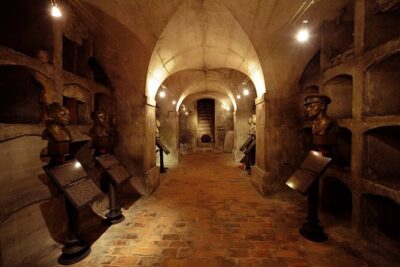
WWII in Prague Tour & The Crypt of Operation Anthropoid
Read our review →
Communism and Bunker Tour with 70s Canteen Lunch
Read our review →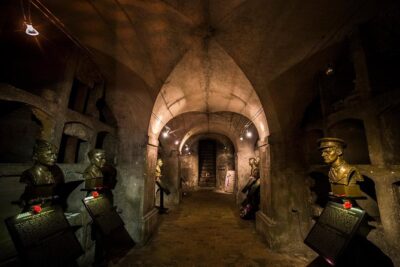
Small-Group World War 2 & Operation Anthropoid Tour in Prague
Read our review →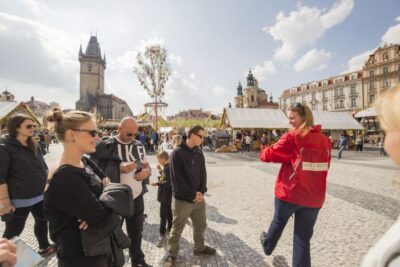
World War 2 and Operation Anthropoid Walking Tour
Read our review →Browse the lists this tour appears in