
REVIEW · COMMUNISM & WWII HISTORY TOURS
Prague Communism History and Nuclear Bunker Tour
The Cold War still echoes beneath Prague. This 2-hour-20-minute walking and bunker tour links key places from Czechoslovakia’s communist period with a visit to a nuclear shelter four floors underground. Along the way, you hear about the secret police, the 1968 Soviet invasion, Alexander Dubček, Václav Havel, and the Velvet Revolution of 1989.
I like the way the tour joins street-level history with an authentic bunker visit, rather than keeping the subject inside a standard museum. I also like that the strongest guides, including Pavel, Stan, Ladislav, Lada, and others identified by first name, bring personal memories of life under communism. The main drawback is that the quality depends heavily on the guide, and the bunker display itself can feel basic to visitors expecting a large, detailed Cold War museum.
The price is about $45.16 per person. That includes the English-speaking guide, bunker admission, transport to and from the bunker, a photo booklet, and a bunker survival guide. For a history-minded visitor, that is fair value if you want explanation and personal stories. If you mainly want an extensive collection of original objects, the bunker may feel less satisfying.
In This Review
- Key points to know before you book
- Starting at Malé Náměstí in the Old Town
- Secret police cells and Václav Havel
- Národní třída and the Velvet Revolution Memorial
- Wenceslas Square and the shock of August 1968
- Olšanské náměstí and socialist Prague
- The journey to the nuclear bunker
- Four floors below Prague in the nuclear bunker
- The guides can make or break the experience
- Is $45.16 a fair price?
- Who should book this Prague tour?
- Should you book the bunker tour?
- FAQ
- How long does the Prague Communism History and Nuclear Bunker Tour last?
- Where does the tour start?
- Where does the tour end?
- Is transport to the bunker included?
- Is bunker admission included?
- Is the tour conducted in English?
- Is the tour suitable for people with mobility issues?
- Can I cancel for a refund?
Key points to know before you book
- The bunker is four floors underground: Expect stairs, ramps, and a confined setting during the roughly one-hour museum visit.
- The tour begins in Prague’s Old Town: The ticket office is inside a passage at Malé Náměstí 459/11, about 20 meters to the right of Hotel U Prince.
- Personal stories are a major strength: Guides who lived through communism or left Czechoslovakia during the Cold War can make the subject feel immediate.
- The city walk covers major political moments: You connect the 1968 invasion, the Velvet Revolution, secret police activity, and the workers’ districts of socialist Prague.
- Transport takes part of the schedule: A tram or other included transport carries the group to the bunker, so the full timing can vary by 10 to 15 minutes.
- This is not a casual family stroll: It is unsuitable for young children under school age, people with mobility problems, and anyone with claustrophobia or serious heart concerns.
Starting at Malé Náměstí in the Old Town
The meeting point is easy to miss if you simply search for a large street-side office. Go to Malé Náměstí 459/11, find the passage about 20 meters to the right of Hotel U Prince, and enter the ticket office inside. The same location is used at the end, which makes the tour easy to fit into a day of sightseeing around Old Town Square.
Arrive early. Once the group leaves, joining later is not guaranteed. Online tickets can be booked up to 30 minutes before departure, but a last-minute booking still leaves little room for finding the passage and checking in.
The opening section sets the theme rather than functioning as a separate attraction. You begin with live commentary about Prague under communist rule, then move into the city to see places tied to political control and resistance. The tour is capped at 26 people, though smaller groups can make the experience more personal and make it easier to hear the guide in busy streets.
More communism and wartime history tours:
- Prague: Communism History and Nuclear Bunker Guided Tour
★ 4.7 · 2,417 reviews - Communism & Nuclear Bunker Tour + 70s Canteen Lunch (own expense)
★ 5.0 · 1,036 reviews - Prague: WWII Guided Tour & The Crypt of Operation Anthropoid
★ 4.7 · 1,030 reviews
Secret police cells and Václav Havel
One of the first meaningful stops is the former StB building. StB was the Czechoslovak secret police, and the holding cells connect the broad subject of state control to the treatment of real people.
The stop also includes the story of Václav Havel, the playwright, dissident, and later president. That personal focus helps keep the tour from becoming a list of dates. You are not only hearing that the state watched and detained opponents. You are being shown a place linked to that system and hearing how public figures such as Havel challenged it.
The scheduled stop is short, around 10 minutes. That is enough for a clear introduction, but not enough for a full visit to every aspect of the building. If you want a detailed study of the StB, this tour will give you an important reference point rather than a long indoor examination.
Národní třída and the Velvet Revolution Memorial
The walk continues to Národní třída, one of the central places for understanding the end of communist rule. Here the guide explains the events of 1989 and the Velvet Revolution, the peaceful movement that led to the collapse of the communist government in Czechoslovakia.
The nearby memorial marks the student demonstration and police crackdown that helped ignite the final phase of the revolution. This is one of the tour’s most useful moments because you are standing in an ordinary city setting while learning how quickly public protest and political change gathered force.
A good guide adds human scale here. Personal stories from someone who grew up during the period can explain what the political shift meant in daily life, not only what happened in government offices. Guides such as Stan and Lada have been praised for adding stories from their own experience, while Pavel has been singled out for making the history friendly and easy to follow.
The short timing also means you should listen closely. The tour does not linger for a long lecture at each site. It moves through several locations, building a connected account as you go.
Wenceslas Square and the shock of August 1968
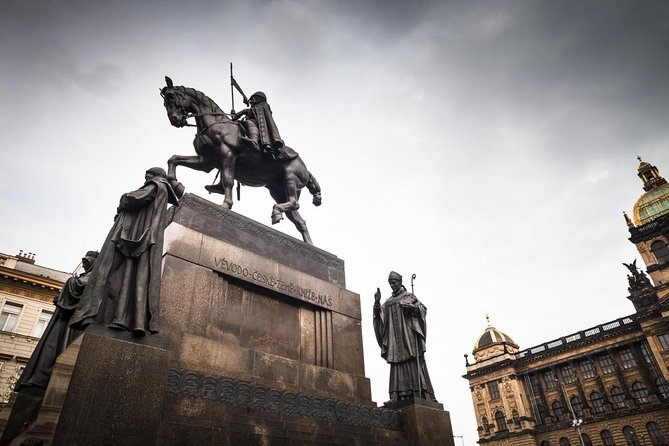
Wenceslas Square provides the setting for the Soviet-led invasion of August 1968 and the story of Alexander Dubček. The square is one of Prague’s main public spaces, so the historical weight is easy to miss if you see it only as a shopping and meeting area.
Your guide explains the hopes surrounding Dubček’s reform movement and the effect of the invasion on Czechoslovakia. This is a useful part of the tour for anyone who knows the Cold War only in broad outline. The discussion gives you a clearer sense of why 1968 remained such a painful memory and why later political events carried such force.
The stop lasts about 10 minutes. You will not receive a full lecture on the Prague Spring, but you should come away with the key political setting and a better understanding of how Soviet power shaped public life.
More history tours:
- Prague: Oldtown, Medieval Underground & Dungeon History Tour
★ 4.2 · 8,244 reviews - Prague Old Town, Medieval Underground and Dungeon Historical Tour
★ 4.5 · 3,227 reviews - Prague: Historic City Center Bus Tour with Top Sights
★ 4.4 · 2,360 reviews - Prague Historic Pub Tour with Drinks Included
★ 5.0 · 2,084 reviews
Olšanské náměstí and socialist Prague
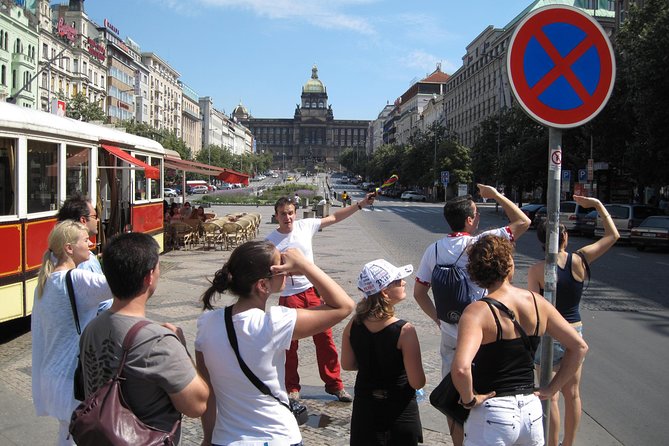
Olšanské náměstí shifts attention away from famous protests and political leaders. It lies in a former workers’ district, where socialist architecture and original buildings from the 1970s concrete era remain visible.
This stop matters because communist history is not only about police cells, invasions, and revolution. It also shaped housing, neighborhoods, public buildings, and the look of everyday Prague. The architecture gives you a physical reminder of the period’s planning and building style.
The visit is brief, so do not expect an architectural tour with detailed building-by-building analysis. Instead, use it as a visual pause. The older center of Prague can make the communist period feel like a small footnote. Olšanské náměstí shows you that it also left a mark on ordinary districts.
The journey to the nuclear bunker
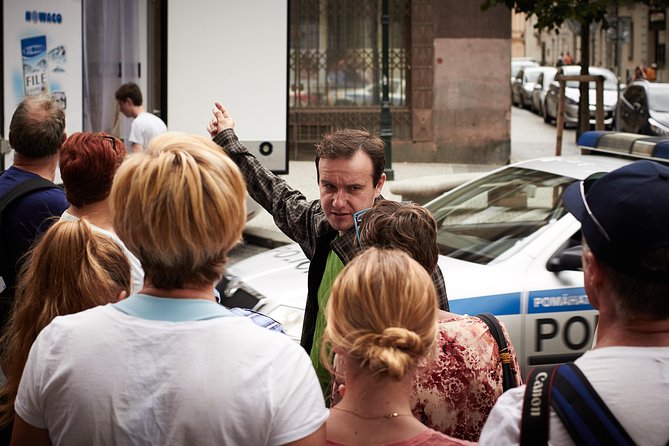
Transport to the bunker is included, and the trip may take a substantial part of the schedule. One account described close to 45 minutes of the advertised 2.5-hour experience being spent on a tram ride, so you should not think of every minute as a guided stop.
That journey is not automatically wasted time. The guide continues the conversation while the group moves through the city, and several people have enjoyed riding public transport as part of the experience. Still, if you want nonstop site visits, the transport time can feel long.
The tour description gives an approximate length of 2 hours and 20 minutes, with a possible variation of 10 to 15 minutes depending on group size. Plan a little flexibility afterward rather than scheduling a meal or timed attraction immediately after the return.
Four floors below Prague in the nuclear bunker
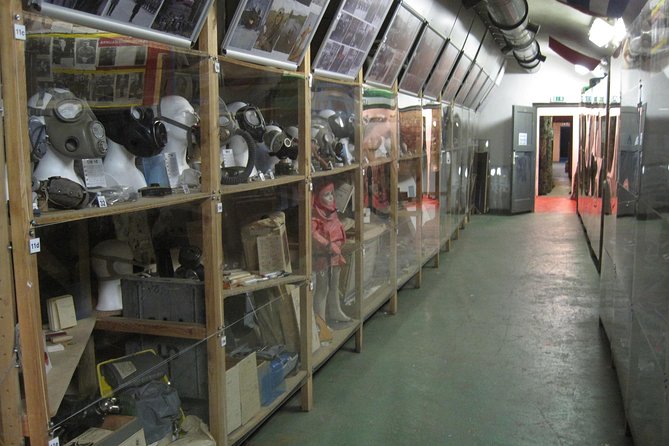
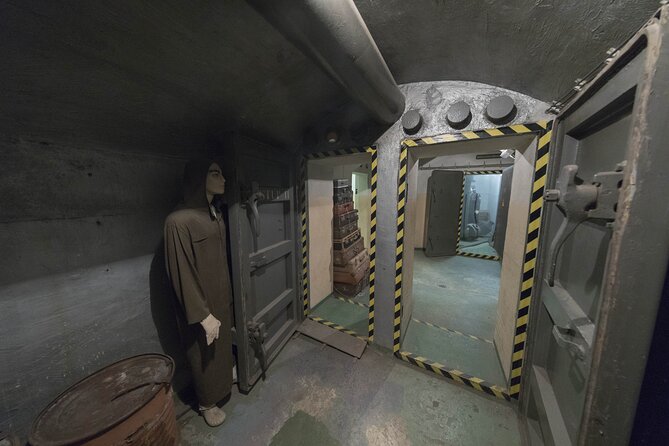
The bunker is the main event. You spend about an hour in the Prague Nuclear Bunker Communism and Cold War Museum, located four floors underground.
The setting provides the physical sensation that ordinary Cold War photographs cannot. You descend into a confined space built around the fear of nuclear conflict and political instability. The bunker survival guide and photo booklet add useful material to the visit, and photographs are allowed.
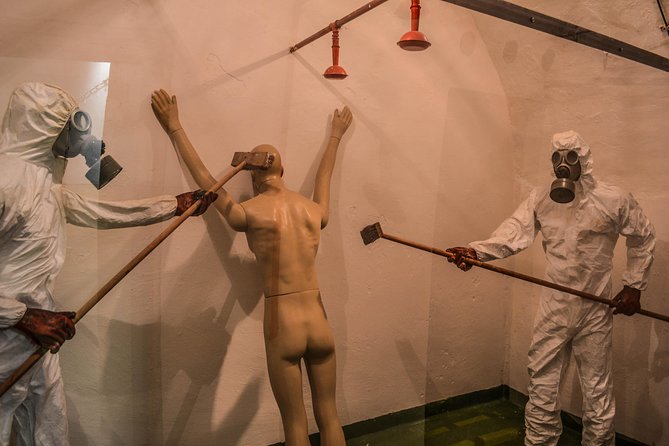
Expect a no-frills museum rather than a polished, large-scale institution. The displays include mannequins and 1980s memorabilia. Some objects may feel only loosely connected to Czechoslovakia or the specific story of Prague, and not every displayed item receives a full explanation.
That limitation is important. I would value the bunker most as a setting that helps you picture the period, especially after hearing about invasions, political repression, and civil unrest during the walk. I would value it less if I wanted a carefully cataloged collection with extensive labels and a long examination of daily life under communism.
There are many stairs and ramps. Comfortable shoes are a practical necessity, not a style suggestion. The confined rooms and underground route make this a poor choice for anyone with claustrophobia, serious heart problems, or difficulty walking.
The guides can make or break the experience
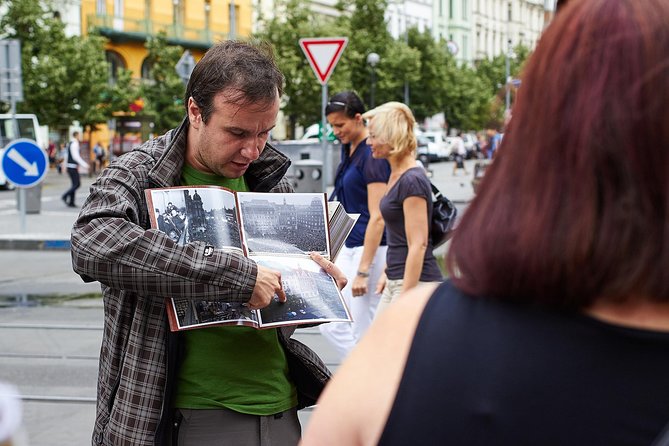
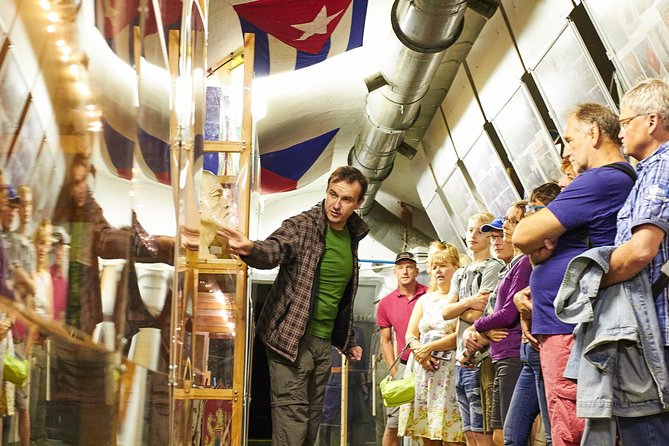
The most praised part of this tour is the guide. Several guides have received especially warm praise for their humor, energy, historical command, and personal experience.
Stan has been described as charismatic and passionate, adding memories of life under communism and comments on current events. Pavel has been praised for combining a friendly manner with strong knowledge of Czech history. Ladislav and Lada have also been appreciated for making the past feel personal and real.
This is where the tour can rise above a basic sightseeing walk. A guide who explains how political events affected ordinary people gives you something a museum label cannot. Stories from someone who grew up under the system, or who left Czechoslovakia during the Cold War, can make the subject more direct and emotionally serious.
The risk is uneven delivery. One guide may repeat points, spend too much time on side topics, or present communism only as a blunt story of oppression without enough explanation of how the system worked. Some visitors have also found the presentation too forceful or lacking in historical context.
You should book this experience knowing that the guide is central. If you get a warm, prepared storyteller, the tour can be memorable. If the delivery is unfocused, the short stops may feel rushed and the bunker may not provide enough detail to carry the experience alone.
Is $45.16 a fair price?
At about $45.16, this is not the cheapest way to learn about Prague’s recent past. The price includes the live English guide, transport, bunker entry, and two printed items, so you are paying for a guided experience rather than admission alone.
I see the best value for you if you want someone to connect several locations into one story. The former secret police building, Národní třída, Wenceslas Square, Olšanské náměstí, and the bunker mean more when the political links are explained as you move through Prague.
The value is weaker if you prefer to set your own pace or already know the basics of Czechoslovak history. The short stops limit how much detail can be given, and the bunker collection may seem modest for the price. This is a story-led tour, not a major museum visit.
A smaller group can improve the value considerably. It is easier to ask questions, hear personal stories, and manage the bunker stairs when the group is not crowded. The maximum is 26 people, so you should not assume every departure will feel intimate.
Who should book this Prague tour?
I would recommend it to adults and older students who want a clear introduction to Prague’s communist period and the Cold War. It also suits people who enjoy political history but do not want to spend an entire day inside a museum.
The tour is particularly useful early in your Prague visit. Once you understand the 1968 invasion, the Velvet Revolution, and the meaning of the secret police sites, later walks through the city can carry more context.
I would be cautious if you have limited walking ability, dislike stairs, or feel uneasy in enclosed spaces. The tour is also not suitable for the smallest children under school age, and high pregnancy or serious heart concerns are listed as reasons to avoid it.
You must speak the selected tour language for safety. Translation during the tour is not allowed, and disruptive behavior, alcohol, drugs, smoking, pets, costumed groups, and bachelor parties are not permitted. These rules help keep a serious subject from turning into a noisy group outing.
Should you book the bunker tour?
Book it if you want personal storytelling, political history, and an unusual underground setting in one outing. The best guides can turn a short city walk into a meaningful look at how communism affected real people, while the bunker gives the lesson a strong physical setting.
Skip it if your priority is a large collection, detailed object labels, or a slow study of Czechoslovakia’s political history. You should also skip it if stairs, ramps, transport time, or enclosed rooms will make the day uncomfortable.
For most history-minded visitors, I think the experience is worth considering, with one clear warning: the guide matters enormously. Book with flexible expectations, wear good shoes, arrive early at the Malé Náměstí passage, and treat the bunker as the final setting for the story rather than the entire reason to go.
FAQ
How long does the Prague Communism History and Nuclear Bunker Tour last?
The approximate duration is 2 hours and 20 minutes. The timing can vary by 10 to 15 minutes depending on the group size.
Where does the tour start?
It starts at the ticket office inside the passage at Malé Náměstí 459/11 in Prague. The passage is about 20 meters to the right of Hotel U Prince.
Where does the tour end?
The tour ends at Malé Náměstí 459/11, the same address used for the starting point.
Is transport to the bunker included?
Yes. Transport to and from the nuclear bunker is included in the experience.
Is bunker admission included?
Yes. Admission to the Prague Nuclear Bunker Communism and Cold War Museum is included.
Is the tour conducted in English?
An English live guide is included when English is the selected language. You are required to speak the chosen tour language for safety.
Is the tour suitable for people with mobility issues?
No. The activity is not possible for people with walking disabilities or mobility issues. The bunker also includes many stairs and ramps.
Can I cancel for a refund?
You can receive a full refund if you cancel at least 24 hours before the experience starts. Cancellations or changes made within 24 hours are not refunded or accepted.
Just added around Prague
- Private Day trip from Prague to Kutná Hora★ 5.0 · 3 reviews
- PRAGUE AIRSOFT SHOOTING GAMES★ 4.7 · 3 reviews
- Private 4-hour City Tour of Prague with driver & official guide w/ Hotel pick up★ 5.0 · 3 reviews
- Glass blowing in Prague★ 4.6 · 3 reviews
- Prague to Karlovy Vary Private Transfer★ 4.5 · 3 reviews
- Disney’s Tarzan Musical★ 5.0 · 3 reviews
- Prague Private Tour★ 5.0 · 3 reviews
- Private Bohemian Glass and Czech Crystal Tour with lunch included★ 5.0 · 3 reviews
Communism & WWII History Tours, compared.

Communism History and Nuclear Bunker Guided Tour
Read our review →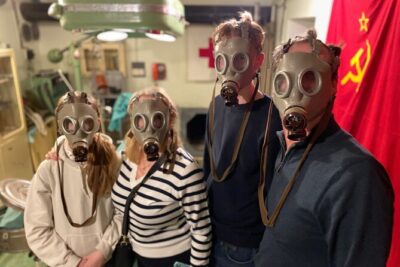
Communism & Nuclear Bunker Tour + 70s Canteen Lunch (own expense)
Read our review →
WWII Guided Tour & The Crypt of Operation Anthropoid
Read our review →
WWII in Prague Tour & The Crypt of Operation Anthropoid
Read our review →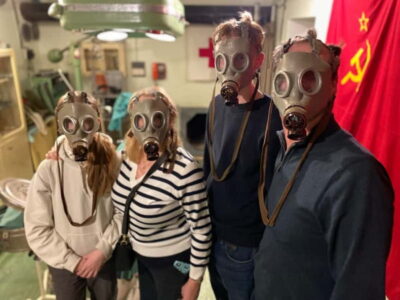
Communism and Bunker Tour with 70s Canteen Lunch
Read our review →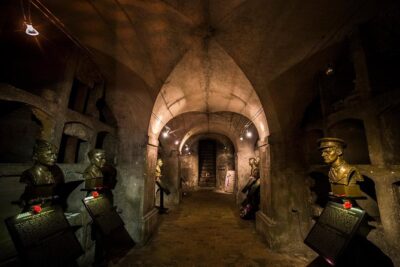
Small-Group World War 2 & Operation Anthropoid Tour in Prague
Read our review →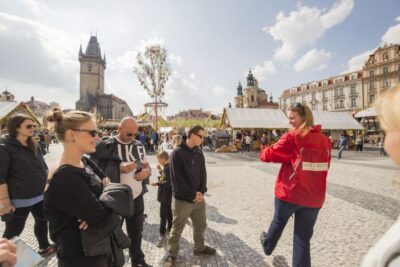
World War 2 and Operation Anthropoid Walking Tour
Read our review →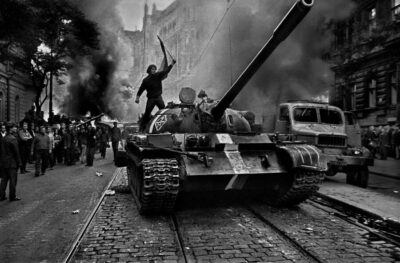
Browse the lists this tour appears in