
REVIEW · COMMUNISM & WWII HISTORY TOURS
World War 2 and Communism Tour
History can change how Prague looks.
This 2.5-hour walking tour connects World War II resistance with the rise and fall of communism, using central Prague as its classroom. I like the unusual route, which reaches places you might otherwise pass by, and I like that public transport is included between sights. The $34.84 price also feels fair for a guided history lesson with cathedral admission.
The main caution is its subject matter. This is not a light sightseeing stroll. Some stops deal with violence, political repression, and the final days of resistance, so you should book it because you want serious historical context, not just pretty streets and photographs.
In This Review
- Key points to know before you book
- Why this Prague history tour is worth your afternoon
- Starting at Týnská 639/4 in the Old Town
- Reading the Old Town Square beyond the postcard view
- Entering St Cyril and Methodius Cathedral
- Moving between sights by public transport
- From wartime Prague to communist rule
- Finishing where the Velvet Revolution happened
- What the $34.84 price really buys you
- Guide style can shape the whole experience
- Who should book, and who should skip it
- Should you book the World War II and Communism Tour?
- FAQ
- How long is the World War II and Communism Tour?
- What time does the tour begin?
- Where does the tour begin?
- Where does the tour end?
- Is the tour offered in English?
- Is public transportation included?
- Is admission to St Cyril and Methodius Cathedral included?
- Are food and drinks included?
- How many people can join the tour?
Key points to know before you book
- The St Cyril and St Methodius crypt is the emotional center: You enter the cathedral and spend time in the crypt connected with wartime resistance.
- The route reaches beyond postcard Prague: The tour adds political and military context to places you may not find on a standard city walk.
- Public transport is included: Transfers between sights are covered, which keeps the 2.5-hour schedule practical.
- The guides are the strongest part: Adam, Phil, Zach, Tony, and Analise are praised for clear explanations, good answers, and a human touch.
- The tour finishes with the Velvet Revolution: You end by examining the place linked with one of the key moments in modern Czech political change.
- It suits history-minded visitors best: The pace and subject call for moderate physical fitness and a real interest in twentieth-century Europe.
Why this Prague history tour is worth your afternoon
Prague is often sold through medieval lanes, grand churches, and castle views. Those sights are worthwhile, but they can leave out the city’s more difficult twentieth century. This tour shifts the focus to occupation, resistance, political power, and the struggle to regain freedom.
I like that the experience treats Prague as more than a collection of monuments. The streets become evidence of changing authority. A square can carry one meaning during wartime, another under communism, and another after the Velvet Revolution.
The tour is offered in English and begins at 2:30 pm. That timing works well if you want a relaxed morning for Prague Castle or a museum, then a serious afternoon walk. At roughly two and a half hours, it is long enough to build a useful story without taking over your entire day.
The group can include up to 30 people. That is not a tiny private walk, so your experience may depend on where you stand and how clearly you can hear. Still, a maximum of 30 is manageable for an urban tour if the guide keeps the group together and explains the stops well.
More communism and wartime history tours:
- Prague: Communism History and Nuclear Bunker Guided Tour
★ 4.7 · 2,417 reviews - Prague Communism History and Nuclear Bunker Tour
★ 5.0 · 1,742 reviews - Communism & Nuclear Bunker Tour + 70s Canteen Lunch (own expense)
★ 5.0 · 1,036 reviews
Starting at Týnská 639/4 in the Old Town
You meet at Discover Prague Tours, at Týnská 639/4 in Staré Město, Prague 1. The first 15 minutes are set aside to meet the guide and get organized. Use this time to arrive early, check the exact meeting point, and make sure you have comfortable shoes.
The starting area places you near Prague’s Old Town, an effective launch point for a tour about political change. You begin in one of the city’s most familiar settings, then look at it through the less familiar lens of twentieth-century events.
This opening is also when you can judge the group pace and ask any immediate questions. Guides such as Adam, Phil, Zach, Tony, and Analise have received especially warm praise for making complicated subjects understandable. Adam is repeatedly singled out for combining seriousness with humor when the topic allows it. Phil is praised for handling questions well, while Zach is noted for explaining not only what happened, but why people acted as they did.
Those details matter. Political history can become a string of names and dates. A guide who explains motives, public reaction, and consequences gives you something more useful: a way to understand the choices behind the events.
Reading the Old Town Square beyond the postcard view
The tour includes a walk through the Old Town Square. The supplied plan does not list every building or stop along this section, so you should not expect a fixed catalogue of monuments. Instead, the square functions as a setting for the wider story of Prague’s political evolution.
I find this approach useful because familiar places often carry more historical weight than first appears. You may already know the square as a place for photographs, cafés, and elaborate façades. On this walk, you get a chance to connect that public space with the conflicts and demonstrations that shaped modern Czech life.
The guide’s role is important here. A good explanation can turn a general walk into a lesson about how power is displayed in a city. The strongest feedback about this experience focuses on guides who connect facts with local perspectives and family experience. That personal angle can make the material easier to grasp, while still leaving room for questions.
Do not expect every moment to be solemn. The tour feedback points to a careful balance between gravity and humor. That is welcome on a subject this heavy, provided you remain prepared for sudden shifts in mood.
Entering St Cyril and Methodius Cathedral
The tour includes admission to St Cyril and St Methodius Cathedral, with about 20 minutes inside the crypt. This is the clearest physical link to the wartime resistance portion of the experience.
The crypt is described as the place where assassins hid, and it is widely regarded by participants as the most moving stop. The visit is not simply a quick look inside a church. You are given time to understand the setting and its connection to the desperate final phase of resistance.
A useful practical detail is that you may be asked to move through the museum independently. That does not mean the guide has abandoned the group. It reflects how the cathedral visit is organized, allowing you to view the material at your own pace before continuing.
I would give this stop your full attention. It is the point where the broad subject of World War II becomes immediate and personal. You may find the crypt more affecting than the outdoor portions because the space itself carries the memory of people making extreme choices under pressure.
The visit also shows why this tour works better for history enthusiasts than for casual sightseeing. You are not just checking off a church. You are being asked to pause, think, and absorb a painful episode.
A completely different kind of day out in Prague:
- Prague: 50-Minute Sightseeing Evening Cruise
★ 4.2 · 33,780 reviews - Prague: Medieval Dinner with Unlimited Drinks
★ 4.4 · 19,847 reviews - Prague: Castle Tour with Local Guide and Entry Ticket
★ 4.6 · 10,422 reviews - Prague Castle 2.5-Hour Tour Including Admission Ticket
★ 4.7 · 8,927 reviews
Moving between sights by public transport
Public transportation is included in the tour price. That is a small feature, but it adds real value. Prague’s sights are not all arranged along one easy walking line, and transfers can cost both time and money when you are on your own.
Included transport also lets the guide build a broader story without forcing the entire group into a long march. You should still expect a moderate level of physical activity. The operator advises that participants have moderate physical fitness, and comfortable footwear remains sensible.
Because the tour lasts about 150 minutes, transport helps protect the schedule. You spend less effort working out routes and more time listening. It also makes the experience easier for visitors who want historical depth but do not want a full-day walking marathon.
The exact transport details are not specified, so you should not assume every transfer will be seated or that the whole route is indoors. Prague weather can change quickly, and much of the experience involves moving through public areas. Bring clothing suitable for the forecast.
From wartime Prague to communist rule
The tour is not limited to World War II. Its second major theme is communism and the political development of what is now the Czech Republic.
That combination is one of its best features. The two subjects are connected, but they are not the same story. A good guide needs to explain the transition from wartime occupation to postwar political control, then show how communist rule affected public life and political choice.
The strongest guide feedback describes explanations that make clear what happened, who acted, and why. That is exactly the help you need when a subject contains several competing forces and changing loyalties.
You may especially value the local perspective. Adam has been praised for connecting Prague’s history with his own and his family’s experience. That sort of reference can add texture that a standard textbook account lacks, though you should remember that guides may differ in emphasis and style.
The tour can also help correct a common travel mistake: treating the communist period as a distant footnote. In Prague, it is part of the recent past. The people who lived through it are not separated from the present by many centuries, and the political changes still shape how the city is understood.
Finishing where the Velvet Revolution happened
The experience finishes on a square associated with the Velvet Revolution. This gives the tour a clear closing point, moving from wartime crisis and communist rule to the peaceful political change that followed.
The ending is useful because it prevents the tour from becoming trapped in tragedy. You see that Prague’s twentieth-century story includes resistance and repression, but also public action and political transformation.
The provided details say the activity ends back at the meeting point, while the final sightseeing portion takes place on the square connected with the Velvet Revolution. Confirm the precise finishing arrangement with the guide on the day, especially if you have a dinner reservation immediately afterward.
Allow a little extra time after the official end. A subject like this often produces questions, and the best guides invite discussion. Tony, Analise, Adam, Phil, and Zach are all praised for answering questions and linking past events with Prague today.
What the $34.84 price really buys you
At $34.84 per person, this is priced above a basic free walk, but it offers more than a general introduction to Prague. Your fee covers the guide, public transportation, and entrance to St Cyril and Methodius Cathedral.
The value depends on your interests. If you mainly want architecture, photographs, or a quick orientation to the city, you can spend your afternoon elsewhere. If you want to understand why Prague’s recent past matters, the cost is reasonable for a focused English-language lesson with a significant memorial stop.
The public transport inclusion helps. You do not need to budget separately for the transfers included in the experience. Food, drinks, and lunch are not included, but the tour length makes that easy to handle. Eat before the 2:30 pm start or plan a meal afterward.
The operator has earned a 4.6 rating from 43 reviews, with 91 percent of participants recommending it. Those figures suggest a dependable experience, but they do not remove the normal risk of guide variation or cancellation if the minimum number is not reached.
Guide style can shape the whole experience
The guide is the key variable. History tours succeed when the person leading them can simplify complex events without flattening them.
The praise for this experience is unusually consistent on that point. Adam is described as informed, pleasant, humorous at the right moments, and able to connect with the group. Phil is praised for his command of the subject and his willingness to answer questions. Zach is noted for explaining the reasons behind events, not just the dates. Tony receives credit for an engaging presentation and useful links to Prague today. Analise is praised for a friendly and eye-opening account.
That does not mean every guide will deliver the exact same tour. It does mean Discover Prague Tours appears to place serious weight on guide quality. If you enjoy asking questions, this is likely to be more rewarding than a scripted audio walk.
The tour is also a good choice for students or family members with a shared interest in modern European history. One participant described booking it as an extracurricular activity during a school trip and found it especially worthwhile. That makes sense: the experience turns a complicated classroom subject into places you can actually see.
Who should book, and who should skip it
I would choose this tour if you have already seen Prague’s major landmarks and want a stronger sense of the city’s modern identity. It is also a good first-day option for anyone who wants historical context before exploring more independently.
History enthusiasts will get the most from it, especially if you are interested in World War II, resistance movements, communism, or the political changes of 1989. The experience also suits people who prefer local explanation to self-guided reading.
You may want to skip it if you want a relaxed, purely scenic walk. The subject is serious, the crypt can be moving, and the tour asks you to pay attention for two and a half hours. It is not designed around shopping, food, or classic sightseeing highlights.
Moderate fitness is enough, but plan for walking and public transport. A group of up to 30 can feel less personal than a small private tour, and the exact style will depend on your guide.
Free cancellation is available if you cancel at least 24 hours before the start time. Changes or cancellations inside that window are not refundable, and the operator may offer another date or a full refund if the minimum number is not met.
Should you book the World War II and Communism Tour?
Book it if you want Prague to make more sense, not just look beautiful. The combination of offbeat historical stops, the St Cyril and Methodius crypt, included transport, and a final look at the Velvet Revolution gives the afternoon a clear purpose.
I would especially recommend it to serious history fans, students, and repeat visitors. At $34.84, it offers solid value if you want a thoughtful English-language tour led by a guide who can explain causes, choices, and consequences. Skip it only if your ideal Prague afternoon is light, scenic, and free of difficult subjects.
FAQ
How long is the World War II and Communism Tour?
The tour lasts approximately 2 hours and 30 minutes.
What time does the tour begin?
The scheduled start time is 2:30 pm.
Where does the tour begin?
You meet at Discover Prague Tours, Týnská 639/4, Staré Město, 110 00 Prague 1, Czech Republic.
Where does the tour end?
The activity ends back at the meeting point, with the final portion taking place on a square associated with the Velvet Revolution.
Is the tour offered in English?
Yes. The experience is offered in English.
Is public transportation included?
Yes. Public transportation between the tour’s sights is included in the price.
Is admission to St Cyril and Methodius Cathedral included?
Yes. The entrance ticket to St Cyril and Methodius Cathedral is included.
Are food and drinks included?
No. Food, drinks, and lunch are not included.
How many people can join the tour?
The tour has a maximum group size of 30 people.
Just added around Prague
- Private Day trip from Prague to Kutná Hora★ 5.0 · 3 reviews
- PRAGUE AIRSOFT SHOOTING GAMES★ 4.7 · 3 reviews
- Private 4-hour City Tour of Prague with driver & official guide w/ Hotel pick up★ 5.0 · 3 reviews
- Glass blowing in Prague★ 4.6 · 3 reviews
- Prague to Karlovy Vary Private Transfer★ 4.5 · 3 reviews
- Disney’s Tarzan Musical★ 5.0 · 3 reviews
- Prague Private Tour★ 5.0 · 3 reviews
- Private Bohemian Glass and Czech Crystal Tour with lunch included★ 5.0 · 3 reviews
Communism & WWII History Tours, compared.

Communism History and Nuclear Bunker Guided Tour
Read our review →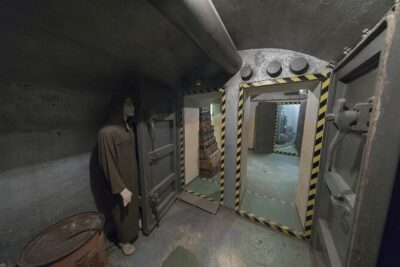
Prague Communism History and Nuclear Bunker Tour
Read our review →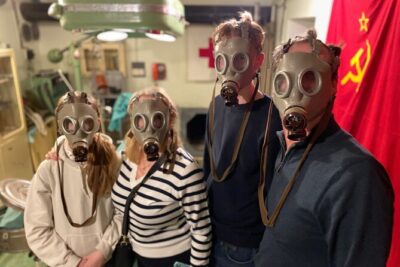
Communism & Nuclear Bunker Tour + 70s Canteen Lunch (own expense)
Read our review →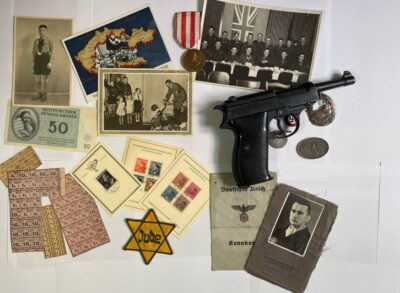
WWII Guided Tour & The Crypt of Operation Anthropoid
Read our review →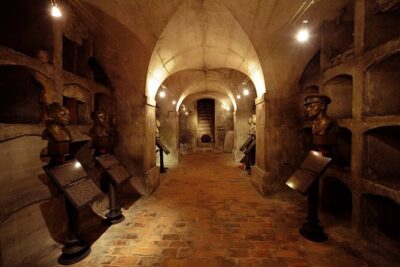
WWII in Prague Tour & The Crypt of Operation Anthropoid
Read our review →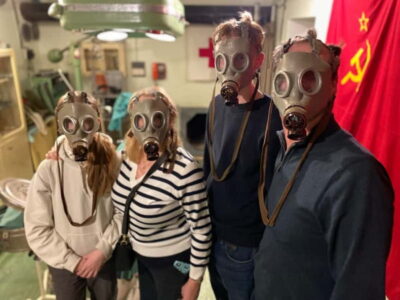
Communism and Bunker Tour with 70s Canteen Lunch
Read our review →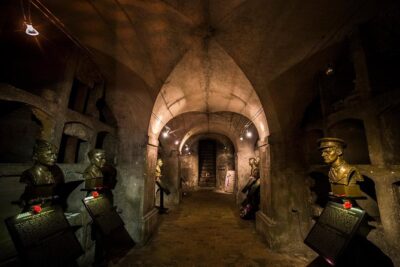
Small-Group World War 2 & Operation Anthropoid Tour in Prague
Read our review →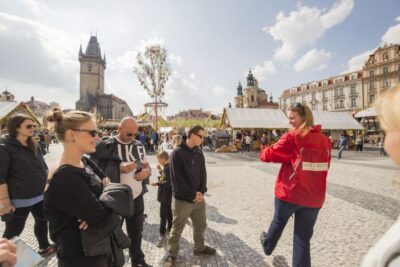
World War 2 and Operation Anthropoid Walking Tour
Read our review →Browse the lists this tour appears in