
REVIEW · COMMUNISM & WWII HISTORY TOURS
Second World War & Communism (Tip-based 3 hour tour)
Prague’s streets carry a difficult twentieth century. This three-hour walking tour links Nazi occupation, the fate of Czech Jews, the Prague Uprising, Soviet control, and the Velvet Revolution in a way that makes the city’s recent past easier to follow. I like the clear route through central Prague, and I especially like that the tour ends inside the crypt connected with Operation Anthropoid. The tip-based price also gives you a low-cost way to explore serious history with a live English-speaking guide.
The main caution is the amount of walking. The route covers about 5 kilometers, and one report described a group of 24 people despite an expectation of no more than eight. I would confirm the expected group size before booking, especially if you want close contact with the guide or have mobility concerns.
In This Review
- Key points to know before you book
- Why this Prague history walk works
- Klárov: independence, resistance, and occupation
- Pinkas Synagogue and the fate of Czech Jews
- Old Town Square and the Prague Uprising
- Wenceslas Square: Communist rule, 1968, and Jan Palach
- Art under Communism at OC Quadrio
- Národní třída and the Velvet Revolution
- The National Theatre and Václav Havel
- Dancing House and the Valentine’s Day bombing
- St. Cyril and St. Methodius Cathedral: the powerful final stop
- Price, tips, walking, and group size
- Who should take this tour?
- Should you book the Second World War and Communism tour?
- FAQ
- How long does the Second World War and Communism tour last?
- What language is the tour offered in?
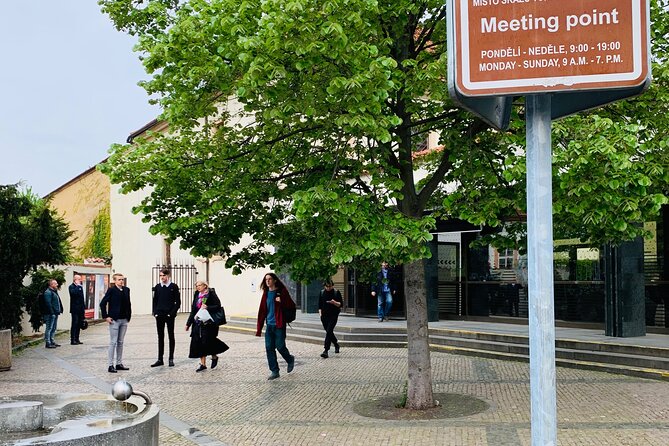
- Where does the tour start?
- Where does the tour end?
- Is museum admission included?
- How much walking is involved?
- Is the tour private?
- Can I cancel for a full refund?
Key points to know before you book
- Operation Anthropoid ends the tour: You enter the war memorial in the crypt where resistance soldiers hid after the assassination of Reinhard Heydrich.
- Nine stops cover a large time span: The route moves from the First World War and Nazi occupation through Communism, 1968, Jan Palach, and the Velvet Revolution.
- The tour is tip-based: The listed price is about $3.60 per person, but the voluntary payment model means you should budget for a tip that reflects the guide’s work.
- Guides shape the experience: Kamil, Vaclav, Katerina, Katarina, Vaclov, and Kuba have been praised for clear storytelling, personal insight, and strong command of the subject.
- Expect a serious walking tour: The route lasts about three hours and requires moderate physical fitness.
- The ending is central and convenient: The crypt is about a minute from the Dancing House or Charles Square, making it easy to continue sightseeing afterward.
Why this Prague history walk works
Prague’s famous sights often focus on medieval kings, Baroque churches, and the castle. This tour gives you another way to read the city. It shows how ordinary streets and major squares were shaped by occupation, dictatorship, protest, and political change during the last century.
I like the chronological structure. The tour begins with the political birth of Czechoslovakia, moves into the Second World War, then follows the country through Communist rule and the 1989 revolution. That order matters because each period explains the next. You are not simply stopping at unrelated monuments and collecting facts.
The format also suits you if you want a strong introduction rather than a specialist seminar. Guides explain why Czechoslovakia became one of the first countries occupied by Hitler, what happened to Czech soldiers during the war, and how the end of the war helped create conditions for Communism. The best guides appear to make the material easy to follow without stripping away the human cost.
Past participants have singled out Kamil for his command of the subject and personal passion. Vaclav has been praised for presenting events in a clear, linear way while building suspense around each story. Katerina and Katarina have also been noted for making the period from the Second World War to the present both accessible and engaging. Guide quality can vary from departure to departure, but the strong feedback gives this tour a solid reputation.
More communism and wartime history tours:
- Prague: Communism History and Nuclear Bunker Guided Tour
★ 4.7 · 2,417 reviews - Prague Communism History and Nuclear Bunker Tour
★ 5.0 · 1,742 reviews - Communism & Nuclear Bunker Tour + 70s Canteen Lunch (own expense)
★ 5.0 · 1,036 reviews
Klárov: independence, resistance, and occupation
The tour begins at Metrocafe Klárov in Malá Strana. At Klárov, you see the Memorial to the Second Resistance and the Winged Lion Memorial, two useful starting points for understanding the country’s wartime story.
The guide first steps back before the Second World War. You learn how Czechoslovakia gained independence after the First World War, why Hitler occupied it so early, and what happened to Czechoslovak soldiers during the war. This opening gives you political context before the tour turns to persecution and resistance.
The stop lasts about 20 minutes and has no separate admission fee. I like this beginning because it avoids treating the Nazi occupation as an isolated event. The guide places it within the country’s earlier independence and the political pressures that made the occupation possible.
Pinkas Synagogue and the fate of Czech Jews
At Pinkas Synagogue, the subject becomes more personal. The guide explains what happened to Czech Jewish communities, how many people managed to emigrate, and what happened to those who remained.
The stop is scheduled for about 15 minutes. You should not expect a long museum visit here, but the location gives the discussion a solemn setting. The tour treats Jewish persecution as a central part of the Czech wartime story rather than a brief side note.
This section may be difficult, particularly because it deals with the choices people faced under growing persecution. The guide’s job is to give you a framework for understanding those choices without reducing them to simple numbers. If you want extensive time inside Prague’s Jewish Museum sites, you will need a separate visit. This tour offers a concise introduction, not a full museum tour.
Old Town Square and the Prague Uprising
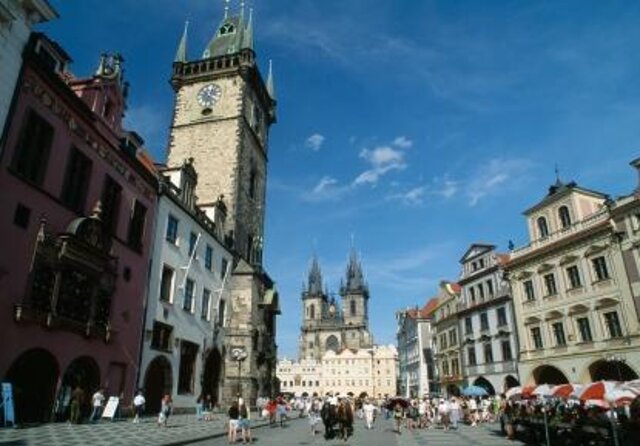
At Staroměstské náměstí, beside the Old Town Hall, the focus shifts to the Prague Uprising and the final stage of the Second World War. The guide explains what happened in Prague as the war ended and why liberation did not lead to a straightforward return to democracy.
This is one of the most useful links in the route. You hear how the end of Nazi rule helped set the stage for the rise of Communism in Czechoslovakia. The large square also makes the events easier to picture because it is one of the city’s main civic spaces.
The stop lasts about 20 minutes. Since the tour takes place outdoors, listen carefully for the guide in a busy public area. A larger group can make that harder, which is another reason to check the expected group size before you arrive.
A few more trips of this kind worth comparing:
- Prague: 3-Hour Walking Tour of Old Town & Prague Castle
★ 4.7 · 5,696 reviews - Prague: 3-Hour Old Town and Prague Castle Tour in German
★ 4.8 · 5,671 reviews - 3-hour Complete Prague Bike Tour
★ 5.0 · 3,674 reviews - Prague 3-hour Afternoon Walking Tour including Prague Castle
★ 5.0 · 1,899 reviews
Wenceslas Square: Communist rule, 1968, and Jan Palach
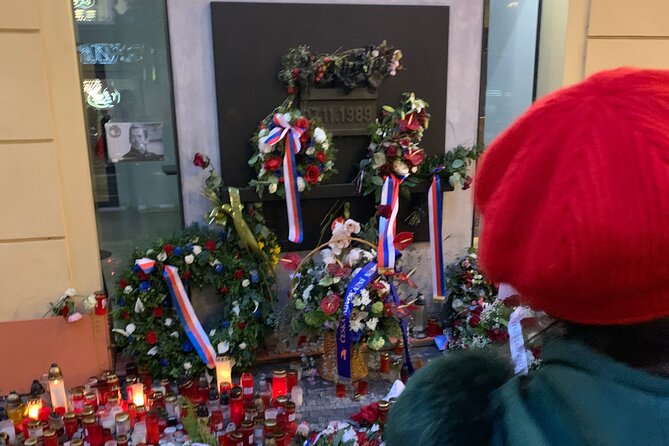
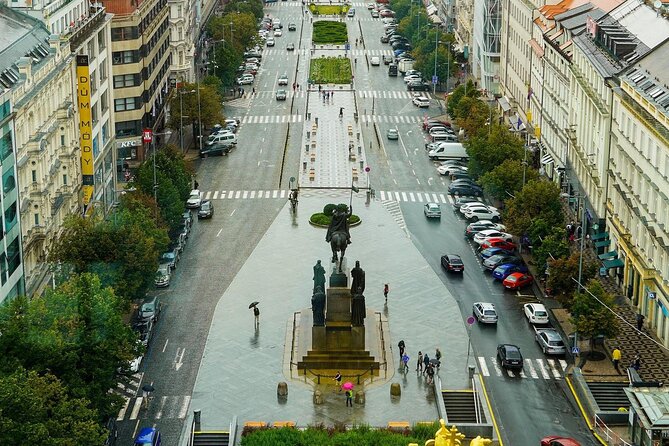
Wenceslas Square brings the story into the Communist period. Here you learn what changed after Communism began, why Warsaw Pact armies invaded Czechoslovakia in 1968, and where Jan Palach carried out his self-immolation.
The square is an effective place for this part of the tour. It has long served as a setting for public gatherings and political demonstrations, so the guide can connect national events with a real civic space. The 1968 invasion and Palach’s protest show the limits placed on reform and the personal risks some people accepted in opposition.
This stop also helps prevent a common mistake: treating Communist rule as one unchanging block of time. The tour introduces the shifts within that period, including the hope for change in 1968 and the response that followed.
You spend about 20 minutes here. Expect a serious discussion rather than a sightseeing pause. You will have time to look around, but the purpose is to understand the events associated with the square.
Art under Communism at OC Quadrio
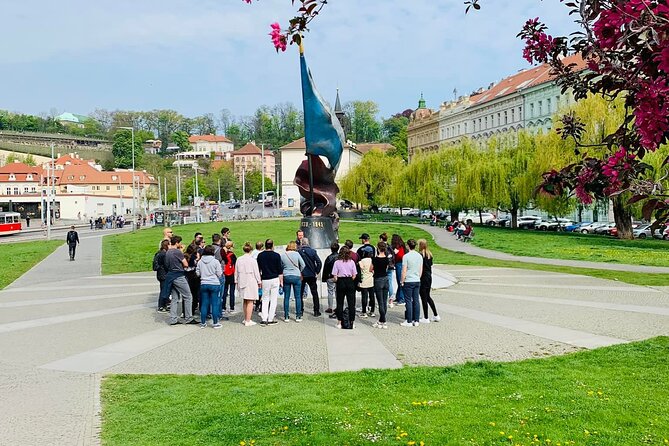
At OC Quadrio, the tour takes a shorter stop of about 15 minutes to look at David Černý’s Rotating Head of Kafka. The guide uses the sculpture to discuss art during Communism.
This is a smart change of pace. Political history can become a long sequence of governments, invasions, and dates. Looking at art lets you consider how people expressed ideas, irony, and dissent under a restrictive system.
The sculpture is also a practical landmark. You do not need a separate entry ticket, and the stop adds a visual element to a tour that otherwise relies heavily on spoken explanation. If modern art is not your interest, the larger point still matters: creative work can reveal attitudes toward authority in ways official documents cannot.
Národní třída and the Velvet Revolution
At Národní třída, near the hands reaching from the wall, the subject turns to the Velvet Revolution and the fall of Communism. The guide explains how the movement brought political change and why this moment remains so important in the Czech national story.
This stop lasts about 15 minutes. It works well after the discussion of 1968 because you can see the long gap between an unsuccessful attempt at reform and the later collapse of Communist rule.
The wall sculpture gives you a tangible place to remember the events. You are not simply hearing that Communism ended in 1989. You are standing in an area connected with public resistance and change. The tour then continues to the National Theatre, where Václav Havel becomes the focus.
The National Theatre and Václav Havel
The National Theatre stop lasts about 10 minutes. Here the guide introduces Václav Havel, a leading figure in the Velvet Revolution and the first president of Czechoslovakia after the fall of Communism.
The stop is brief, but it gives a human face to the political transition. Havel was not presented only as a president. The guide explains his role during the revolution and places him within the wider movement that challenged Communist power.
This part should appeal to you if you want the tour to continue beyond 1945 and 1968. Some war-focused walks end once the fighting is over. This one follows the consequences through the late twentieth century and into the country’s new political direction.
Dancing House and the Valentine’s Day bombing
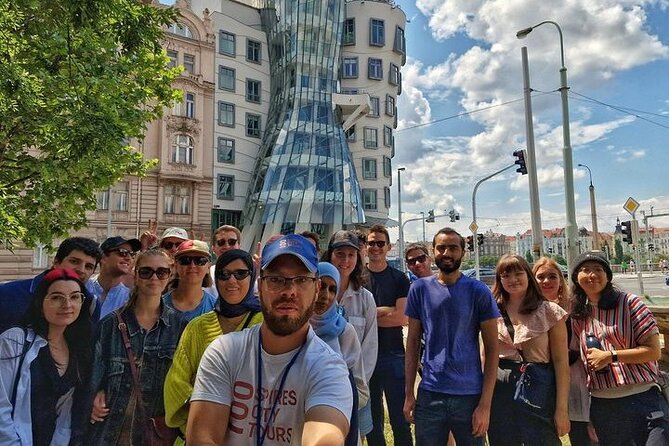
The tour then reaches the Dancing House for about 10 minutes. The guide shows you the building and tells the story of the Valentine’s Day bombing.
This is a compact stop, but it adds another reminder that Prague’s twentieth-century story includes more than the best-known political milestones. The Dancing House also changes the visual mood of the walk. After memorials, historic squares, and political sites, you see a modern architectural landmark connected to a darker event.
The tour does not list a separate entry to the Dancing House. You view the building from the route before continuing to the cathedral. The final stop is only a short walk away.
St. Cyril and St. Methodius Cathedral: the powerful final stop
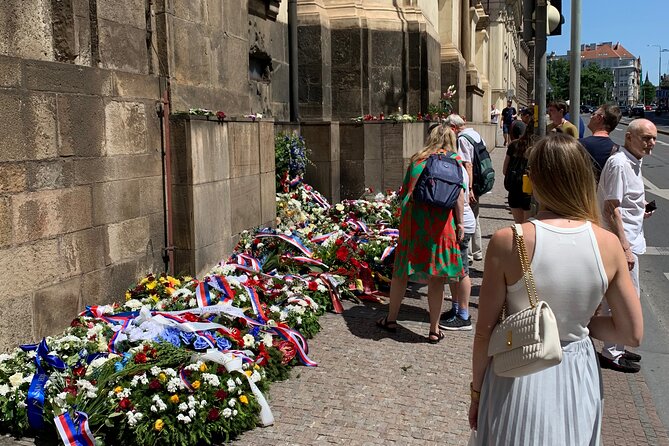
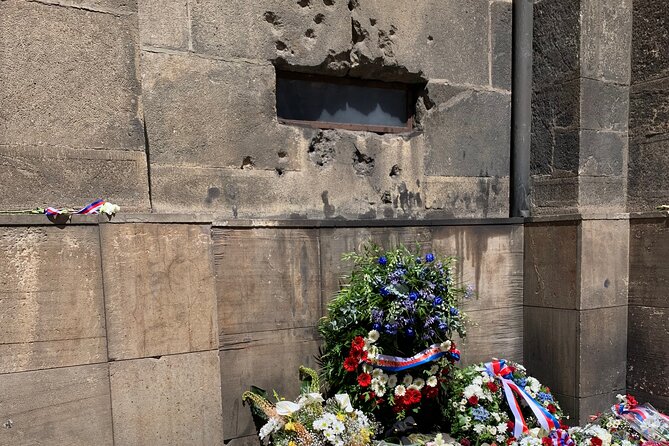
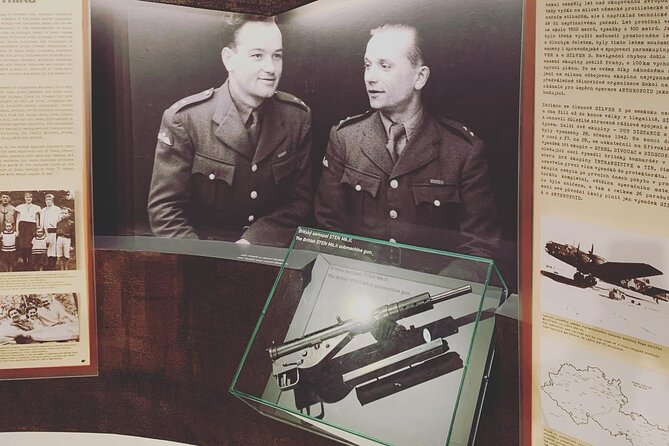
The tour ends at the Orthodox Cathedral of Saints Cyril and Methodius, where you enter the Museum of Anthropoid Operation. The stop takes about 20 minutes and includes free entry to the museum.
This is the emotional center of the experience. Operation Anthropoid was the Czechoslovak resistance mission that targeted Reinhard Heydrich, a leading Nazi official. The tour finishes in the crypt where resistance soldiers hid after the operation.
The setting gives the story unusual force. You are not only hearing about resistance in the abstract. You enter the actual hideout connected with the soldiers’ final stand. The crypt is a war memorial, so animals are not allowed inside, although service animals are generally permitted on the tour.
I consider the included museum entry a major value point. A low-cost walking tour that ends at an important memorial can otherwise leave you with only an outdoor explanation. Here, you receive access to a place that gives the final story physical weight.
Price, tips, walking, and group size
The listed price is about $3.60 per person, making this one of the least expensive ways to get a structured introduction to modern Czech history. It is a tip-based tour, so the booking price should not be treated as the complete cost of the guide’s service. If you find the storytelling useful, plan to give a tip that matches the value you received.
The route lasts approximately three hours and covers about 5 kilometers. You should wear comfortable shoes and be ready to remain outdoors for much of the experience. Moderate physical fitness is recommended, and the tour is not suited to people with mobility problems.
The tour includes an in-person English-speaking guide, mobile ticketing, and entry to the Museum of Anthropoid Operation. There are no separate admission charges for the listed outdoor stops.
The booking information describes the activity as private, with only your group participating. However, one account recorded a group of 24 people and expected no more than eight. That mismatch is important. If a small group is central to your decision, contact Real Prague Guides before booking and ask how many people are expected on your date.
The tour is offered in English and is near public transportation. It starts at MetrocafeKlárov 51 and ends in the cathedral crypt on Resslova Street. The ending is convenient: it is about one minute from the Dancing House or Charles Square.
Free cancellation is available if you cancel at least 24 hours before the start time. Changes or cancellations inside that window are not refundable, and the operator may cancel if the minimum number of participants is not reached.
Who should take this tour?
I would choose this tour if you want Prague’s modern political story explained in order, with the war and Communist periods given equal attention. It suits history buffs, families with older children, and anyone who wants more than the castle and Old Town.
You will get the most from it if you enjoy listening while walking and asking questions along the way. The guides have been praised for clear explanations, strong storytelling, and personal accounts of life under Communism. That human detail can make the political material easier to remember.
I would skip it if you want an easy sightseeing stroll with lots of time for photographs. The route is long, the subject is often grim, and the walking pace may be tiring. It also may not meet your expectations if you require a reliably tiny group.
Should you book the Second World War and Communism tour?
Book it if you want a serious, affordable introduction to Prague’s last century and the chance to finish in the Operation Anthropoid crypt. The route connects monuments, squares, art, protest sites, and a war memorial better than a simple list of dates could.
Before booking, confirm the likely group size and be honest about your walking ability. If those points work for you, the combination of strong guides, clear chronology, and included museum entry makes this a very good value for a history-focused visit to Prague.
FAQ
How long does the Second World War and Communism tour last?
The tour lasts approximately three hours.
What language is the tour offered in?
The tour is offered in English with an in-person certified guide.
Where does the tour start?
The meeting point is MetrocafeKlárov 51, 118 00 Praha 1, Malá Strana, Czechia.
Where does the tour end?
The tour ends inside the crypt at the Orthodox Cathedral of Saints Cyril and Methodius on Resslova Street.
Is museum admission included?
Yes. Entry to the Museum of Anthropoid Operation is included in the tour.
How much walking is involved?
The route covers about 5 kilometers and requires a moderate level of physical fitness.
Is the tour private?
The activity is described as private, with only your group participating. One account reported a group of 24 people despite an expectation of no more than eight, so confirm the group size before booking.
Can I cancel for a full refund?
Yes, if you cancel at least 24 hours before the experience start time. Cancellations made less than 24 hours in advance are not refunded.
Just added around Prague
- Private Day trip from Prague to Kutná Hora★ 5.0 · 3 reviews
- PRAGUE AIRSOFT SHOOTING GAMES★ 4.7 · 3 reviews
- Private 4-hour City Tour of Prague with driver & official guide w/ Hotel pick up★ 5.0 · 3 reviews
- Glass blowing in Prague★ 4.6 · 3 reviews
- Prague to Karlovy Vary Private Transfer★ 4.5 · 3 reviews
- Disney’s Tarzan Musical★ 5.0 · 3 reviews
- Prague Private Tour★ 5.0 · 3 reviews
- UNESCO Teplice – Premiant eGuide APP★ 4.5 · 3 reviews
Communism & WWII History Tours, compared.

Communism History and Nuclear Bunker Guided Tour
Read our review →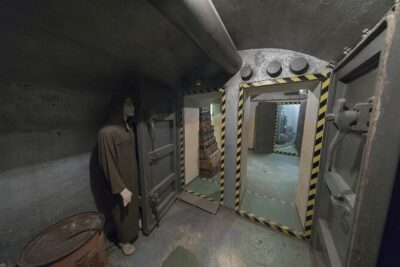
Prague Communism History and Nuclear Bunker Tour
Read our review →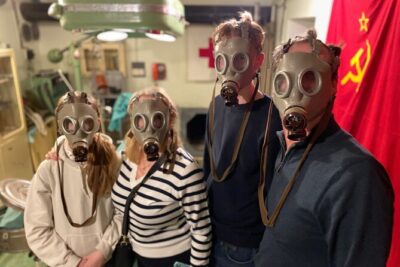
Communism & Nuclear Bunker Tour + 70s Canteen Lunch (own expense)
Read our review →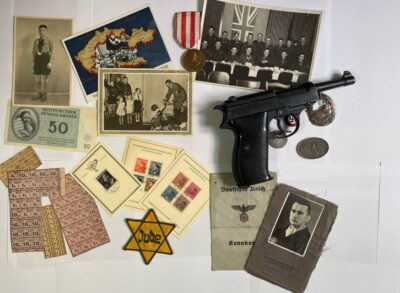
WWII Guided Tour & The Crypt of Operation Anthropoid
Read our review →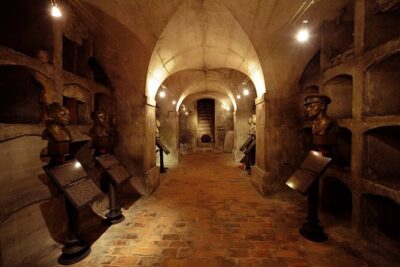
WWII in Prague Tour & The Crypt of Operation Anthropoid
Read our review →
Communism and Bunker Tour with 70s Canteen Lunch
Read our review →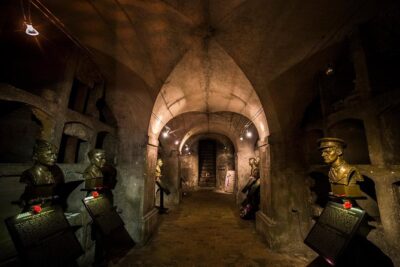
Small-Group World War 2 & Operation Anthropoid Tour in Prague
Read our review →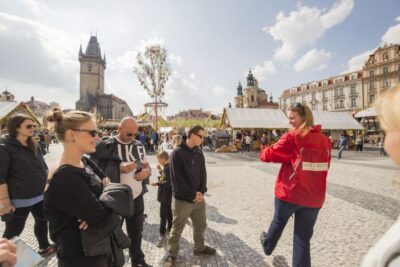
World War 2 and Operation Anthropoid Walking Tour
Read our review →Browse the lists this tour appears in