
REVIEW · COMMUNISM & WWII HISTORY TOURS
Private Prague Cold War Walking Tour
Cold War Prague still speaks through concrete, statues, and protest walls. I like the private format, which lets your guide adjust the pace, and I like the personal stories that guides such as Alzbeta and Vadim bring to this difficult period. The main drawback is the steep 20-minute climb up Vitkov Hill, which can be tiring.
This three-hour walk connects major communist-era sites with the human story behind them. You will see the former mausoleum of Klement Gottwald, traces of nuclear shelter corridors, the John Lennon Wall, and Wenceslas Square, but some stops are viewed from outside and the route covers a fair amount of ground.
In This Review
- Key points to know before booking
- Prague’s Cold War story in three focused hours
- The Karlin to Zizkov tunnel and its sealed shelter doors
- Vitkov Hill, Gottwald’s mausoleum, and Prague from above
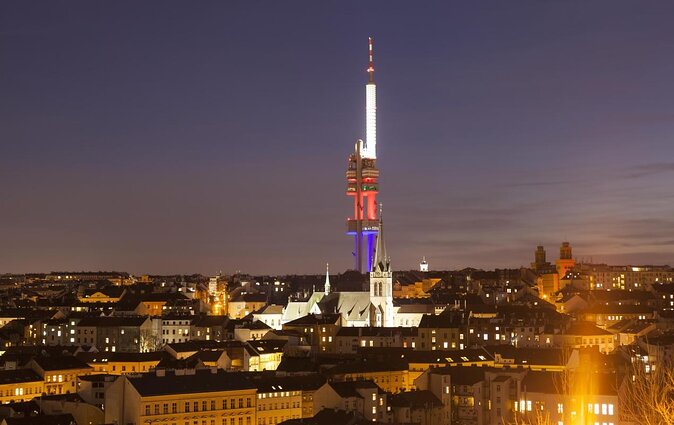
- The Žižkov Television Tower and the city’s communist-era skyline
- Letna Hill and the memory of Stalin
- The John Lennon Wall and protest in public view
- Wenceslas Square, from occupation to the Velvet Revolution
- The upside-down Wenceslas statue and a sharp modern joke
- What the private format is worth at $390.37
- Who will get the most from this walk?
- FAQ
- How long is the Private Prague Cold War Walking Tour?
- Where does the tour begin?
- Is hotel pickup included?
- Does the tour include tram tickets?
- How difficult is the walk?
- Is the tour private?
- Should you book this Cold War tour?
Key points to know before booking
- Gottwald’s former mausoleum: See the laboratory and temperature-control area once used to preserve the embalmed communist leader.
- A serious climb for a fine view: Vitkov Hill takes about 20 minutes uphill, but rewards you with broad views toward Prague’s Old Town and the Žižkov Television Tower.
- The 1968 and 1989 turning points: Wenceslas Square helps explain both the crushing of the Prague Spring and the Velvet Revolution.
- Small-group attention: The tour is private, with only your group taking part, and the advertised price is per group.
- Useful tram travel: Tram tickets are included, helping connect the hilltop sights with central Prague.
- Guides who make the past personal: Alzbeta and Vadim are praised for clear explanations, discussion with students, and practical restaurant and bar suggestions.
Prague’s Cold War story in three focused hours
This tour is a good choice if you want more than a quick look at old communist buildings. It links places that can seem scattered across Prague and explains how they fit together: Soviet influence after 1948, the brief opening of the Prague Spring in 1968, and the demonstrations that ended communist rule in 1989.
You meet your historian guide in central Prague, normally 15 minutes before the start at the Church of Saint Joseph on Náměstí Republiky. Hotel pickup may be arranged, but it is not included by default. From there, the route uses walking and public transport, with tram tickets covered in the price.
The subject is political, but the strongest parts focus on ordinary life. You hear how state control shaped speech, public gatherings, work, and daily choices. The best guide for you will not simply recite dates. You will want someone who can explain why a statue disappeared, why a wall became a place for protest, and why a square in the city center mattered so much.
The tour is offered in English, in either the morning or afternoon. A private setting also helps if your group has questions about Czech communism, Soviet control, family experiences, or the difference between the Prague Spring and the Velvet Revolution.
More communism and wartime history tours:
- Prague: Communism History and Nuclear Bunker Guided Tour
★ 4.7 · 2,417 reviews - Prague Communism History and Nuclear Bunker Tour
★ 5.0 · 1,742 reviews - Communism & Nuclear Bunker Tour + 70s Canteen Lunch (own expense)
★ 5.0 · 1,036 reviews
The Karlin to Zizkov tunnel and its sealed shelter doors
The first stop is a pedestrian tunnel linking Karlin and Zizkov. You walk through it and look at locked doors leading to corridors built as part of Cold War nuclear shelter systems.
This is a brief stop, listed at about 10 minutes, but it gives the tour an immediate physical connection to the period. Instead of beginning with a textbook explanation, you see the kind of infrastructure built around the fear of nuclear war. The doors remain maintained, which adds a slightly unsettling quality. The shelter is not presented as a fully open museum, so you should expect to observe the entrances rather than wander through the corridors.
That limitation is worth knowing. If you want an interior bunker tour, this is not it. If you appreciate small details that show how a city prepared for a possible attack, the stop works well.
The tunnel itself is a practical part of the route, not a grand monument. Wear comfortable shoes and keep your attention on the guide. This early stop sets up the larger question of the tour: how much of Cold War Prague remains visible if you know where to look?
Vitkov Hill, Gottwald’s mausoleum, and Prague from above
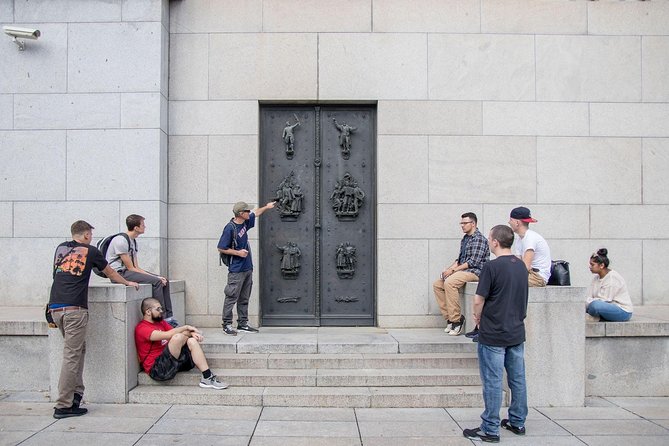
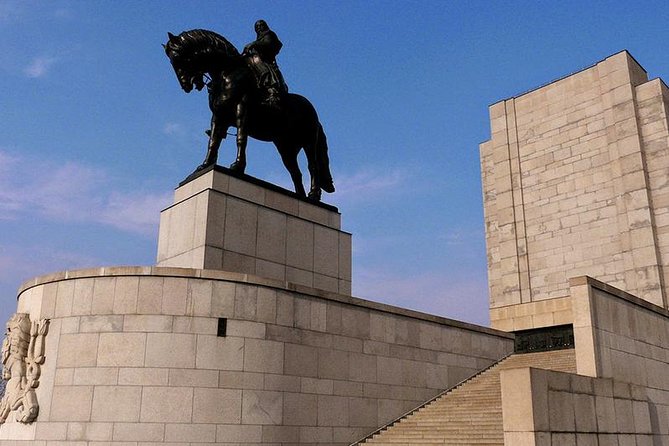
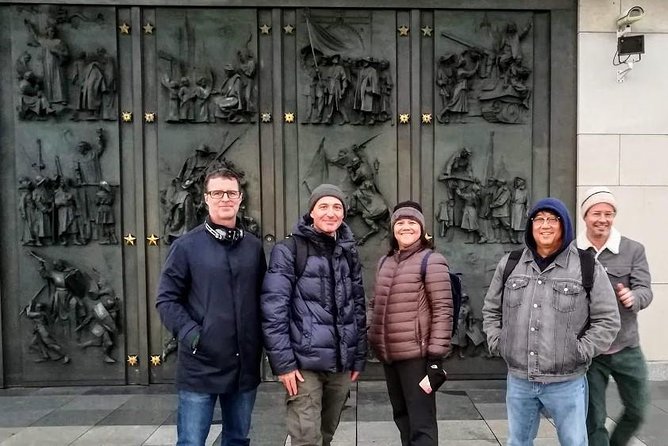
The most unusual section takes you to the National Monument at Vitkov. The site honors Czech and Slovak warriors of the First World War, but the tour focuses on its later communist-era use.
Here you see the Hall of the Red Army, with statues and decorative friezes honoring Soviet soldiers killed in Eastern Europe during the Second World War. The building’s message reflects the political order that followed. Soviet military power was presented not only as a wartime force, but also as the foundation of the new Czechoslovak state.
The monument once housed the mausoleum of Klement Gottwald, the communist leader who served as Czechoslovakia’s president from 1948 to 1953. His embalmed body was displayed there in the style of other communist leaders whose remains became part of official political theater.
One of the tour’s most striking details is the laboratory and temperature-control center used to maintain Gottwald’s body. These rooms show the practical machinery behind the public image. They also reveal the strange mixture of politics, ceremony, and technical work that surrounded the mausoleum.
The itinerary lists admission to the National Monument as not included, so check the arrangements for your date if access inside is important to you. The tour description does include the former mausoleum area and the preservation facilities, but the exact admission process should not be assumed.
Vitkov also has a major historical marker in the form of the equestrian statue of Jan Zizka. It is described as the third-largest bronze equestrian statue in the world. The statue is not a Cold War monument, but its size and location help explain why this hill has long carried political meaning.
The climb is the practical challenge. You should expect about 20 minutes uphill, and the tour requires a moderate level of fitness. If your knees or breathing make steep paths difficult, tell the company in advance. The hill can be left out, allowing the guide to focus on other Cold War locations.
The payoff is the view. From the memorial, you can look across Prague toward the Old Town and spot the Žižkov Television Tower on the horizon. A sunset departure may provide especially attractive light, though the tour is offered in the morning or afternoon and sunset is not guaranteed.
The Žižkov Television Tower and the city’s communist-era skyline
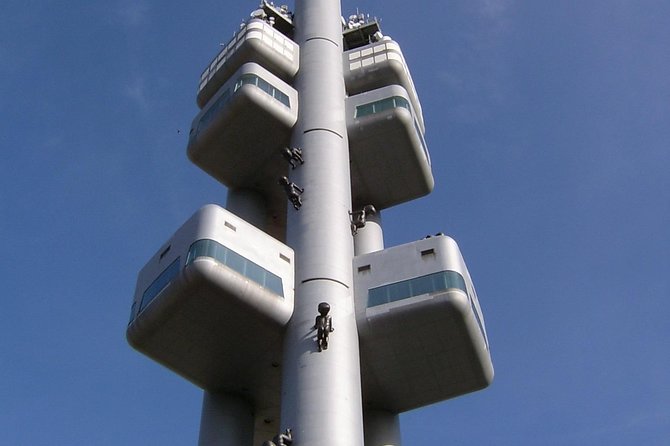
The stop at the Žižkov Television Tower is short, about five minutes. You get one of the best views of the tower’s Brutalist design, rather than a full visit to the tower itself.
That distinction matters. This is a photo and interpretation stop, not a ticketed tower experience. The structure is one of Prague’s clearest examples of late communist-era architecture, and its unusual form gives your guide a chance to discuss how public buildings projected modernity, technology, and state power.
Because the stop is brief, you will not spend long studying the building. Its value comes from seeing it in relation to Vitkov and hearing how the city’s skyline changed during the communist years. If you already plan to visit the tower separately, this quick stop can help you place it within Prague’s wider political story.
More walking tours:
- Prague: 3-Hour Walking Tour of Old Town & Prague Castle
★ 4.7 · 5,696 reviews - Prague: Ghost Walking Tour Where Legends Come To Life
★ 4.4 · 5,253 reviews - Prague: Jewish Quarter Walking Tour with Admission Tickets
★ 4.7 · 3,729 reviews - Prague Guided Walking Tour and Cruise with Authentic Czech Lunch
★ 5.0 · 3,627 reviews
Letna Hill and the memory of Stalin
The route then turns toward central Prague and the area around Letna Hill. The tour explains that one of the world’s largest statues of Josef Stalin once looked down over the city from here.
The statue is gone, but the site remains useful for understanding the scale of the personality cult and the public image communist governments tried to build. A massive monument above the city was not a casual decoration. It made ideology part of the daily view.
This is also a good reminder that political symbols can vanish while the setting remains. You are not simply looking at an empty place. You are learning how Prague’s public spaces were used for military displays, official celebrations, and messages of loyalty.
The route covers multiple parts of the city, so the tram connections matter. Included tram tickets remove one small task from the day and help keep the group moving. Still, this is a walking tour, not a bus tour. Plan for outdoor time and bring shoes suited to pavement and the Vitkov climb.
The John Lennon Wall and protest in public view
The John Lennon Wall offers a different kind of Cold War evidence. People who wanted Western-style freedom used the wall for painted messages of hope, peace, and revolution.
The wall was not a formal monument created by the state. Its importance came from individual expression in a public space. That makes it a useful counterpoint to the official statues, halls, and military memorials seen earlier in the tour.
Your guide can explain why Western music, youth culture, and free expression carried political weight in communist Czechoslovakia. A painted message might look simple, but in a tightly controlled society, public words could be treated as a challenge.
The wall changes over time, so do not expect every image or message to remain as it once appeared. The value is in the story of the place and the way ordinary people used a city surface to push back against official limits.
This stop can be especially effective for younger visitors and students because it makes protest easy to understand. You see how culture and politics overlap without needing a formal rally or a government building.
Wenceslas Square, from occupation to the Velvet Revolution
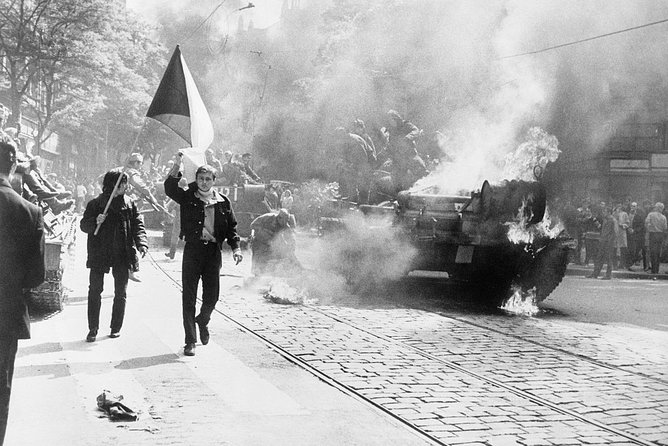
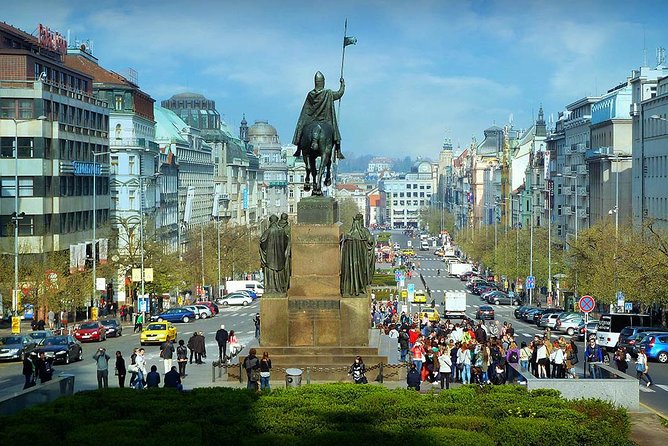
Wenceslas Square is the tour’s most important central stop. Allow about 20 minutes to walk through it and consider its long history, including military parades, demonstrations, the Prague Spring, and the events of 1989.
The square helps separate two moments that are sometimes blurred together. In 1968, Alexander Dubcek’s reform period allowed greater freedom of speech and a more independent press. Warsaw Pact tanks entered Prague and crushed the Prague Spring after about eight months of attempted reform.
Your guide also explains the human cost of protest. Monuments in the square honor Czech people who stood against the regime, including those connected with the tragic protests of the period. The subject is heavy, but seeing the memorials where events unfolded gives the story a clear sense of place.
Then the focus shifts to 1989. Wenceslas Square became a gathering point during the Velvet Revolution, when mass demonstrations helped bring communist rule to an end. The square’s broad open form made it possible for thousands of people to gather, listen, and show public support for change.
I like this stop because it connects political history with a place you can revisit on your own. After the tour, you can return to the square and picture it filled with demonstrators, speeches, and crowds demanding a different future.
The upside-down Wenceslas statue and a sharp modern joke
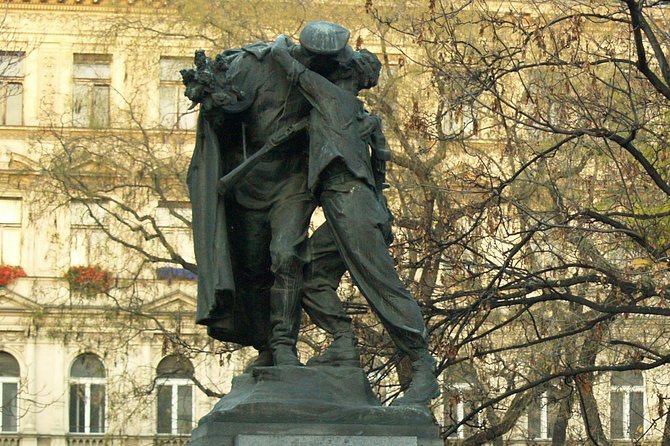
Near the end, you see the upside-down statue of King Wenceslas riding a dead horse. The sculpture is deliberately ironic and invites discussion about current Central European politics.
It is a short, roughly five-minute stop, but it changes the tone after the more solemn memorials. The work asks you to think about how national symbols are used, questioned, and mocked. Your guide can place the sculpture in the wider political mood of the region without treating history as something safely sealed in the past.
This is a good final image for the tour. You move from formal communist monuments to street-level protest, then finish with a pointed piece of contemporary art. Prague’s political memory is not only displayed in museums. It appears in public squares, on walls, and in jokes made with statues.
What the private format is worth at $390.37
The advertised price is $390.37 per group of up to 10 people, with pricing described as based on six people or fewer. That means the value changes greatly with group size. For six people, the listed price works out to about $65 per person. A smaller group pays more per head, but gains more direct time with the guide.
You should confirm the exact price for groups larger than six, since the description gives both a maximum group size of 10 and a group basis of six or fewer. The private setup is most worthwhile when your group is interested in the subject and likely to ask questions.
The price includes a historian guide and tram tickets. Food, drinks, and standard hotel pickup and drop-off are not included. Since the tour lasts about three hours, you can pair it with a meal before or after rather than losing a full day.
I see the main value in the guide, not in admission fees. Many of the sites are public spaces or viewed from the outside. You are paying for the connections between them, the political context, and the chance to shape the discussion around your group’s interests.
The strongest guide comments describe Vadim as friendly, engaging, and able to ask questions rather than simply point at buildings. He has also offered restaurant and bar suggestions that visitors might not otherwise have found. Alzbeta is praised for linking the places to historical detail and family experiences.
Those details matter. Communist history can become a list of leaders and dates. A guide who adds personal or family context can show how state policy affected real households, not just government offices.
Who will get the most from this walk?
I would choose this tour if you have a serious interest in twentieth-century European history, architecture, protest movements, or the changing political identity of Prague. It also suits parents, university groups, and visitors who prefer discussion over a fixed script.
Students may benefit especially from the private format. Vadim has worked with American study-abroad groups and is described as engaging students with questions and connections between the sites. That approach can make a difficult subject easier to follow.
You should think twice if you want a gentle stroll through postcard Prague. The route includes a steep hill, political material, and several stops where the main attraction is explanation rather than a spectacular interior. It is also not ideal if your mobility is limited and you do not arrange to skip Vitkov Hill.
The tour is offered in English and requires moderate physical fitness. Meet at Náměstí Republiky unless pickup has been arranged. Free cancellation is available if you cancel at least 24 hours before the start time. Changes or cancellations inside that period are not refunded.
FAQ
How long is the Private Prague Cold War Walking Tour?
The tour lasts approximately three hours.
Where does the tour begin?
Unless hotel pickup has been arranged, meet your guide 15 minutes before the start at the Church of Saint Joseph, Náměstí Republiky 1077/2, Prague 1.
Is hotel pickup included?
Hotel pickup may be arranged, but standard hotel pickup and drop-off are not included.
Does the tour include tram tickets?
Yes. Tram tickets are included in the tour price.
How difficult is the walk?
You should have a moderate level of physical fitness. The route includes a steep climb of about 20 minutes up Vitkov Hill. If you have mobility concerns, you can ask to leave out that section.
Is the tour private?
Yes. Only your group participates. The advertised price is per group, with a maximum of 10 people, and the pricing is described as based on six people or fewer.
Should you book this Cold War tour?
Book it if you want Prague’s communist period explained through real places, from sealed shelter doors and Gottwald’s mausoleum to the protest wall and Wenceslas Square. The personal approach associated with guides such as Alzbeta and Vadim is a major reason to choose it.
Skip it if your priority is a relaxed, low-effort city walk or a series of grand interiors. For the right group, though, this is a focused and thoughtful way to understand how occupation, state control, public protest, and the Velvet Revolution shaped modern Prague.
Just added around Prague
- Private Day trip from Prague to Kutná Hora★ 5.0 · 3 reviews
- Private 4-hour City Tour of Prague with driver & official guide w/ Hotel pick up★ 5.0 · 3 reviews
- PRAGUE AIRSOFT SHOOTING GAMES★ 4.7 · 3 reviews
- Glass blowing in Prague★ 4.6 · 3 reviews
- Prague to Karlovy Vary Private Transfer★ 4.5 · 3 reviews
- Disney’s Tarzan Musical★ 5.0 · 3 reviews
- Prague Private Tour★ 5.0 · 3 reviews
- Private Bohemian Glass and Czech Crystal Tour with lunch included★ 5.0 · 3 reviews
Communism & WWII History Tours, compared.

Communism History and Nuclear Bunker Guided Tour
Read our review →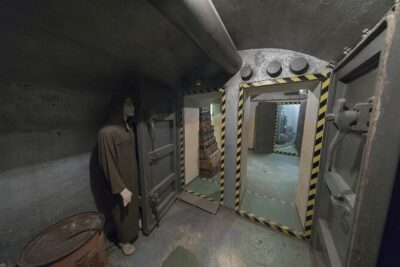
Prague Communism History and Nuclear Bunker Tour
Read our review →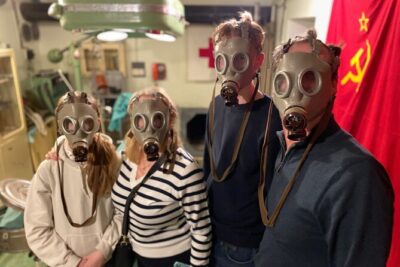
Communism & Nuclear Bunker Tour + 70s Canteen Lunch (own expense)
Read our review →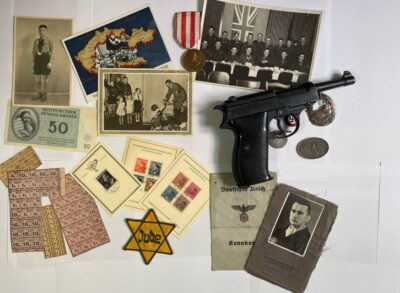
WWII Guided Tour & The Crypt of Operation Anthropoid
Read our review →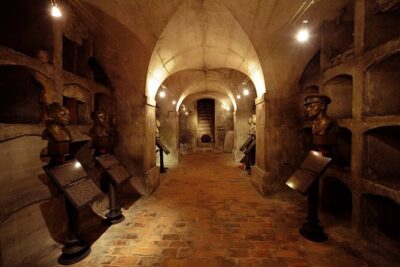
WWII in Prague Tour & The Crypt of Operation Anthropoid
Read our review →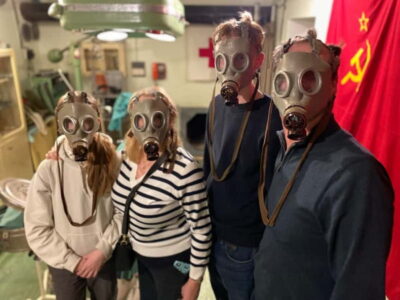
Communism and Bunker Tour with 70s Canteen Lunch
Read our review →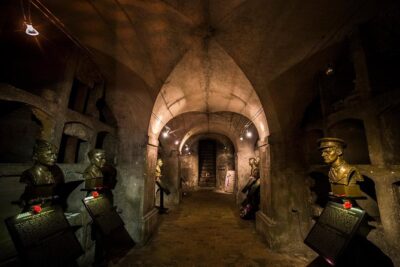
Small-Group World War 2 & Operation Anthropoid Tour in Prague
Read our review →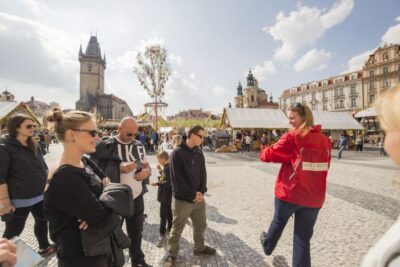
World War 2 and Operation Anthropoid Walking Tour
Read our review →Browse the lists this tour appears in