
REVIEW · COMMUNISM & WWII HISTORY TOURS
Prague Private Tour and Museum of Communism with transfer
Prague’s past gets personal here. This four-hour private tour combines hotel pickup in a Mercedes-Benz with a guided visit to the Museum of Communism and a walking tour through sites tied to the Prague Spring and Velvet Revolution. I especially like the chance to hear first-hand memories from a Czech guide, and I like the freedom to shape the city portion around your interests.
The main drawback is the price: at $221.60 per person, this is a serious splurge, particularly for one or two people. You also need comfortable shoes, since the tour includes a moderate amount of walking, and the four-hour schedule can feel tight if you want long stops at every location.
In This Review
- Key points at a glance
- Why this tour works best for history-minded visitors
- Hotel pickup and a comfortable Mercedes-Benz start
- Albertov and the student protests of 1989
- Wenceslas Square and the National Museum bullet holes
- Narodni Trida and the violence of November 1989
- Inside the Museum of Communism
- Letna Park and the former Stalin monument
- How much flexibility do you really get?
- Is $221.60 per person a fair price?
- Who should book this experience?
- Practical details before you reserve
- Should you book the Prague Communist history tour?
- FAQ
- How long does the tour last?
- Is hotel pickup included?
- Is admission to the Museum of Communism included?
- Is transportation provided during the tour?
- What places are included in the city tour?
- Does the tour involve much walking?
Key points at a glance
- Personal stories from the communist era: Guides such as Pavel, Iva, and Hanna have shared family memories and personal experience of life under the regime.
- Skip-the-line museum entry: Your guide takes you directly into the Museum of Communism, saving time at the start of the experience.
- Private Mercedes-Benz transport: Hotel pickup, city transfers, bottled water, and return transport are included.
- Major Velvet Revolution sites: See Albertov, Wenceslas Square, Narodni Trida, the National Museum, and Letna Park.
- Flexible city sightseeing: Tell the provider about special interests when booking, and your guide can adjust the private portion.
- A strong choice for history buffs: The tour connects museum displays with the streets where major events actually happened.
Why this tour works best for history-minded visitors
Communist-era Prague can be hard to understand from monuments alone. Much of the story involves political pressure, censorship, secret police, shortages, student protests, and ordinary people making careful choices in daily life. This experience gives you both the broad political story and the physical places where it unfolded.
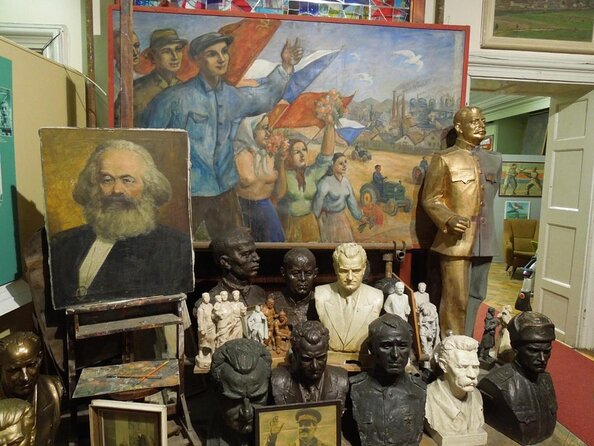
I like that the museum visit is not treated as an isolated indoor stop. You first see displays about politics, education, work, propaganda, the police, the StB secret police, show trials, and political labor camps. Then you connect those subjects to Wenceslas Square, Narodni Trida, Albertov, and Letna Park.
The private format also matters. You are not tied to a large group’s pace or interests. If your main focus is the 1968 Soviet invasion, the 1989 Velvet Revolution, secret police activity, or the experience of ordinary Czech families, tell your guide in advance so the tour can be prepared around you.
Past guests especially praised guides who could bring the subject to life through family stories. Pavel was praised for speaking about his family’s life under communism from 1948 to 1990. Iva and Hanna were also singled out for explaining the political changes through personal experience and education.
More communism and wartime history tours:
- Prague: Communism History and Nuclear Bunker Guided Tour
★ 4.7 · 2,417 reviews - Prague Communism History and Nuclear Bunker Tour
★ 5.0 · 1,742 reviews - Communism & Nuclear Bunker Tour + 70s Canteen Lunch (own expense)
★ 5.0 · 1,036 reviews
Hotel pickup and a comfortable Mercedes-Benz start
Your guide collects you from your hotel lobby or another location you choose in Prague. A private Mercedes-Benz vehicle and driver are included, along with bottled water. That is useful in a city where several stops are spread across different neighborhoods and where public transport, while convenient, may not always fit neatly into a short private schedule.
The vehicle is more than a luxury touch. It saves you from figuring out the route to the museum, then arranging transport between the museum and the walking stops. It also lets you finish at your hotel or another useful place in central Prague.
The four-hour duration is approximate. Expect a mix of driving, museum time, walking, and short stops for explanations. This is not a slow museum study day. It is a compact introduction to Prague’s 20th-century political story.
Albertov and the student protests of 1989
The route begins at Albertov, the place where peaceful student demonstrations connected to the Velvet Revolution began in 1989. The stop is brief, about 10 minutes, but its importance is large.
Albertov helps explain how opposition to the communist government gathered momentum. The demonstrations were peaceful, and student action became part of the wider movement that eventually brought down the regime.
Do not expect a major indoor attraction here. This is a location-based history stop, so the guide’s explanation is the key part. If you are interested in the events of November 1989, listen closely to the sequence of protests and the response from the authorities.
Wenceslas Square and the National Museum bullet holes
Wenceslas Square is one of the most important places on the tour. The broad square has been the setting for major political events, including the Prague Spring in 1968 and the mass protests of November 1989.
In August 1968, Soviet armored units entered Prague after the reform movement known as the Prague Spring. Clashes took place around the square, and bullet holes were preserved on the walls of the National Museum during its later renovation. Your guide can point out these marks, which make the events feel much less distant than a textbook account.
The square also played a central role in the Velvet Revolution. In November 1989, a protest against police brutality helped fuel the movement that led to the end of communist rule in Czechoslovakia.
There is plenty to see beyond the political story. The square began as a horse market and is now lined with hotels, shops, restaurants, clubs, and other businesses. The statue of St. Wenceslas, mounted on horseback, looks down the length of the square from in front of the National Museum.
The guide also points out the Jalta Hotel, where the StB secret police monitored foreign diplomats and businesspeople staying there. That detail gives you a glimpse of how surveillance operated in everyday city life, not only in prisons or interrogation rooms.
More museums and galleries:
- Prague: Museum of Fantastic Illusions Entry Ticket
★ 4.3 · 4,337 reviews - IAM Illusion Art Museum Entry Ticket
★ 4.2 · 1,664 reviews - Prague: Museum of Senses Admission Ticket
★ 4.0 · 1,445 reviews - IAM Illusion Art Museum Prague Fast Pass Ticket
★ 5.0 · 957 reviews
Narodni Trida and the violence of November 1989
At Narodni Trida, you see the location connected with one of the harshest police actions of the Velvet Revolution. Police formed a narrow cordon and blocked the side streets. People trying to leave were forced through the line and beaten.
The stop takes roughly 20 minutes. A memorial featuring hands reaching from a wall marks the site and gives the guide a clear starting point for explaining what happened.
This is one of the tour’s strongest moments because the location is ordinary in appearance. You are not standing inside a grand political building. You are on a city street where a peaceful protest turned into a brutal confrontation, and where public outrage helped push the country toward political change.
The walking portions can be spread out, so wear shoes you would happily use for several hours on pavement. The tour operates in all weather, making suitable clothing a practical concern.
Inside the Museum of Communism
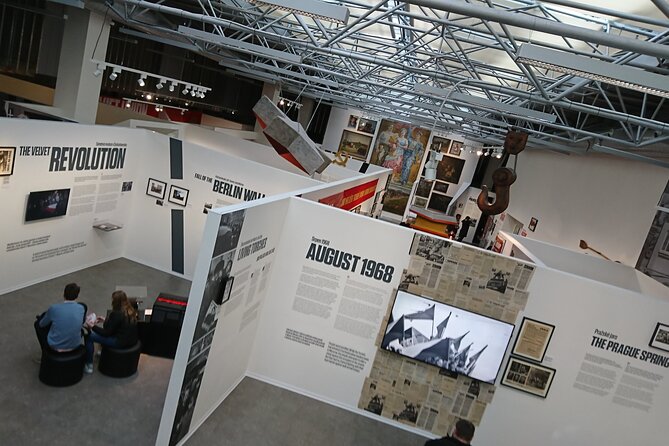
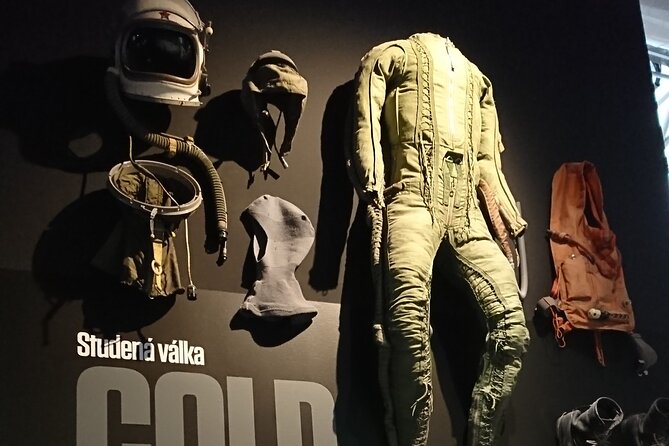
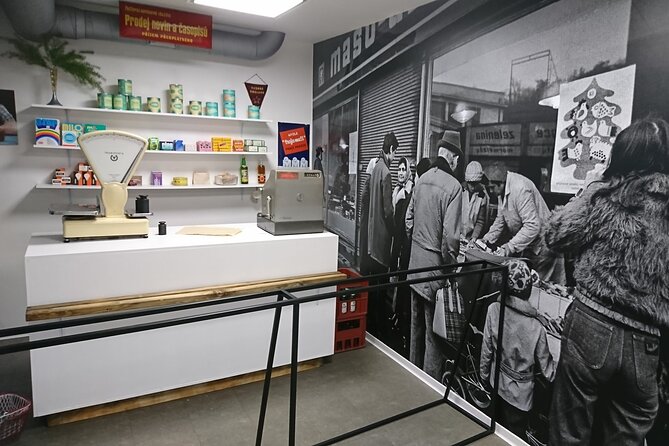
The Museum of Communism receives about an hour, with admission included and skip-the-line access provided. The displays cover Czechoslovakia from the communist takeover in February 1948 through the Velvet Revolution in 1989.
The museum looks at more than leaders and dates. You can expect displays on:
- Daily life and economics
- Politics and education
- Sports and art
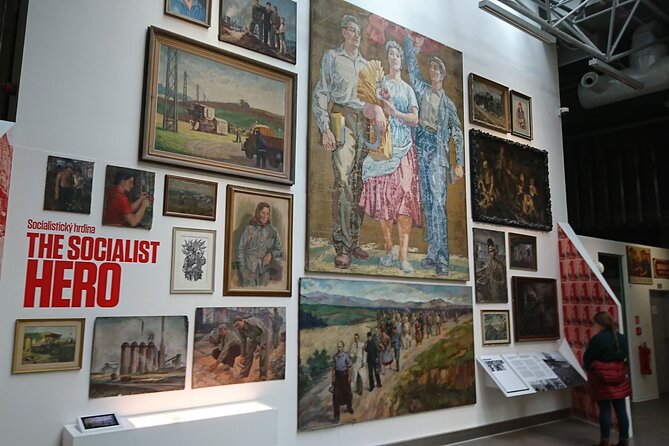
- Socialist Realism
- Media propaganda and censorship
- The army and People’s Militias
- The police and StB secret police
- Courts, show trials, and political labor camps
- Interrogation and other forms of repression
Recreated spaces include a communist-era classroom, a factory, and an interrogation room. These settings help you picture how the system reached into school, work, and the justice system.
I particularly like having a private guide in the museum. Without context, displays about political institutions or propaganda can blur together. Your guide can explain what you are looking at, answer questions immediately, and connect the material to the places you have already seen or will visit afterward.
The museum is also where personal testimony adds the most value. A guide who lived through the period, or whose family did, can explain the difference between official slogans and ordinary experience. Accounts from Pavel, Iva, and Hanna were praised for doing exactly that.
One limitation is the one-hour time frame. If you read every panel carefully, you may want more time than the tour allows. The private format helps because you can ask for emphasis on the parts that matter most to you, but this remains a focused visit rather than an exhaustive museum study.
Letna Park and the former Stalin monument
The final listed stop is Letna Park, where you get a wide view over Prague from the former site of a giant statue of Joseph Stalin. The statue once looked over the city and its people, but it was removed after Nikita Khrushchev condemned Stalin’s abuses.
Only the base remains. A large metronome now occupies the location, which has become a popular place for young people, dating, and skateboarding. The view gives the tour a lighter final note after the museum’s heavier subjects.
Letna also shows how political space changes meaning. A site once used to project state power is now a public viewpoint and recreation area. That contrast is a useful reminder that the end of communism changed not just government, but also how people used the city.
The stop lasts about 30 minutes. Bring a coat in cooler weather, since an open park viewpoint may feel breezier than the streets below.
How much flexibility do you really get?
The private tour gives you a choice about the city portion, and you should use that option. Mention special interests at the time of booking, especially if you want the guide to focus on the 1968 invasion, the StB, the Velvet Revolution, or related 20th-century subjects.
One private group used extra time to visit the memorial connected with the assassination of Reinhard Heydrich, then went inside the crypt at the Church of Saints Cyril and Methodius. They also made quick outside stops at the Dancing House, the television tower, and another church.
These additions should not be treated as guaranteed parts of the standard route. They show what can happen when the guide and driver have time and your interests are clear. If you want extra stops, ask about them before the tour begins and understand that each addition may reduce time elsewhere.
The option to finish somewhere other than your hotel is useful, too. You can return to your hotel or choose another convenient place in central Prague, such as an area where you plan to eat or continue sightseeing.
Is $221.60 per person a fair price?
This tour costs more than a basic museum ticket and a do-it-yourself walk. The value comes from the combination of private transport, a personal guide, skip-the-line entry, hotel pickup, and flexible routing.
For a couple, the total cost is substantial. For a family or small group, the price may make more sense because the experience is private and group discounts are offered. The value also improves if you want to reach places that are awkward to combine on foot or by public transport.
I would not book this tour simply for a ride around Prague. The vehicle is useful, but the real reason to pay extra is the guide’s interpretation. The strongest experiences described by past guests came from personal accounts, clear explanations, and the ability to ask questions throughout the day.
A private tour can also save mental energy. You do not need to find the museum, work out transfers, or decide how to connect Albertov with Wenceslas Square and Letna Park. That convenience is especially useful if you have only a short stay in Prague.
Who should book this experience?
I would recommend it to:
- People with a strong interest in communism, the Prague Spring, or the Velvet Revolution
- Families with different ages and interests who want a flexible private pace
- First-time visitors who want historical context while seeing major city sights
- Anyone who values personal stories from a local guide
- Small groups willing to spend more for private transport and control over the route
I would think twice if you mainly want Prague Castle, Old Town, or the city’s medieval sights. This is not a general highlights tour. Its focus is modern Czech political history, with only limited time for unrelated landmarks.
It also may not suit someone who prefers a quiet museum visit at their own pace. The guide-led format is the point, and the walking and outdoor stops require a reasonable level of mobility.
Practical details before you reserve
The tour is offered in English and operates Monday through Sunday, with listed operating hours from 8:00 a.m. to 2:00 p.m. Pickup is available from your hotel lobby or another chosen place in Prague, and the tour ends at your hotel or a location in central Prague.
A mobile ticket is provided, and booking confirmation is issued at the time of reservation. Food and drinks are not included, though bottled water is provided in the car.
The tour runs in all weather. Wear comfortable walking shoes and dress for changing conditions. Most people can take part, but expect regular movement between stops and some time outdoors.
Free cancellation is available if you cancel at least 24 hours before the local start time. Cancellations or changes made within 24 hours are not accepted for a refund.
Should you book the Prague Communist history tour?
Book it if you want more than dates and monuments. The best part is the connection between personal testimony, museum displays, and the actual streets where Prague’s political drama played out.
The price is high, but the private Mercedes-Benz, hotel service, included museum admission, and flexible route make it easier to justify for a small group or a special occasion. I would request a guide with personal experience of the communist period, such as the kind of storytelling praised in connection with Pavel, Iva, and Hanna.
Skip it if your main goal is medieval Prague or independent sightseeing. For anyone fascinated by the country’s journey from the 1948 communist takeover to the 1989 Velvet Revolution, this is a focused, practical, and unusually personal way to understand the city.
FAQ
How long does the tour last?
The tour lasts approximately four hours.
Is hotel pickup included?
Yes. Your private guide can pick you up from your hotel lobby or another place of your choice in Prague.
Is admission to the Museum of Communism included?
Yes. Museum admission and skip-the-line entry are included.
Is transportation provided during the tour?
Yes. Transport is provided in a private Mercedes-Benz vehicle with a driver. Bottled water is also included.
What places are included in the city tour?
The route includes Albertov, Wenceslas Square, the National Museum area, Narodni Trida, the Museum of Communism, and Letna Park. The private route can be adjusted around special interests.
Does the tour involve much walking?
A moderate amount of walking is involved. Comfortable walking shoes are recommended, and the tour operates in all weather conditions.
More Private Drivers
- Prague Airport Private Arrival Transfer
★ 4.5 · 991 reviews - UNESCO Cesky Krumlov from Prague with Guided Tour and Transfer
★ 4.0 · 812 reviews - Prague Airport Private Departure Transfer
★ 4.5 · 780 reviews - Prague: Shared Group/Private Segway Tour with Hotel Transfer
★ 4.8 · 574 reviews
Just added around Prague
- Private Day trip from Prague to Kutná Hora★ 5.0 · 3 reviews
- PRAGUE AIRSOFT SHOOTING GAMES★ 4.7 · 3 reviews
- Private 4-hour City Tour of Prague with driver & official guide w/ Hotel pick up★ 5.0 · 3 reviews
- Glass blowing in Prague★ 4.6 · 3 reviews
- Prague to Karlovy Vary Private Transfer★ 4.5 · 3 reviews
- Disney’s Tarzan Musical★ 5.0 · 3 reviews
- Prague Private Tour★ 5.0 · 3 reviews
- Private Bohemian Glass and Czech Crystal Tour with lunch included★ 5.0 · 3 reviews
Communism & WWII History Tours, compared.

Communism History and Nuclear Bunker Guided Tour
Read our review →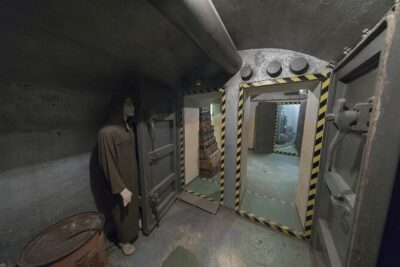
Prague Communism History and Nuclear Bunker Tour
Read our review →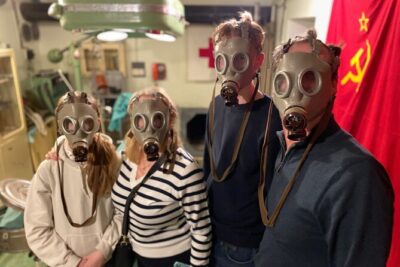
Communism & Nuclear Bunker Tour + 70s Canteen Lunch (own expense)
Read our review →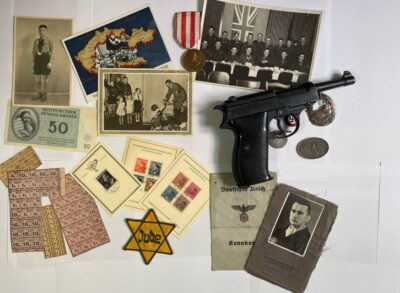
WWII Guided Tour & The Crypt of Operation Anthropoid
Read our review →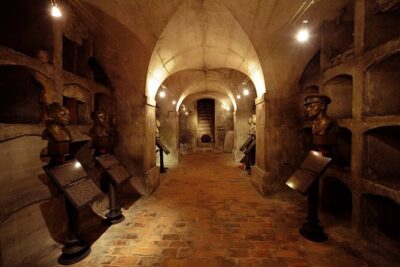
WWII in Prague Tour & The Crypt of Operation Anthropoid
Read our review →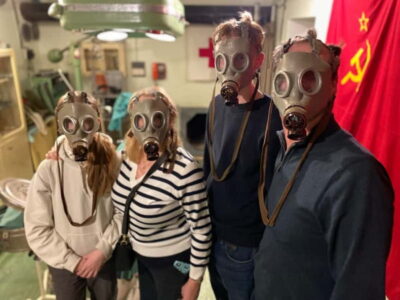
Communism and Bunker Tour with 70s Canteen Lunch
Read our review →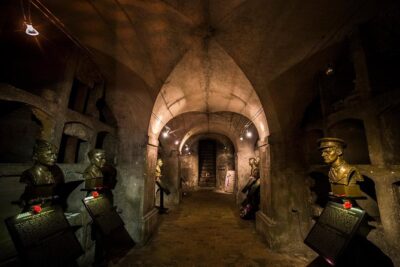
Small-Group World War 2 & Operation Anthropoid Tour in Prague
Read our review →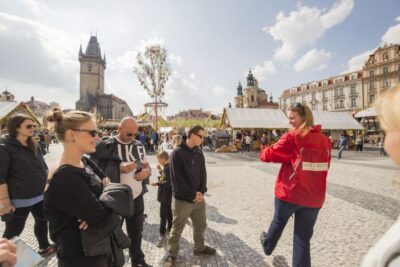
World War 2 and Operation Anthropoid Walking Tour
Read our review →Browse the lists this tour appears in