
REVIEW · COMMUNISM & WWII HISTORY TOURS
Prague: Historical Walking Tour with Focus on World War 2
Prague’s wartime story rewards careful walking. This three-hour tour connects Nazi occupation, the Prague Uprising, and the assassination of Reinhard Heydrich with the actual streets and buildings where these events unfolded. I like the way it combines a clear historical introduction with on-site visits, and I especially like the guide’s use of photographs to show how places looked during the war. The main consideration is pace: the subject matter is serious, and one past participant found some explanations at key sites too limited.
You’ll visit the former Gestapo headquarters, pause for a minute of silence, and see the Old Town Square, Wenceslas Square, and Czech Radio headquarters, all linked to the heaviest fighting of the Prague Uprising in May 1945. I also like that the tour ends at the crypt beneath the church on Resslova Street, where members of the resistance made their last stand. The three-hour format offers a lot, so you should be ready to walk, listen closely, and keep up.
In This Review
- Key points to know before booking
- Why this Prague war history tour is worth your time
- Starting beneath the archway at Skautský Institut
- The opening lecture: Czech history before the walking begins
- A former Nazi hotel and the mark of the Gestapo
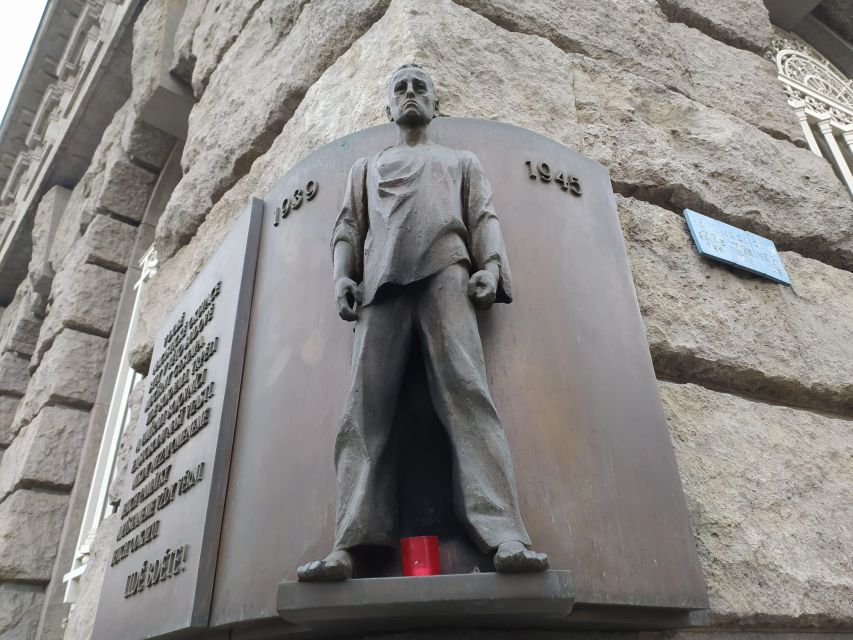
- Old Town Square and Wenceslas Square during the Prague Uprising
- Czech Radio headquarters and the sound of resistance
- Reinhard Heydrich and the road to Resslova Street
- Finishing at the church crypt on Resslova Street
- Guide style, group choice, and the right pace
- Practical details that affect the value
- Who should book this serious three-hour walk
- Should you book Spectrum Tours?
- FAQ
- How long does the Prague World War II walking tour last?
- What languages are available?
- Where does the tour start?
- Where does the tour finish?
- What places connected to the Prague Uprising are visited?
- Does the tour cover the assassination of Reinhard Heydrich?
- Is the tour wheelchair accessible?
- What should I bring, and who cannot join?
Key points to know before booking
- The Heydrich assassination is the tour’s emotional center: You follow the story from its wider political setting to the place where the resistance members made their final stand.
- The Prague Uprising gets real locations, not just dates: Old Town Square, Wenceslas Square, and Czech Radio headquarters help you picture the fighting in May 1945.
- The former Gestapo headquarters brings a quiet memorial moment: The minute of silence gives the tour a respectful pause amid the walking and explanation.
- Photographs add useful visual context: The guide uses many images and professional commentary to connect present-day Prague with wartime Prague.
- The final stop is a crypt beneath a church: The setting is unusually powerful and gives the tour a strong ending at Resslova 9a.
- Petr has received praise for personal, thoughtful guiding: One private group particularly enjoyed his knowledge of history and present politics, along with his memories of growing up in Prague.
Why this Prague war history tour is worth your time
Most first visits to Prague focus on kings, baroque churches, and the old town’s handsome squares. Those sights matter, but this tour gives you another way to read the city. You begin to notice how ordinary streets can carry the memory of occupation, resistance, executions, and final battles.
I find the format useful because it does not treat World War II as a list of disconnected events. The guide first explains the wider Czech story, then takes you to places where the subject becomes physical. You hear the background, look at period photographs, and then stand in the present-day location. That sequence can make a difficult subject easier to follow.
The tour costs $58 per person for three hours. I consider that a reasonable price if you want a focused private or small-group history experience with a licensed local guide. It is less appealing if you mainly want a general introduction to Prague or prefer to move quickly between famous sights without extended explanation.
The experience has a rating of 4.3 from 12 ratings, which suggests a generally positive but not flawless record. The strongest praise centers on guides who are punctual, friendly, passionate, and well-informed. One participant especially appreciated the guide’s personal experience of growing up in Prague. At the same time, one lower rating pointed to limited explanation at some important sites, so the quality may depend heavily on the guide and the group’s questions.
More communism and wartime history tours:
- Prague: Communism History and Nuclear Bunker Guided Tour
★ 4.7 · 2,417 reviews - Prague Communism History and Nuclear Bunker Tour
★ 5.0 · 1,742 reviews - Communism & Nuclear Bunker Tour + 70s Canteen Lunch (own expense)
★ 5.0 · 1,036 reviews
Starting beneath the archway at Skautský Institut
The usual meeting point is outside the entrance door to Skautský Institut, located in an archway. Look for a guide holding a paper marked Spectrum Tours. Some booking options may use a different pickup point, so check the selected option carefully before setting out.
This is a walking experience in central Prague, and you finish at Resslova 9a in Prague 2-Nové Město. That start-to-finish arrangement matters. You are not simply returning to the starting point, so allow time to continue with your day from the final stop.
I would arrive a little early. The meeting point is specific, but an archway and entrance door can be easy to miss if you are rushing. Bring an identity card or passport, and wear comfortable shoes. The three-hour duration includes substantial time on foot, standing, and listening.
The tour can be provided in English, German, or Czech. A private group is available, which may suit people who want to ask more questions or keep a more flexible conversation. The tour is wheelchair accessible, although the final crypt is an underground site, so you should confirm how accessibility works for your particular booking before you pay.
The opening lecture: Czech history before the walking begins
The tour starts with a theoretical introduction to World War II and the Czech experience of the period. This opening is important because the later sites carry several layers of meaning. Without background, you might see a square, a building, or a memorial without understanding why it matters.
I like that the experience begins with an explanation rather than immediately sending you into a sequence of monuments. The guide covers details of Czech history and sets up the subjects that will return throughout the walk. You can expect a lecture-style introduction, so this is not a tour built around quick anecdotes alone.
The presentation also includes many photographs. These images are a useful tool when the modern city has changed around the wartime locations. A period photograph can show you the old appearance of a building, the setting of a street, or the people connected to a place. The value depends on how clearly the guide explains each image, but the approach gives the tour more substance than simply pointing at a plaque.
If you enjoy asking questions, this is a good point to do it. One participant described the guide as strong on both history and present-day politics, while also bringing in personal memories of Prague. That style can make the subject feel more connected to modern life, though you may need to stay alert as the conversation moves quickly.
A former Nazi hotel and the mark of the Gestapo
One stop concerns a hotel that was once popular with prominent Nazis. The information provided does not identify the hotel by name, so you should not expect a simple famous-hotel checklist item. Its value lies in what the building reveals about Prague during the occupation and the people who used the city’s grand public spaces.
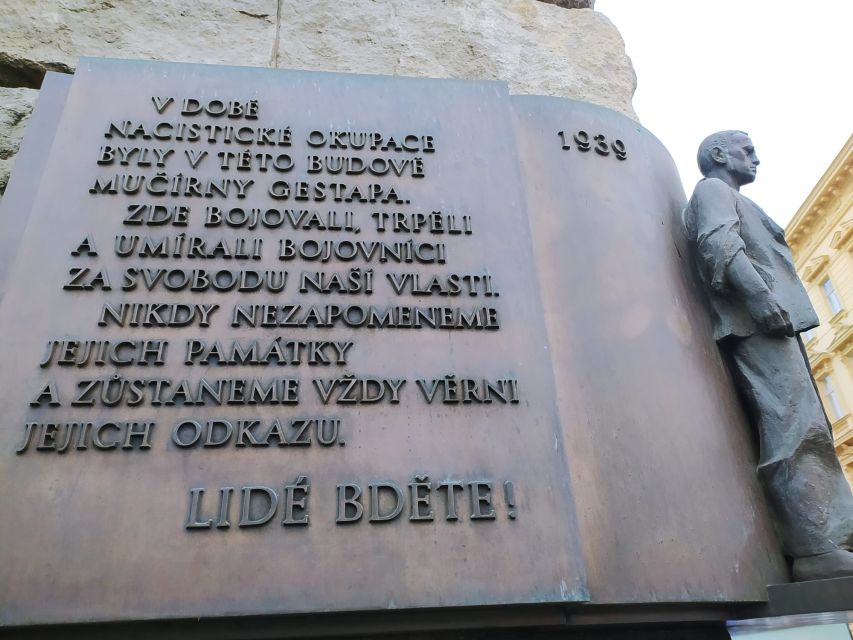
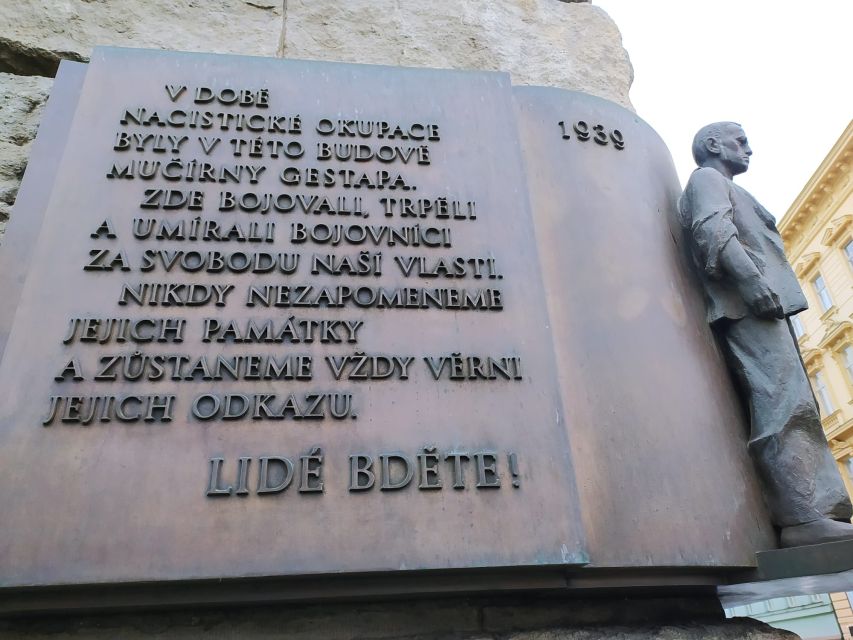
The tour then visits the former Gestapo headquarters. This is one of the most serious moments of the walk. Rather than treating it as just another address, the group observes a minute of silence as a memorial to the victims of Nazism.
I appreciate this pause. Historical tours can become crowded with facts, names, and dates. A minute of silence changes the mood and reminds you that the subject concerns real suffering, not only military or political history. You may find this part especially affecting because it asks you to stop talking and simply acknowledge the site.
The guide’s photographs and comments are meant to add context here. The experience does not only show you the building as it looks now. It tries to connect the physical place with the people and institutions associated with it. Still, the tour’s impact will be strongest if you listen closely and are comfortable with a sober presentation.
More history tours:
- Prague: Oldtown, Medieval Underground & Dungeon History Tour
★ 4.2 · 8,244 reviews - Prague Old Town, Medieval Underground and Dungeon Historical Tour
★ 4.5 · 3,227 reviews - Prague: Historic City Center Bus Tour with Top Sights
★ 4.4 · 2,360 reviews - Prague Historic Pub Tour with Drinks Included
★ 5.0 · 2,084 reviews
Old Town Square and Wenceslas Square during the Prague Uprising
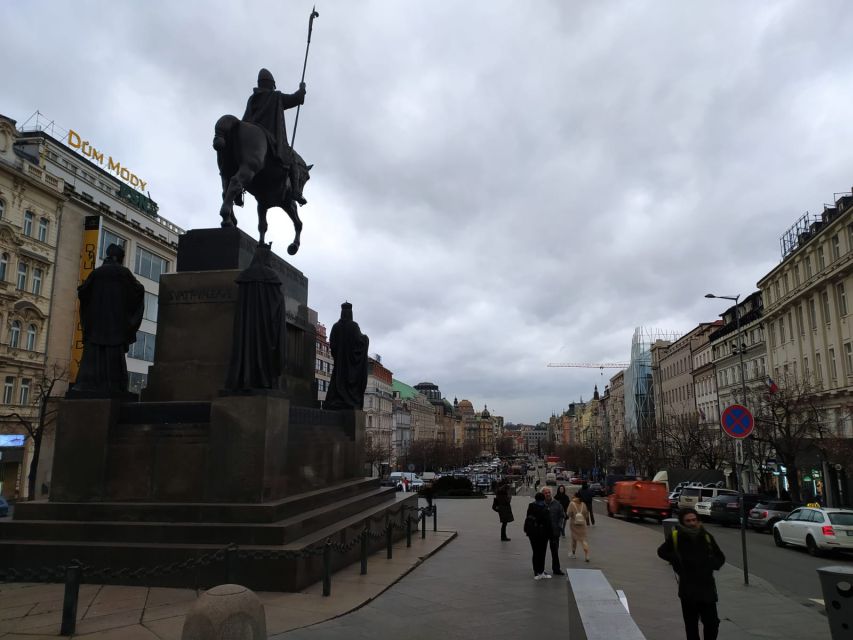
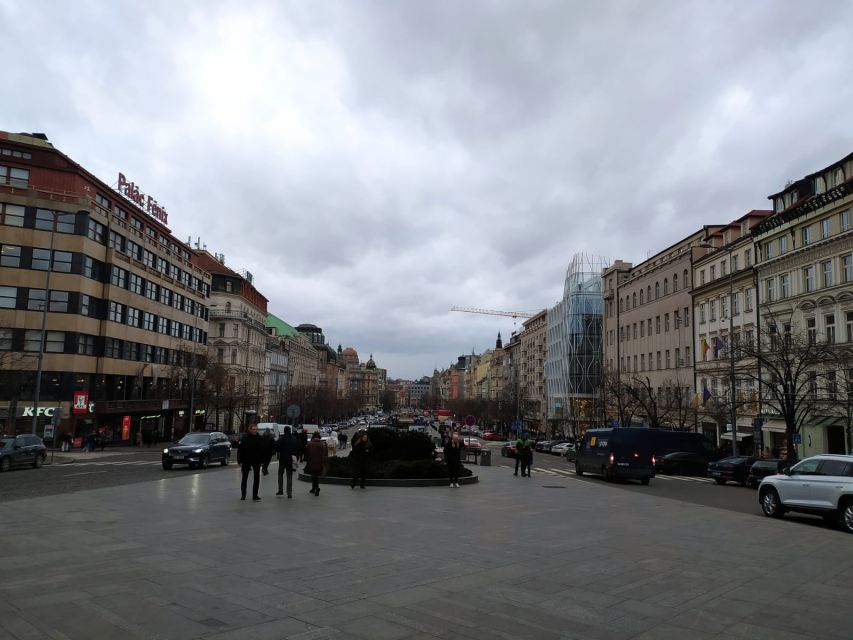
The tour visits the Old Town Square and Wenceslas Square, two of central Prague’s most familiar public spaces. Here they are presented as locations connected to the heaviest fighting during the Prague Uprising in May 1945.
That change of viewpoint is one of the tour’s best features. You may already know these squares as places for architecture, shopping, and city life. The guide asks you to picture them under the pressure of armed conflict. The modern setting can make the events feel distant, so the photographs and explanation are especially useful.
The Old Town Square is a large, open public space, while Wenceslas Square has a different urban character. Seeing both gives you a sense of how the uprising touched central Prague rather than staying confined to one isolated monument. You do not need to rely on a museum display to imagine the city’s crisis. The streets themselves become part of the lesson.
Keep your expectations realistic. This is still a walking tour in a living city. You will see present-day Prague, not preserved battle scenes. The guide’s interpretation and visual material do much of the work, and that is why a strong explanation matters. One participant felt that some important tourist sites received too little insight, so ask for clarification if a location feels underexplained.
Czech Radio headquarters and the sound of resistance
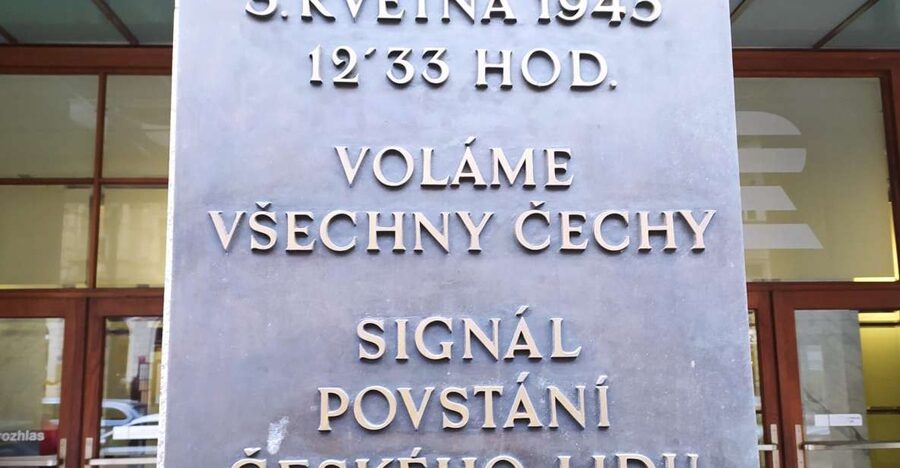
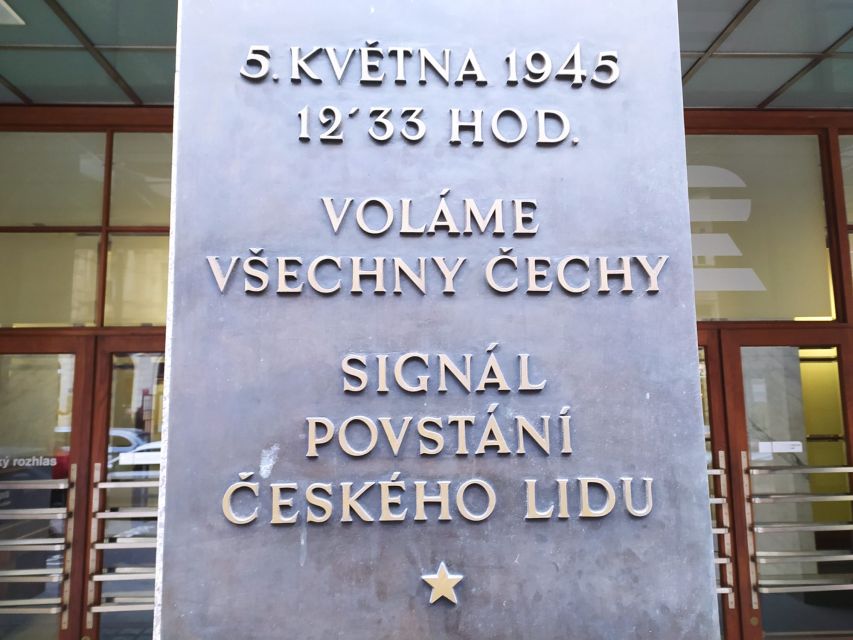
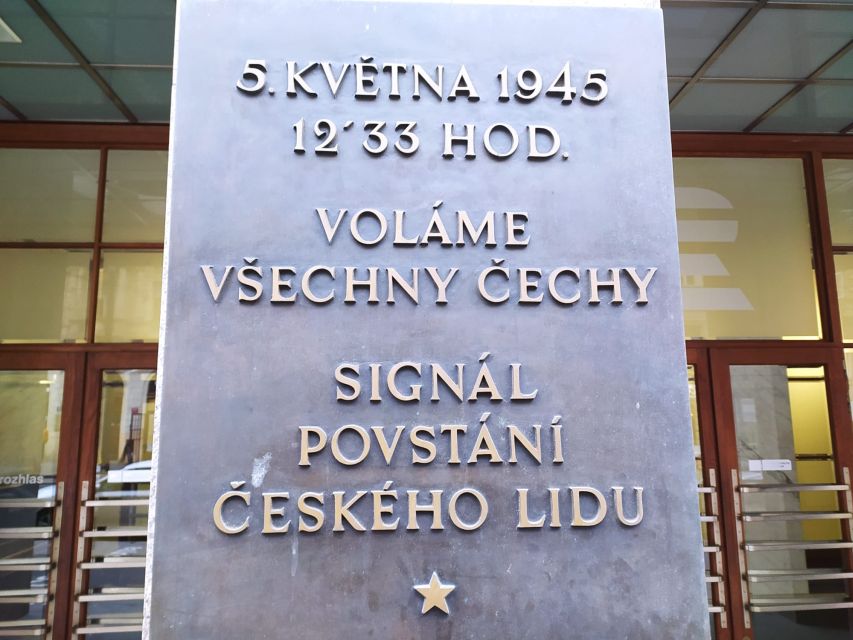
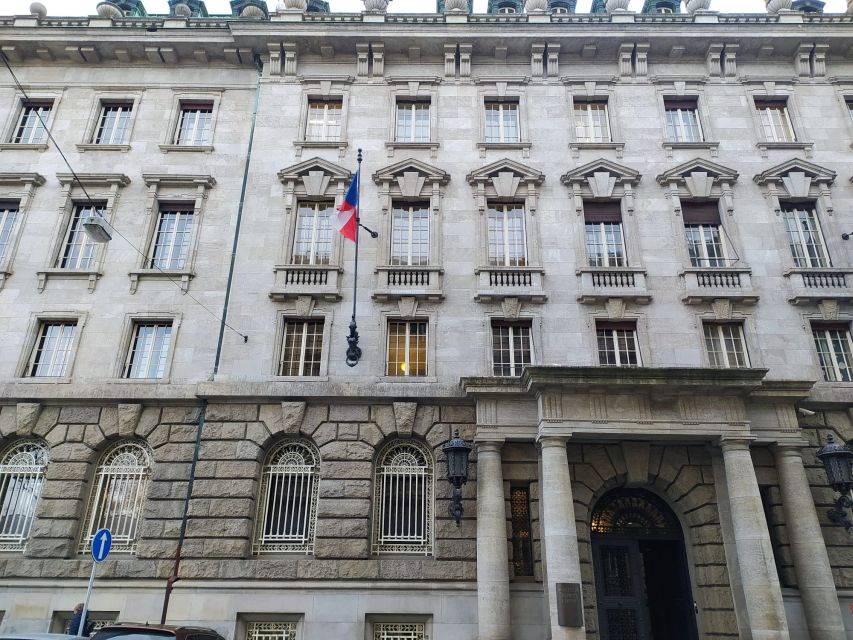
Czech Radio headquarters is another important stop connected to the Prague Uprising. The tour presents it as one of the locations involved in the heaviest fighting in May 1945.
This stop helps widen the story beyond famous squares. A radio headquarters may not be as visually dramatic as a church crypt or old town monument, but it shows how communication and public institutions fit into a citywide uprising. I like this kind of stop because it encourages you to look beyond the obvious attractions.
The guide’s photographs should help you understand why the headquarters mattered and how the site related to the events around it. Pay attention to the sequence of the explanation. The tour appears designed to build a chain from the broader Czech wartime experience to the uprising’s major locations, then to the resistance story that ends the walk.
If you are interested mainly in architecture, this may be one of the less immediately exciting stops. If you want to understand how Prague’s public life and institutions became part of the conflict, it adds useful depth.
Reinhard Heydrich and the road to Resslova Street
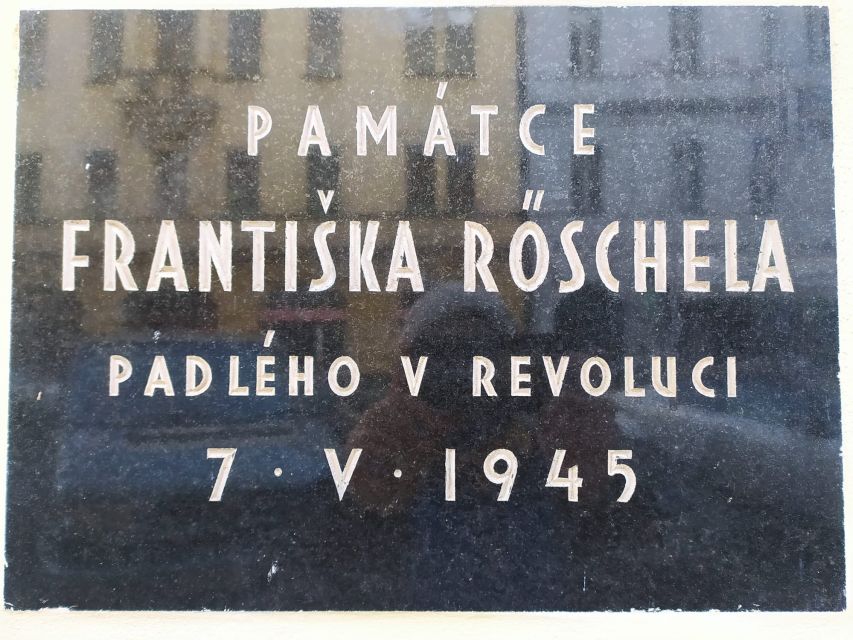
The assassination of Reinhard Heydrich receives extensive attention. He was one of the highest-ranking Nazis until 1942, and the tour explains the event in detail before taking you to the site of the resistance members’ final stand.
This section is likely the main reason to choose the tour over a standard Prague city walk. You are not only told about the assassination. You visit the place connected to the last resistance and death of the people involved, then enter a crypt beneath a church.
The crypt is described as incredibly impressive, and I can understand why. Underground memorial spaces often feel more immediate than an outdoor plaque because the physical setting is enclosed, quiet, and closely tied to the final chapter of the story. The visit gives the assassination subject a clear human focus.
The guide’s photographs are particularly valuable here. They can show people, places, and wartime conditions that are not obvious from the modern street. Professional comments also help separate the main historical points from the many details that can otherwise blur together.
This is not a light sightseeing stop. You should expect a serious account of resistance, death, and sacrifice. Children under 10 are not permitted, and the subject matter makes that restriction sensible. Older children and teenagers may still need an interest in history to appreciate the experience.
Finishing at the church crypt on Resslova Street
The tour finishes at Resslova 9a, in Prague 2-Nové Město. Ending here gives the walk a strong narrative shape. You begin with the broad political and historical setting, move through public sites linked to the uprising, and finish in the place tied to the resistance members’ last stand.
For me, a good history walk should leave you with one location that stays in your mind after the tour. This crypt is designed to be that place. It is not just another stop squeezed into a long list. The guide uses it to bring the story to its most personal and solemn point.
The final location is also practical. Since the tour ends here, you can plan your next activity from Prague 2 rather than assuming you will finish near the first meeting point. The information provided does not promise transportation back to the start, so plan to make your own way onward.
Guide style, group choice, and the right pace
The experience includes a professional licensed local guide. Tours are offered in English, German, or Czech, and private groups are available. These options matter because the subject involves many names, events, and locations, and a language you follow comfortably will make a real difference.
Petr is one guide whose work received especially warm praise. His history knowledge, interest in present politics, and personal stories of growing up in Prague made a private tour feel more personal. That kind of local perspective can be valuable, but you should also expect a direct point of view. One participant noted that the guide’s opinions about world history were clear and that the pace required quick thinking.
I would choose a private group if you want to ask detailed questions, need the guide to slow down, or are traveling with people who already know some European history. A shared group may suit you if you prefer a lower-cost structure and are comfortable with a set pace.
The tour is not ideal for someone looking for a quick overview. It includes a full lecture, photographs, political and historical context, several major sites, and the crypt visit in three hours. You need to listen actively rather than drift in and out of the commentary.
Practical details that affect the value
At $58 per person, the price reflects a specialized history walk rather than a basic orientation tour. You are paying for a licensed local guide, a focused subject, visual material, and access to a carefully connected route through central Prague.
I think the price is fair for people who would otherwise need to research the Heydrich assassination, the Prague Uprising, the former Gestapo headquarters, and the resistance memorials separately. The tour saves you from piecing together scattered information and gives the places a shared story.
The value is less certain if you already have strong knowledge of Czech World War II history. In that case, the experience may depend on how much new detail the guide provides and how willing the guide is to discuss your questions. The mixed scores suggest that explanation at individual sites can vary, so it is reasonable to ask for more context when needed.
Free cancellation is available up to 24 hours before the start, and you can reserve without paying immediately. Those policies make it easier to fit the walk into a changing Prague schedule. Still, the most important preparation is simple: bring identification, wear comfortable shoes, and arrive at the correct archway meeting point.
Who should book this serious three-hour walk
I would recommend the tour to you if you want to understand Prague through the experiences of occupation, resistance, and uprising. It suits history-minded adults, students over 10, and anyone who prefers a focused story to a general city tour.
It is also a good choice if you value a local guide’s interpretation. The best parts depend on explanation, photographs, and the connection between sites. You will gain more if you ask questions and stay engaged with the guide’s sequence.
I would think twice if you want a relaxed stroll with little talking, or if you are uncomfortable with memorials connected to death and Nazi persecution. The former Gestapo headquarters and the church crypt give the tour a grave tone. That is not a flaw, but it is important to know before booking.
Should you book Spectrum Tours?
Book this tour if the Czech side of World War II interests you and you want to visit real places tied to the Prague Uprising and the Heydrich assassination. The former Gestapo headquarters, the minute of silence, and the crypt beneath the church give it a clear purpose beyond ordinary sightseeing.
I would be more cautious if your main goal is a broad introduction to Prague or if you need a slow, highly detailed explanation at every landmark. The experience covers a lot in three hours, and at least one participant found some key sites underexplained.
For the right audience, the route offers strong value. You get a serious subject, a local guide, photographs, central Prague locations, and a memorable final stop at Resslova Street. Bring comfortable shoes, give the guide your full attention, and choose a private group if detailed questions matter to you.
FAQ
How long does the Prague World War II walking tour last?
The tour lasts three hours.
What languages are available?
The tour is available in English, German, and Czech.
Where does the tour start?
The standard meeting point is outside the entrance door to Skautský Institut in an archway. The guide holds a paper marked Spectrum Tours. The starting point can depend on the option selected.
Where does the tour finish?
The tour finishes at Resslova 9a, 120 00 Praha 2-Nové Město, Czechia.
What places connected to the Prague Uprising are visited?
The tour visits the Old Town Square, Wenceslas Square, and Czech Radio headquarters. These sites are presented as locations connected to the heaviest fighting during the Prague Uprising in May 1945.
Does the tour cover the assassination of Reinhard Heydrich?
Yes. The tour gives detailed attention to the assassination of Reinhard Heydrich and visits the crypt beneath a church where the resistance members involved made their last stand and died.
Is the tour wheelchair accessible?
The activity is listed as wheelchair accessible. Because the route includes a crypt beneath a church, you should confirm the specific access arrangements when booking.
What should I bring, and who cannot join?
Bring a passport or identity card and comfortable shoes. Children under 10 are not permitted to join the tour.
More Walking Tours
- Prague: 3-Hour Walking Tour of Old Town & Prague Castle
★ 4.7 · 5,696 reviews - Prague: Ghost Walking Tour Where Legends Come To Life
★ 4.4 · 5,253 reviews - Prague: Jewish Quarter Walking Tour with Admission Tickets
★ 4.7 · 3,729 reviews - Prague Guided Walking Tour and Cruise with Authentic Czech Lunch
★ 5.0 · 3,627 reviews
Just added around Prague
- Private Day trip from Prague to Kutná Hora★ 5.0 · 3 reviews
- PRAGUE AIRSOFT SHOOTING GAMES★ 4.7 · 3 reviews
- Private 4-hour City Tour of Prague with driver & official guide w/ Hotel pick up★ 5.0 · 3 reviews
- Glass blowing in Prague★ 4.6 · 3 reviews
- Prague to Karlovy Vary Private Transfer★ 4.5 · 3 reviews
- Disney’s Tarzan Musical★ 5.0 · 3 reviews
- Prague Private Tour★ 5.0 · 3 reviews
- Private Bohemian Glass and Czech Crystal Tour with lunch included★ 5.0 · 3 reviews
Communism & WWII History Tours, compared.

Communism History and Nuclear Bunker Guided Tour
Read our review →
Prague Communism History and Nuclear Bunker Tour
Read our review →
Communism & Nuclear Bunker Tour + 70s Canteen Lunch (own expense)
Read our review →
WWII Guided Tour & The Crypt of Operation Anthropoid
Read our review →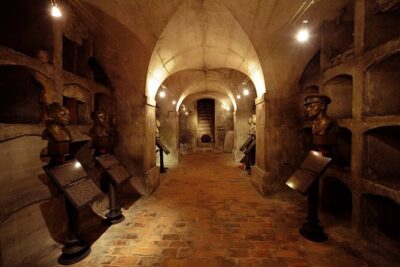
WWII in Prague Tour & The Crypt of Operation Anthropoid
Read our review →
Communism and Bunker Tour with 70s Canteen Lunch
Read our review →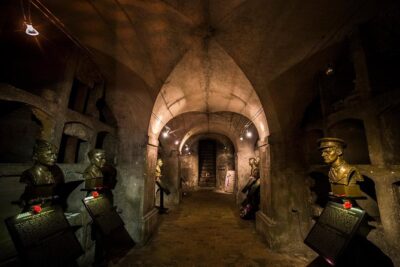
Small-Group World War 2 & Operation Anthropoid Tour in Prague
Read our review →
World War 2 and Operation Anthropoid Walking Tour
Read our review →Browse the lists this tour appears in