
REVIEW · COMMUNISM & WWII HISTORY TOURS
Prague Communism and World War II Walking Tour
History gets personal here. This two-hour Prague walking tour links Nazi occupation, Soviet control, and the Velvet Revolution through the streets where those events unfolded. I like the clear chronological approach, and I especially like the chance to hear local perspectives from guides such as Tomas, Martin, Maria, and Dominick. The main drawback is that the tour is more of an outdoor city walk than a site-heavy WWII tour, so you may find the Jewish Quarter and parachutist hideouts receive little or no attention.
At $30.12 per person, the tour offers a useful introduction to 20th-century Czech history without asking you to spend half a day indoors. It is a good fit if you want Prague to mean more than castles, churches, and pretty squares. I would just arrive ready to walk, listen closely, and ask questions, since the experience is strongest when the guide can shape the discussion around your interests.
In This Review
- Key points to know before booking
- Why this period matters in Prague
- Starting at Křižovnické náměstí beside the Old Town Bridge Tower
- New Town and the road to Nazi occupation
- From democracy to communist dictatorship
- Wenceslas Square and the Prague Spring
- The 1970s and 1980s, seen through ordinary streets
- Narodní třída and the Velvet Revolution
- What the guides do best
- Walking effort, group size, and practical value
- Who should book this Prague walk
- Should you book it?
- FAQ
- Where does the Prague Communism and World War II Walking Tour start?
- What time does the tour begin?
- How long does the walking tour last?
- What language is the tour offered in?
- Are food, drinks, or attraction tickets included?
- Can I cancel for a full refund?
Key points to know before booking
- A chronological walk from Nazi rule to 1989: The route connects the Second World War, the communist takeover, Prague Spring, the Soviet invasion, and the Velvet Revolution.
- Strong local storytelling: Guides including Tomas and Martin have been praised for clear explanations, personal memories, and lively discussion.
- Starts beside the Charles Bridge: You meet at Křižovnické náměstí, near the Old Town Bridge Tower, at 10:00 a.m.
- The focus is streets and stories, not museum interiors: Admission to attractions is not included because the tour takes place outdoors.
- Good value for history-minded visitors: The price is modest for a guided orientation that can sometimes run beyond the advertised two hours.
- Comfortable shoes matter: You cover a substantial part of central Prague on foot, with public transport nearby if needed.
Why this period matters in Prague
Prague can look wonderfully old-fashioned, but much of its modern character was shaped during the 20th century. In the space of a few decades, the city moved from the Austro-Hungarian world to an independent democratic republic, then endured Nazi occupation, Soviet influence, communist dictatorship, reform, invasion, and finally democratic change.
That sequence is the backbone of this walk. Instead of treating the past as a list of dates, the guide places it on familiar streets and squares. You begin in the Old Town, cross into the New Town, and finish around Wenceslas Square, a natural stage for some of the most important public events in Czech history.
I find that approach useful early in a Prague visit. You get an orientation to the city while learning why certain monuments, plaques, museums, and public spaces matter. The tour also gives you context for later visits to the Museum of Communism, Prague Castle, the National Museum, or sites linked to Operation Anthropoid.
More communism and wartime history tours:
- Prague: Communism History and Nuclear Bunker Guided Tour
★ 4.7 · 2,417 reviews - Prague Communism History and Nuclear Bunker Tour
★ 5.0 · 1,742 reviews - Communism & Nuclear Bunker Tour + 70s Canteen Lunch (own expense)
★ 5.0 · 1,036 reviews
Starting at Křižovnické náměstí beside the Old Town Bridge Tower
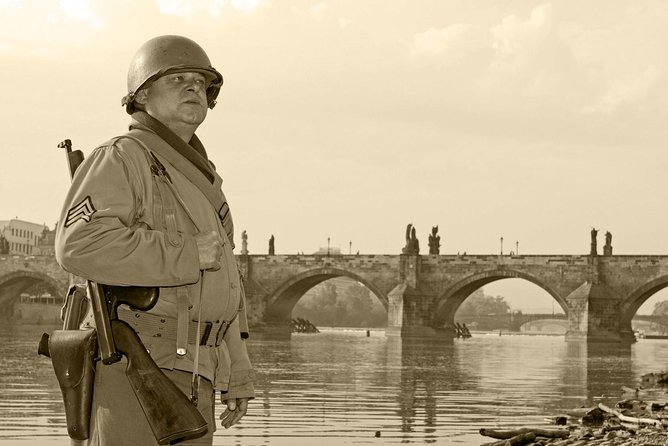
The meeting point is Křižovnické náměstí, in the heart of Prague’s Old Town. Look for the area by the Old Town Bridge Tower, near the approach to Charles Bridge. It is a central place to begin, though the square can be busy, so give yourself enough time to find the guide before the 10:00 a.m. start.
The opening view toward Prague Castle is more than a postcard moment. The castle has been the seat of Czech rulers and presidents, and it gives the guide a useful way to talk about power, statehood, and the symbols of Czech identity. From this same starting point, you learn about the enormous statue of Joseph Stalin that once stood elsewhere in Prague. It was once the largest Stalin monument in the world, a striking reminder of how strongly the communist government aligned itself with the Soviet Union.
This first stop is short, about 15 minutes, but it sets the tone. The guide is not simply pointing out attractive buildings. You are being asked to read Prague as a political city, where statues, public squares, government buildings, and monuments often reveal who held power at a given moment.
The location is convenient, but the area around Charles Bridge can be crowded. If you dislike busy tourist zones, do not judge the whole tour by its opening minutes. The route moves away from the biggest crowds as it continues.
New Town and the road to Nazi occupation
The walk then turns toward Prague’s New Town, where the guide explains how Czech lands moved from the Austrian monarchy to the independent state of Czechoslovakia. This background matters because the country was not simply a passive place caught between larger powers. The first Czechoslovak Republic was a democratic state with one of the strongest economies in its era, and after 1933 it was the last functioning democracy in Central and Eastern Europe.
That political foundation makes the events that followed easier to understand. The guide covers the Nazi Protectorate of Bohemia and Moravia and the pressures placed on Czech society during the Second World War. You hear about fear, control, resistance, and the difficult choices faced by ordinary people under occupation.
Operation Anthropoid is one of the key subjects. It was the successful assassination of Reinhard Heydrich, a senior Nazi figure and acting Reich Protector of Bohemia and Moravia. The operation was carried out by Czechoslovak agents trained in Britain, and its aftermath brought severe Nazi reprisals.
This part of the tour is valuable if you want the political setting around the operation, not just the dramatic event itself. The walk does not promise a visit inside the church crypt or a tour of the parachutists’ hideouts, and one past participant specifically found the WWII coverage less detailed than expected. If Operation Anthropoid is your main reason for booking, plan a separate visit to the relevant memorial sites.
That limitation is important. The tour gives you a broad framework, but it is not a specialist resistance tour. You should expect explanation and outdoor discussion rather than a concentrated sequence of wartime interiors.
From democracy to communist dictatorship
The New Town section also follows the end of the war and the changing political balance that allowed the Soviet Union to shape Czechoslovakia’s future. The guide explains how a formerly democratic country became a one-party communist state, and how the new government used political control, pressure, and fear to reshape daily life.
This is one of the strongest reasons to take the walk with a local guide. Facts about communist rule are easy to find in a book, but the street-level effect can be harder to grasp. Guides have described childhood experiences behind the Iron Curtain, including atomic drills at school and the ordinary routines of life under a system where the state reached into work, education, and public expression.
Tomas received particular praise for combining political history with family background and stories about growing up in Prague from the 1970s onward. Martin was also praised for making the period understandable and answering questions with ease. Those details suggest the tour works best as a conversation, not a one-way lecture.
Group size can reach 25 people, though some departures have been much smaller and even private in practice. A smaller group gives you more room to ask about daily life, censorship, Soviet influence, or the meaning of political terms. With a full group, you may need to stay close and save questions for natural pauses.
More walking tours:
- Prague: 3-Hour Walking Tour of Old Town & Prague Castle
★ 4.7 · 5,696 reviews - Prague: Ghost Walking Tour Where Legends Come To Life
★ 4.4 · 5,253 reviews - Prague: Jewish Quarter Walking Tour with Admission Tickets
★ 4.7 · 3,729 reviews - Prague Guided Walking Tour and Cruise with Authentic Czech Lunch
★ 5.0 · 3,627 reviews
Wenceslas Square and the Prague Spring
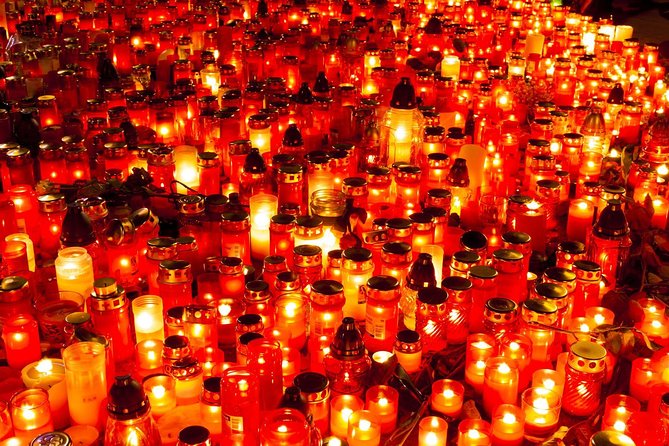
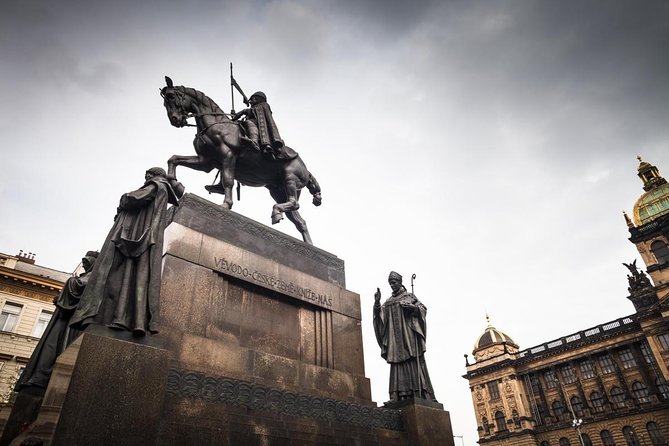
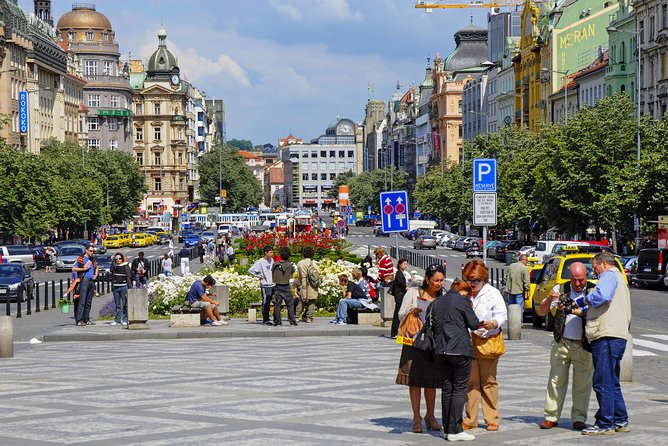
The longest part of the tour takes place around Wenceslas Square, or Václavské náměstí. Allow about an hour here and along the surrounding streets. This is where the story becomes especially visual, because the square has repeatedly served as a place for public celebration, protest, mourning, and political change.
The guide discusses the Prague Spring of 1968, when Alexander Dubček and reformers tried to create a more open form of socialism. The experiment was crushed when Soviet-led forces invaded Czechoslovakia. You are asked to picture tanks in the square and gunfire striking the National Museum.
The museum building still carries the memory of that invasion through the damage caused by shooting. Seeing the setting helps you understand why 1968 remains such a powerful subject in Czech public life. It was not an abstract dispute inside a distant government. It played out in the middle of Prague, in front of citizens who had briefly hoped for greater freedom.
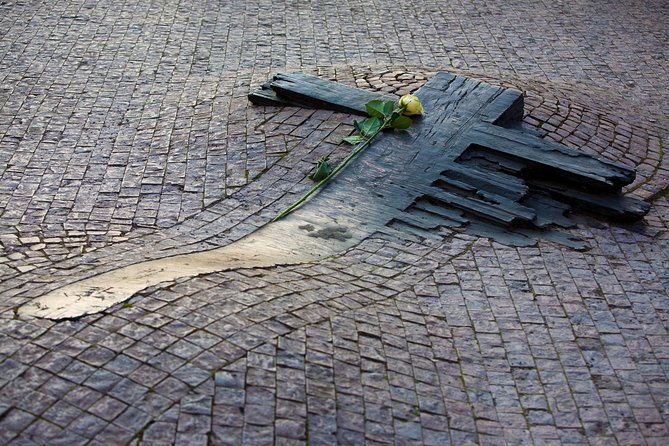
The tour also covers Jan Palach and Jan Zajíc, young students who set themselves on fire in 1969 in protest against the occupation and the loss of reform. Their acts are painful to discuss, and a good guide needs to handle them with care. Here, the subject is connected to the wider question of how people resist when tanks, police, and state power leave little room for ordinary protest.
The square itself is broad and easy to recognize, but traffic, trams, and city noise can compete with the guide’s voice. Stay near the group and do not wander off for photographs while the explanation is underway. There should be time to take pictures, but the storytelling is the main point.
The 1970s and 1980s, seen through ordinary streets
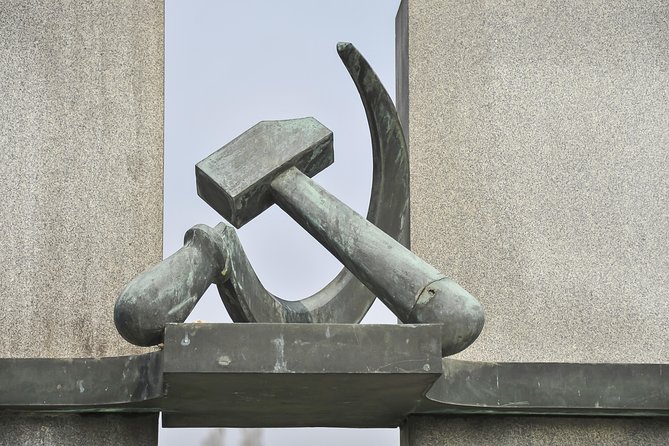
After the invasion, the tour moves into the period of normalization, when the communist government tightened control and rolled back the hopes of the Prague Spring. The guide explains the Brezhnev Doctrine and the wider Soviet policy that justified intervention in countries considered part of the Soviet sphere.
For me, this part is particularly useful because it bridges the gap between the drama of 1968 and the Velvet Revolution of 1989. Forty years of communism were not one unchanging block. The 1970s and 1980s had their own pressures, compromises, shortages, official rituals, and private ways of coping.
You may also hear humorous or unusual stories about the years after freedom returned. That lighter material helps prevent the walk from becoming relentlessly grim. Czech humor played an important role in dealing with authority, absurd rules, and political double-talk, and the guides use that spirit to show how people made sense of daily life.
This is also where the tour can become more personal. One guide was described as a student demonstrator during the Velvet Revolution and offered a first-hand account of 1989. That kind of testimony gives the final section unusual force, particularly when you are standing on streets where the protests actually unfolded.
Narodní třída and the Velvet Revolution
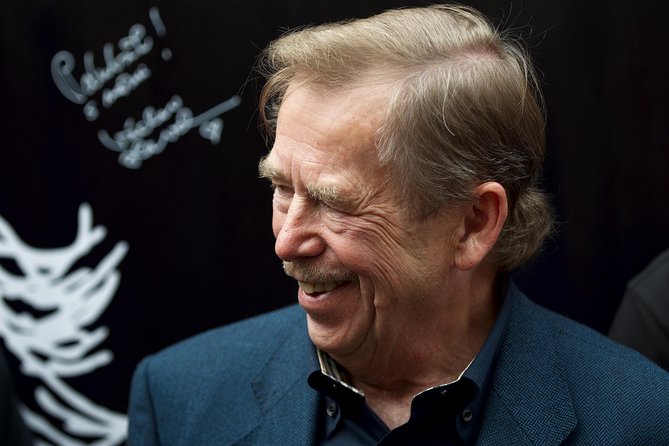
The final chapter concerns the November 1989 demonstrations and the collapse of communist rule. The guide introduces Václav Havel, student activists, police violence, and the clashes on Národní třída.
The Velvet Revolution was not a single heroic moment. It grew through demonstrations, public pressure, student action, artistic voices, and a government that was losing its ability to command belief. The guide links those parts together before bringing the story to the return of democracy.
If your guide has direct memories of the period, ask questions. A first-hand account can clarify what the demonstrations felt like, how news spread, and why the movement gathered force so quickly. The tour does not turn the revolution into a polished legend. It also includes some humorous and less familiar stories from the early years of renewed freedom.
The finish is in central Prague, with the precise endpoint described as Prague city centre. Because the route and length can vary, you should not schedule a tightly timed attraction immediately afterward. Several outings have run longer than two hours, especially when the group had many questions or the guide extended the walk for an interested audience.
What the guides do best
The strongest part of this experience is the quality of the guide. Tomas was praised for being articulate, engaging, and willing to continue the conversation over coffee or a beer. Martin was repeatedly described as clear, pleasant, and able to explain both WWII and communist-era Prague. Maria received praise for taking the group to less familiar parts of the city and extending the outing beyond three hours when time allowed.
Dominick also handled difficult historical questions well, including questions from someone with a strong background in the subject. That matters because this tour covers complicated issues, not just a simple sequence of occupation, dictatorship, and liberation.
The guide’s personality will shape your experience. Some people may receive a young university student with excellent English and a mature grasp of the subject. Others may get a guide with direct family or personal memories of communism and 1989. The shared strength is discussion. Ask about daily life, the Soviet role, Czech identity, the EU, or what changed after 1989.
English is the stated language, and the tour is offered with a mobile ticket. Confirmation is provided when you book.
Walking effort, group size, and practical value
This is a two-hour walking tour, but it is not a gentle stroll around one square. You move through several central areas and may cover a substantial distance. Wear comfortable shoes, bring water, and keep enough space in your day for a possible extension.
The tour is near public transportation, which helps if you need to return to your hotel or continue to another part of Prague. Food and drinks are not included, but that is hardly a problem in central Prague, where you can easily continue with lunch or a coffee after the walk.
At $30.12, I consider the price fair if you use the tour as an orientation and then follow up independently. The guide gives you a framework for deciding which places deserve more of your time. You can visit the Museum of Communism afterward, and you may want to seek out the memorials connected with Operation Anthropoid or the Velvet Revolution.
The value is lower if you want entry to museums, underground spaces, wartime bunkers, or a dedicated Jewish Quarter tour. Those are not the focus here, and admission tickets are not included.
Who should book this Prague walk
I would choose this tour if you enjoy modern European history, want to understand Czech politics, or prefer local stories to a standard sightseeing route. It is also a smart first or second-day activity because it helps explain what you are seeing throughout the rest of your stay.
It suits adults and older children who can follow serious subjects and manage a fairly long walk. Children must be accompanied by an adult. Most people can participate, but anyone with mobility concerns should consider the walking distance and ask the provider for current route details before booking.
I would not choose it as my only WWII activity in Prague. If your central interest is the Holocaust, the Jewish Quarter, resistance hideouts, or the physical traces of the 1942 assassination plot, you need a more focused tour or museum visit.
Should you book it?
Book this walk if you want a compact, thoughtful introduction to Prague’s troubled 20th century and value a guide who can connect public events with ordinary life. The best departures appear to be the ones with a strong storyteller and a small group, so be ready to ask questions and take advantage of the conversation.
Skip it if you want many interior visits or a tightly specialized WWII route. For most history-minded visitors, though, $30.12 is a reasonable price for a central Prague orientation, especially when the guide adds personal memories and the walk runs beyond its planned two hours. Free cancellation is available up to 24 hours before the 10:00 a.m. start, which gives you some flexibility while planning.
FAQ
Where does the Prague Communism and World War II Walking Tour start?
The tour starts at Křižovnické náměstí, near the Old Town Bridge Tower in central Prague.
What time does the tour begin?
The stated start time is 10:00 a.m.
How long does the walking tour last?
The advertised duration is approximately two hours. Some outings have lasted longer when the group had questions or the guide extended the walk.
What language is the tour offered in?
The tour is offered in English.
Are food, drinks, or attraction tickets included?
No. The experience includes a professional guide, but food, drinks, and admission tickets are not included.
Can I cancel for a full refund?
Yes. You can cancel at least 24 hours before the experience start time for a full refund. Cancellations or changes made less than 24 hours before the start are not accepted for a refund.
Just added around Prague
- Private Day trip from Prague to Kutná Hora★ 5.0 · 3 reviews
- PRAGUE AIRSOFT SHOOTING GAMES★ 4.7 · 3 reviews
- Private 4-hour City Tour of Prague with driver & official guide w/ Hotel pick up★ 5.0 · 3 reviews
- Glass blowing in Prague★ 4.6 · 3 reviews
- Prague to Karlovy Vary Private Transfer★ 4.5 · 3 reviews
- Disney’s Tarzan Musical★ 5.0 · 3 reviews
- Prague Private Tour★ 5.0 · 3 reviews
- Private Bohemian Glass and Czech Crystal Tour with lunch included★ 5.0 · 3 reviews
Communism & WWII History Tours, compared.

Communism History and Nuclear Bunker Guided Tour
Read our review →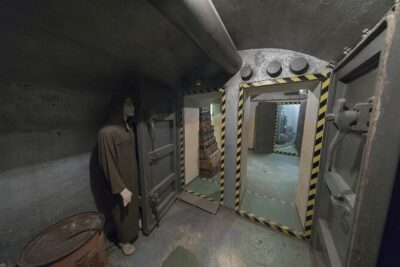
Prague Communism History and Nuclear Bunker Tour
Read our review →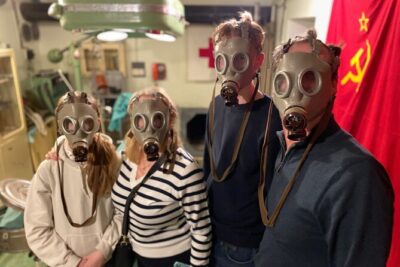
Communism & Nuclear Bunker Tour + 70s Canteen Lunch (own expense)
Read our review →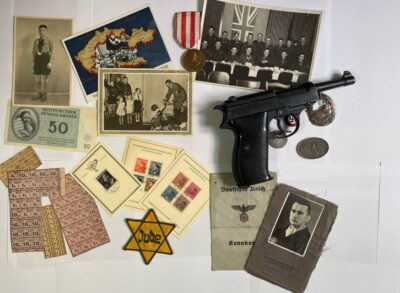
WWII Guided Tour & The Crypt of Operation Anthropoid
Read our review →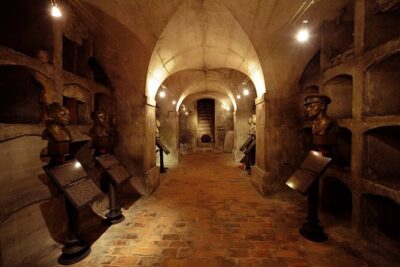
WWII in Prague Tour & The Crypt of Operation Anthropoid
Read our review →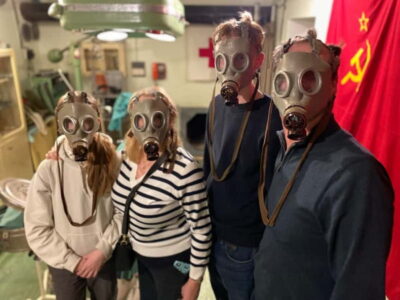
Communism and Bunker Tour with 70s Canteen Lunch
Read our review →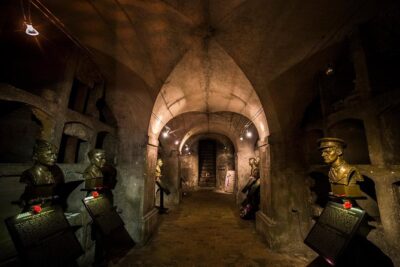
Small-Group World War 2 & Operation Anthropoid Tour in Prague
Read our review →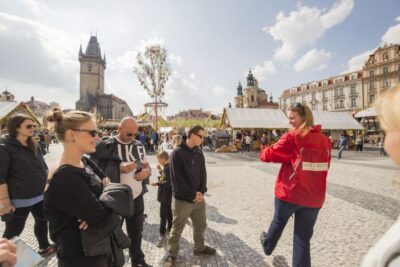
World War 2 and Operation Anthropoid Walking Tour
Read our review →Browse the lists this tour appears in