
REVIEW · COMMUNISM & WWII HISTORY TOURS
Prague Cold War Walking Tour
Prague keeps its secrets in plain sight. This three-hour walking tour connects Communist-era landmarks with the political events that shaped modern Czechia, led by a historian and limited to eight people. I like the small group size, which should leave room for real questions, and I like the route’s range, from nuclear shelter doors and propaganda art to the John Lennon Wall and Wenceslas Square.
The main drawback is the climb to Vitkov Hill, which takes about 20 to 30 minutes uphill. At $126.43 per person, the tour is not cheap for a walking tour, so it makes the most sense if you want serious historical context rather than a quick city stroll.
In This Review
- Key Points to Know Before You Book
- Why This Tour Adds More Than a Communist Label
- Starting Near Náměstí Republiky
- The Karlin-Zhizhkov Tunnel and Its Sealed Cold War Corridors
- Vitkov Hill: Monument, Mausoleum, and a Serious Climb
- The Zizkov Television Tower and Brutalist Prague
- Letna Hill and the Stalin Statue That Disappeared
- The John Lennon Wall and Political Protest
- National Assembly and the Machinery of Government
- Wenceslas Square and the Velvet Revolution
- The Upside-Down Wenceslas Statue
- Is $126.43 a Fair Price?
- Who Will Get the Most From This Walk?
- Should You Book the Prague Cold War Walking Tour?
- FAQ
- How long is the Prague Cold War Walking Tour?
- What time does the tour start?
- Where does the tour meet?
- How large is the group?
- Is the Vitkov Hill climb difficult?
- What is included in the price?
Key Points to Know Before You Book
- Klement Gottwald’s former mausoleum reveals the strange ceremonial side of Czechoslovak Communism, including the adjoining embalming laboratory.
- Vitkov Hill requires a steep uphill climb, but it brings you to a major monument, a former Soviet soldier hall, and Jan Zizka’s huge equestrian statue.
- The group is capped at eight people, a useful limit for a history-heavy tour with discussion.
- Tram tickets are included, while food, drinks, hotel transfers, and admission to the Vitkov monument are not.
- Vadim earned especially strong praise for leading a sophisticated discussion of Communism in the Czech lands.
- Wenceslas Square ties the story together, from occupying armies and Prague Spring to the Velvet Revolution.
Why This Tour Adds More Than a Communist Label
Prague is often presented through castles, churches, Baroque streets, and beer halls. Those are good reasons to visit, but they tell only part of the city’s story. The decades after the Second World War left marks on public squares, statues, apartment districts, government buildings, and even the routes used by city transport.
This experience focuses on those marks. You are not simply shown a statue and told its date. The guide connects architecture and public art to political power, nationalism, Soviet influence, and protest. That approach matters because Communist Czechoslovakia was not a simple copy of Moscow. Local identity, Czech and Slovak nationalism, wartime memory, and party politics all shaped the system.
The tour is offered in English and lasts about three hours. It is built for people who want explanation, not just photographs. One especially positive assessment singled out Vadim for an intellectual, sophisticated discussion of Communism in the Czech lands. That is the sort of guide you want here, since many of the key stories involve political nuance rather than a neat good-versus-bad plot.
The group limit of eight is another real advantage. In a large group, a stop such as the former mausoleum could become a quick glance followed by a speech at the back of the crowd. With eight people or fewer, you have a better chance to hear clearly and ask about the details that catch your attention.
More communism and wartime history tours:
- Prague: Communism History and Nuclear Bunker Guided Tour
★ 4.7 · 2,417 reviews - Prague Communism History and Nuclear Bunker Tour
★ 5.0 · 1,742 reviews - Communism & Nuclear Bunker Tour + 70s Canteen Lunch (own expense)
★ 5.0 · 1,036 reviews
Starting Near Náměstí Republiky
The published meeting point is Náměstí Republiky 1077/2 in Prague 1, while the tour description identifies St. Joseph Church as the beginning of the walk. Because both details appear in the tour information, check the final meeting instructions before setting out. The listed start time is 2 p.m., though a morning departure may be available if requested at booking.
This is a walking experience, but tram tickets are included. That tells you something about the route: the tour is not confined to one compact central neighborhood. You will use Prague’s transport system to connect sites that tell different parts of the Communist story.
Wear shoes with good grip and bring water. The walk includes a substantial uphill section, and the tour’s own guidance calls for moderate physical fitness. If climbing is difficult for you, a private alternative can leave out Vitkov Hill and focus on Cold War sites in the city center.
The Karlin-Zhizhkov Tunnel and Its Sealed Cold War Corridors
The first stop is the pedestrian tunnel between Karlin and Zhizhkov. You walk through it and look at locked doors leading toward nuclear bomb-shelter corridors built during the Cold War.
This is a modest start, but it sets the mood well. You are not entering a staged museum display. Instead, you are seeing the ordinary fabric of the city with traces of civil defense built into it. The locked doors raise practical questions about what happened during a nuclear emergency, how public shelters were maintained, and how much of Cold War planning remains visible today.
The stop lasts about 10 minutes, so do not expect an extended underground visit. The shelter corridors are observed through the existing access points rather than presented as a full attraction. That is both the strength and limitation of the stop: it feels like a real urban remnant, but it is brief and visually restrained.
Vitkov Hill: Monument, Mausoleum, and a Serious Climb
Vitkov Hill is the tour’s largest stop, taking about an hour. It is also the part that demands the most from you physically. Reaching the National Monument involves a 20 to 30 minute uphill climb, so pace yourself and do not treat the ascent as a minor detail.
The monument itself commemorates Czech and Slovak soldiers of the First World War. That older memorial purpose is important because Communist authorities did not erase every earlier national symbol. They often reused, reframed, or placed new political meaning around them.
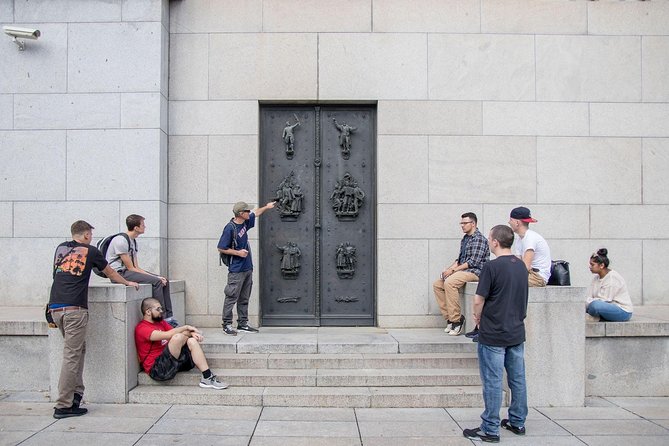
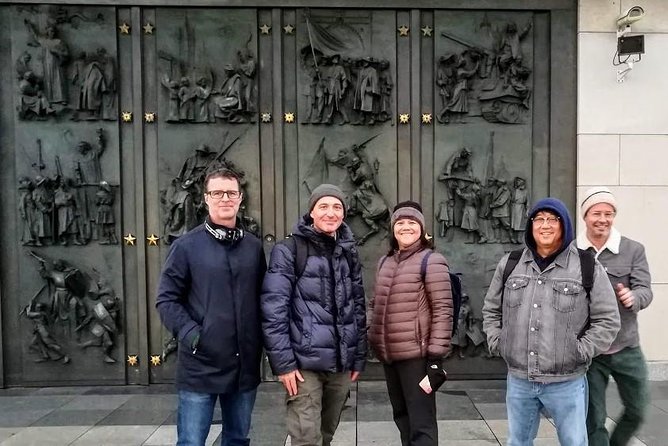
Inside, you learn about the Hall of the Soviet Soldier and the former mausoleum of Klement Gottwald. Gottwald was the first chairman of the Communist Party of Czechoslovakia and later the party’s general secretary and chairman. His embalmed body was once displayed there in the style of a Communist leader cult, much like the treatment given to certain Soviet rulers.
The adjoining laboratory, where Gottwald’s body was embalmed, adds an unsettling practical detail. It shows how political power could turn a human body into a public symbol. The ceremony was not only about mourning. It was about presenting the leader as permanent, almost beyond ordinary death.
This stop gives the guide room to explain party propaganda and the symbolism of public monuments. You may find the material sobering rather than entertaining, but that is the point. The tour is at its strongest when it shows how ideology entered buildings, ceremonies, school lessons, and patriotic imagery.
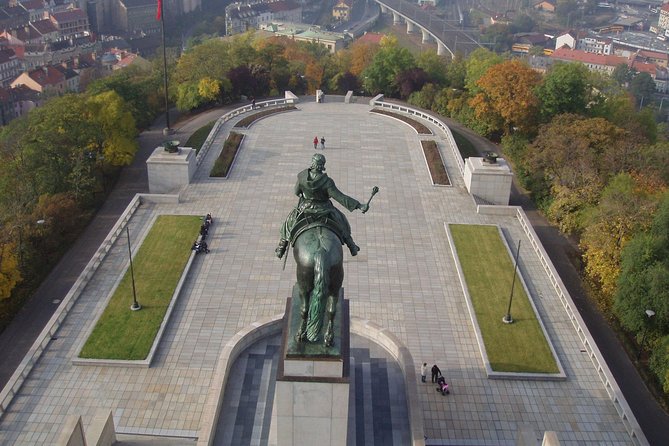
Outside, the monument to Jan Zizka dominates the hill. The statue is described as the third-largest bronze equestrian statue in the world. Zizka was a medieval military commander, and his image allowed the Communist state to connect itself with an older story of Czech resistance and national strength.
That connection is worth paying attention to. Communist rule did not rely only on Soviet symbols. It also tried to present itself as the latest chapter in Czech national history. The guide uses Vitkov to explain why nationalism mattered so much in local Communist politics.
Admission to the Vitkov monument is not included in the tour price, so budget for that separately if entry is required for your visit. The climb and extra admission make this the point where the tour’s value depends most on your interest in history. If you mainly want scenic viewpoints, you may find the explanations too detailed. If you want to understand how Communist power was presented to the public, this is the essential stop.
More walking tours:
- Prague: 3-Hour Walking Tour of Old Town & Prague Castle
★ 4.7 · 5,696 reviews - Prague: Ghost Walking Tour Where Legends Come To Life
★ 4.4 · 5,253 reviews - Prague: Jewish Quarter Walking Tour with Admission Tickets
★ 4.7 · 3,729 reviews - Prague Guided Walking Tour and Cruise with Authentic Czech Lunch
★ 5.0 · 3,627 reviews
The Zizkov Television Tower and Brutalist Prague
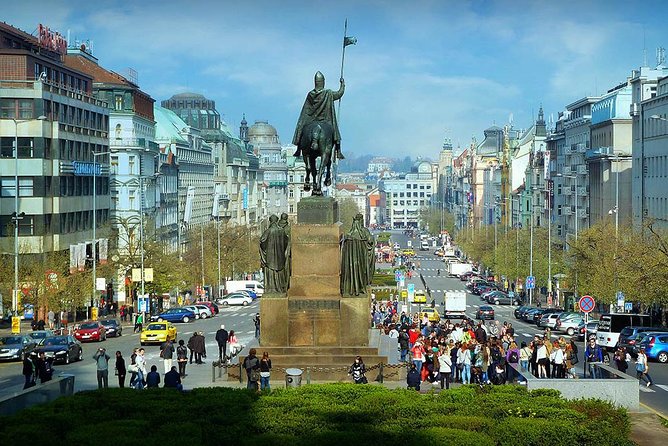
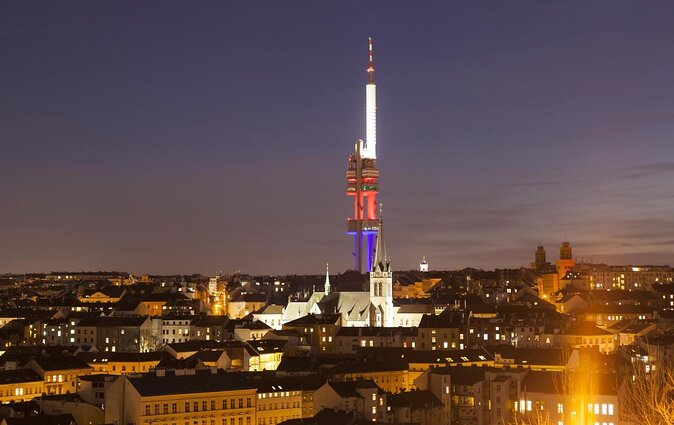
The route includes a short stop for the best view of the Zizkov Television Tower. The stop lasts about five minutes and does not include admission.
The tower is a useful visual break after the monument. Its Brutalist design is often divisive, but that is exactly why it belongs in a tour about Prague’s recent political and architectural past. The structure reflects the confidence and hard-edged modernism associated with the Communist period, even though its meaning today is more complicated.
Do not expect a full visit inside the tower. You are stopping to view and discuss it from the outside. Five minutes is enough to identify its form and place it within Prague’s modern architecture, but not enough for a long architectural lecture or an observation-deck visit.
Letna Hill and the Stalin Statue That Disappeared
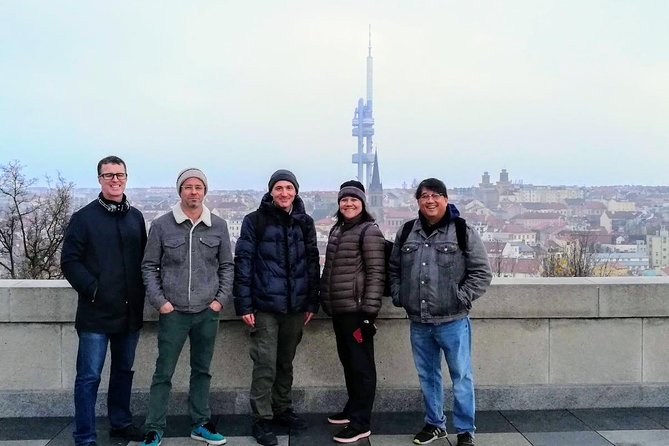
Letna Hill was once home to an enormous statue of Joseph Stalin. The monument is gone, but the site remains important because it shows how quickly public symbols can change when political power shifts.
The tour uses the former statue location to explain Stalinism and the human cost of political cults. It also includes the tragic story of the sculptor who created the monument. That detail makes the stop more than a simple account of demolition. It points to the pressure placed on artists and officials when a state demands grand symbols of loyalty.
The site is also useful for understanding scale. A huge statue is not only an artwork. It changes how people experience a public space and tells them which figure the state wants to place above everyone else. Standing where the statue once dominated the hill helps you imagine the visual force of that message, even though the object itself is gone.
The John Lennon Wall and Political Protest
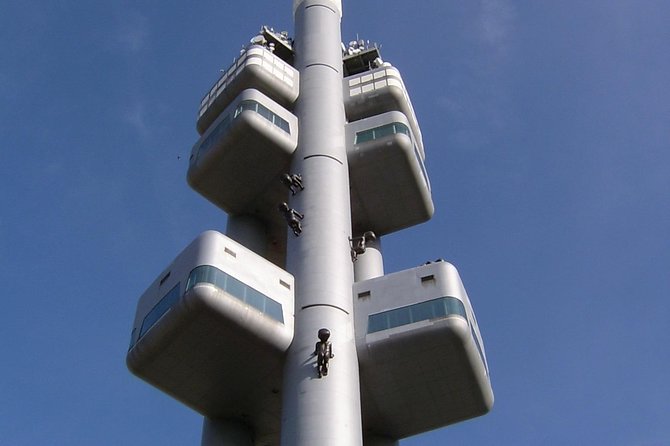
The John Lennon Wall brings the tour into a different kind of public expression. It became an important site of political protest, with messages connected to peace, freedom, and opposition to the Communist government.
This stop works because it shows protest at street level. The earlier monuments represent official power, while the wall represents people making their own public message. The contrast is sharp: one side uses stone, bronze, ceremonies, and state funding; the other uses handwritten words, paint, and repeated acts of defiance.
The wall is also a reminder that political protest does not always begin with a formal organization or a major march. A public surface can become a gathering point and a place where people test the limits of authority. Your guide can place the wall within the wider story of dissent, censorship, and the desire for cultural freedom.
Expect a short visit rather than a long art lesson. The main value comes from its political role and from seeing how a symbolic place fits into the city’s larger story.
National Assembly and the Machinery of Government
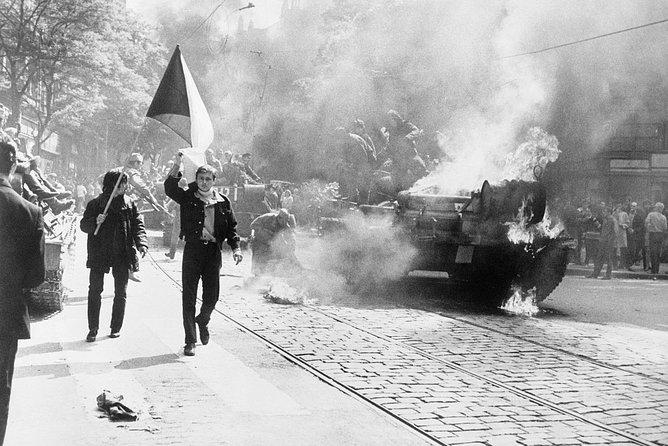
As the walk continues, you pass the National Assembly building, which served as the seat of the Communist government. This is an important change of focus. The tour moves from monuments and protest sites to the institutions that made policy and exercised control.
A government building may look formal and unremarkable from the outside, but its role gives the surrounding street a different weight. Here, the guide can explain how political authority was organized and how the party state operated in practice.
This is one reason a historian-led route is more useful than a self-guided list of Communist landmarks. You are encouraged to connect the building to the people, decisions, and public ceremonies associated with it. The tour does not treat architecture as decoration. It uses buildings as evidence.
Wenceslas Square and the Velvet Revolution
Wenceslas Square is the emotional center of the tour. The guide traces the square from its founding in the 14th century through military parades by occupying powers, the Prague Spring, and the events of the Velvet Revolution.
The square’s size makes it suited to mass politics. It could host official displays of power, but it could also hold enormous public gatherings against the government. That double role helps explain why Wenceslas Square appears again and again in accounts of Czech political life.
The Prague Spring is discussed as part of the square’s painful story. In 1968, attempts to create a more open form of socialism collided with Soviet-led military intervention. The square later became a place of public opposition, and the Velvet Revolution ignited there in 1989.
The tour’s description of the revolution as gathering force in a single day captures the dramatic change, but the wider lesson is more useful. Political systems can look fixed until public fear breaks. The guide helps you connect the excitement of mass protest with the long pressure that came before it.
By the end, you should have a clearer sense of how Communism rose in Czechoslovakia, how Soviet power shaped the country, and why the revolution remains part of modern Czech identity. You also hear about the continuing echoes of those events, rather than treating 1989 as a clean endpoint.
The Upside-Down Wenceslas Statue
The final listed stop is the upside-down statue of King Wenceslas riding a dead horse. This ironic sculpture offers a lighter, sharper ending after the heavy material at Vitkov and Wenceslas Square.
The work plays with the familiar image of Saint Wenceslas, the patron figure associated with Czech identity. Reversing the traditional pose creates a pointed comment on political authority and contemporary Central European life.
It is a small stop, lasting about five minutes, but it gives you a chance to consider how political criticism can appear through humor and absurdity. After seeing official monuments built to command respect, you end with an artwork that questions the symbols people are expected to honor.
Is $126.43 a Fair Price?
At $126.43 per person, this is a high-priced walking tour. The fee is easier to justify because the group is capped at eight, a historian leads the experience, and tram tickets are included. You are paying for interpretation and a carefully connected route, not simply for someone to point out buildings.
The value depends on how you use your time in Prague. If you want a broad introduction to the city, this is too specialized. If you have already seen the Old Town and Prague Castle, the tour offers a different city, one shaped by party rule, public ceremony, forced memory, and protest.
The Vitkov admission fee is extra, and food and drinks are not included. Hotel pickup and drop-off are also excluded, so plan to reach the meeting point yourself and arrange your return after the walk.
Free cancellation is available if you cancel at least 24 hours before the start time. Changes or cancellations made later are not accepted for a refund.
Who Will Get the Most From This Walk?
I would recommend this tour to you if you enjoy political history, modern European affairs, architecture, public art, or guided discussions that move beyond dates. It is particularly useful if you want to understand the Velvet Revolution as part of a longer story rather than as one dramatic afternoon in 1989.
You should also be comfortable walking for three hours and climbing Vitkov Hill. The private version that skips Vitkov is a better choice if the uphill section would make the tour unpleasant.
This is not the right pick if you want a relaxed stroll with plenty of café time. The subject matter can be grim, and the guide may spend more time explaining ideology and power than pointing out postcard views.
Should You Book the Prague Cold War Walking Tour?
Book it if you want a serious, small-group look at Prague’s Communist past and you value a historian who can connect monuments, government buildings, protest sites, and national identity. The strongest reason to choose it is the quality of the discussion, with Vadim receiving especially warm praise for an intellectual treatment of the subject.
Skip it if you are watching your budget, dislike uphill walks, or want a general sightseeing tour. For everyone else, the route offers something rare in Prague: a way to see the city’s 20th-century scars and political symbols without reducing them to a few slogans.
FAQ
How long is the Prague Cold War Walking Tour?
The tour lasts approximately three hours.
What time does the tour start?
The listed start time is 2 p.m. A morning departure may also be available if requested when booking.
Where does the tour meet?
The listed meeting point is Náměstí Republiky 1077/2 in Prague 1. The tour description also identifies St. Joseph Church as the beginning, so confirm the exact meeting instructions before the tour.
How large is the group?
The tour has a maximum of eight participants.
Is the Vitkov Hill climb difficult?
The walk to the Vitkov Hill monument includes a steep uphill climb lasting about 20 to 30 minutes. Moderate physical fitness is recommended.
What is included in the price?
A historian guide and tram tickets are included. Food, drinks, hotel pickup and drop-off, and admission to the Vitkov monument are not included.
Just added around Prague
- Private Day trip from Prague to Kutná Hora★ 5.0 · 3 reviews
- PRAGUE AIRSOFT SHOOTING GAMES★ 4.7 · 3 reviews
- Private 4-hour City Tour of Prague with driver & official guide w/ Hotel pick up★ 5.0 · 3 reviews
- Glass blowing in Prague★ 4.6 · 3 reviews
- Prague to Karlovy Vary Private Transfer★ 4.5 · 3 reviews
- Disney’s Tarzan Musical★ 5.0 · 3 reviews
- Prague Private Tour★ 5.0 · 3 reviews
- Private Bohemian Glass and Czech Crystal Tour with lunch included★ 5.0 · 3 reviews
Communism & WWII History Tours, compared.

Communism History and Nuclear Bunker Guided Tour
Read our review →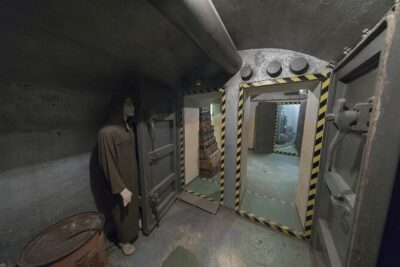
Prague Communism History and Nuclear Bunker Tour
Read our review →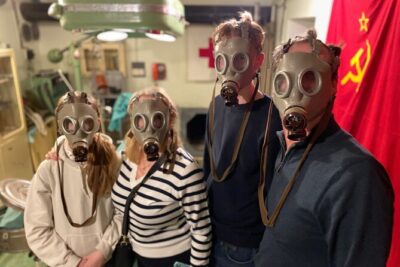
Communism & Nuclear Bunker Tour + 70s Canteen Lunch (own expense)
Read our review →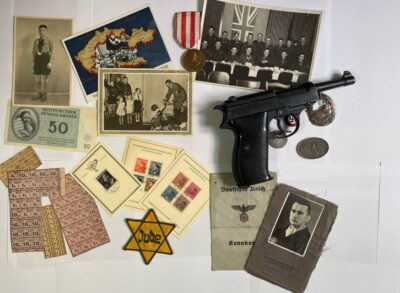
WWII Guided Tour & The Crypt of Operation Anthropoid
Read our review →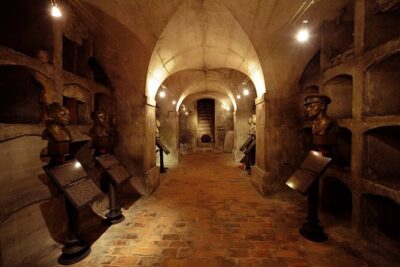
WWII in Prague Tour & The Crypt of Operation Anthropoid
Read our review →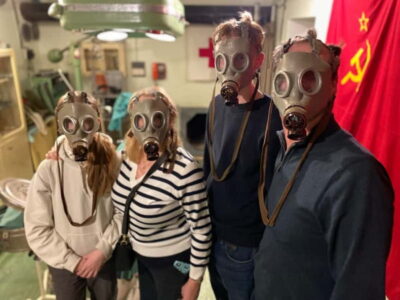
Communism and Bunker Tour with 70s Canteen Lunch
Read our review →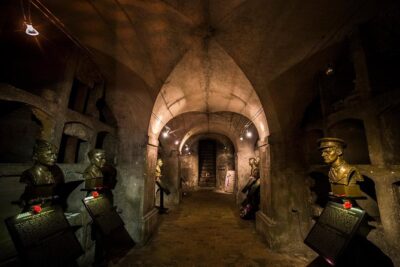
Small-Group World War 2 & Operation Anthropoid Tour in Prague
Read our review →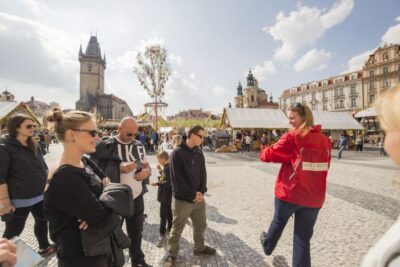
World War 2 and Operation Anthropoid Walking Tour
Read our review →Browse the lists this tour appears in