
REVIEW · COMMUNISM & WWII HISTORY TOURS
Prague: 2-Hour Back to Communism Walking Tour
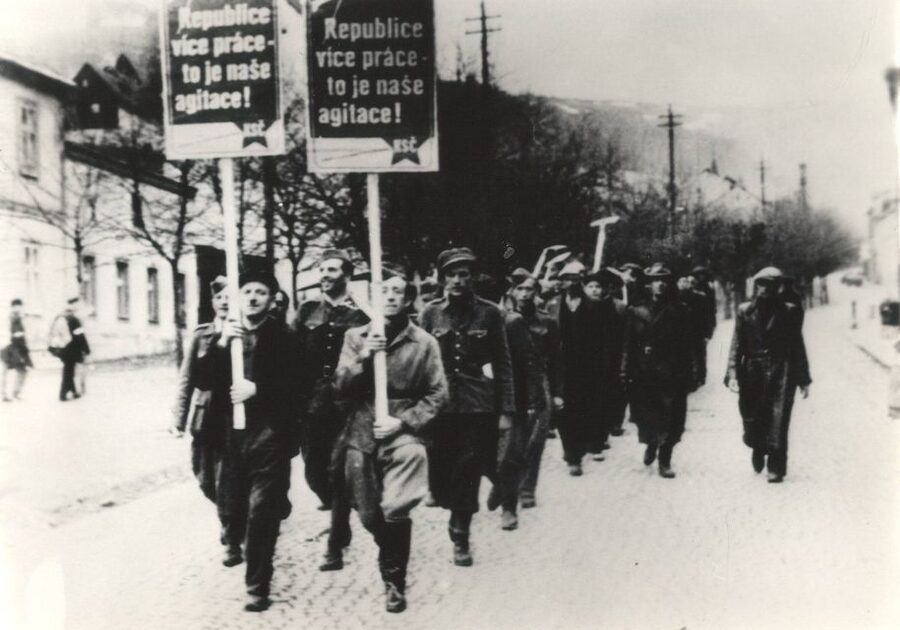
Prague’s past is closer than it looks. This walking tour connects former secret police offices, protest sites, Communist Party buildings, the old Stalin statue location, and places tied to Soviet occupation. I like the firsthand local perspective, since guides lived through the period rather than treating it as a distant textbook subject. I also like the focus on ordinary life, not just party leaders and dates. The main concern is guide consistency: one German-language booking had trouble with the guide’s fluency, and another suffered when the guide spent much of the tour handling phone messages.
The tour costs about $50 per person and lasts roughly two hours. That is a fair price if you want political context and personal stories in one compact walk, especially when a group booking ends up operating like a private tour. If you want grand buildings, classic Prague views, or a broad introduction to Czech culture, this is probably too narrow.
In This Review
- Key points before you book
- Why this tour gives Prague a different face
- Starting at Na Příkopě 28 or Na Příkopě 864
- The opening lesson: socialism, communism, and Prague
- Former secret police headquarters and the machinery of control
- The old Stalin statue site and the power of public space
- Party offices, protests, occupation, and revolution
- Daily life under Communism, not just political theory
- Guide quality and language choice
- Is $50 a fair price for two hours?
- Who should book this walk?
- Practical advice for a smoother experience
- Should you book the Back to Communism walk?
- FAQ
- How long does the Prague Back to Communism Walking Tour last?
- Where does the tour begin?
- Which languages are available?
- What places related to Communism will I see?
- What should I bring?
- Is the tour wheelchair accessible?
Key points before you book
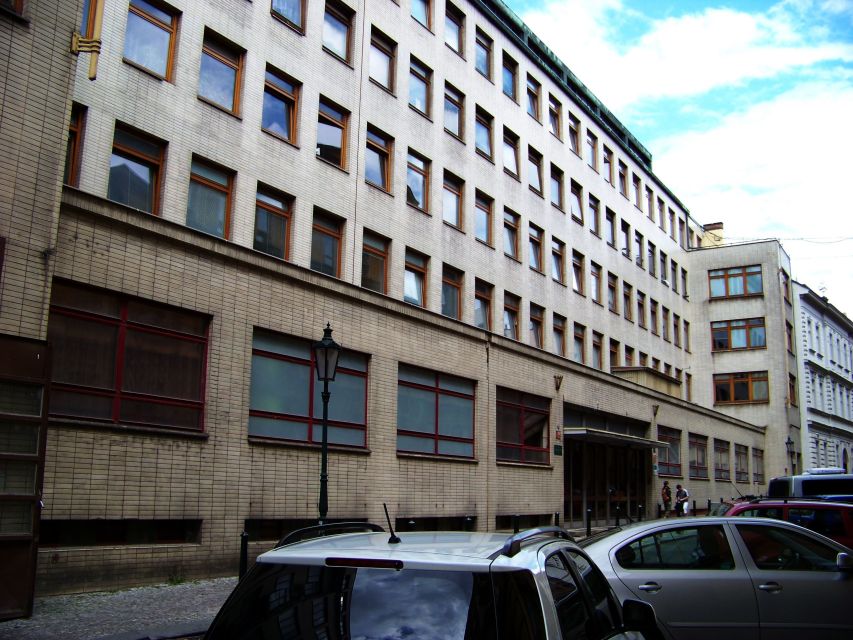
- Former secret police headquarters: See a site connected with the machinery of Communist surveillance and state control.
- A local guide who lived through the era: The strongest part of the walk is the chance to hear how daily life felt under the system.
- The former Stalin statue site: One stop links Prague’s public spaces with the visual power once used to promote Soviet rule.
- Places of protest and revolution: The route helps connect demonstrations, rebellion, occupation, and political change.
- A useful two-hour format: You get serious historical context without giving up a full morning or afternoon.
- German-language quality may vary: Czech and English appear to be safer choices if precise German explanations matter to you.
Why this tour gives Prague a different face
Most first visits to Prague focus on medieval lanes, castle courtyards, Baroque churches, and handsome squares. This walk takes you toward a less polished story. It asks how the city functioned under socialism and communism, how Soviet power shaped public life, and how ordinary people managed inside a controlled system.
I like that the tour begins with an explanation of socialism and communism rather than assuming you already know the difference. The guide covers the rise of these ideas in the 19th century, then follows their spread into Central and Eastern Europe. That opening gives the later stops a purpose. You are not simply looking at a building and hearing that something happened there. You are given the political framework needed to understand why it mattered.
The tour also treats communism as a lived system. You hear about important personalities, dates, protests, rebellions, revolutions, and the Soviet occupation, but you also hear about everyday routines and pressures. That balance matters. A political tour can become a parade of official names. This one aims to show what the system meant at street level.
I would choose it early in a Prague visit if modern Central European history interests you. The ideas and locations can add weight to the rest of your sightseeing. Afterward, a Communist-era building or public square may look less like a neutral backdrop and more like part of a long argument about power.
More communism and wartime history tours:
- Prague: Communism History and Nuclear Bunker Guided Tour
★ 4.7 · 2,417 reviews - Prague Communism History and Nuclear Bunker Tour
★ 5.0 · 1,742 reviews - Communism & Nuclear Bunker Tour + 70s Canteen Lunch (own expense)
★ 5.0 · 1,036 reviews
Starting at Na Příkopě 28 or Na Příkopě 864
There are two possible starting points on Na Příkopě, at numbers 28 and 864. Check your selected option carefully, because the meeting place can change depending on the booking. This is the sort of small detail that can decide whether your tour begins calmly or with a hurried search along a busy central street.
The central location is practical for a walking experience. You will not need to arrange a separate transfer to the edge of Prague, and the short duration fits neatly between other sights. I would arrive with enough time to confirm the exact starting point and keep your phone available for meeting instructions.
Bring a passport or identity card. Large bags and luggage are not allowed, so this is not a good activity to schedule while moving between hotels with suitcases in tow. A small day bag is the sensible choice, provided it meets the operator’s restrictions.
The tour is wheelchair accessible. Since the experience takes place on city streets and involves moving between several historical locations, you should still confirm the practical details for your particular booking if you use a wheelchair.
The opening lesson: socialism, communism, and Prague
The first part is not just a quick welcome. You receive an introduction to the history and theory of socialism and communism, including their 19th-century origins and their spread across the region. This can be especially useful if your previous knowledge comes mostly from Cold War headlines.
I appreciate this approach because it gives the tour some intellectual shape. The guide can explain the difference between an idea and the way a state applied it. That distinction is important. Political systems often look tidy in theory and far messier in daily life.
You will also hear how Czechoslovakia fit into the larger Soviet sphere after the Second World War. The tour centers on Prague, but the subject reaches beyond one city. The goal is to show how Soviet influence affected Central and Eastern Europe and how that influence appeared in government, public space, policing, and popular resistance.
The amount of detail will depend on your guide and the language of your booking. The strongest feedback praises guides who tell the story with unusual anecdotes and explain its different sides. I would expect a discussion rather than a simple memorized speech, since questions are welcome throughout.
Former secret police headquarters and the machinery of control
One of the most meaningful stops is the former headquarters of the secret Communist police. The building matters because it points to the less visible side of the era. Public monuments and party offices show what the state wanted people to see. A secret police headquarters points toward surveillance, pressure, and the enforcement of political loyalty.
You should not expect a museum visit or a large interior exhibition from the information provided. The value is in understanding the location and its role. A guide who lived through the period can explain why such an address carried fear or significance, even if the building itself looks ordinary today.
I find stops like this more useful than a long list of official slogans. They give the political story a physical anchor. You are standing in a place connected with the state’s ability to watch, question, intimidate, and control. That makes the abstract discussion of Communism more concrete.
The tour also describes some areas as still carrying a sense of depression. That is a striking detail, but it should be treated as atmosphere and memory rather than a promise that every stop will feel dramatic. Some locations may look changed, busy, or completely normal. The contrast is part of the point.
More walking tours:
- Prague: 3-Hour Walking Tour of Old Town & Prague Castle
★ 4.7 · 5,696 reviews - Prague: Ghost Walking Tour Where Legends Come To Life
★ 4.4 · 5,253 reviews - Prague: Jewish Quarter Walking Tour with Admission Tickets
★ 4.7 · 3,729 reviews - Prague Guided Walking Tour and Cruise with Authentic Czech Lunch
★ 5.0 · 3,627 reviews
The old Stalin statue site and the power of public space
The former location of the Stalin statue offers another way to read Prague. A monument of that scale was not merely decoration. It put Soviet authority into the city’s skyline and made political loyalty visible in stone.
The tour uses this site to explain how public spaces can serve a government’s message. You learn about the former statue and the role such symbols played during the Communist period. The stop also helps you consider what happens when a political symbol disappears. The place remains, even after the monument is gone.
This is a good example of why a walking tour can work better than a lecture in a room. You can connect a broad story about propaganda and Soviet power with the actual setting in Prague. I like that kind of physical connection, especially when the guide adds personal memories or local anecdotes.
Do not book this walk expecting a sequence of spectacular viewpoints. The attraction is the meaning attached to the locations. The city’s appearance is only one layer. The political story underneath is what you are paying to explore.
Party offices, protests, occupation, and revolution
The route continues to places linked with the Communist Party, including both current and former seats. These sites help explain how political authority operated in public and how its presence changed over time.
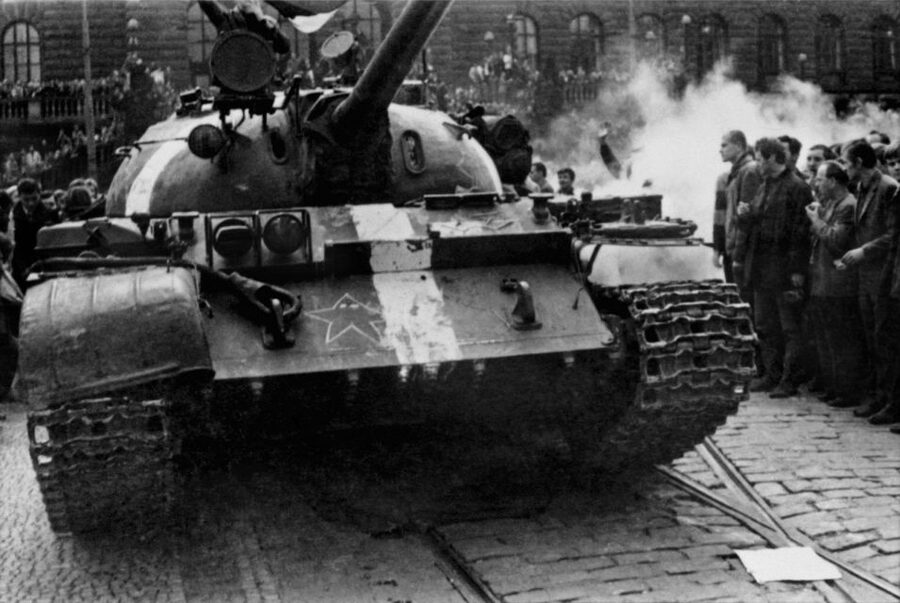
You will also visit places connected with protests, demonstrations, rebellions, revolutions, and the Soviet occupation. The tour does not present history as a smooth chain of events. Instead, it links official power with resistance. That makes the walk more balanced than a simple anti-Communist presentation, although the exact tone will depend on the individual guide.
I value the promise to discuss both advantages and disadvantages of the system. That does not mean every part of the experience will feel perfectly neutral. It does mean the guide is expected to address the pros and cons, rather than presenting only one approved interpretation.
The strongest guide will help you understand why some people supported or tolerated the system, while others resisted it or suffered under it. The personal account matters here. A local who lived through the period can describe how political rules reached into ordinary life in a way that a visitor reading a timeline cannot.
The tour’s focus is mainly Communism in the Soviet system and the Soviet Union’s influence on Europe after the Second World War. If you want a worldwide history of communist movements, this is not the right match. Its strength is Prague and the Central European experience.
Daily life under Communism, not just political theory
For me, the most valuable promise is the discussion of everyday life. The guide explains how common people lived during the period, alongside the major personalities and political milestones.
That can include the social feeling of the era, the limits placed on daily choices, and the ways people responded to a controlled public life. The provided details do not specify every subject covered, so I would not expect a fixed list of personal stories. Still, the tour is designed to move beyond dates and official events.
This is also where questions can improve the experience. Ask how the political system affected ordinary families, work, travel, public speech, or access to goods if those subjects matter to you. The operator specifically welcomes discussion, so you do not need to remain a silent listener.
One caution: the quality depends heavily on the guide’s preparation and health on the day. A German-language booking received criticism for weak German skills. Another guide was repeatedly on the phone dealing with organizational problems and was also coughing through the presentation. Those problems appear to be exceptions rather than the main pattern, but they are worth keeping in mind when you pay a premium for a specialist walk.
Guide quality and language choice
Several bookings praise guides for interesting storytelling, unusual anecdotes, clear meeting instructions, punctuality, and strong command of the subject. One Italian-language comment especially praised the guide’s ability to draw the listener into the story and explain its different sides. An English-language booking also described the experience as informative, educational, and unique.
The tour is offered in Czech, English, and German. If you understand more than one of those languages, I would choose the one in which you can comfortably follow political detail and ask questions. This subject includes names, dates, institutions, and subtle distinctions. A language mismatch can weaken the whole experience.
The overall score is 3.8 from 26 ratings, which suggests a generally worthwhile experience with some unevenness. I would not treat the score as a guarantee of a perfect performance. Instead, I would see it as a sign that the subject and format work well, while guide quality and language ability can make a real difference.
A private group is available. Interestingly, one group booking operated without other participants, giving the group at a group price. That can be a lucky outcome if you enjoy asking questions and want a more personal conversation. It can also feel less social if you expected to meet other people.
Is $50 a fair price for two hours?
At $50 per person, this is not the cheapest walking tour in Prague. You are paying for a narrow subject, a professional guide, and access to local memory rather than for a long list of attractions.
I think the price is fair when the subject genuinely interests you. Two hours is enough time to introduce the political background, visit several relevant sites, and talk about daily life without turning the outing into a full-day commitment. A specialist guide can save you the work of connecting scattered facts on your own.
The value is weaker if you mainly want sightseeing. You will see historical places, but the tour is not built around Prague’s most famous architectural highlights. Its purpose is interpretation. You are paying to understand what happened in the city and how the period felt, not simply to collect photographs.
The private-group possibility changes the calculation. If you book a shared option and find yourself with only your own party, you may receive a more personal experience at the listed per-person price. That is a useful benefit, though you should not count on it.
Who should book this walk?
I would recommend it to you if you are interested in the Cold War, postwar Europe, political systems, modern Czech history, or personal accounts of life behind the Iron Curtain. It also suits repeat visitors who have already seen the Old Town and want a different side of Prague.
It is a good choice for people who enjoy asking questions. The walk is not passive sightseeing. You will get more from it if you want to discuss the tension between Communist theory and everyday practice.
Families with older children and teenagers may find the subject useful, provided they are ready for serious political history. The two-hour format keeps it manageable, and the outdoor setting gives the discussion a clear sense of place.
I would skip it if your Prague schedule is very short and you have not yet seen the city’s main historic sights. I would also think twice if you want a broad, global treatment of Communism or a tour devoted to architecture. This experience stays focused on Prague, Czechoslovakia, Soviet influence, and the local experience.
Practical advice for a smoother experience
Check whether your confirmation gives Na Příkopě 28 or Na Příkopě 864. Do not assume the two options are interchangeable. Arrive without luggage, carry your passport or ID card, and choose a language in which you can follow a detailed historical explanation.
I would reserve this tour for a day when you have a little mental space. The route may be short, but the subject is heavy. Give yourself time afterward to think about what you heard rather than rushing straight into another packed attraction.
The tour accepts cancellations up to 24 hours before the start for a full refund, and you can reserve now while paying later. Those terms are useful if your Prague plans may shift. Starting times vary, so check availability before arranging other activities around it.
Should you book the Back to Communism walk?
Book it if you want personal stories tied to real Prague locations and you are willing to trade postcard views for political context. The former secret police headquarters, the old Stalin statue site, party offices, and protest locations give the walk a clear purpose. The local guide’s lived experience can make the subject feel immediate rather than academic.
I would be more cautious about booking in German unless you have confirmed that the guide is fully comfortable in the language. English and Czech appear to be stronger choices based on the available feedback. Also remember that this is a specialist history walk, not a general Prague introduction.
For the right audience, $50 buys a useful two hours and a clearer understanding of how Communist rule shaped Prague. For anyone looking only for beautiful streets and famous monuments, spend the money elsewhere.
FAQ
How long does the Prague Back to Communism Walking Tour last?
The tour lasts about two hours, though the stated duration range is one to two hours. Starting times depend on availability.
Where does the tour begin?
There are two possible starting locations on Na Příkopě: Na Příkopě 28 or Na Příkopě 864. The exact meeting point depends on the option booked.
Which languages are available?
The tour is available in Czech, English, and German.
What places related to Communism will I see?
The walk visits the former secret Communist police headquarters, the former Stalin statue site, current and former Communist Party locations, and places connected with protests, demonstrations, rebellions, revolutions, and Soviet occupation.
What should I bring?
Bring a passport or identity card. Large bags and luggage are not allowed.
Is the tour wheelchair accessible?
Yes, the activity is listed as wheelchair accessible. A private group option is also available.
More 2-Hour Experiences
- Prague: Pub Crawl with 2-Hour Open Bar at Drunken Monkey
★ 3.9 · 670 reviews - Prague Boats 2-hour Lunch Cruise
★ 4.0 · 352 reviews - 2-Hour Old Town and Jewish Quarter Tour in Prague
★ 5.0 · 310 reviews - From Old Town: 2-Hour Prague Bus Tour with Top Sights
★ 4.2 · 219 reviews
Just added around Prague
- Private Day trip from Prague to Kutná Hora★ 5.0 · 3 reviews
- PRAGUE AIRSOFT SHOOTING GAMES★ 4.7 · 3 reviews
- Private 4-hour City Tour of Prague with driver & official guide w/ Hotel pick up★ 5.0 · 3 reviews
- Glass blowing in Prague★ 4.6 · 3 reviews
- Prague to Karlovy Vary Private Transfer★ 4.5 · 3 reviews
- Disney’s Tarzan Musical★ 5.0 · 3 reviews
- Prague Private Tour★ 5.0 · 3 reviews
- Private Bohemian Glass and Czech Crystal Tour with lunch included★ 5.0 · 3 reviews
Communism & WWII History Tours, compared.

Communism History and Nuclear Bunker Guided Tour
Read our review →
Prague Communism History and Nuclear Bunker Tour
Read our review →
Communism & Nuclear Bunker Tour + 70s Canteen Lunch (own expense)
Read our review →
WWII Guided Tour & The Crypt of Operation Anthropoid
Read our review →
WWII in Prague Tour & The Crypt of Operation Anthropoid
Read our review →
Communism and Bunker Tour with 70s Canteen Lunch
Read our review →
Small-Group World War 2 & Operation Anthropoid Tour in Prague
Read our review →
World War 2 and Operation Anthropoid Walking Tour
Read our review →Browse the lists this tour appears in