
REVIEW · COMMUNISM & WWII HISTORY TOURS
Back to Communism Walking Tour
The past is still written on Prague’s streets. This two-hour walking tour connects former communist-era sites with personal stories from guides who lived through at least part of that period. I like the small group of no more than 15 people, and I like that guides such as Petr, Marek, and Daniel bring different firsthand perspectives to the subject. The main drawback is the walking format: you will be outdoors for the full tour, and several people found the experience physically and emotionally freezing in cold weather.
At $44.22 per person, I see this as a fair price for a focused introduction to modern Czech history. You are paying for a local guide, personal questions, and context that is hard to get from plaques alone, but the route includes public sites rather than paid attractions. Dress for the weather, arrive ready to walk, and allow the stories time to sink in.
In This Review
- Key points to know before you book
- Why this short Prague tour is worth your time
- Starting at Na Příkopě 864/28
- Bartolomějská and the former secret police headquarters
- Wenceslas Square, where modern Prague changed direction
- Národní třída and the hands reaching from the wall
- What the guides add to the experience
- Group size, walking pace, and weather
- Is $44.22 a good value?
- Who should book this walking tour?
- Should you book the Back to Communism Walking Tour?
- FAQ
- How long does the Back to Communism Walking Tour last?
- How much does the tour cost?
- Where does the tour begin?
- Where does the tour end?
- What language is the tour offered in?
- How many people can join the tour?
- Which locations are included?
- Are admission tickets included?
- Can children join the tour?
- Can I cancel for a full refund?
Key points to know before you book
- Personal accounts shape the tour: Guides explain what life under communism felt like, not just what happened in textbooks.
- The route links three important locations: Bartolomějská, Wenceslas Square, and the memorial on Národní třída.
- Wenceslas Square carries several layers of memory: The square connects everyday public life with the protests and political changes of the late 1980s.
- The Velvet Revolution memorial is easy to miss: Hands reaching from a wall mark victims of the events on Národní třída.
- A maximum of 15 people keeps questions practical: You have a better chance to speak with the guide than on a large coach tour.
- Cold weather matters: The tour lasts about two hours outside, and the stories can feel chilling even when the temperature is mild.
Why this short Prague tour is worth your time
Prague offers grand castles, handsome squares, and medieval lanes at every turn. Those sights matter, but they can leave a gap in your understanding of the city. The communist period shaped daily life for generations, and the changes of 1989 still influence how many Czechs view politics, freedom, and public protest.
This tour fills that gap in a compact way. Instead of asking you to absorb a long lecture, it takes you through central Prague and uses familiar streets as evidence. You hear about surveillance, the Cold War, public demonstrations, and the Velvet Revolution while standing in places connected to those events.
I especially like the human scale. The tour is not presented as a remote chapter from the past. Your guide may have experienced part of the period personally, as Marek and Daniel did, or may explain it through family and local experience. Petr was praised for clear explanations and strong German-language skills, while Marek was noted for his command of the subject. That range matters because personal memory can make a political story easier to grasp.
At the same time, you should expect interpretation rather than a museum visit. There are no listed interior admissions, displays, or formal exhibits. The value comes from the guide’s storytelling, the questions you ask, and the places around you.
More communism and wartime history tours:
- Prague: Communism History and Nuclear Bunker Guided Tour
★ 4.7 · 2,417 reviews - Prague Communism History and Nuclear Bunker Tour
★ 5.0 · 1,742 reviews - Communism & Nuclear Bunker Tour + 70s Canteen Lunch (own expense)
★ 5.0 · 1,036 reviews
Starting at Na Příkopě 864/28
The tour begins at Na Příkopě 864/28 in Prague’s Nové Město, or New Town, within Prague 1. This central location is near public transportation, which makes it practical to reach from other parts of the city.
You receive confirmation when you book, so check the meeting instructions and local start time carefully. The activity returns to the same meeting point at the end, a useful feature if you have plans afterward or do not want to work out a new route home.
The opening is likely important for setting the tone. A subject such as communism can quickly become a list of dates and political terms. A good guide instead gives you a framework for understanding what you will see, then ties the political story to ordinary life.
Because the group is capped at 15, you should be able to hear the guide without the strained listening that comes with a large crowd. You can also ask about details that puzzle you, including differences between life in Czechoslovakia and life in Western Europe during the Cold War.
Bartolomějská and the former secret police headquarters
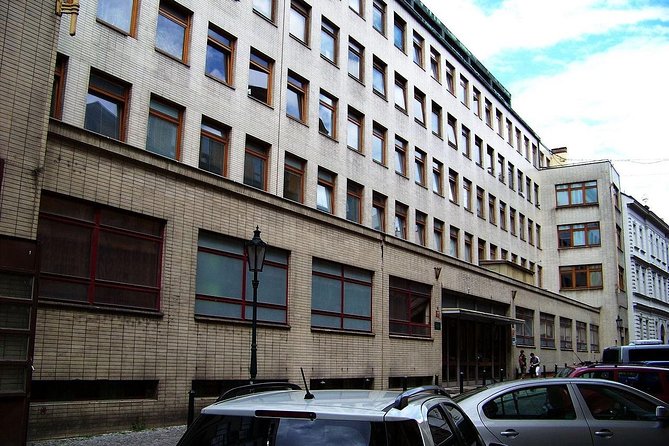
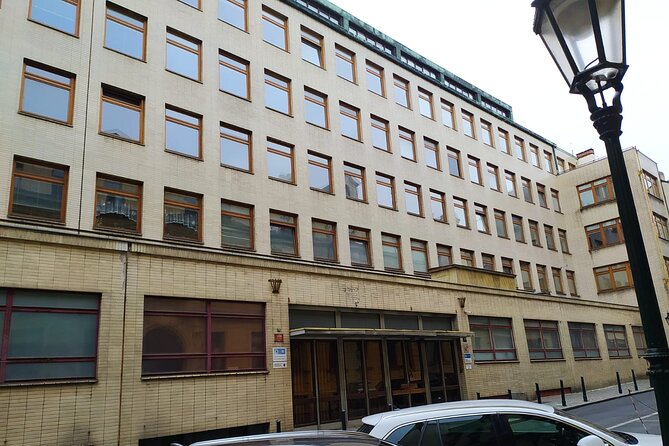
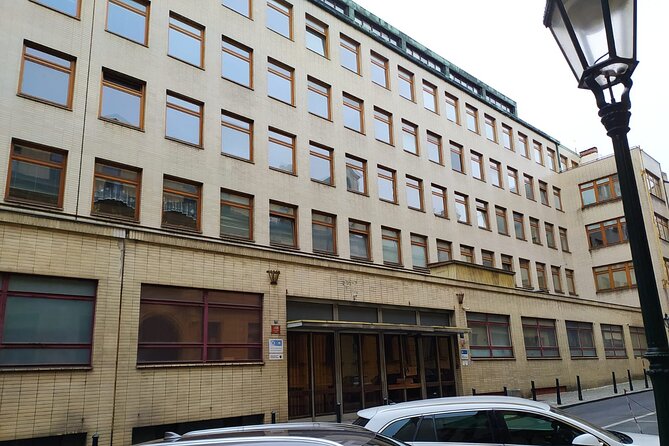
The first listed stop is Bartolomějská, the former headquarters of the Czechoslovak Secret Police. You spend about five minutes here, and admission is free.
Five minutes may sound brief, but this stop works as a sharp opening image. It gives the tour a physical address for state surveillance and repression. Rather than discussing secret police work in the abstract, you are shown the place associated with it.
The short visit also tells you what kind of tour this is. You are not entering a large museum or spending half an hour at each site. You are moving through the city, using locations as prompts for the guide’s explanation.
I would listen closely here for the practical details of control. The supplied information does not promise a specific interior visit or a particular surviving room, so do not expect to walk through headquarters. The point is the location and the story attached to it.
This is also a good moment to ask questions. If you want to understand how surveillance affected ordinary people, ask the guide to connect the political system with work, family life, travel, or public speech. The small group gives you a better chance to do that.
Wenceslas Square, where modern Prague changed direction
The tour then spends about 15 minutes at Wenceslas Square. This is the longest stop listed, and for good reason. The square has witnessed many major events in Czech modern history, making it an ideal place to connect the communist era with the political upheaval that followed.
Wenceslas Square is not simply a beautiful central boulevard. On this tour, it becomes a public stage. The guide explains how the space functioned during the final years of communist rule and how large gatherings helped turn public frustration into visible political pressure.
You may also hear about the Soviet invasion and the marks left by bullets. One account describes seeing scratches from Soviet bullets, a detail that brings the violence much closer than a date in a guidebook. The information provided does not specify exactly where the marks are or guarantee that every group will examine them, so treat this as a possible point to ask about rather than a promised exhibit.
The square is a strong stop for anyone who wants to understand the link between public space and political change. A demonstration is not only a political event. It changes how people see one another, how authorities judge risk, and how quickly a quiet city can become a place of open resistance.
Your guide may also address the contrast between those who lived under the system and those who watched the Cold War from the opposite side. That perspective appeared in the tour’s feedback and is especially useful for visitors from former Western Bloc countries. You can compare memories without assuming that the two sides experienced the period in the same way.
The drawback is that Wenceslas Square can be visually and physically busy. You are still in the middle of central Prague, not in a sealed memorial space. Traffic, pedestrians, and city noise may compete with the guide, so stay close and position yourself where you can hear.
More walking tours:
- Prague: 3-Hour Walking Tour of Old Town & Prague Castle
★ 4.7 · 5,696 reviews - Prague: Ghost Walking Tour Where Legends Come To Life
★ 4.4 · 5,253 reviews - Prague: Jewish Quarter Walking Tour with Admission Tickets
★ 4.7 · 3,729 reviews - Prague Guided Walking Tour and Cruise with Authentic Czech Lunch
★ 5.0 · 3,627 reviews
Národní třída and the hands reaching from the wall
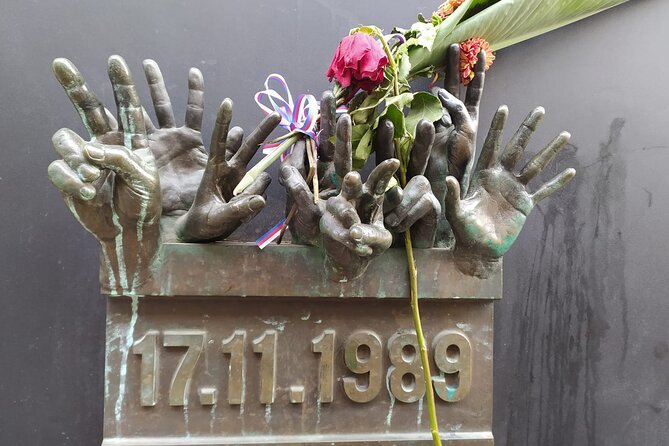
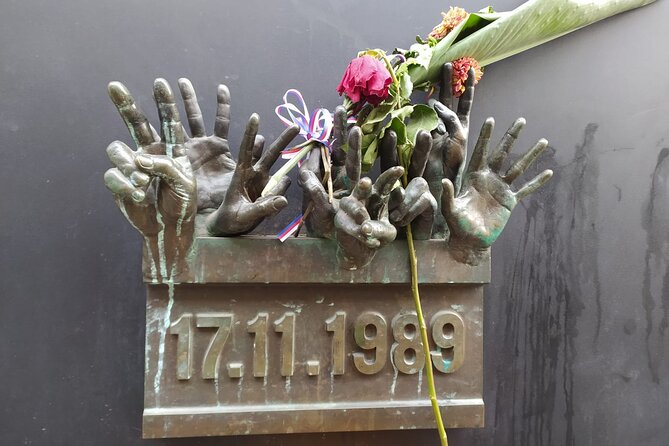
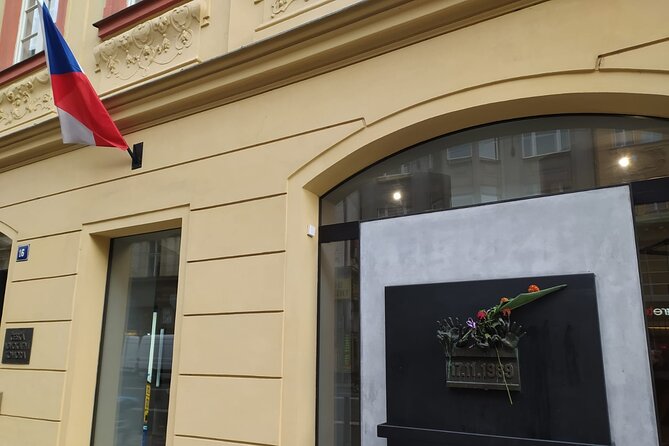
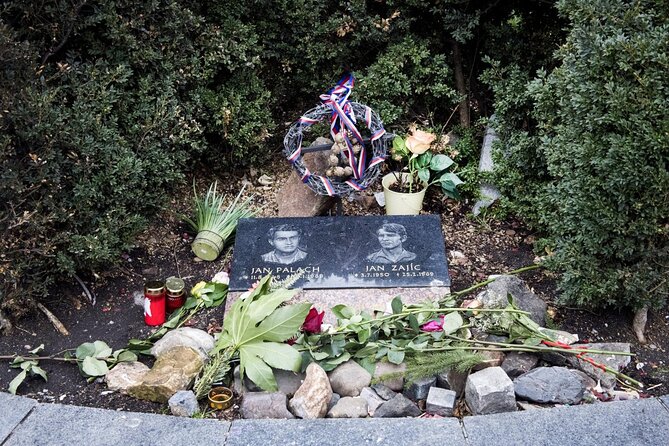
The final listed stop is on Národní třída, where hands reach out from a wall in a memorial to victims of the so-called Velvet Revolution. The stop lasts about 10 minutes.
This memorial gives the tour an emotional ending. After hearing about surveillance and the political pressure of the communist period, you arrive at a place tied to the peaceful movement that helped bring the system to an end.
The phrase Velvet Revolution refers to the largely nonviolent political change in Czechoslovakia in 1989. The memorial’s hands make the event personal and immediate. They suggest people reaching out, joining together, or asking to be remembered. You do not need a large monument to understand that ordinary people were part of the turning point.
The guide explains the events on Národní třída and why they remain among the strongest moments in Czech modern history. Several guides were praised for making this material clear, detailed, and memorable. Daniel was described as having a particularly strong grasp of the subject, while Petr’s explanations were praised for their clarity.
This stop is also where the tour’s title becomes broader than a look backward. The stories raise questions about what happens when public freedoms shrink, how people respond to pressure, and how quickly political systems can change. The subject can feel unsettling, especially because the guides connect past events with concerns in the present.
You should not expect a long visit or a formal ceremony. The stop is short, and the value lies in the explanation around the memorial. Take a moment to look at the hands, then ask the guide to clarify anything you want to place in a wider political context.
What the guides add to the experience
A walking tour on a serious subject depends heavily on the guide. Here, that appears to be a major strength.
Marek was described as having lived through part of the communist period and as explaining the subject with a strong grasp of the material. Daniel was praised for deep insight into the era and for sharing less familiar facts. Petr was praised for detailed, clear explanations and for speaking very good German.
Those names are useful to know, but guide assignments can change. You should not book expecting one specific person unless the provider confirms it. What you can reasonably expect is a professional local guide and an approach shaped by direct experience or close knowledge of the period.
I like that this setup allows questions. If a guide simply recites a prepared speech, a complicated subject can feel flat. The chance to ask about daily life, political pressure, protest, or the Cold War divide makes the tour more useful.
The tone can also be serious. The stories include surveillance, Soviet bullets, repression, and the difficult transition away from communism. Some of the feedback uses the word freezing not just for the weather but for the emotional effect of the stories. That is not a warning against booking. It is a reminder to expect a thoughtful, sometimes uncomfortable experience rather than light sightseeing.
Group size, walking pace, and weather
The maximum group size is 15 people. That is small enough for a personal feel without making the tour private or expensive. You should be able to stay near the guide and ask questions, though the experience will still depend on the size of your specific departure.
The duration is about two hours. Since the route is on foot and includes three central stops, wear comfortable shoes and avoid scheduling a tightly timed attraction immediately afterward. The tour ends where it begins, but you may want a few extra minutes before your next plan.
The weather deserves more attention than it often gets in a city tour description. You remain outside for the experience, and the route includes pauses for explanation. In cold weather, gloves, a warm coat, and shoes suitable for walking are sensible. In wet weather, a rain layer will help you concentrate on the guide instead of the forecast.
Children must be accompanied by an adult. Most people can participate, and service animals are allowed. The information provided does not give a detailed accessibility assessment, so contact the provider if you need specific guidance about pavement, walking distance, or other mobility concerns.
Is $44.22 a good value?
At $44.22 per person, this is not the cheapest way to see central Prague. You are not paying for entry to a major attraction, and much of the route can be viewed without a ticket.
You are paying for structure and interpretation. A local guide turns three ordinary-looking city locations into a connected story, then gives you the chance to ask questions. For a first visit, that can be more useful than trying to piece together the communist period from scattered online reading.
The small-group limit strengthens the value. A large group might offer the same route at a lower price, but you would have less access to the guide and less room for conversation. Here, the cost makes the most sense if you care about modern Czech history and prefer a personal walking experience.
If you already have a strong understanding of Czechoslovak communism and the Velvet Revolution, the tour may feel introductory. The route is short, and the listed stops do not include a museum or extended indoor visit. In that case, you may prefer a longer specialist program.
For most people, though, the price is reasonable because the tour supplies context that the streets alone cannot provide.
Who should book this walking tour?
I would recommend it to active visitors who want to understand Prague beyond its medieval center. It suits people interested in politics, Cold War history, civic protest, and the personal effects of major political systems.
It is also a good choice if you prefer conversation over a formal lecture. The group limit and local guide make it easier to ask direct questions and follow up on details that interest you.
The tour may suit families with older children, provided an adult accompanies them and they are comfortable with a serious subject. The material is not presented as a children’s attraction, so consider your child’s interest and maturity before booking.
I would be more cautious if you dislike outdoor walking, have a packed schedule, or want a tour filled with interior sites. I would also choose a warmer day if you can, since the cold can distract from a story that demands attention.
Should you book the Back to Communism Walking Tour?
Book it if you want a concise, human explanation of how communism and the Velvet Revolution shaped Prague. The strongest reasons are the personal perspective of guides such as Marek, Petr, and Daniel, the small group, and the route’s clear progression from secret police headquarters to public protest and political change.
Skip it if you want museum access, elaborate sightseeing, or a broad survey of all Czech history. This is a focused two-hour walk, not a full-day course.
For the right audience, $44.22 is a fair charge for the guide’s time and insight. Wear warm clothing, keep your schedule flexible, and arrive ready to listen. Prague’s recent past is not tucked away in a distant archive. On this route, it is part of the street beneath your feet.
FAQ
How long does the Back to Communism Walking Tour last?
The tour lasts approximately two hours.
How much does the tour cost?
The price is $44.22 per person.
Where does the tour begin?
It begins at Na Příkopě 864/28, Nové Město, 110 00 Praha, Prague 1, Czechia.
Where does the tour end?
The activity ends back at the meeting point.
What language is the tour offered in?
The tour is offered in English.
How many people can join the tour?
The maximum group size is 15 people.
Which locations are included?
The route includes Bartolomějská, the former headquarters of the Czechoslovak Secret Police, Wenceslas Square, and the hands reaching from the wall on Národní třída.
Are admission tickets included?
The listed stops have free admission. A local guide and professional guide are included.
Can children join the tour?
Children can join, but they must be accompanied by an adult.
Can I cancel for a full refund?
Yes. You can cancel up to 24 hours before the experience starts for a full refund. Cancellations or changes made less than 24 hours before the start time are not accepted for a refund.
Just added around Prague
- Private Day trip from Prague to Kutná Hora★ 5.0 · 3 reviews
- PRAGUE AIRSOFT SHOOTING GAMES★ 4.7 · 3 reviews
- Private 4-hour City Tour of Prague with driver & official guide w/ Hotel pick up★ 5.0 · 3 reviews
- Glass blowing in Prague★ 4.6 · 3 reviews
- Prague to Karlovy Vary Private Transfer★ 4.5 · 3 reviews
- Disney’s Tarzan Musical★ 5.0 · 3 reviews
- Prague Private Tour★ 5.0 · 3 reviews
- Private Bohemian Glass and Czech Crystal Tour with lunch included★ 5.0 · 3 reviews
Communism & WWII History Tours, compared.

Communism History and Nuclear Bunker Guided Tour
Read our review →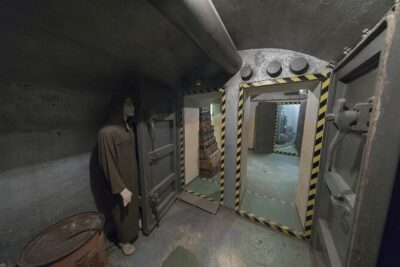
Prague Communism History and Nuclear Bunker Tour
Read our review →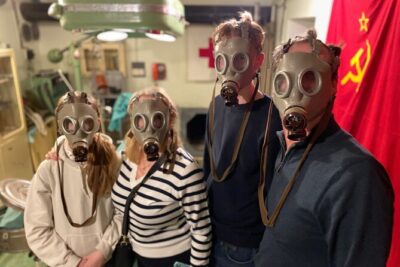
Communism & Nuclear Bunker Tour + 70s Canteen Lunch (own expense)
Read our review →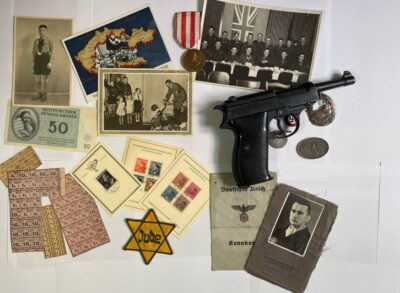
WWII Guided Tour & The Crypt of Operation Anthropoid
Read our review →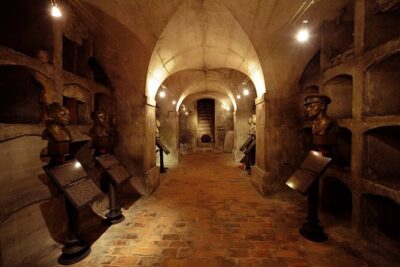
WWII in Prague Tour & The Crypt of Operation Anthropoid
Read our review →
Communism and Bunker Tour with 70s Canteen Lunch
Read our review →
Small-Group World War 2 & Operation Anthropoid Tour in Prague
Read our review →
World War 2 and Operation Anthropoid Walking Tour
Read our review →Browse the lists this tour appears in