
REVIEW · OLD TOWN & JEWISH QUARTER TOURS
WWII and Communism History in Prague’s Old Town Private Tour
Prague’s stones still carry political scars. This private walking tour connects the German occupation, the Prague Uprising, the Gestapo, and the 1989 Velvet Revolution in a way that makes the city’s past easier to follow. I like the small private format, which lets you ask direct questions, and I like the route’s range, from the Jewish Quarter to Wenceslas Square. The main drawback is that the basic two-hour option only covers the outdoor route, while the Museum of Communism requires the four-hour upgrade.
The guides also earn strong praise. Sofija impressed Dorthe with her command of Czech history and her ability to add personal anecdotes, while Markéta was described as entertaining and highly informed. At $104 per person, the price makes the most sense for a private group that wants serious historical context rather than a quick stroll past famous buildings.
In This Review
- Key points at a glance
- Why this route works in Prague
- Josefov and the synagogues: a difficult beginning
- Old Town Square and the Prague Uprising
- Petschek Palace and the Gestapo
- Wenceslas Square and the Velvet Revolution
- The four-hour option and the Museum of Communism
- Guide quality matters here
- Is $104 per person good value?
- Practical details before you book
- Who should choose this tour?
- Should you book it?
- FAQ
- Where does the tour meet?
- How long does the tour last?
- Is the Museum of Communism included?
- What does the tour cover?
- Which Prague sights are visited on the walking route?
- Is this a private tour?
- Which languages are available?
- Is the tour wheelchair accessible?
Key points at a glance
- The route links four turning points: Nazi occupation, the Prague Uprising of May 1945, Communist rule, and the Velvet Revolution of 1989.
- Josefov adds a sobering beginning: You see the Maisel and Spanish Synagogues while learning about deportations to Theresienstadt.
- Old Town Square reveals wartime damage: The Astronomical Clock and Old Town Hall were caught in the fighting of May 5 to 9, 1945.
- Petschek Palace brings the Gestapo close: A memorial plaque marks the building’s connection to Czech resistance members and their suffering.
- Wenceslas Square ties the story together: Nazis used it for mass demonstrations, and Czechs later filled it during the Velvet Revolution.
- The four-hour version includes the Museum of Communism: It covers the Cold War, Prague Spring, the Soviet invasion, Jan Palach, censorship, political trials, and the fall of Communist rule.
Why this route works in Prague

Prague can look almost untouched at first glance. Medieval lanes, grand churches, and handsome squares make it easy to think only about kings, composers, and Gothic architecture. This tour changes that view. It shows you that the city was also shaped by occupation, resistance, state terror, Soviet control, and public protest.
I especially like the way the route moves through familiar places with a new purpose. Old Town Square is not simply a photogenic stop. It becomes the scene of the 1945 uprising. Wenceslas Square is not just a shopping avenue. It becomes the setting for Nazi rallies and the huge demonstrations that helped end Communist rule.
Because the tour is private, the guide can adjust the pace and explain terms that may be unfamiliar. The advertised languages are English, French, German, Italian, Polish, Russian, Spanish, and Czech. That range is useful for families or mixed-language groups who want the same guide rather than separate audio devices or a large shared group.
The route is also wheelchair accessible, according to the activity details. Still, you should expect a walking tour through central Prague, so ask about the exact route when booking if someone in your group needs special assistance.
More Old Town and Jewish Quarter walks:
- Prague: Old Town Hall Tower Entry Ticket
★ 4.5 · 6,749 reviews - Prague: 3-Hour Walking Tour of Old Town & Prague Castle
★ 4.7 · 5,696 reviews - Prague: 3-Hour Old Town and Prague Castle Tour in German
★ 4.8 · 5,671 reviews
Josefov and the synagogues: a difficult beginning
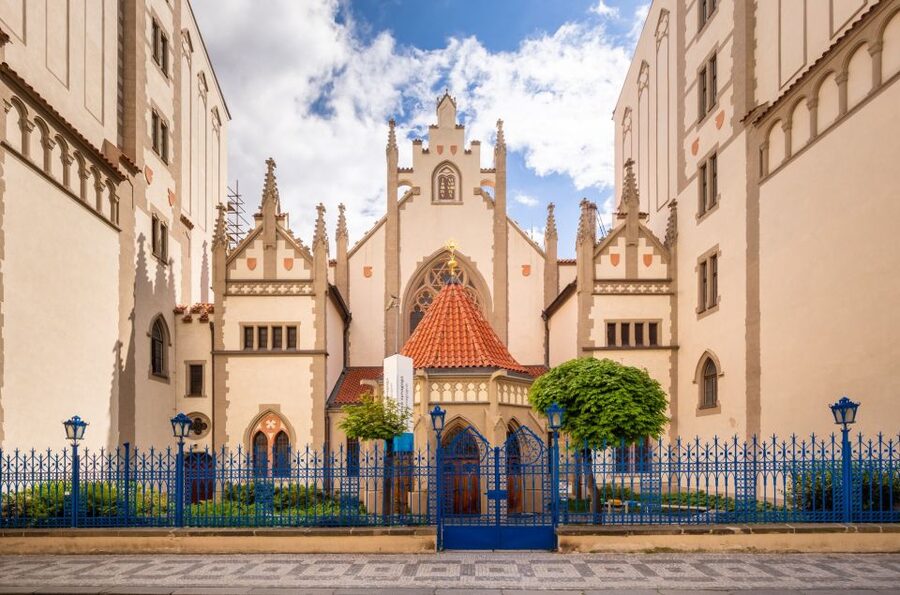
The tour starts in front of the World of Franz Kafka at Náměstí Franze Kafky 16/1 in Staré Město. From there, you walk into Josefov, Prague’s former Jewish Quarter and one of the best-preserved Jewish ghettos in Europe.
The opening section deals with the German occupation and the destruction planned for Czech Jewish communities. You see the Maisel Synagogue and the Spanish Synagogue while the guide explains the transport of Czech Jews to the Theresienstadt concentration camp.
This is not a light introduction. The subject calls for attention, and the route makes clear how Nazi persecution affected Prague’s Jewish population. You also hear about Hitler’s plan to create a museum of an extinct race, a chilling idea that treated Jewish objects and traditions as museum pieces after the people themselves had been murdered or expelled.
The tour does not appear to include entry into these synagogues. The value here is the setting and the explanation provided outdoors. If you want a full interior visit, you should check separately rather than assume admission is part of the tour.
For me, this is an important start because it places Nazi rule in a human setting. The story is not only about military movements or political leaders. It is also about families, religious life, forced transport, and the destruction of a community.
Old Town Square and the Prague Uprising
From Josefov, the route continues to Old Town Square. This is where the tour shifts from persecution to resistance and open fighting.
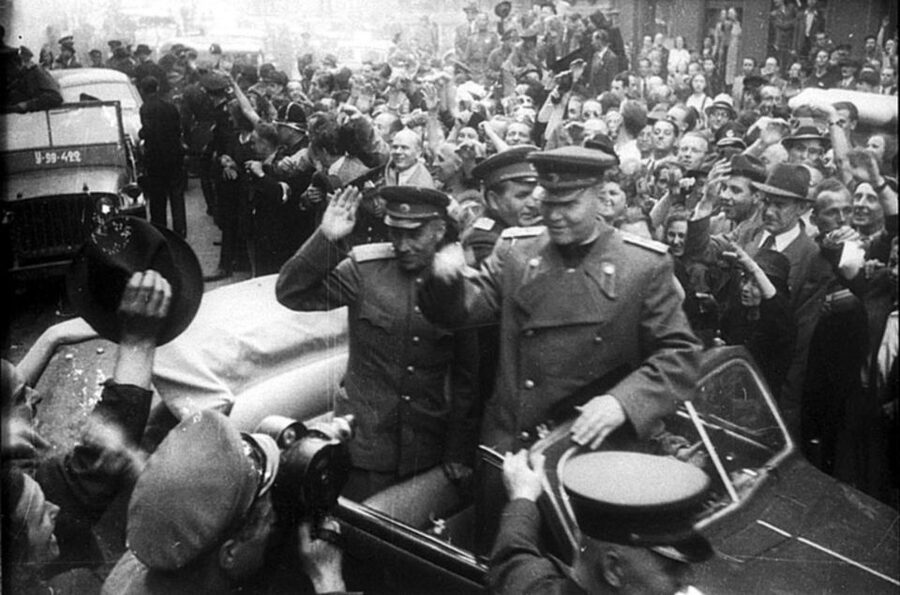
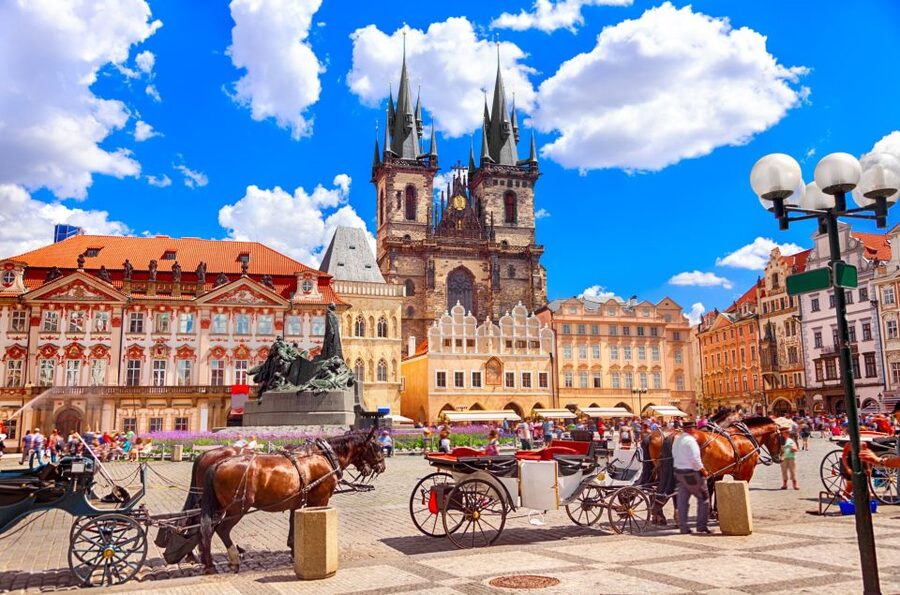
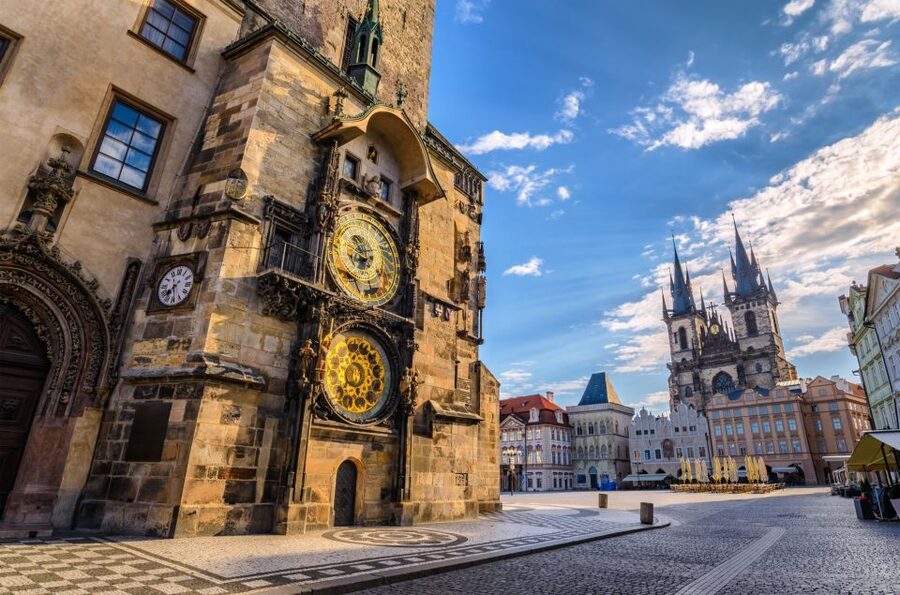
The guide explains the Prague Uprising, which took place from May 5 to May 9, 1945. The Old Town Hall and its famous Astronomical Clock suffered major damage during the battles. That detail gives the square a sharper meaning. The clock is one of Prague’s most photographed sights, but its facade also bears the memory of the city’s final wartime struggle.
You learn about the people who resisted the occupation and about the events surrounding Prague’s liberation. The tour also explains the role of the Red Army. Soviet forces helped defeat Nazi control in the city, but the Communist Party later used that involvement to build public support for Communist rule.
That connection is one of the tour’s strongest teaching points. The end of Nazi occupation did not lead directly to a stable liberal democracy. Liberation created a new political opening, but the Soviet presence and Communist influence shaped what came next.
The stop works well because the square is easy to understand physically. You can picture public crowds, fighting around important buildings, and the damage caused during the uprising. A good guide can turn a wide open plaza into a clear sequence of events, and Sofija’s ability to answer questions and add anecdotes would be especially useful here.
Petschek Palace and the Gestapo
Next comes Petschek Palace, a grand building with a grim wartime role. It served as the Gestapo headquarters in Prague during the German occupation.
On the corner, a memorial plaque honors members of the Czech resistance. Here, the focus turns from public battle to secret police work. You hear about resistance efforts, arrests, interrogations, and torture.
This stop is less visually dramatic than Old Town Square. The building may look formal and imposing, but the important details are not always obvious from the street. That is exactly why the guide matters. Without explanation, you could pass the palace and miss one of the most troubling sites on the route.
I would prepare yourself for a serious section. The subject is not presented as a simple story of brave heroes and cruel villains. Resistance members faced interrogation and torture, and the guide’s job is to explain both their courage and the cost of opposing the occupation.
For visitors with a strong interest in Operation Anthropoid, it is worth asking the guide how much time can be devoted to it. The tour description includes Operation Anthropoid among its major topics, along with the events and personalities of occupation and liberation. The exact balance may depend on your questions and the selected tour length.
More communism and wartime history tours:
- Prague: Communism History and Nuclear Bunker Guided Tour
★ 4.7 · 2,417 reviews - Prague Communism History and Nuclear Bunker Tour
★ 5.0 · 1,742 reviews - Communism & Nuclear Bunker Tour + 70s Canteen Lunch (own expense)
★ 5.0 · 1,036 reviews - Prague: WWII Guided Tour & The Crypt of Operation Anthropoid
★ 4.7 · 1,030 reviews
Wenceslas Square and the Velvet Revolution
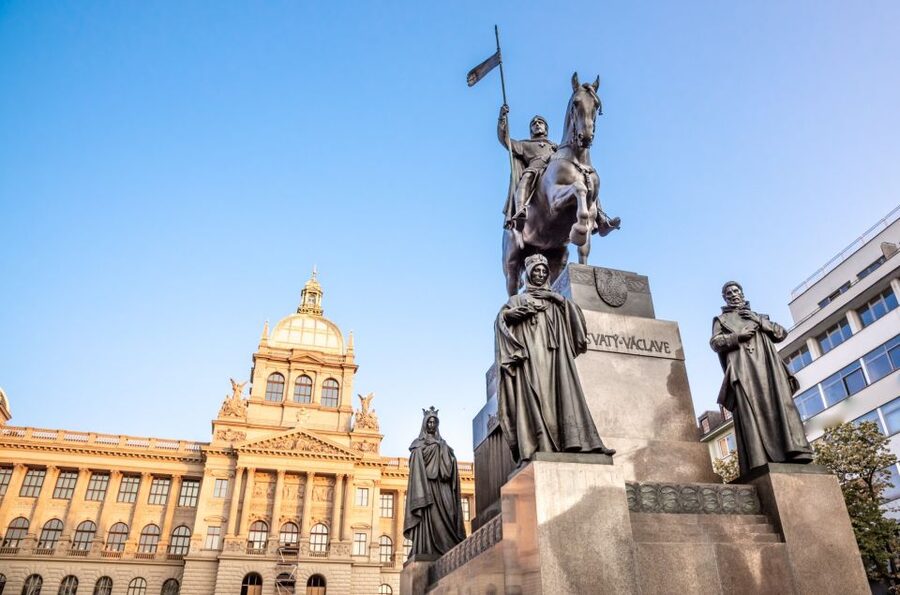
The outdoor tour ends at Wenceslas Square, a broad historic avenue that has played several political roles.
The Nazis used the square for mass demonstrations. Decades later, it became one of the main stages of the 1989 Velvet Revolution. Here, the guide explains how large public demonstrations challenged Communist rule and helped restore democracy and independence.
This final stop gives the tour a strong sense of movement through time. You begin with the destruction of Jewish life under Nazi rule, move through resistance and wartime liberation, then follow the Soviet-backed Communist period to the peaceful protests of 1989.
Wenceslas Square is also a useful place to think about ordinary people in political change. The story is not only about party leaders or foreign armies. It is about crowds gathering in public, students and citizens making demands, and the pressure created when a regime can no longer control the public square.
The outdoor route takes about two hours. That is enough time for a focused introduction, but it will not give you an extended museum visit or a full treatment of every event. If you want the period from 1938 through 1989 explained in greater detail, choose the longer option.
The four-hour option and the Museum of Communism
The extended tour adds the Museum of Communism. Regular admission is included in the four-hour option, while tickets are not included in the basic two-hour version because the museum is not part of that route.
The museum covers four decades of Communist rule in Czechoslovakia. Topics include the Cold War, the Prague Spring, the Soviet invasion of 1968, the death of student Jan Palach, and the Velvet Revolution.
You also learn about daily life under a totalitarian regime, along with propaganda, censorship, political trials, and executions. This makes the museum valuable for visitors who know the broad outline of Communist rule but want to understand how government control affected real people.
I would choose the four-hour option if this is your first serious look at modern Czech history. The walking route gives you places and events. The museum adds political and social context. Together, they explain why the end of Communist rule mattered so much to Praguers.
The longer option does require more time and concentration. Four hours of difficult history can feel heavy, particularly after the section on Nazi persecution and Gestapo torture. You may prefer the two-hour route if you want a concise introduction or already plan to visit several museums and memorials during your stay.
Guide quality matters here

This experience depends heavily on the guide. The buildings and squares are already in Prague, but the connections between them are not always obvious.
Sofija received especially warm praise for combining a broad view of political events with small anecdotes. Her ability to answer unexpected questions is a useful quality on a private tour, where you are not limited to the guide’s prepared script. Markéta was also praised for being entertaining and highly informed, a good balance for material that can otherwise become dense.
A French participant described an exceptional experience because the guide shared personal moments that gave the country’s past a more human shape. That is worth noting. Personal connections can make history easier to grasp, but the best guides still separate family stories from established historical facts.
The tour is described as led by a History Expert Guide. Since this is a private group, you can ask for more detail about a specific topic, such as Operation Anthropoid, the Prague Uprising, Jan Palach, or the Velvet Revolution. You should do that early, especially if one event matters more to you than the others.
Is $104 per person good value?
The listed price is $104 per person. That is not a bargain for a short walk, but it can be fair value for a private experience with a specialist guide, particularly if several people share the booking.
The value comes from the structure. You are not paying only to see Old Town Square or Wenceslas Square. You are paying for a connected explanation of places that many visitors see without understanding. The private format also gives you more room for questions than a large group tour.
The four-hour option offers the strongest value if the Museum of Communism is already on your list. Museum admission is included in that version, and the extra time fills a real gap in the outdoor tour. The two-hour option may suit you better if you want a compact introduction and prefer to manage museum visits independently.
The price is harder to justify for someone who already knows Czech modern history well or who dislikes serious political tours. This is not a general sightseeing walk with a few wartime facts added. The subject remains central from beginning to end.
Practical details before you book
The meeting point is in front of the World of Franz Kafka at Náměstí Franze Kafky 16/1 in Prague’s Old Town. Check your email the day before, since important tour information is sent then.
Starting times depend on availability. The activity allows cancellation up to 24 hours in advance for a full refund, and you can reserve now and pay later. Those terms help if your Prague schedule is still changing.
The tour is offered as a private group experience. The duration is either two or four hours, depending on the option you select. Read the selected option carefully, since the number of included attractions changes and Museum of Communism tickets are included only with the four-hour version.
Who should choose this tour?
I would recommend it to you if you want modern Czech history tied to actual streets and buildings. It is especially useful for first-time visitors who see Prague’s beauty but want to understand the political wounds beneath it.
It also suits families with older children, history students, and anyone interested in World War Two, resistance movements, Soviet influence, or the fall of Communism. The private format is helpful when your group has different levels of background knowledge.
Choose the four-hour version if you want the Communist period explained properly. Choose the two-hour version if you need a concise outdoor introduction or have limited time.
You may want another type of tour if your main goal is castles, architecture, food, or light sightseeing. This route includes difficult material, including deportation, torture, executions, and political repression. It asks you to pay attention.
Should you book it?
Book this tour if you want Prague’s twentieth-century story told in one connected route. The combination of Josefov, Old Town Square, Petschek Palace, and Wenceslas Square gives you a clear path from Nazi occupation to Communist rule and finally to the Velvet Revolution.
I would favor the four-hour option for most people who have room in their schedule. The Museum of Communism adds the background needed to understand the decades between 1945 and 1989, and admission is included. Pick the two-hour walk only if you want the essential outdoor sites without committing half a day to difficult history.
The strongest reason to book is the guide-led context. Sofija and Markéta were praised for being engaging as well as well prepared, and that mix matters here. Prague provides the setting, but the guide turns scattered monuments into a story you can follow.
FAQ
Where does the tour meet?
Meet your guide in front of the World of Franz Kafka at Náměstí Franze Kafky 16/1, 110 00 Staré Město, Czechia.
How long does the tour last?
You can select a two-hour or four-hour version. The four-hour option includes the Museum of Communism.
Is the Museum of Communism included?
Museum admission is included in the four-hour option. It is not included in the basic two-hour option.
What does the tour cover?
The tour covers the German occupation of Czechoslovakia, Operation Anthropoid, the Prague Uprising, the Communist era, and the Velvet Revolution.
Which Prague sights are visited on the walking route?
The route includes Josefov, the Maisel Synagogue, the Spanish Synagogue, Old Town Square, the Astronomical Clock and Old Town Hall, Petschek Palace, and Wenceslas Square.
Is this a private tour?
Yes. The experience is offered for a private group.
Which languages are available?
Live guides are available in English, French, German, Italian, Polish, Russian, Spanish, and Czech.
Is the tour wheelchair accessible?
Yes, the activity is listed as wheelchair accessible. You should still check the exact route details if your group has specific mobility needs.
More History Tours
- Prague: Oldtown, Medieval Underground & Dungeon History Tour
★ 4.2 · 8,244 reviews - Prague Old Town, Medieval Underground and Dungeon Historical Tour
★ 4.5 · 3,227 reviews - Prague: Historic City Center Bus Tour with Top Sights
★ 4.4 · 2,360 reviews - Prague Historic Pub Tour with Drinks Included
★ 5.0 · 2,084 reviews
Just added around Prague
- Private Day trip from Prague to Kutná Hora★ 5.0 · 3 reviews
- PRAGUE AIRSOFT SHOOTING GAMES★ 4.7 · 3 reviews
- Private 4-hour City Tour of Prague with driver & official guide w/ Hotel pick up★ 5.0 · 3 reviews
- Glass blowing in Prague★ 4.6 · 3 reviews
- Prague to Karlovy Vary Private Transfer★ 4.5 · 3 reviews
- Disney’s Tarzan Musical★ 5.0 · 3 reviews
- Prague Private Tour★ 5.0 · 3 reviews
- Private Bohemian Glass and Czech Crystal Tour with lunch included★ 5.0 · 3 reviews
Old Town & Jewish Quarter Tours, compared.
3-Hour Walking Tour of Old Town & Prague Castle
Read our review →
3-Hour Old Town and Prague Castle Tour in German
Read our review →
Jewish Quarter Walking Tour with Admission Tickets
Read our review →
Prague Old Town, Medieval Underground and Dungeon Historical Tour
Read our review →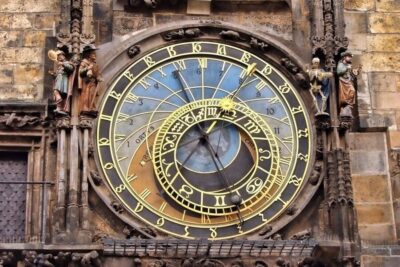
Old Town and Jewish Quarter Guided Tour in German
Read our review →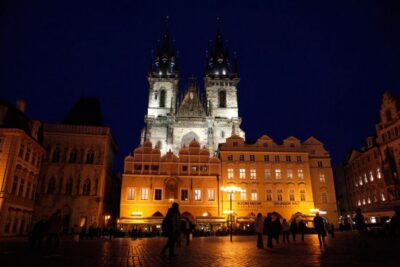
Ghosts and Legends of the Old Town Evening Tour
Read our review →
Old Town and Jewish Quarter Guided Walking Tour
Read our review →Browse the lists this tour appears in