
REVIEW · KUTNA HORA & BONE CHURCH TOURS
From Prague: Kutna Hora UNESCO Site Tour with Bone Chapel
Death gets top billing here. But Kutná Hora offers far more than its famous chapel of bones, with Gothic churches, silver-mining wealth, medieval streets, and sharp stories from the Hussite Wars. I like the easy train connection from Prague, and I like having a guide handle the local buses, trains, tickets, and timing.
The Sedlec Ossuary is the obvious draw, yet St. Barbara’s Church may be the day’s visual surprise. The main consideration is pace: six hours covers a lot, and some stops feel brief. Lunch is not included, and several people found the restaurant break a little rushed.
The tour costs $81 per person, including the English-speaking guide, train tickets, and admission to both major churches. That is fair value if you want context and simple transport, though independent visitors can spend less if they are happy to plan the route themselves.
In This Review
- Key details that shape the day
- Why Kutná Hora makes a good Prague side trip
- Meeting your guide beneath Prague station
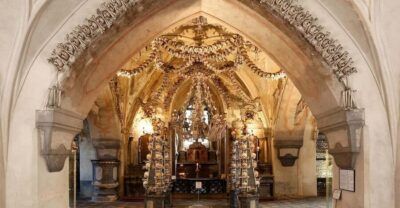
- Sedlec Ossuary: more than skulls and bones
- St. Barbara’s Church and Kutná Hora’s Gothic power
- Italian Court, Sankturin House, and the old town
- The Hussite Wars and the town’s troubled fortunes
- Lunch, local connections, and the tour’s pace
- What the $81 price really buys
- Who will enjoy this trip most
- Is this Kutná Hora tour worth booking?
- FAQ
- How long does the Kutná Hora tour take?
- Where does the tour meet in Prague?
- How do I identify the tour meeting point?
- Is transport included in the price?
- Are entrance fees included?
- Can I take photographs inside the Bone Chapel?
- Is lunch included?
- Is the tour suitable for people with mobility impairments?
Key details that shape the day
- Bone Chapel without photographs: Sedlec Ossuary is decorated with human bones, but photography inside is forbidden.
- A train ride from Prague: The tour begins at the Czech Railway Main Ticket Office on the station’s minus 3 floor.
- Two major admissions included: Your fee covers St. Barbara’s Church and the Sedlec Ossuary.
- Silver made the town powerful: Kutná Hora once produced silver for the Prague Groschen, an important medieval currency.
- Public transport is part of the experience: The guide manages regional trains and local connections, saving you from sorting out the town’s spread-out sights.
- A six-hour history lesson: You see the ossuary, Gothic architecture, royal sites, old streets, and a plague monument in one tightly planned outing.
Why Kutná Hora makes a good Prague side trip
Prague can easily fill several days, but its polished center does not tell the whole Czech story. Kutná Hora gives you a smaller town with a different source of power: silver. In its best years, this was one of the Kingdom of Bohemia’s economic centers and a favored residence of several kings.
That wealth paid for impressive churches and civic buildings. The town also played a role in the Hussite Wars of the 15th century, a period of religious and political conflict that reshaped Bohemia. A good guide connects the grand buildings to those events, so you are not just looking at old stone.
I especially like this combination of famous oddity and serious history. You get the macabre Sedlec Ossuary, but you also learn why the town became rich, how it rivaled Prague, and why its buildings look far grander than you might expect from a small town today.
The trip lasts six hours, making it manageable during a Prague stay. It is long enough to reach the main sights but short enough to leave your evening free. Still, this is not a slow, unplanned day. You move between sites with purpose.
More Kutna Hora and bone church trips:
- From Prague: Kutná Hora, St.Barbara’s Church, Sedlec Ossuary
★ 4.3 · 673 reviews - Day Trip to Kutná Hora by train from Prague
★ 4.5 · 587 reviews - Kutna Hora Day Trip from Prague
★ 4.0 · 570 reviews
Meeting your guide beneath Prague station
The meeting point is the Czech Railway Main Ticket Office on the minus 3 floor of Prague’s main train station. This detail matters. Large stations can be confusing, especially when you are looking for a particular desk rather than a street address.
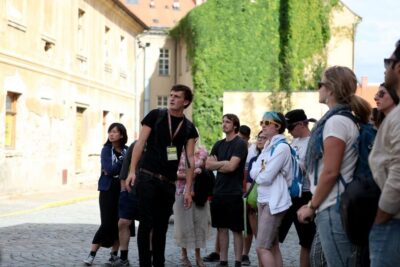
A useful visual clue is the red umbrella used by the tour staff. Allow yourself time to find the correct level and office. The tour begins with the group boarding a comfortable regional train to Kutná Hora, and train tickets are included.
The railway portion is more than a transfer. You get a look at the countryside outside Prague, and the shift from the capital to a smaller Bohemian town helps set the mood. Recent transport works and heavy snow have occasionally made the route more complicated, but the guides have handled those changes by adjusting connections and keeping the group together.
You should expect public transportation rather than a private coach. That can mean more coordination, but it also gives the trip a local feel. Guides such as Brandon, Karel, Oliver, Pavel, Jan, and Gabriella have been praised for managing connections, explaining changes, and making sure nobody is left behind.
Sedlec Ossuary: more than skulls and bones
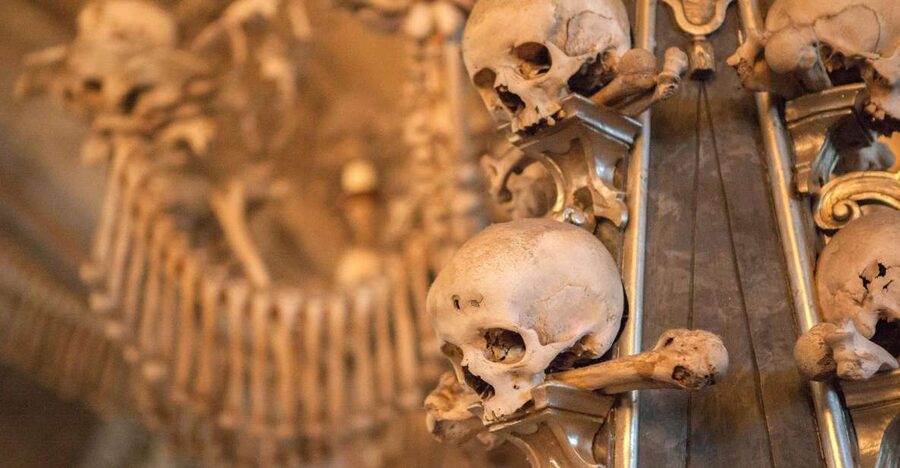
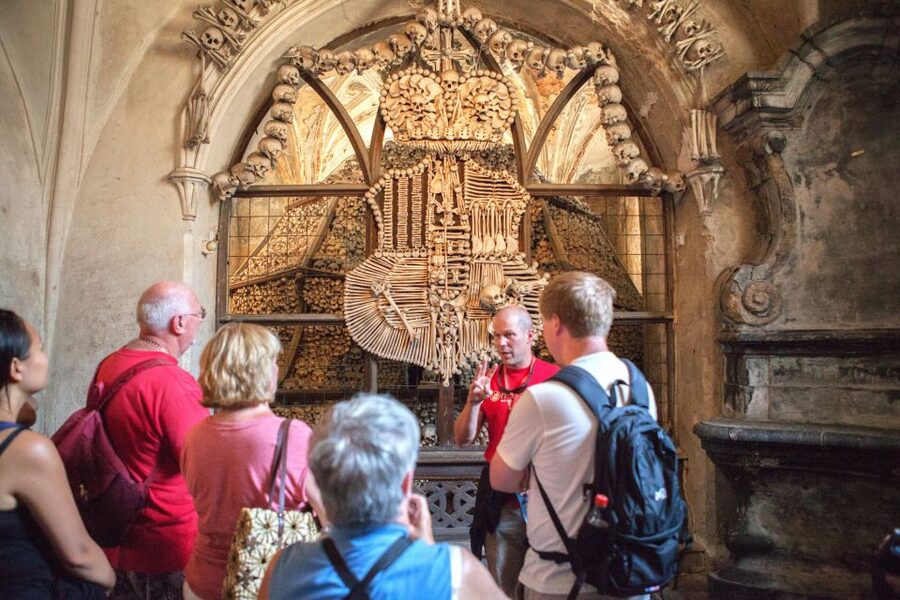
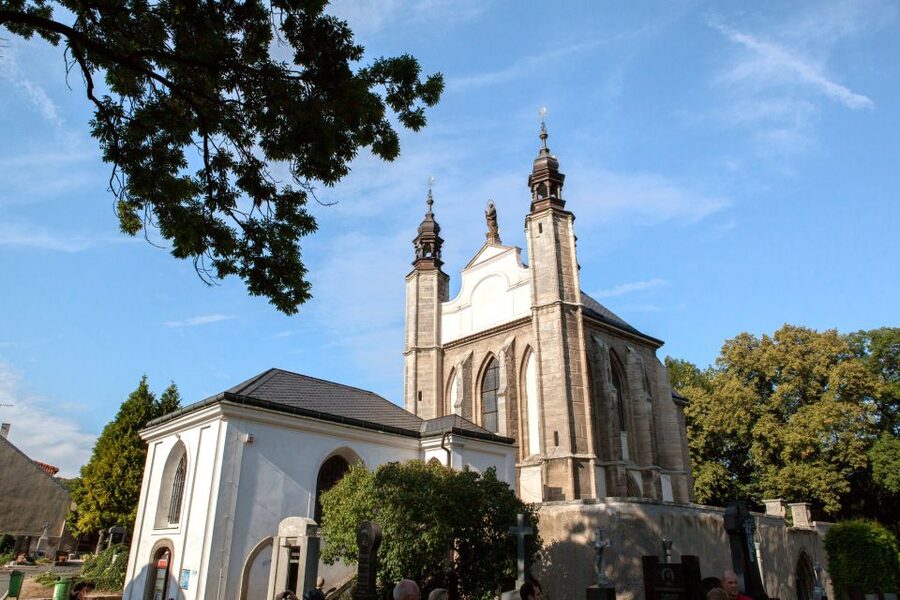
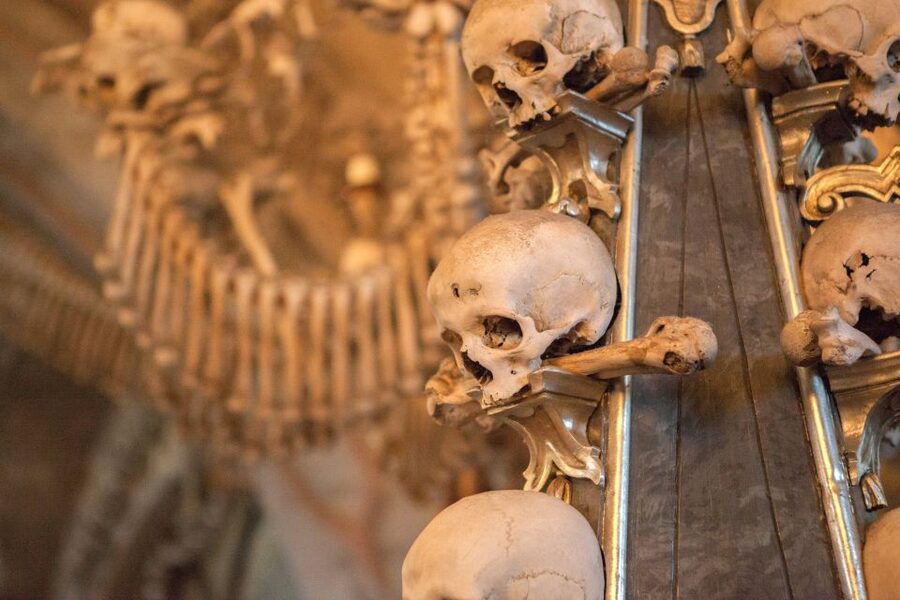
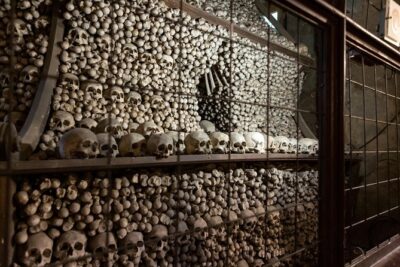
The Sedlec Ossuary is the emotional center of the tour. It is a small chapel decorated with human bones, including skulls and carefully arranged bone designs. The effect is macabre, but it is not presented simply as a shock attraction.
Your guide explains how the site fits into Bohemian religious history and why the bones are there. That context changes the visit. Without it, you might see only an unusual room filled with remains. With it, the chapel becomes a reflection on death, memory, faith, and the way earlier societies treated human remains.
The ossuary attracts people from around the world, so it can be busy. Visiting outside the main season may help. One January group of five found both the ossuary and the cathedral pleasantly quiet, with snow adding a memorable setting. Winter also brings a drawback: Kutná Hora has fewer open restaurants and services in the off-season.
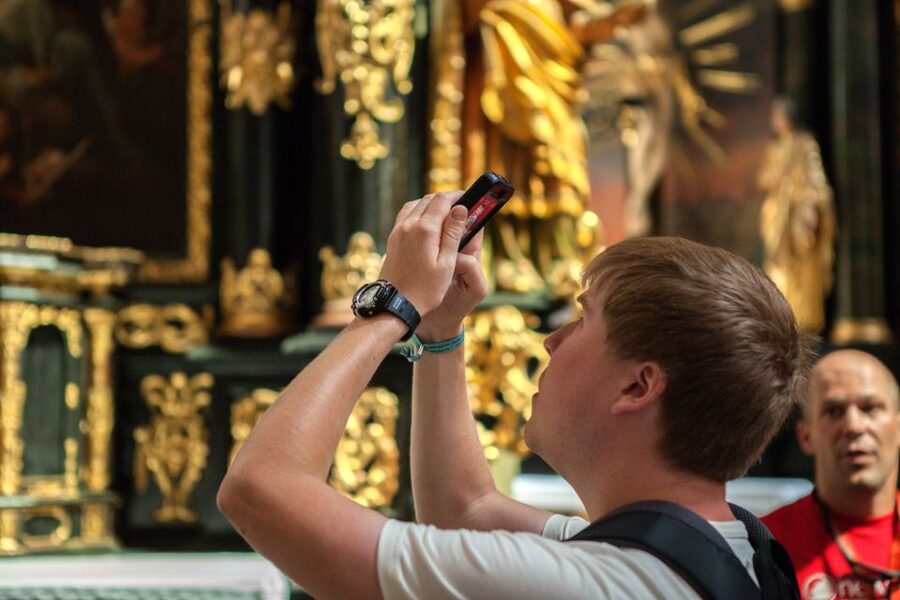
Photography inside the Bone Chapel is prohibited. Treat this as part of the visit, not a nuisance. You will need to pay attention rather than experience the chapel through a camera screen. The time inside may feel short to you, especially if this is the main reason you booked the trip.
The ossuary is not suitable for everyone. Its subject matter is intense, and the tour itself is not suitable for people with mobility impairments. If you prefer a relaxed visit with lots of time for reflection, an independent trip may give you more control. If you want to see it with the history explained and transport arranged, the guided format is useful.
St. Barbara’s Church and Kutná Hora’s Gothic power
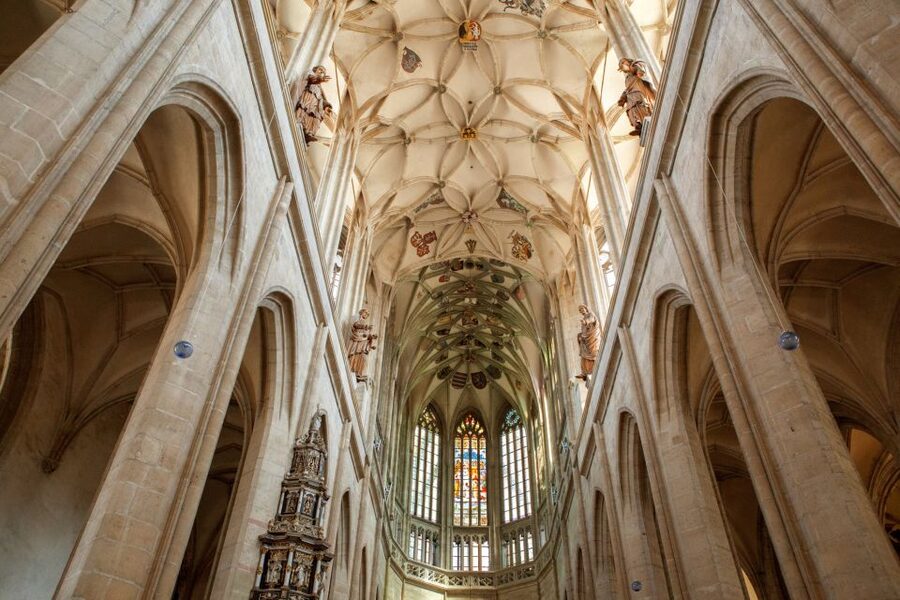
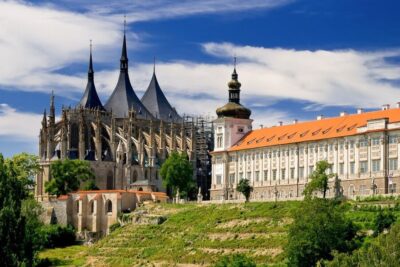
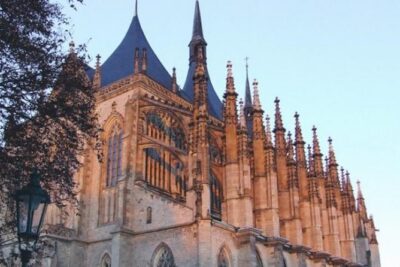
St. Barbara’s Church gives the tour a dramatic counterpoint to the ossuary. Where Sedlec is intimate and unsettling, St. Barbara’s is grand, airy, and richly decorated. Its stained-glass windows are a particular highlight, and the building shows what silver wealth could buy in medieval Bohemia.
Admission is included, so you do not need to budget separately for this major stop. The guide provides the setting: St. Barbara’s was tied to the mining community, and the church reflects the pride of a town that competed with Prague in money and culture.
Take time to look up. Gothic churches reward slow attention, but the schedule may not allow a long independent visit. Several parts of the day are tightly timed, and St. Barbara’s is one of the places where you may wish for extra minutes.
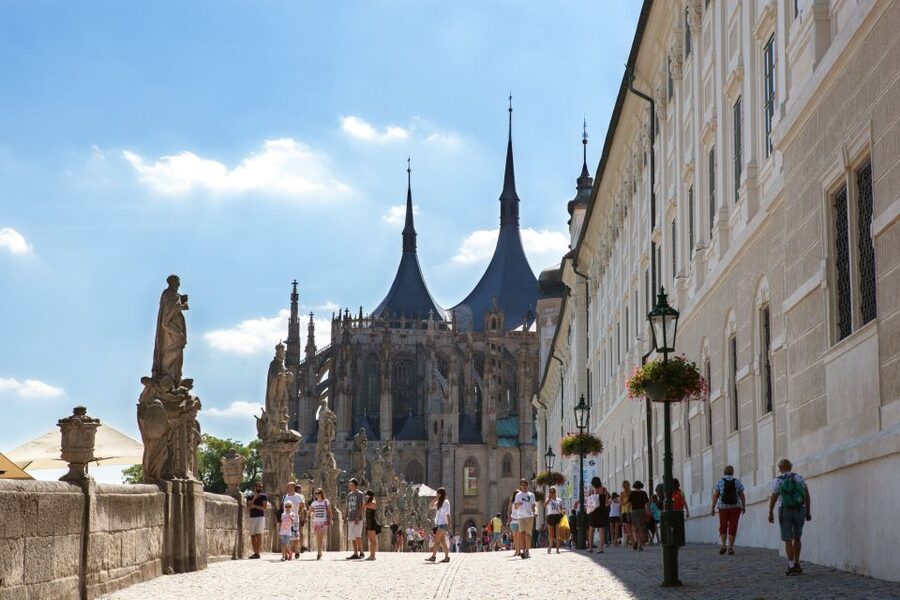
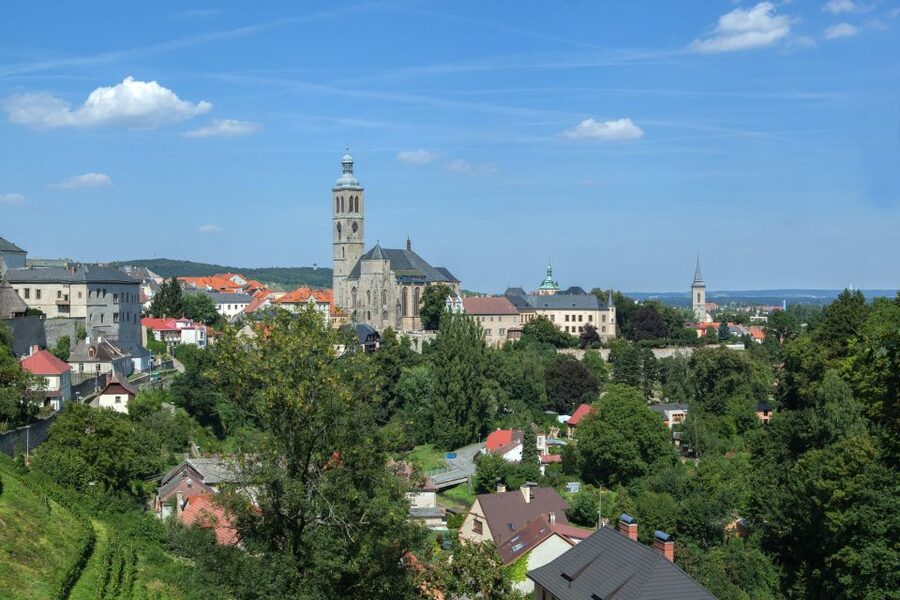
The surrounding town adds to the experience. You may pass medieval Ruthardka Street, with its old architecture and sloping route through the historic core. This is where the tour feels less like a checklist and more like a walk through a former royal town.
A completely different kind of day out in Prague:
- Prague: 50-Minute Sightseeing Evening Cruise
★ 4.2 · 33,780 reviews - Prague: Medieval Dinner with Unlimited Drinks
★ 4.4 · 19,847 reviews - Prague: Castle Tour with Local Guide and Entry Ticket
★ 4.6 · 10,422 reviews - Prague Castle 2.5-Hour Tour Including Admission Ticket
★ 4.7 · 8,927 reviews
Italian Court, Sankturin House, and the old town
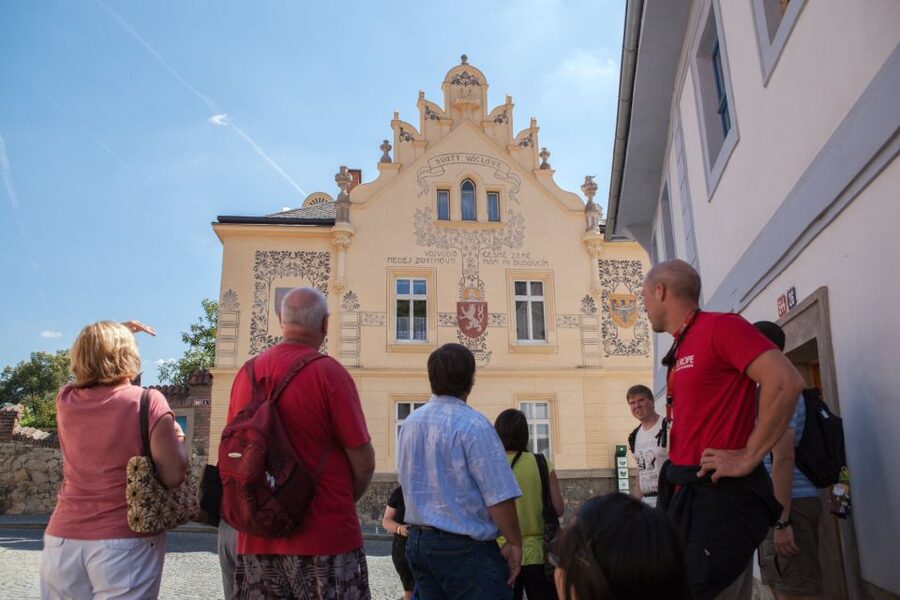
The Italian Court is one of Kutná Hora’s key historic buildings. Its name reflects the arrival of Italian experts connected with coin production and silver wealth. The site helps explain how raw silver became the Prague Groschen, once accepted as hard currency across Central Europe.
This stop is valuable because it links economics to architecture. Kutná Hora did not become important by accident. Its mines supported royal finances, attracted skilled workers, and helped fund the churches and public buildings you see throughout the town.
The tour also takes in Sankturin House, described as Bohemia’s oldest Cistercian Monastery, along with the Stone House and the Plague Column. Each adds a different layer:
- Sankturin House connects the town to religious institutions and early settlement.
- The Stone House shows the confidence of wealthy medieval citizens.
- The Plague Column recalls the repeated disease outbreaks that shaped European towns.
- Ruthardka Street gives you a sense of the medieval town plan and its old residences.
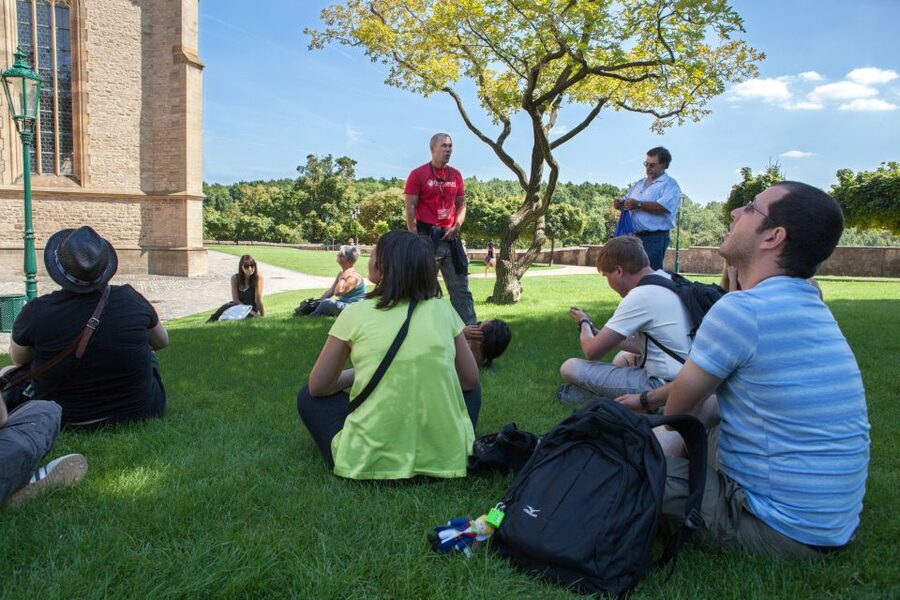
You may not spend long inside every building. The value comes from the guide’s explanation and the way the sites fit together. Karel has been praised for making each stop clear, while Oliver is known for mixing historical detail with humor. That matters on a day with many names, dates, and buildings.
The Hussite Wars and the town’s troubled fortunes
Kutná Hora’s story is not only one of wealth. The town was caught up in the Hussite Wars, when followers of reformer Jan Hus challenged the authority of the Catholic Church and the political order of the time.
A guide can make this complicated period easier to follow by showing how religion, royal power, mining, and local loyalty overlapped. Kutná Hora supported the Catholic side, while many Hussite forces opposed it. The conflict affected the town’s politics and fortunes.
This is one of the strongest reasons to take the tour with a guide rather than simply visit the ossuary. You gain a broader picture of Bohemia, not just a collection of pretty façades. The explanations also help you understand why Kutná Hora once rivaled Prague and later became a quieter provincial town.
The quality of the day depends partly on the guide assigned to your group. Names that have drawn especially strong praise include Brandon for his humor and personal attention, Karel for clear explanations and organization, Pavel for his fluent English and friendly style, and Jan for keeping large groups together. Gabriella and Gaby have also been praised for energy and for handling bigger groups well.
Lunch, local connections, and the tour’s pace
Food and drinks are not included in the $81 price. In practice, the guide may recommend or arrange a traditional Czech restaurant, and some guides pre-order meals so they are ready when the group arrives. This can save time on a six-hour schedule.
The restaurant meal has been a real strength of the day for many groups. Dacicky is one named option, with traditional food, generous portions, good prices, and local beer. You may want to order carefully, since the portions can be large.
The tradeoff is time. The lunch stop is useful and welcome, especially in cold weather, but some people would prefer another 20 minutes to eat slowly. If you want a leisurely meal, tell the guide early or ask whether you can arrange your own lunch. At least one group opted out and found a quieter restaurant with a view toward St. Barbara’s Church.
Lunch options can be limited on public holidays or during winter. Smaller restaurants and other businesses may be closed in the off-season. Bring that reality into your planning, especially if food choices matter to you.
The local transport is another practical advantage. Kutná Hora’s sights are not all packed into one compact square. The guide may use buses and local trains to avoid a dull or tiring stretch of walking. Pavel was specifically praised for using local buses instead of making the group walk through less interesting parts of town.
That efficiency comes with less freedom. You are following the group’s route and timetable, not wandering wherever you please. The payoff is that you see more of the town without spending the day studying Czech transport maps.
What the $81 price really buys
At $81, this is not the cheapest way to reach Kutná Hora. A person comfortable with Czech rail schedules, local transport, and advance ticket buying could potentially spend less independently.
But the fee covers the return train, the guide, and admissions to St. Barbara’s Church and the Sedlec Ossuary. It also buys practical help with local connections and a structured route through a town whose sights are spread out.
I see the value most clearly for a first visit. You do not have to work out which station serves which part of Kutná Hora, decide how to connect Sedlec with the historic center, or worry about missing the return train. The guide also turns the buildings into a story rather than a series of isolated stops.
The price is less compelling if you want long visits, private time, or a slow lunch. The tour is designed for coverage and context. You trade some independence for a smoother day.
Who will enjoy this trip most
I would recommend it to you if you want to see something beyond Prague without spending a night away. It works especially well for first-time visitors to the Czech Republic, history fans, architecture lovers, and anyone curious about the unusual Sedlec Ossuary.
Families can enjoy it too. A group with children aged five and seven found the day manageable and engaging. The bone chapel may not suit every child, so use your judgment before booking.
The trip is less suitable for anyone with mobility limitations, since it involves train travel, local connections, and walking between historic sites. It is also not ideal if you dislike group schedules or need a long, quiet meal.
Winter has both advantages and problems. Snow can make the town look beautiful, and smaller crowds may give you a calmer visit. On the other hand, cold weather, transport changes, and closed restaurants can make the day less convenient.
The tour is offered in English with a live guide. If you want detailed local stories, ask questions as you go. Guides are generally praised for strong English, humor, and a personal approach, but the energy and exact pacing can vary by person and group size.
Is this Kutná Hora tour worth booking?
Book it if you want an efficient, story-filled day trip and would rather let someone else manage the trains, buses, tickets, and timetable. The combination of Sedlec Ossuary, St. Barbara’s Church, silver-mining history, and the Hussite Wars gives you much more than a quick visit to a bone chapel.
Think twice if your priority is solitude, photography inside the ossuary, or a long Czech lunch. Bring extra money for food, expect a full schedule, and remember that photographs are forbidden inside the Bone Chapel.
For most people with one free day in Prague, the $81 price is reasonable. You get the major admissions and transport, plus the historical thread that ties the town together. I would choose this organized visit over an independent trip if your time is limited or Czech transport feels intimidating.
FAQ
How long does the Kutná Hora tour take?
The tour lasts six hours, including travel between Prague and Kutná Hora and visits to the main sights.
Where does the tour meet in Prague?
It meets at the Czech Railway Main Ticket Office, located on the minus 3 floor of Prague’s main train station.
How do I identify the tour meeting point?
Look for the tour staff and the red umbrella near the Czech Railway Main Ticket Office.
Is transport included in the price?
Yes. Train tickets are included. The guide also manages local buses and trains used during the day.
Are entrance fees included?
Admission to St. Barbara’s Church and the Sedlec Ossuary is included.
Can I take photographs inside the Bone Chapel?
No. Photography is forbidden inside the Sedlec Ossuary in Kutná Hora.
Is lunch included?
No. Food and drinks are not included. The guide may recommend or arrange a local restaurant, but you should budget separately for your meal.
Is the tour suitable for people with mobility impairments?
No. The tour is not suitable for people with mobility impairments.
Just added around Prague
- Private Day trip from Prague to Kutná Hora★ 5.0 · 3 reviews
- PRAGUE AIRSOFT SHOOTING GAMES★ 4.7 · 3 reviews
- Private 4-hour City Tour of Prague with driver & official guide w/ Hotel pick up★ 5.0 · 3 reviews
- Prague to Karlovy Vary Private Transfer★ 4.5 · 3 reviews
- Glass blowing in Prague★ 4.6 · 3 reviews
- Disney’s Tarzan Musical★ 5.0 · 3 reviews
- Prague Private Tour★ 5.0 · 3 reviews
- Private Bohemian Glass and Czech Crystal Tour with lunch included★ 5.0 · 3 reviews
Kutna Hora & Bone Church Tours, compared.
Kutná Hora, St.Barbara’s Church, Sedlec Ossuary
Read our review →
Kutna Hora Day Tour Including Sedlec Ossuary from Prague
Read our review →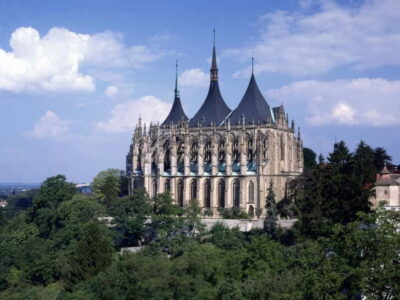
Sedlec Ossuary Skip-the-Line Ticket & Audioguide
Read our review →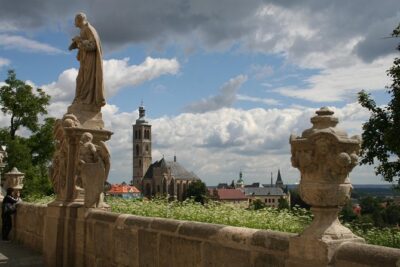
Half Day Trip to Kutna Hora and Bone Church from Prague
Read our review →Browse the lists this tour appears in