
REVIEW · KUTNA HORA & BONE CHURCH TOURS
Day Trip to Kutná Hora by train from Prague
Prague has a wonderfully strange neighbor. Kutná Hora makes a strong day trip because it combines the eerie Sedlec Ossuary, a church decorated with human bones, with grand Gothic architecture and a medieval town center. I like that the tour handles the train, local transport, entrance fees, and guiding in one package. I also like the chance to see a quieter part of Czechia without arranging several connections yourself. The main drawback is the schedule: with public transport, a group of up to 30 people, and fixed site times, parts of the visit can feel rushed.
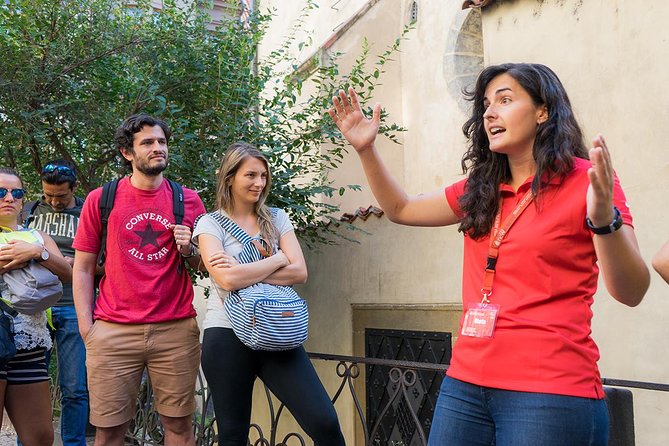
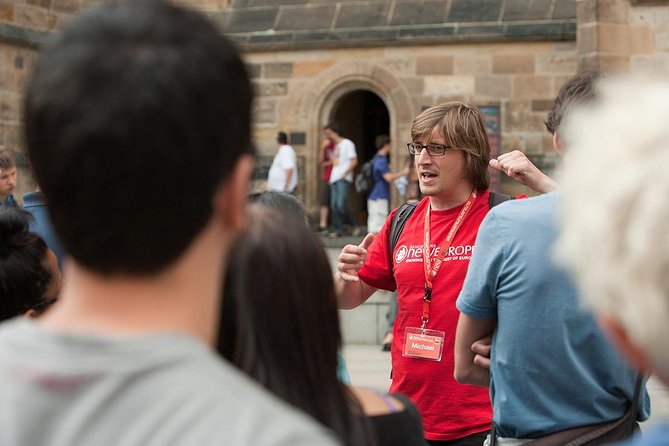
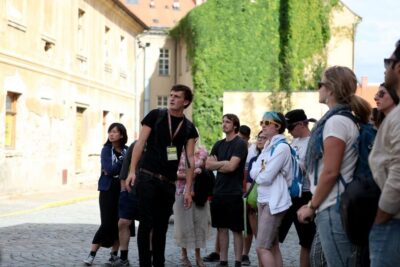
This is a practical outing for anyone who wants more than Prague’s old streets and castle views. Guides such as Pavel, Brandon, Gabby, Jan, Oliver, Libor, Karel, and Andrea have been praised for keeping groups organized and adding humor to the day. Still, your experience depends partly on the guide, train schedules, group pace, and occasional delays.
In This Review
- Key points at a glance
- Why Kutná Hora makes sense beyond Prague
- Meeting at Praha hlavní nádraží
- The train and local bus: useful, but not carefree
- Sedlec Ossuary: the macabre opening scene
- Kutná Hora’s old town and medieval streets
- St. Barbara’s Cathedral and the miners’ story
- Hrádek, the Italian Court, and the lunch stop
- How much walking and rushing should you expect?
- Is $83.44 good value?
- Who should book this Kutná Hora outing?
- Should you book it?
- FAQ
- How long does the Kutná Hora trip from Prague last?
- Where does the tour meet?
- Is transportation included?
- Is lunch included in the price?
- Can I take photographs inside the Bone Church?
- Is the tour suitable for children?
- Can I cancel for a full refund?
Key points at a glance
- The Sedlec Ossuary is the unusual star: Human bones form a chandelier, decorations, and furnishings inside a small cemetery church.
- St. Barbara’s Cathedral adds real scale: Its Gothic interior and mining-themed frescoes provide a dramatic contrast to the ossuary.
- The train removes much of the planning: Transport is arranged, though the trip still includes local buses, walking, stairs, and station changes.
- Lunch is separate: A restaurant stop is included in the day, but food and drinks are paid for by you.
- Expect a walking-heavy outing: Cobblestones, steps, train tracks, and a brisk group pace make comfortable shoes essential.
- The price can be fair for convenience: At $83.44 per person, the package includes a guide, transport, and entrance fees, but not lunch.
Why Kutná Hora makes sense beyond Prague
Kutná Hora grew around the Sedlec Monastery, founded for Cistercian monks in the 12th century. Silver mining later brought wealth and ambition, helping the town compete with Prague in churches, royal buildings, and civic design.
That background gives the excursion a useful shape. You begin with death and remembrance at Sedlec, then move into the proud, wealthy medieval town. The two main churches are not alike, and that contrast keeps the visit interesting.
I would choose this trip if you have already seen Prague’s main sights and want a half-day escape with a strong historical theme. It is less suitable if you prefer long, slow museum visits or independent wandering with no fixed timetable.
The advertised duration is about six hours, with a 9:30 a.m. start and a return to Prague’s main station. In practice, public transport can affect the timing. One account describes a train journey of more than two hours, while another group faced a 50-minute train delay and still returned on schedule after the guide changed the route to a bus. Build in some flexibility rather than planning a tight evening reservation.
More Kutna Hora and bone church trips:
- From Prague: Kutna Hora UNESCO Site Tour with Bone Chapel
★ 4.6 · 1,917 reviews - From Prague: Kutná Hora, St.Barbara’s Church, Sedlec Ossuary
★ 4.3 · 673 reviews - Kutna Hora Day Trip from Prague
★ 4.0 · 570 reviews
Meeting at Praha hlavní nádraží
The meeting point is at Wilsonova 300/8, inside Prague’s main railway station. More precisely, the group gathers near the Czech Railway Main Office, České dráhy, on the lower level.
This can be confusing. The station’s level numbers depend on where you enter, and one description refers to the lower level as level minus three. Look for the Czech Railway office rather than relying only on a floor number. Jan has been described as waiting with a red umbrella, but guides and meeting details can vary.
Arrive early. Prague’s main station is large, and finding the correct staircase or lower level takes time, especially if you are carrying luggage or arriving during a busy period. The meeting begins at 9:30 a.m., and the group needs to board together.
A major benefit here is that you do not have to decipher Czech train tickets or work out the Kutná Hora connection alone. The guide handles the route and keeps an eye on the departure time. Several guides have also helped groups find seats and stay together.
The trade-off is that public transport remains public transport. A large group moving through a station, boarding a train, transferring to a local bus, and walking through town is not as effortless as a private minibus.
The train and local bus: useful, but not carefree
The journey from Prague is part of the experience. It gives you a look beyond the capital and avoids traffic on the road. One guide, Pavel, was especially praised for making the train journey easy to navigate and for using rail travel to avoid traffic delays on the return to Prague.
The transport plan can include a train, a local bus, further rail travel, and a fair amount of walking. The exact order may change with schedules, group size, or delays. One group took three trains and a bus, while another changed from train to bus because the group was large.
This is important when judging the tour. You are not stepping onto a coach at one Prague hotel and getting off directly beside each sight. You are taking a guided public-transport day trip. That keeps the experience closer to ordinary Czech travel, but it also means stairs, station platforms, crowded buses, and strict departure times.
I like the train because it gives the day a sense of place. You are not sealed inside a private vehicle. But if you dislike transfers or need a slow pace, a private excursion may suit you better.
Sedlec Ossuary: the macabre opening scene
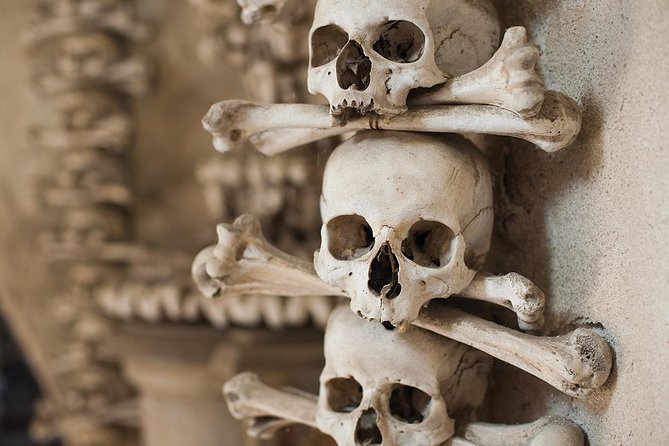
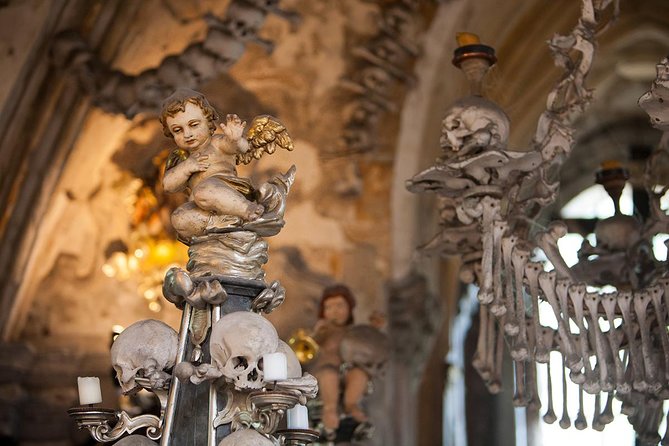
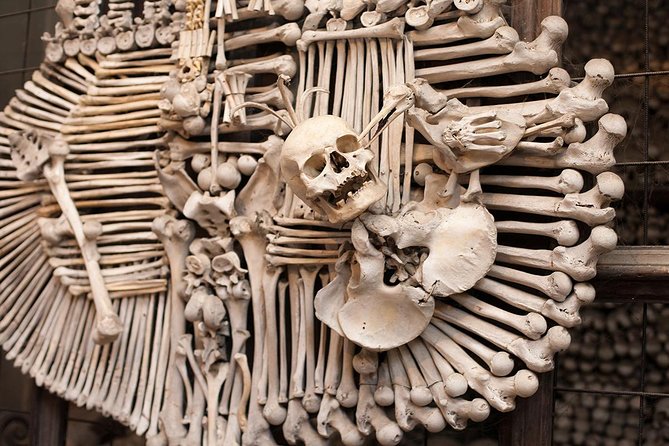
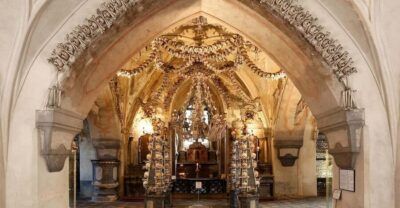
The first major stop is the Cemetery Church of All Saints, better known as the Sedlec Ossuary or Bone Church. Inside, the remains of around 40,000 people are arranged in striking patterns.
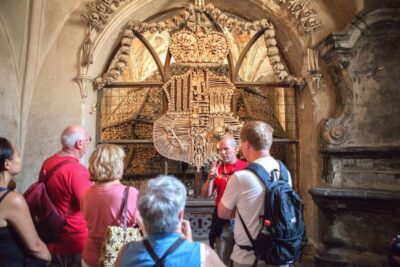
The famous interior includes a chandelier and other furnishings made from human bones. The effect is macabre, but the church is not presented simply as a horror attraction. Your guide explains how Sedlec developed around its monastery and why the cemetery became such an important place of burial.
This is the moment when a guide adds real value. Without context, you may walk in, notice the chandelier, take in the unusual decoration, and leave in a few minutes. With a clear explanation, the bones become part of a story about faith, death, memory, and the growth of the town.
The interior is compact. That means the allotted visit can feel short, particularly if you also need to use the restroom, visit the cemetery, browse souvenirs, and rejoin the group. One account found that roughly 30 minutes had to cover the Bone Church, sanctuary, cemetery, restroom, and souvenir area. If the ossuary is your main reason for coming, pay attention to the guide’s instructions and use your time inside carefully.
Photography is forbidden inside the Bone Church. Do not plan on taking pictures of the chandelier or bone decorations. You will need to rely on memory, and perhaps on the explanation you receive, rather than your camera.
The site can feel crowded, and the narrow setting leaves little room for lingering. I would treat it as a powerful, unusual stop rather than a place for a long visit.
A few more trips of this kind worth comparing:
- Kutna Hora Private Day Trip from Prague by Train
★ 5.0 · 136 reviews - Prague: Railway Kingdom Giant Model Railway Museum
★ 4.4 · 54 reviews
Kutná Hora’s old town and medieval streets
From Sedlec, the tour continues toward historic central Kutná Hora. This part of the day is outdoors, with walking through streets and squares filled with medieval buildings.
The town’s character comes from its mining wealth. Silver made Kutná Hora important enough to compete with Prague, and the architecture reflects that ambition. You will hear about the town’s rise after Sedlec Monastery and see how religious and royal power shaped its center.
The walking portion is a welcome change after the dim, enclosed ossuary. It also gives you time to notice the town’s scale. Kutná Hora is not simply a collection of isolated churches. Its streets, former royal buildings, and fortified structures form a coherent historic center.
Still, the free time is limited. About 1 hour and 20 minutes is assigned to the historic center, and that period may also include walking between stops. You should not expect a long independent exploration of every lane or a series of museum visits.
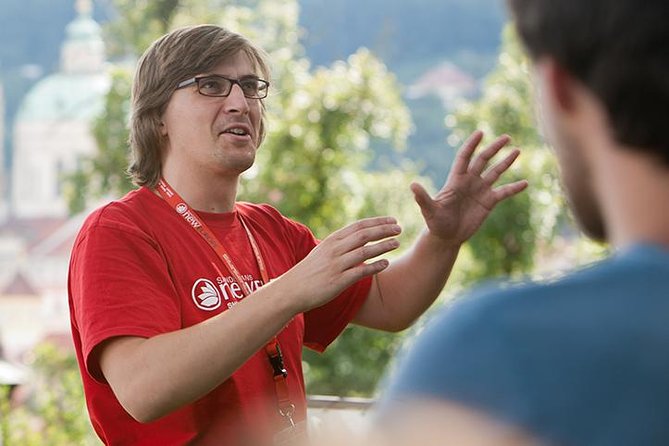
A guide such as Libor has been praised for allowing time to explore independently while still keeping the day moving. That is the ideal balance here. Listen during the walking explanation, then use any free minutes to look around, take photographs outdoors, or settle into the town’s quieter rhythm.
St. Barbara’s Cathedral and the miners’ story
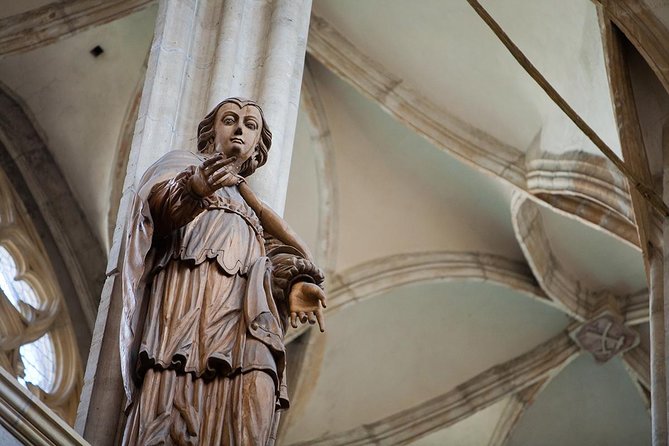
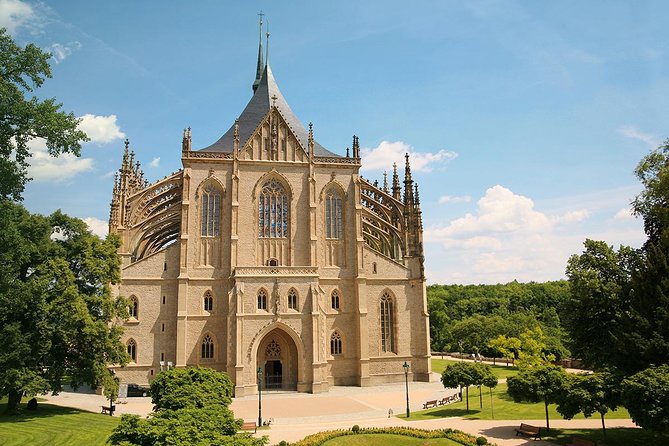
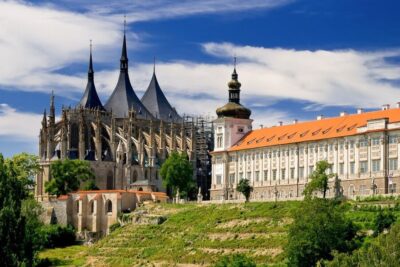
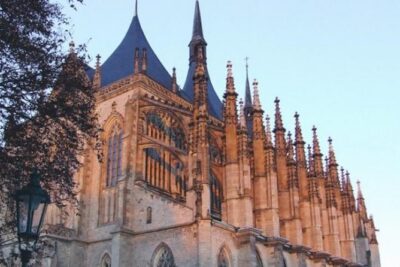
St. Barbara’s Cathedral is the architectural high point of the outing. Its Gothic interior is large, echoing, and far more spacious than the Bone Church.
The cathedral was dedicated to St. Barbara, the patron saint of miners. Inside, frescoes show medieval miners, linking the building directly to the industry that made Kutná Hora wealthy. The church was also part of the town’s effort to rival Prague, so its scale reflects civic pride as much as religious devotion.
I find this pairing of churches especially effective. The ossuary is intimate and unsettling. St. Barbara’s is grand, bright by comparison, and built to impress. Seeing both helps you understand Kutná Hora as a place shaped by mining money, religious institutions, and competition with the capital.
The visit lasts about an hour. That is enough to appreciate the major interior features and hear the main story, but not enough for a slow architectural study. Look up as you walk. The frescoes and vaulting are easy to miss if you focus only on the guide or the people around you.
The cathedral is also one of the places where a good guide can make a difference. Several guides have been praised for explaining the sites clearly, giving historical context, and keeping the mood light without turning the visit into a comedy routine.
Hrádek, the Italian Court, and the lunch stop
After the cathedral, the route passes through more of Kutná Hora’s historic streets. You may see Hrádek, a fortified palace, and the Italian Court, the former royal mint. These stops help fill in the political and economic side of the town.
The Italian Court is particularly useful as an idea, even if the visit is mainly a passing look. Kutná Hora was not wealthy by accident. Its silver supported royal finance, and the mint connected local mining directly to the Czech crown.
Lunch is normally arranged at a restaurant, with the cost left to you. Dačický is one restaurant named in the trip feedback, and the food there was praised. A spinach pancake with sour cream and salad was one successful choice.
Allow for a short meal. One account described a 30-minute food stop, and the timetable is governed by train and bus departures. Some guides place orders in advance to save time. That makes the meal efficient, but you may not have time for several courses, appetizers, or dessert.
Bring a snack if you know you eat slowly or need a specific diet. Food and drinks are not included in the $83.44 price. Carry water, and keep some Czech change for restrooms, a small but useful tip from the day-to-day reality of this outing.
How much walking and rushing should you expect?
This is not a gentle stroll. You should be comfortable walking on cobblestones, climbing stairs, crossing station areas, and keeping up with a group. The tour requires a moderate level of physical fitness.
The route also includes public transport, so the pace can increase when a train or bus is waiting. A slow-moving member of the group once made it harder to keep the schedule, and another guide had to hold a train after lunch ran over.
That does not mean the outing is badly organized. It means the plan has little spare time. Guides such as Brandon, Pavel, Jan, and Oliver have been praised for staying patient, entertaining the group during delays, and making connections on time. Even so, you should wear sturdy shoes and avoid bringing more than you can carry comfortably.
Weather matters. One group visited in snow and found that proper clothing made a major difference. Bring water and sunglasses in bright weather, and dress for conditions rather than assuming the day will feel like a short city walk in Prague.
Children up to age 13 can join free, though a valid ID may be requested. Families should consider the walking and the bone-themed subject matter before booking.
Is $83.44 good value?
At $83.44 per person, this is not the cheapest way to see Kutná Hora. You are paying for more than entrance tickets. The fee covers a local guide, the train and other transport used during the excursion, and admission to the Sedlec Ossuary and St. Barbara’s Cathedral.
That package has real value if you are unfamiliar with Czech public transport or do not want to coordinate several connections. The guide also explains the places you see, keeps the group on schedule, and adjusts the route when delays occur.
The value is weaker if you mainly want to visit two churches and wander independently. Some people find the journey long for the amount of time spent at each site. Lunch is extra, and the group size can reach 30, which may make the walking portions feel less personal.
I would compare the price with your priorities. Pay for this tour if convenience, historical explanation, and a managed day matter to you. Skip it and arrange your own visit if you are comfortable with trains, buses, tickets, and a flexible timetable.
Who should book this Kutná Hora outing?
I would recommend it to first-time visitors to Prague who want a distinctive day outside the capital. It is also a good choice for history fans, Gothic architecture fans, and anyone curious about the Bone Church.
You will likely enjoy it most if you:
- Like guided history but still want some independent time
- Are comfortable with trains, buses, stairs, and cobblestones
- Want transport and entrance fees handled together
- Have a flexible evening after returning to Prague
- Are happy with a short, efficient lunch stop
I would hesitate if you need step-free access, dislike group travel, want extended time inside the ossuary, or expect a private vehicle from door to door. The tour is active and schedule-driven.
Free cancellation is available up to 24 hours before the 9:30 a.m. start. If the minimum group size is not reached and the operator cancels, you can be offered another date or a full refund.
Should you book it?
Book this trip if you want an easy introduction to Kutná Hora and value having a guide manage the rail and bus connections. The strongest parts are the contrast between the Bone Church and St. Barbara’s Cathedral, the clear mining story, and guides who keep the day moving when transport goes wrong.
Do not book it expecting a leisurely full-day exploration. The advertised visit lasts about six hours, but the transport can take a sizable share of that time, and the ossuary visit may be brief. For most visitors with limited time in Prague, I think the convenience makes the $83.44 reasonable. Independent planners who want more time in Kutná Hora may get better value by going alone.
FAQ
How long does the Kutná Hora trip from Prague last?
The experience lasts approximately six hours. It starts at 9:30 a.m. and ends back at Prague’s main railway station.
Where does the tour meet?
The meeting point is at Wilsonova 300/8, 110 00 Praha 2-Vinohrady, inside Prague’s main train station near the Czech Railway Main Office, České dráhy.
Is transportation included?
Yes. Transportation is included, including the train and local transport used during the route. The exact combination can change because of schedules, delays, or group size.
Is lunch included in the price?
No. Food and drinks are not included. The day includes a lunch stop, but you pay for your own meal.
Can I take photographs inside the Bone Church?
No. Photography is forbidden inside the Sedlec Ossuary.
Is the tour suitable for children?
Children up to 13 years old may join free. The tour requires moderate physical fitness, with walking, stairs, cobblestones, and public transport.
Can I cancel for a full refund?
Yes, if you cancel at least 24 hours before the experience start time. Cancellations or changes made less than 24 hours in advance are not eligible for a refund.
More Day Trips
- From Prague: Full-Day Trip to Český Krumlov
★ 4.6 · 1,172 reviews - From Prague: Bohemian & Saxon Switzerland Iconic Day Trip
★ 4.9 · 883 reviews - From Prague: Český Krumlov and České Budějovice Day Trip
★ 4.0 · 818 reviews - Prague: Karlovy Vary Day Trip with Watchtower and Funicular
★ 4.4 · 468 reviews
Just added around Prague
- Private Day trip from Prague to Kutná Hora★ 5.0 · 3 reviews
- PRAGUE AIRSOFT SHOOTING GAMES★ 4.7 · 3 reviews
- Private 4-hour City Tour of Prague with driver & official guide w/ Hotel pick up★ 5.0 · 3 reviews
- Glass blowing in Prague★ 4.6 · 3 reviews
- Prague to Karlovy Vary Private Transfer★ 4.5 · 3 reviews
- Disney’s Tarzan Musical★ 5.0 · 3 reviews
- Prague Private Tour★ 5.0 · 3 reviews
- UNESCO Teplice – Premiant eGuide APP★ 4.5 · 3 reviews
Kutna Hora & Bone Church Tours, compared.
Kutná Hora, St.Barbara’s Church, Sedlec Ossuary
Read our review →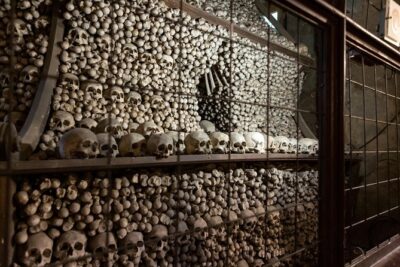
Kutna Hora Day Tour Including Sedlec Ossuary from Prague
Read our review →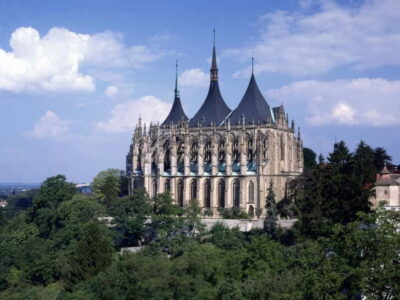
Sedlec Ossuary Skip-the-Line Ticket & Audioguide
Read our review →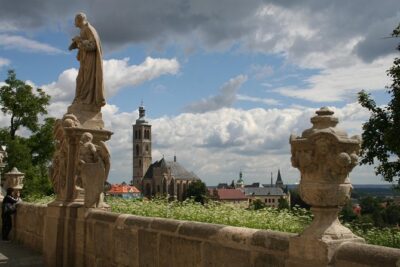
Half Day Trip to Kutna Hora and Bone Church from Prague
Read our review →Browse the lists this tour appears in