
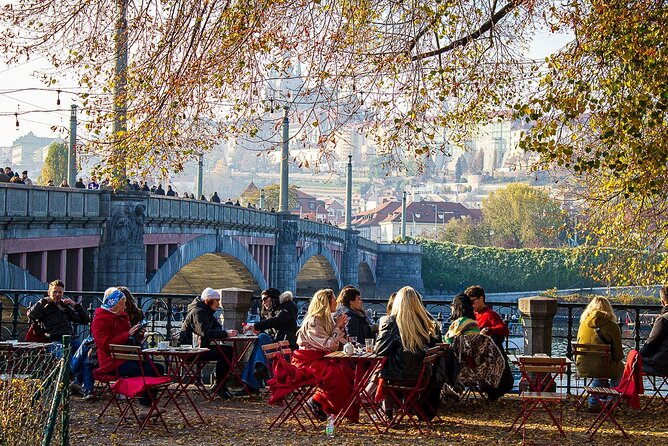
REVIEW · WALKING TOURS
Walking through ages: 11th to 21st century, Prague flavoured
Prague tells its story under your feet. This four-hour walk links the Prague Castle, Charles Bridge, Jewish Quarter, Old Town, and Wenceslas Square in one clear route. I like the small maximum of 10 people and the way guide Vadim brings both old and modern Prague into the same conversation. The main drawback is that the tour is exterior only, so entry to the cathedral, synagogues, theatre, and other interiors costs extra.
I also like that the route ends in central Wenceslas Square, where you can continue exploring on your own. Vadim has been praised for detailed answers, witty stories, tram help, food suggestions, and flexible timing. You should allow for the separate public transport fare of €2, and bring water or a snack because none is included.
In This Review
- Key points at a glance
- Why this route works for a first look at Prague
- Starting at Prague Castle and St. Vitus Cathedral
- Hradčanské náměstí and the descent into Lesser Town
- St. Nicholas Church and the 700-year-old Charles Bridge
- Josefov and the Old-New Synagogue
- Old Town Square and Prague’s medieval center
- Mozart, Czech Art Nouveau, and the birth of a state
- Wenceslas Square and Prague’s modern public life
- What Vadim adds to the walk
- Is $60.21 a fair price?
- Practical details before you book
- Who should choose this Prague walk?
- Should you book it?
- FAQ
- How long does the Prague walking tour last?
- What time does the tour begin?
- Where does the tour start?
- Where does the tour finish?
- Is public transportation included?
- Are admission tickets included?
- Is food included?
- How large is the group?
- Can I cancel for a full refund?
Key points at a glance
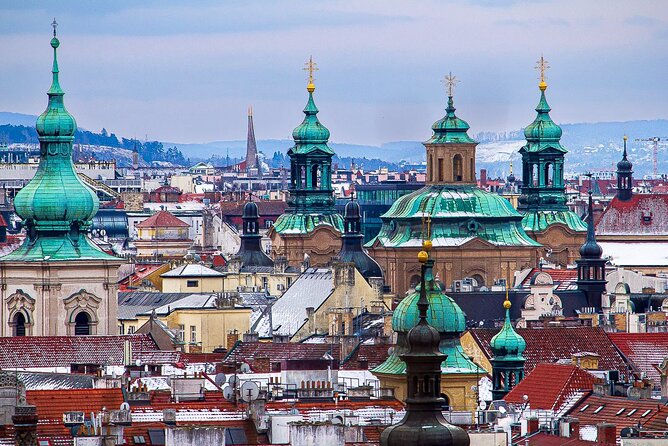
- A full city story in four hours: Follow Prague from the 10th-century castle to the political and cultural life of the 20th and 21st centuries.
- Small-group attention: The group is limited to 10 people, a useful size for questions and city-centre streets.
- Vadim adds practical help: He explains Prague’s past while also showing you how to use the trams and suggesting places to eat and drink.
- Exterior sightseeing keeps the price down: At $60.21 per person, you pay for the guide rather than a bundle of admission tickets.
- The route crosses Prague’s major districts: Castle Quarter, Lesser Town, Josefov, Old Town, and Wenceslas Square all appear.
- Plan for public transport: The walk begins at Prague Castle, and public transport to the start costs €2 per person.
Why this route works for a first look at Prague
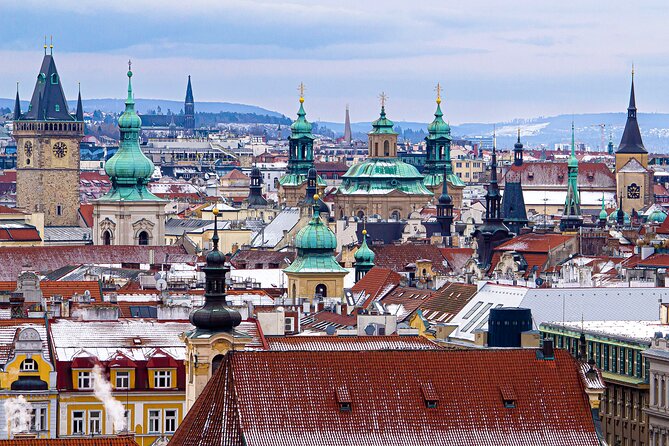
Prague can feel confusing at first. Its castle sits above the river, the Old Town lies beyond Charles Bridge, and the grander modern streets begin farther east. This route gives you a useful thread through the city instead of leaving you to connect the pieces alone.
You begin at Prague Castle and finish at Wenceslas Square. That direction matters. You start with Bohemian rulers, churches, and noble palaces, then move through baroque Prague, Jewish Prague, medieval Old Town, Czech Art Nouveau, and the political center of modern Prague.
I like the historical range. In one morning or afternoon, you can see the seat of Bohemian power, a 700-year-old bridge, a 13th-century synagogue, Mozart’s Prague, the birth of Czechoslovakia, and the city’s 20th-century public square.
It is not a museum tour. It is a guided walk through streets and squares, with short stops at major buildings. That makes it a good orientation tour, but not the right choice if you want long interior visits or detailed time inside each attraction.
More walking tours:
- Prague: 3-Hour Walking Tour of Old Town & Prague Castle
★ 4.7 · 5,696 reviews - Prague: Ghost Walking Tour Where Legends Come To Life
★ 4.4 · 5,253 reviews - Prague: Jewish Quarter Walking Tour with Admission Tickets
★ 4.7 · 3,729 reviews
Starting at Prague Castle and St. Vitus Cathedral
The meeting point is Prague Castle, at Pražský hrad, with a 10:00 am start. You need to arrange your way there by public transport, unless you use the pickup option offered with the experience. The public transport cost is listed separately at €2 per person.
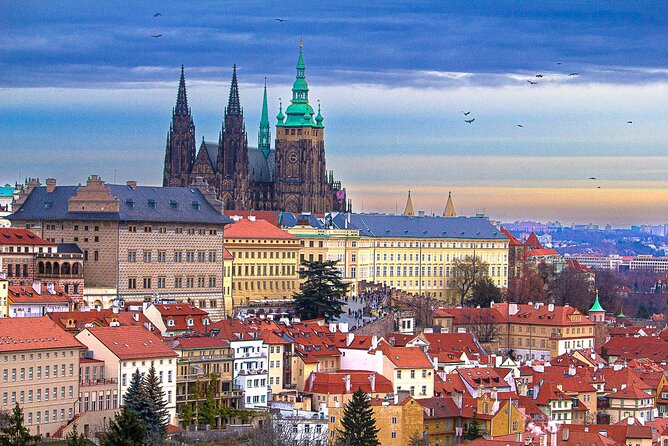
Prague Castle has been the seat of Bohemian rulers since the 10th century. It is also a UNESCO World Heritage Site and one of the city’s most important visual markers. The tour allows about 10 minutes here, so expect a brisk introduction to the castle rather than a full visit to its courtyards and buildings.
St. Vitus Cathedral receives another short look. Its Gothic form is one of Prague’s defining sights, and it serves as a symbol of the Czech state. The cathedral is also part of the larger castle complex, which is described as the world’s largest castle.
The key point is to manage your expectations. Admission is not included, and the tour is exterior only. If you want to see the cathedral’s interior, chapels, stained glass, or royal tombs, you will need a separate visit and more time.
Hradčanské náměstí and the descent into Lesser Town
From the castle, the route continues to Hradčanské náměstí, the broad square in front of Prague Castle. Seventeenth-century palaces once occupied by powerful noble families surround it. The square also gives you a striking view across the city.
This is one of the places where a guide earns the fee. A quick look at a palace façade tells you very little on its own. With context, the square becomes a lesson in rank, power, and the relationship between the castle and the people who served the court.
The tour then spends about 30 minutes in Lesser Town, or Malá Strana. This is one of Europe’s best-preserved baroque quarters, with palaces, gardens, small shops, restaurants, and handsome houses.
I like this part because it changes the pace. The castle feels official and imposing. Lesser Town feels more intimate, even though its buildings were designed to impress. You will see how Prague’s grand style continues beyond the castle walls, but at street level.
The route does not promise entry into the palaces or gardens. You are seeing the district from outside, which keeps the walk moving but limits what you can inspect.
St. Nicholas Church and the 700-year-old Charles Bridge
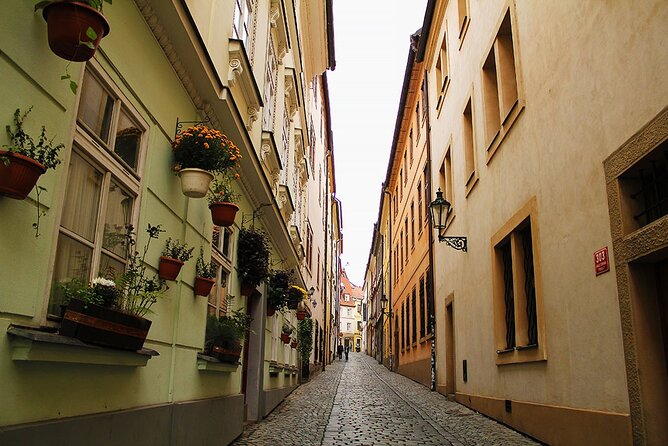
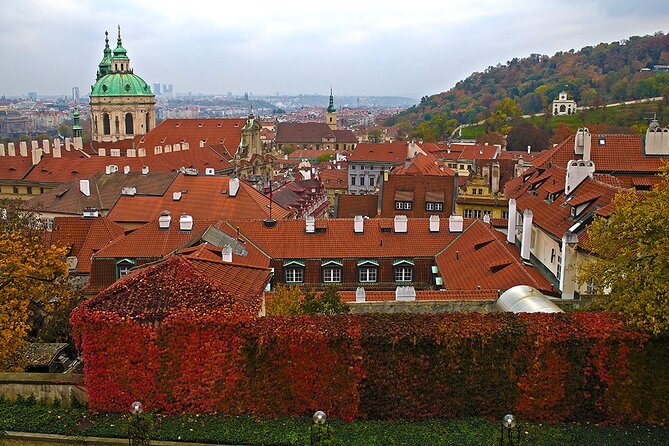
Malostranské náměstí is the center of Lesser Town. Its main feature is St. Nicholas Church, a major work of Prague baroque architecture. The church’s dome is among the most recognizable shapes in the Prague skyline.
The stop at the square lasts about 15 minutes, followed by roughly 10 minutes at the church. Admission is not included, and the interior is not part of the guided experience. Even from outside, the church helps explain the baroque character of the quarter.
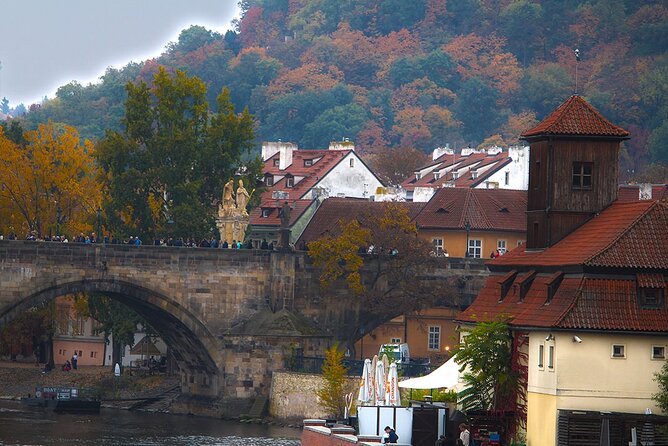
Next comes Charles Bridge, Prague’s best-known crossing over the Vltava. The bridge is about 700 years old and lined with statues. It also provides broad views over the river and the city.
The bridge is free to cross, but it can be one of the busiest parts of central Prague. The scheduled stop is about 15 minutes, enough for orientation, photographs, and a few stories, but not enough for an unhurried look at every statue.
You should also expect a walking route with changing surfaces, slopes, and public streets. The supplied details do not give a walking distance, so wear shoes you can trust for several hours.
A completely different kind of day out in Prague:
- Prague: 50-Minute Sightseeing Evening Cruise
★ 4.2 · 33,780 reviews - Prague: Medieval Dinner with Unlimited Drinks
★ 4.4 · 19,847 reviews - Prague: Castle Tour with Local Guide and Entry Ticket
★ 4.6 · 10,422 reviews - Prague Castle 2.5-Hour Tour Including Admission Ticket
★ 4.7 · 8,927 reviews
Josefov and the Old-New Synagogue
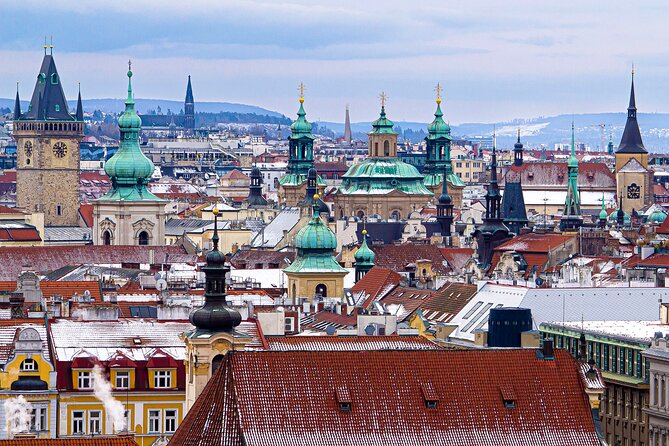
The tour then moves into Josefov, Prague’s Jewish Quarter. The area was rebuilt around the turn of the 20th century, with Neo-Renaissance and Art Nouveau buildings replacing much of the older quarter.
The 30-minute visit gives you time to see the district’s architecture and understand how sharply its appearance changed. This part of Prague can be easy to reduce to a few famous names, but the streets also show the city’s late 19th-century ambitions and its changing urban style.
The Old-New Synagogue receives a brief 10-minute stop. Dating from around 1270, it is one of Europe’s oldest surviving synagogues. Prague tradition also connects its closed attic with the story of the Golem, the human-like creature said to have served its master.
Admission is not included, and the synagogue is not visited inside on this walk. That is an important distinction. If the synagogue is a priority, treat this stop as a preview, then return for a separate paid visit.
Old Town Square and Prague’s medieval center
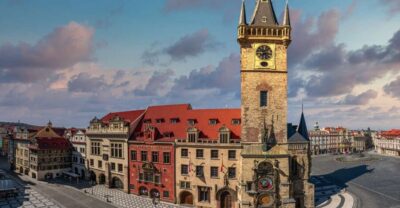
Old Town Square is the heart of Prague’s historic center. It carries about 800 years of city life and includes the famous Astronomical Clock. The planned stop is 20 minutes.
I would use this time to get your bearings. The square connects many of the city’s main routes, and it can be hard to know what deserves attention first. A guide can point out the major façades and explain how the square fits into Prague’s wider story.
The walk continues through Staré Město, or Old Town, for about 30 minutes. This area includes Charles University, one of Europe’s oldest universities, and the Estates Theatre, where Mozart performed.
The Old Town section is not just a parade of pretty buildings. It helps connect Prague’s academic, musical, religious, and commercial life. You also get a chance to see how close many major sights are to one another, which is useful when planning your next day.
The busy nature of Old Town is both a benefit and a nuisance. You get a lot in a small area, but the streets and squares may feel crowded. The route is designed to keep moving rather than give you long stretches of quiet observation.
Mozart, Czech Art Nouveau, and the birth of a state
The Estates Theatre gets its own 10-minute stop. It is described as the only theater still operating where Wolfgang Amadeus Mozart personally conducted his operas. The exterior visit gives you the essential connection, while an interior performance or tour would require separate planning.
The next stop is Obecní dům, or the Municipal House. This is Prague’s flagship Art Nouveau building, built on the former Royal Court site. It was completed just before Czechoslovak independence and was intended as a celebration of Czech art and national identity.
The building also carries direct political importance. Czechoslovakia was proclaimed there in 1918. That makes the stop valuable for understanding the move from imperial Prague to the modern Czech national story.
Again, the visit is exterior only and admission is not included. If you enjoy Art Nouveau interiors, you may want to return later. The guided walk gives you the setting and meaning, but not the full decorative detail inside.
Wenceslas Square and Prague’s modern public life
The final stop is Wenceslas Square, the main square of modern Prague. It is more like a long city boulevard than a traditional enclosed square, and its mixture of styles reflects the city’s changing identity.
You may see the Gothic Church of Our Lady of the Snows, the Neo-Classical National Museum, the Art Deco Hotel Europa, and examples of rondocubism from the 1920s. The square also recalls political movements from the 20th and 21st centuries.
This is a strong ending because it shows that Prague is not frozen in the Middle Ages. The route begins with rulers and cathedrals, then finishes in a place tied to modern public life and national change.
The tour ends here, at Václavské náměstí in central Prague. That gives you easy access to continue sightseeing, find lunch, or return to your hotel. The 20-minute stop is long enough for a final explanation, but you can stay in the area after the guide leaves.
What Vadim adds to the walk
The guide is a major part of the value. Vadim is praised for detailed answers and wide knowledge of Prague, but the practical side matters just as much. He has helped with tram use, which can make the rest of your stay easier, and he offers suggestions for places to eat and drink.
That tram lesson is especially useful because the tour begins at Prague Castle and the route ends elsewhere. You are not simply following a guide through famous streets. You are also learning how to move between Prague’s main areas.
Vadim has also adjusted timing when needed. That suggests some flexibility, though you should not assume every schedule change can be guaranteed. The group limit of 10 should make it easier to ask questions than on a large coach tour.
The tone sounds conversational, with witty stories mixed into the historical explanation. That suits Prague well. The city is full of legends, political turns, artistic rivalries, and odd details that can make dates and dynasties easier to remember.
Is $60.21 a fair price?
At $60.21 per person, this is not the cheapest way to see Prague’s streets. It can still be good value if you want one guide to connect the major districts and give you a useful city framework.
The price covers the guide service, not entrance tickets. You also pay €2 per person for public transport, and snacks are up to you. Since the tour is exterior only, the cost is mainly for explanation, organization, and the route itself.
I would compare it with the cost of buying several separate guided visits. You are not getting interior access to Prague Castle, St. Vitus Cathedral, St. Nicholas Church, the Old-New Synagogue, the Estates Theatre, or Municipal House. Instead, you get a broad introduction to all of them in one half-day.
That makes the tour most valuable at the beginning of your stay. You can use the guide’s recommendations and transport advice for later visits. If you already know Prague well, the broad route may feel too familiar, unless Vadim’s stories and local suggestions are your main reason for booking.
Practical details before you book
The tour lasts about four hours and is offered in English. Confirmation arrives at booking, and mobile tickets are accepted. Group discounts are available, and pickup is offered, though the stated meeting point is Prague Castle.
Bring water and perhaps a small snack. You can also buy something along the way, but food is not included. Since the walk crosses several historic districts, comfortable footwear is sensible.
The tour is near public transport, service animals are allowed, and most people can participate. The supplied details do not provide a specific accessibility route or walking distance, so you should contact the operator if you need exact information about slopes, steps, or surfaces.
Free cancellation is available up to 24 hours before the 10:00 am start for a full refund. Changes or cancellations made less than 24 hours ahead are not accepted, with the local time used for the cutoff.
Who should choose this Prague walk?
I would choose this tour if you are visiting Prague for the first time and want a strong overview before exploring individual interiors. It also suits you if you enjoy history explained through streets, buildings, and stories rather than a long museum lecture.
It is a good fit for couples, families, and small groups who want to ask questions. The maximum of 10 people is a real advantage, especially in busy parts of Old Town and around Charles Bridge.
You may want another option if your main goal is entering the sights. The short stops at the cathedral, synagogue, theatre, and churches are useful introductions, but they will not satisfy someone who wants stained glass, frescoes, collections, or long architectural study.
Should you book it?
Book this walk if you want Prague’s major districts explained as one connected story. The best reasons are the route, the small group, and Vadim’s practical guidance, especially his help with trams and suggestions for food and drink.
Skip it if you prefer to explore slowly or already have a detailed plan for the castle, Jewish Museum, and Old Town interiors. At $60.21, the tour earns its price through orientation and storytelling, not admission access.
For a first or second day in Prague, I think it is a sensible choice. You finish in Wenceslas Square with a clearer sense of where the city’s old, artistic, religious, and modern centers fit together.
FAQ
How long does the Prague walking tour last?
The tour lasts approximately four hours.
What time does the tour begin?
It starts at 10:00 am.
Where does the tour start?
The stated meeting point is Prague Castle at Pražský hrad, 169 00 Prague, Czechia.
Where does the tour finish?
The tour ends at Wenceslas Square, Václavské náměstí, 110 00 Prague.
Is public transportation included?
No. The tour is a walking experience, and public transport to the starting point costs €2 per person.
Are admission tickets included?
No. The experience is exterior only, and admission fees are not included.
Is food included?
No. You can bring water or snacks, or buy them during the walk.
How large is the group?
The group has a maximum of 10 people.
Can I cancel for a full refund?
Yes. You can cancel at least 24 hours before the start time for a full refund. Cancellations or changes made less than 24 hours before the start are not accepted.
Just added around Prague
- Private Day trip from Prague to Kutná Hora★ 5.0 · 3 reviews
- PRAGUE AIRSOFT SHOOTING GAMES★ 4.7 · 3 reviews
- Private 4-hour City Tour of Prague with driver & official guide w/ Hotel pick up★ 5.0 · 3 reviews
- Glass blowing in Prague★ 4.6 · 3 reviews
- Prague to Karlovy Vary Private Transfer★ 4.5 · 3 reviews
- Disney’s Tarzan Musical★ 5.0 · 3 reviews
- Prague Private Tour★ 5.0 · 3 reviews
- Ebike tour in Prague – Express Tour★ 5.0 · 3 reviews
Walking Tours, compared.
3-Hour Walking Tour of Old Town & Prague Castle
Read our review →
Ghost Walking Tour Where Legends Come To Life
Read our review →
Jewish Quarter Walking Tour with Admission Tickets
Read our review →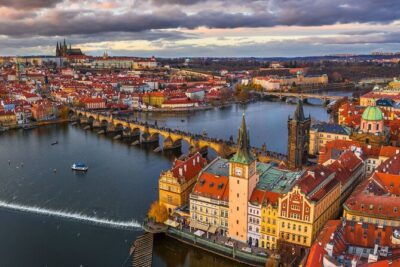
Prague Guided Walking Tour and Cruise with Authentic Czech Lunch
Read our review →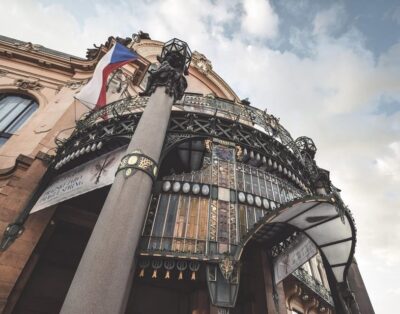
Old Town and Jewish Quarter Guided Walking Tour
Read our review →
Prague Ghost and Legend of Old Town Walking Tour
Read our review →
Prague 3-hour Afternoon Walking Tour including Prague Castle
Read our review →
Ghosts and Legends Nighttime Guided Walking Tour
Read our review →Browse the lists this tour appears in