
REVIEW · MUSEUMS
Prague: Tickets for the Franz Kafka Museum
Kafka still haunts Prague. This ticket pairs a 20-minute English briefing with a self-guided visit to the Franz Kafka Museum, where letters, manuscripts, photographs, drawings, and first editions bring the author’s life into focus. I like the helpful introduction before you enter, and I like the mix of original documents with 3-D installations, audiovisual pieces, and a custom soundtrack. The main drawback is simple: the museum is small, and crowded conditions can make it hard to study everything at an unhurried pace.
You meet a host holding a yellow umbrella outside the museum, collect your admission, and then continue inside on your own. I also like the freedom this gives you. You are not tied to a guide’s pace, but you should know that some visual material may not have enough explanation, so readers new to Kafka may need to do a little connecting for themselves.
In This Review
- Key points to know before you go
- Starting with Kafka in Prague
- Meeting the host with the yellow umbrella
- Inside the museum: documents from 1883 to 1924
- Three-dimensional installations and sound
- Why the self-guided format works
- A small museum needs a careful pace
- Is $28 a fair price?
- Who will enjoy this Kafka visit most?
- Tips for getting more from the visit
- Should you book the Franz Kafka Museum ticket?
- FAQ
- Where is the Franz Kafka Museum located?
- How much does the ticket cost?
- What does the ticket include?
- Is a guide included inside the museum?
- What language is the introduction?
- How do I find the meeting point?
- How long is the entire museum experience?
- What can I see inside the museum?
- Can I explore the museum at my own pace?
- Can I cancel the booking?
- Can I reserve now and pay later?
Key points to know before you go
- A short English introduction gets you oriented: The host explains the museum before you enter, then leaves you to explore independently.
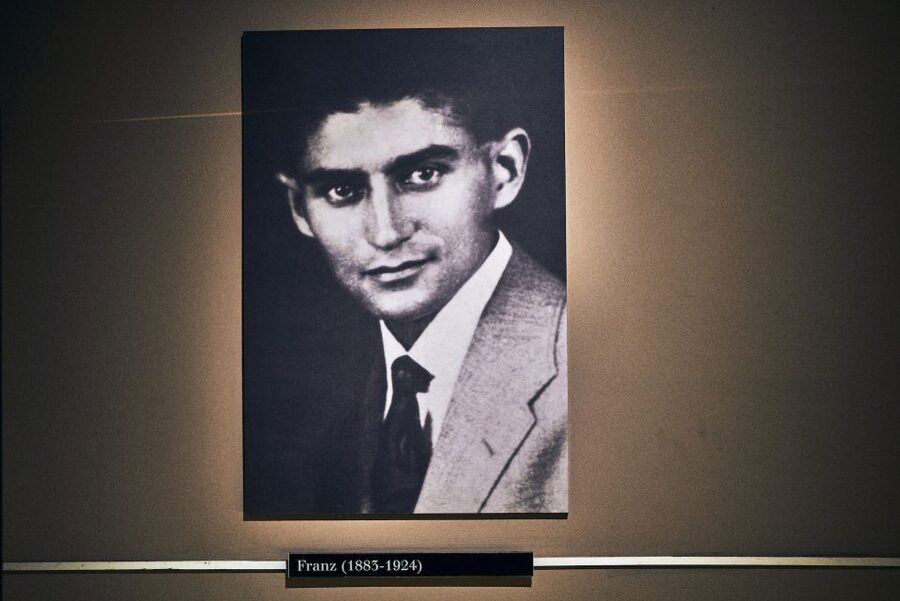
- The collection reaches from 1883 to 1924: You follow Kafka’s life through letters, diaries, manuscripts, photographs, drawings, and first editions.
- The presentation is more than glass cases: Three-dimensional installations, audiovisual work, and a specially made soundtrack create a moody setting.
- The museum visit is self-guided: You can pause at the pieces that interest you instead of following a fixed route with a guide.
- The yellow umbrella is your meeting-point clue: Look for the English-speaking host outside the museum.
- Small size affects the visit: At busy times, you may need patience to read and view everything properly.
Starting with Kafka in Prague
Franz Kafka was born in Prague in 1883 and lived until 1924. This museum focuses on the man behind the writing, placing his work within the city where his life unfolded.
That setting matters. Kafka is often treated as a distant literary figure, known mainly for unsettling stories and difficult ideas. The museum gives you a chance to see him as a person who wrote letters, kept diaries, made drawings, and moved through ordinary life in Prague.
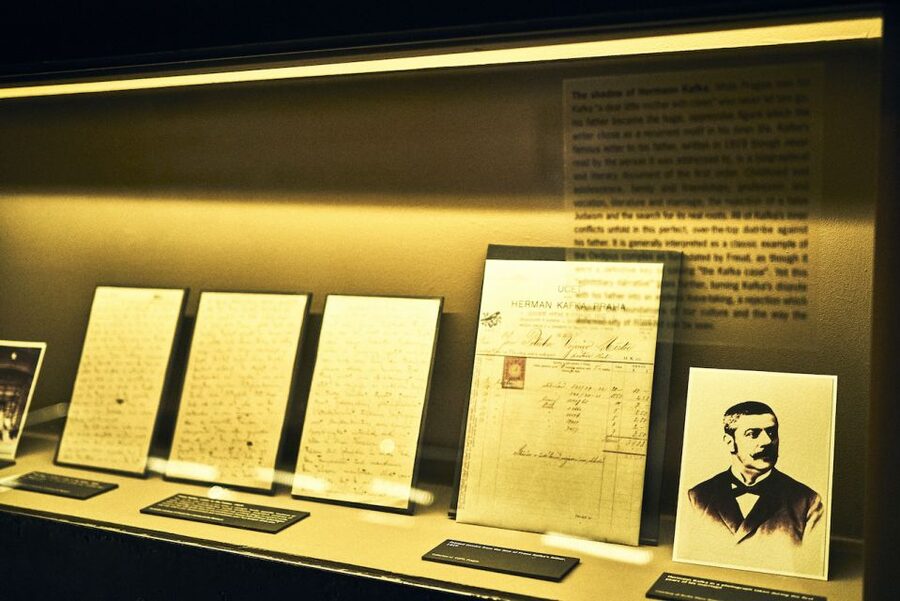
I find that the documents are the strongest reason to come. A manuscript or personal letter has a directness that a standard biography cannot match. You can look at the marks on the page and see writing as a physical act, not just a list of famous titles.
The museum covers Kafka’s lifetime from 1883 to 1924. That period gives the visit a clear frame. You are not walking through every stage of Prague’s past, and you are not getting a broad survey of Czech literature. The focus stays on Kafka and the material connected to him.
More museums and galleries:
- Prague: Museum of Fantastic Illusions Entry Ticket
★ 4.3 · 4,337 reviews - IAM Illusion Art Museum Entry Ticket
★ 4.2 · 1,664 reviews - Prague: Museum of Senses Admission Ticket
★ 4.0 · 1,445 reviews
Meeting the host with the yellow umbrella
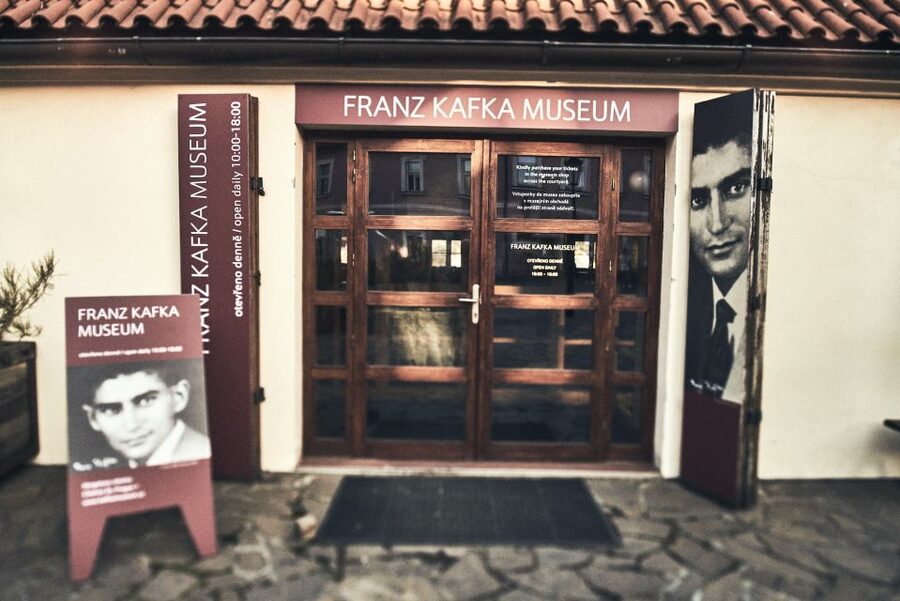
The meeting point is outside the Franz Kafka Museum. Look for a host holding a yellow umbrella. That detail is especially useful in a busy central Prague setting, where a precise visual marker is easier to spot than a general instruction to meet near the entrance.
The host speaks English and gives you a 20-minute introduction before you enter. This briefing is short enough to fit into a packed sightseeing day, but long enough to explain what you are about to see and help you get your bearings.
I would pay attention during this opening. Since there is no guide accompanying you inside, the introduction is your main chance to receive context directly from the tour staff. It can help you notice how the objects, installations, and audiovisual pieces relate to Kafka’s life and writing.
The arrangement is also practical for independent visitors. You get a human explanation at the beginning, then the freedom to spend more time with a manuscript, photograph, or display that catches your attention. You do not have to keep moving because a group is waiting.
The tradeoff is that the introduction ends at the door. There is no in-museum guide included, so the rest of your understanding must come from the displays, your own background knowledge, and the way the exhibition is arranged.
Inside the museum: documents from 1883 to 1924
Once you enter, the museum takes you back to Kafka’s lifetime. The central collection includes first editions of his works, letters, diaries, manuscripts, photographs, and drawings.
Each type of item offers something different. First editions show how Kafka’s work appeared in print. Manuscripts reveal his process. Diaries and letters bring you closer to his private voice, while photographs give you a more tangible sense of the person whose name has become an adjective in everyday language.
The drawings are worth making time for. They remind you that Kafka’s creativity was not limited to finished literary texts. A museum visit focused only on novels and short stories would miss part of his artistic life.
The material also rewards a slower pace. You can rush through a small museum in very little time, but that would work against the point of seeing original documents. I suggest choosing a few categories that interest you most, then giving them proper attention rather than trying to absorb every item equally.
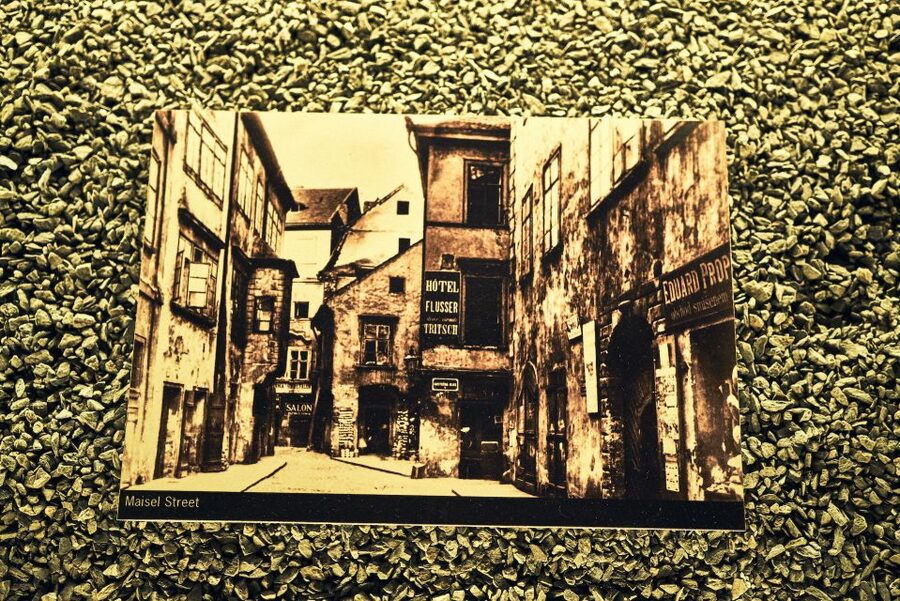
One issue deserves a clear warning. Some photographs and other displays may not explain their connection to Kafka as fully as you expect. If you arrive without knowing much about him, you might find yourself asking why a particular image is included or what role it plays in the story.
That does not make the material unimportant, but it can make the visit less direct. The 20-minute briefing helps, yet it cannot replace labels and interpretation beside every object.
Three-dimensional installations and sound
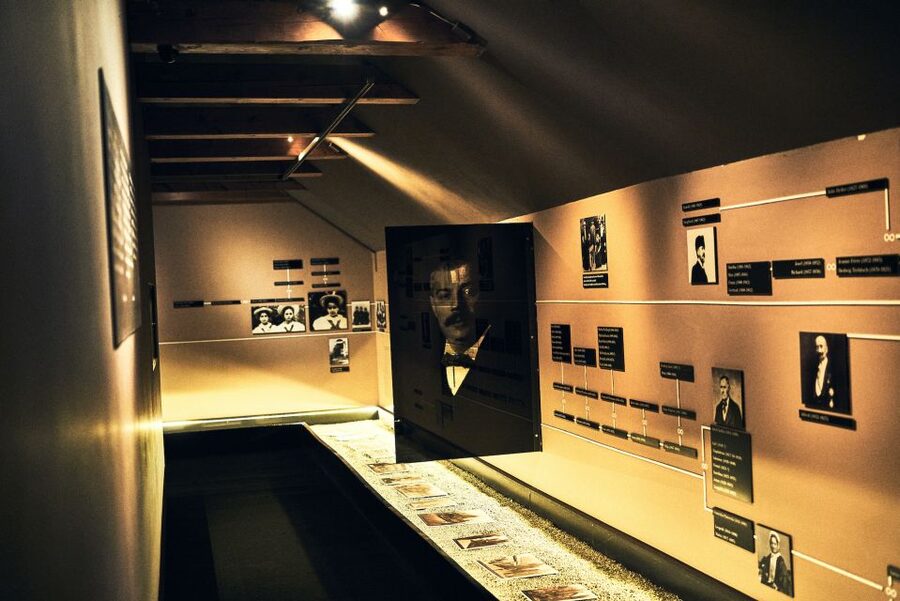
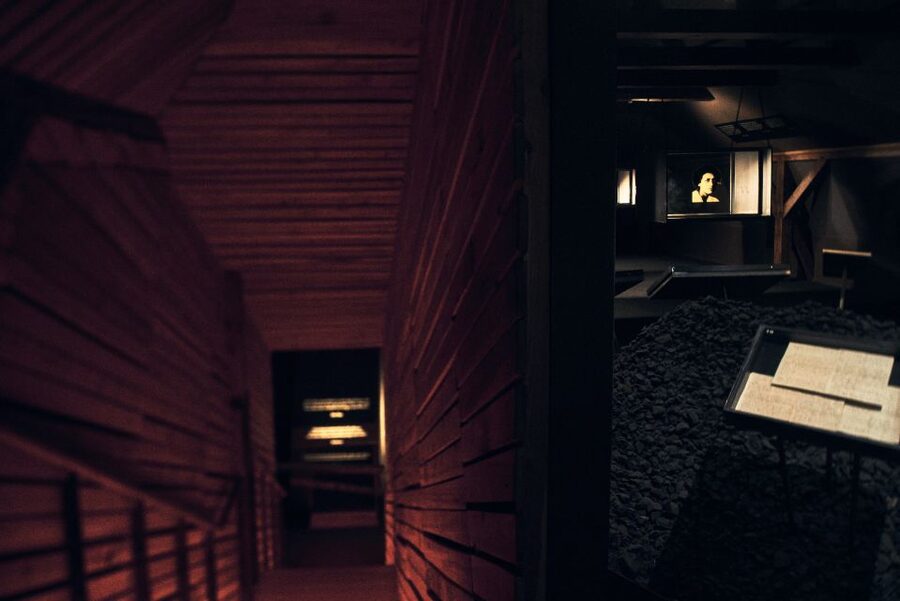
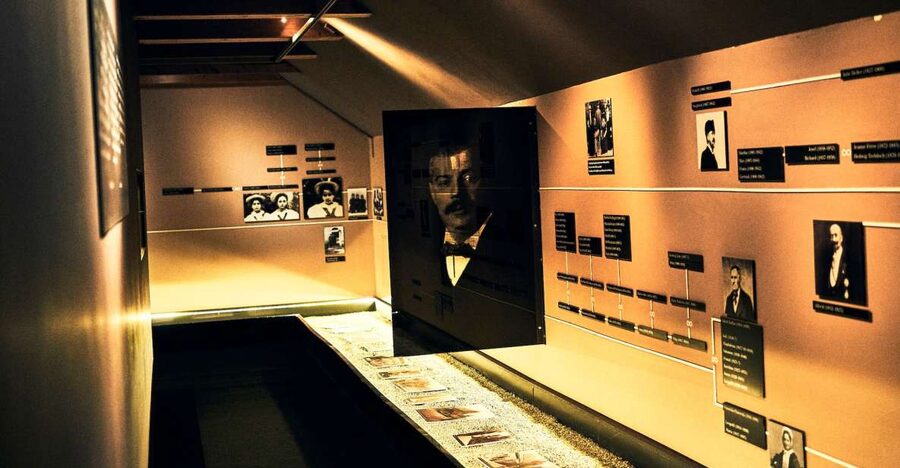
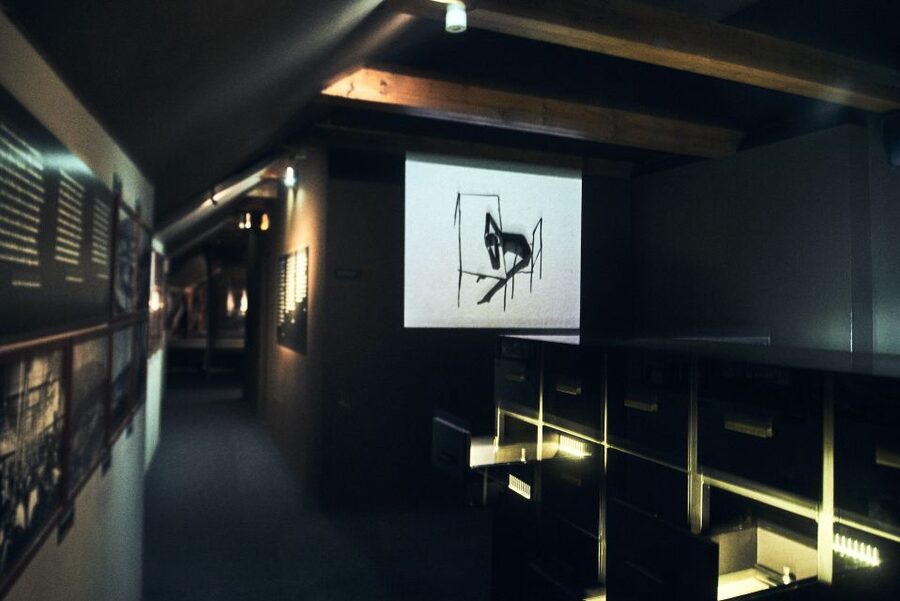
The Franz Kafka Museum does not rely only on documents behind glass. Three-dimensional installations, audiovisual pieces, and a soundtrack created for the exhibition shape the mood of the visit.
This approach suits Kafka’s work. His writing is often associated with unease, uncertainty, and strange transformations. The exhibition uses more than plain text to suggest that atmosphere. You may find the installations memorable precisely because they offer a visual and sensory response to the author’s world.
The soundtrack is part of that design. It adds another layer as you move through the displays, making the museum feel less like a simple archive and more like an interpretation of Kafka’s life and imagination.
Still, this style will not appeal to everyone. If you prefer a quiet museum made up of clearly labeled documents, the audiovisual material may feel like a distraction. If you enjoy exhibitions that use design, sound, and visual effects to shape an idea, you will probably appreciate the effort.
I would treat the installations as companions to the original documents, not replacements for them. The most rewarding visit combines both: take in the mood, then return your attention to the letters, diaries, manuscripts, and photographs.
A few more trips of this kind worth comparing:
- Prague: Castle Tour with Local Guide and Entry Ticket
★ 4.6 · 10,422 reviews - Prague Castle 2.5-Hour Tour Including Admission Ticket
★ 4.7 · 8,927 reviews - Prague: Old Town Hall Tower Entry Ticket
★ 4.5 · 6,749 reviews - Prague: Entry ticket to Ice Pub Prague with Nightclub Option
★ 4.1 · 5,273 reviews
Why the self-guided format works
After the introduction, you explore at your own pace. That is a useful arrangement for a museum this size because different people come for different reasons.
If you already know Kafka’s writing, you can spend time with the manuscripts and first editions. You might care most about the photographs and diaries. If you are meeting Kafka for the first time, you can move through the exhibition more slowly and use the opening briefing to build a basic framework.
I like not having to follow a guide from case to case. You can stop when something interests you, move past a display that feels less important, and revisit a piece before leaving.
The self-guided format also makes the ticket easy to add to a day in central Prague. The activity is valid for one day, with available starting times shown when you check dates. You should check the selected time before booking, since the information provided does not promise all-day open entry at any hour.
There is a limit to this freedom. Without a guide in the rooms, you cannot ask a question on the spot. If a display feels unclear, you may have to rely on its text or your own knowledge.
A small museum needs a careful pace
The museum’s compact size is both its advantage and its weakness. You can fit it into a day of sightseeing without giving up half a day, and the collection has a focused subject rather than a sprawling route.
But a small interior can feel crowded. When several people gather around a display, you may not be able to read every label or examine each photograph from the best position. A crowded visit also makes the multimedia elements less effective, since you have less room to pause and take in the setting.
I would not treat the one-day validity as a reason to rush. The ticket gives you flexibility around the selected visit time, but the museum itself may still require patience if many people arrive together.
If your schedule is open, allow enough time to look closely at the key documents and experience the installations without racing. The exact length of the museum visit is not stated, so I would avoid building a tightly timed connection immediately afterward.
The strongest strategy is simple: listen carefully to the host, enter with a short list of interests, and accept that you may not be able to examine every item at busy moments.
Is $28 a fair price?
At $28 per person, this is not a bargain admission for a very small museum. The value depends on what you want from the visit.
The price includes museum admission and the 20-minute English introduction outside. It does not include a guide inside, so you are paying for access to the collection plus a short orientation, not for a full guided tour.
For a Kafka enthusiast, the price may make sense because the museum brings together first editions, letters, diaries, manuscripts, photographs, and drawings in one focused setting. The multimedia presentation adds a second reason to visit beyond simply reading labels.
For a casual visitor who knows little about Kafka, the value is less certain. The opening briefing helps, but the limited explanation beside some displays may leave gaps. You may get more from the ticket if you read a little about Kafka before arriving.
The reserve-now-and-pay-later option can also help with planning. You can hold a place without paying immediately, and cancellation is free up to 24 hours in advance for a full refund. Those terms reduce the risk if your Prague schedule changes.
Who will enjoy this Kafka visit most?
I would recommend this experience most strongly to:
- People who already enjoy Kafka’s novels, short stories, letters, or diaries
- Visitors interested in original literary documents
- Anyone who likes museums that mix archival material with sound and visual installations
- Independent sightseers who prefer exploring alone after a short introduction
- People seeking a focused cultural stop in central Prague
I would be more cautious if you need a detailed explanation for every photograph and display. The absence of a guide inside means this is not the best choice for someone who wants a full lecture or a question-and-answer tour.
Families and mixed groups may also have different reactions. The audiovisual work can make the subject easier to approach, but the written documents require attention and may not hold every reader equally well.
Tips for getting more from the visit
Read at least a short introduction to Kafka before you arrive. You do not need to become a literature scholar. Knowing the titles of a few major works and a little about his life will make the documents easier to place.
Arrive ready to find the yellow umbrella. The meeting instruction is clear, but the host may be easier to spot outside than inside the museum.
Use the 20-minute briefing as a map for your visit. Note the names, objects, or themes the host emphasizes, then look for them once you enter.
Do not spend all your time on the first striking installation. The original manuscripts, letters, diaries, and drawings are the heart of the collection. Give the documents enough attention to balance the sensory presentation.
Finally, keep your schedule flexible. The museum is small, and crowded conditions may slow you down. A little extra time will make the visit calmer.
Should you book the Franz Kafka Museum ticket?
Book it if you want a concentrated look at Kafka’s life in Prague, especially if original documents matter to you. The first editions, manuscripts, letters, diaries, photographs, and drawings give the visit real substance, while the 3-D and audiovisual work keeps it from feeling like a plain display of papers.
Skip it if you want a fully guided museum tour or detailed explanations beside every object. The 20-minute English introduction is useful, but you explore alone afterward.
For most literature fans, the ticket offers a worthwhile cultural stop at a manageable length. For everyone else, the best reason to book is the combination of a short orientation, self-guided freedom, and a focused collection tied directly to Prague’s most famous literary figure.
FAQ
Where is the Franz Kafka Museum located?
The museum is in Prague, in the Central Bohemian Region of the Czech Republic.
How much does the ticket cost?
The listed price is $28 per person.
What does the ticket include?
It includes entrance to the Franz Kafka Museum and a 20-minute guided introduction outside the museum.
Is a guide included inside the museum?
No. The introduction takes place outside, and you explore the museum independently afterward.
What language is the introduction?
The host or greeter provides the introduction in English.
How do I find the meeting point?
Look for the host holding a yellow umbrella outside the museum.
How long is the entire museum experience?
The included guided introduction lasts 20 minutes. The ticket is valid for one day, but the total time inside the museum is not specified.
What can I see inside the museum?
You can see first editions of Kafka’s works, letters, diaries, manuscripts, photographs, and drawings, along with 3-D installations, audiovisual pieces, and a specially created soundtrack.
Can I explore the museum at my own pace?
Yes. After the English introduction, you leave the host and explore the museum independently.
Can I cancel the booking?
Yes. You can cancel up to 24 hours in advance for a full refund.
Can I reserve now and pay later?
Yes. The activity allows you to reserve a spot and pay later.
Just added around Prague
- Private Day trip from Prague to Kutná Hora★ 5.0 · 3 reviews
- PRAGUE AIRSOFT SHOOTING GAMES★ 4.7 · 3 reviews
- Private 4-hour City Tour of Prague with driver & official guide w/ Hotel pick up★ 5.0 · 3 reviews
- Glass blowing in Prague★ 4.6 · 3 reviews
- Prague to Karlovy Vary Private Transfer★ 4.5 · 3 reviews
- Disney’s Tarzan Musical★ 5.0 · 3 reviews
- Prague Private Tour★ 5.0 · 3 reviews
- Private Bohemian Glass and Czech Crystal Tour with lunch included★ 5.0 · 3 reviews
Museums, compared.

IAM Illusion Art Museum Prague Fast Pass Ticket
Read our review →

Ticket to Audiovisual Light Art at Lumia Gallery
Read our review →
Browse the lists this tour appears in