REVIEW · TOURS
Prague Through the Eyes of Franz Kafka 2.5-Hour Tour
Kafka’s Prague is stranger than it first appears. This $40 walking tour links Franz Kafka’s homes, schools, cafés, and literary haunts with the Jewish and political history of the city he knew. I like the way it gives you more than a writer’s biography, and I like that the café stop provides a welcome rest with tea or coffee included. The main drawback is that the tour is mostly about stories and places, not museum interiors, so visual attractions are limited.
You meet at Get Prague Guide on Maiselova 5, close to Old Town Square, then spend about two hours walking through Old Town and Josefov before settling into a local café for the final 30 minutes. Guides such as Peter, Martina, Argel, and Filip have been praised for turning complex material into clear storytelling, but the quality of the experience will still depend on who leads your departure.
In This Review
- Key points at a glance
- Why Kafka makes a fine guide to Prague
- Starting at Maiselova 5 near Old Town Square
- Old Town through Kafka’s daily life
- Josefov and the city behind the books
- Cafés, coffee, and Kafka’s working world
- What the guides do best
- Is $40 good value for 150 minutes?
- Who should book this Kafka tour?
- My verdict: a thoughtful way to meet Kafka’s Prague
- FAQ
- Where does the Franz Kafka tour meet?
- How long does the tour last?
- What places are included in the walk?
- Is coffee or tea included?
- Are admission tickets included?
- Which languages are available?
- Does the tour operate in bad weather?
Key points at a glance
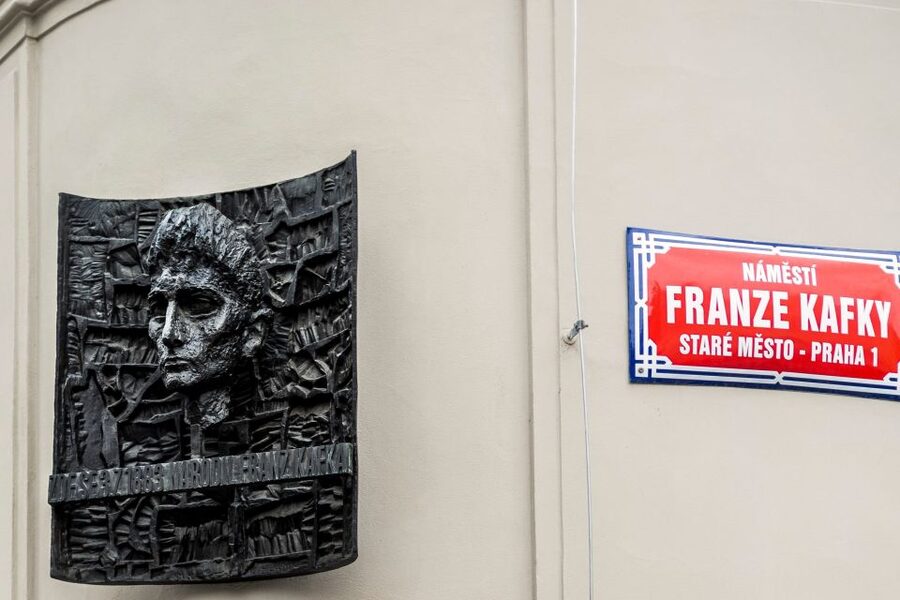
- Kafka’s everyday Prague: Walk near apartments connected with the Kafka family, his school, university, and the place where he met Felice Bauer.
- Josefov gives the tour its depth: Kafka’s life is set against the changing Jewish Quarter and the fate of Prague’s Jewish community.
- A proper café pause: Tea or coffee is included, and the stop has been held at traditional and Cubist-style coffee houses.
- Strong guide-led experience: Peter, Martina, Argel, and other guides have earned praise for literary insight, humor, and wider knowledge of Prague.
- Good value at $40: You receive 150 minutes with a licensed guide and a drink, with no admission fees required for the core walk.
- Best for curious readers: You do not need to know Kafka’s books well, but you should enjoy walking, listening, and connecting places with ideas.
Why Kafka makes a fine guide to Prague
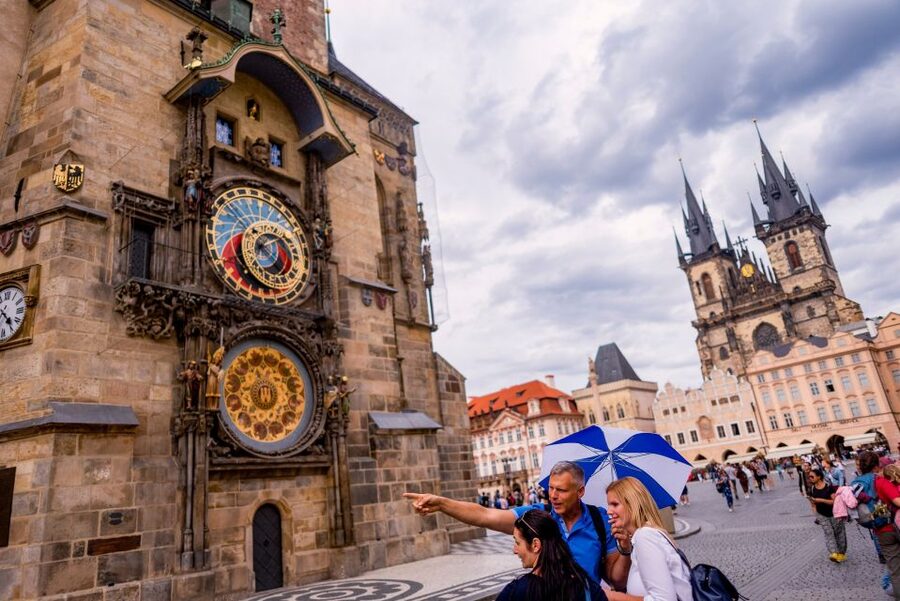
Franz Kafka is often treated as a gloomy literary monument, a man of nightmarish offices, locked doors, and unfortunate insects. In Prague, he becomes more human. This tour follows the places where he studied, worked, lived, loved, and tried to write while belonging fully to no single part of the city.
Kafka was born into Prague’s German-speaking Jewish community and spent much of his life in and around Josefov and Old Town. That position matters. Prague was shaped by Czech, German, and Jewish communities, and Kafka’s writing grew from the tensions among language, identity, family, bureaucracy, religion, and modern city life.
I like this approach because it keeps Kafka attached to real streets. You are not simply told that Prague influenced him. You walk near the apartments connected with his family, pass places associated with his education, and hear how cafés, salons, synagogues, and public life fed his imagination.
You also get a useful introduction to Prague beyond the usual postcard view. The focus on the Jewish community and the city’s social and political changes helps explain why Kafka’s work can feel so uneasy. He was writing in a city where culture and authority did not always pull in the same direction.
Other days out in Prague people book alongside this one:
- Prague: 50-Minute Sightseeing Evening Cruise
★ 4.2 · 33,780 reviews - Prague: Medieval Dinner with Unlimited Drinks
★ 4.4 · 19,847 reviews - Prague: Castle Tour with Local Guide and Entry Ticket
★ 4.6 · 10,422 reviews
Starting at Maiselova 5 near Old Town Square
The meeting point is the Get Prague Guide office at Maiselova 5, Prague 1. This is a practical place to begin because it sits near Old Town Square and Josefov, the two areas that shape the walking route.
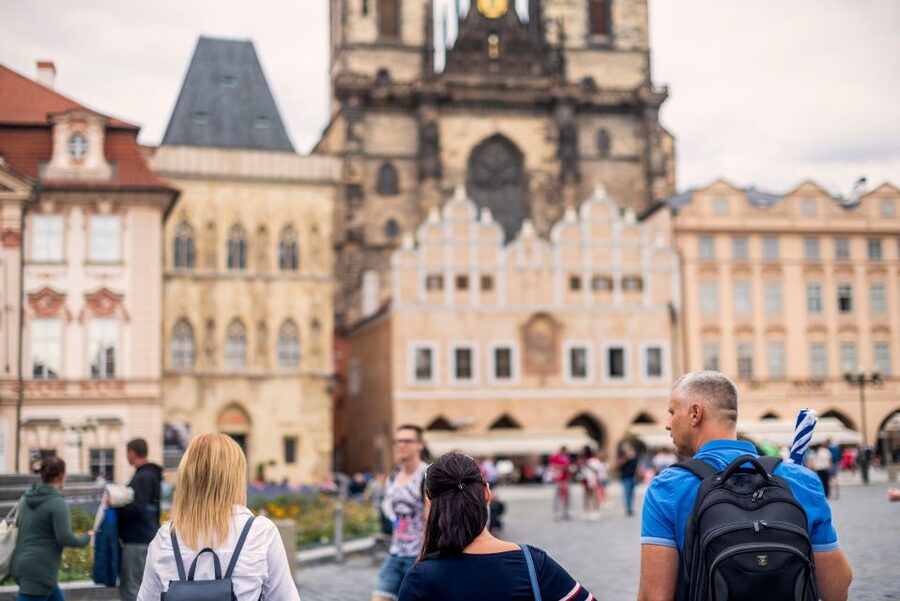
The first hour is generally devoted to Old Town. Expect a guided stroll rather than a long series of formal entries into buildings. Your guide points out locations tied to Kafka’s life and explains how they looked, functioned, or mattered during his time.
This format is useful for a first or second day in Prague. You can get your bearings while learning why certain streets and quarters mattered to Kafka. It also means you should wear comfortable shoes and be prepared for changing weather. The tour runs in all weather, so a rain jacket is a sensible part of your Prague packing list.
There is no promise of a private group, and the supplied details do not give a fixed group size. That matters if you prefer a quiet literary discussion. Still, the strong feedback about the guides suggests that the human side of the tour is one of its main strengths.
Old Town through Kafka’s daily life
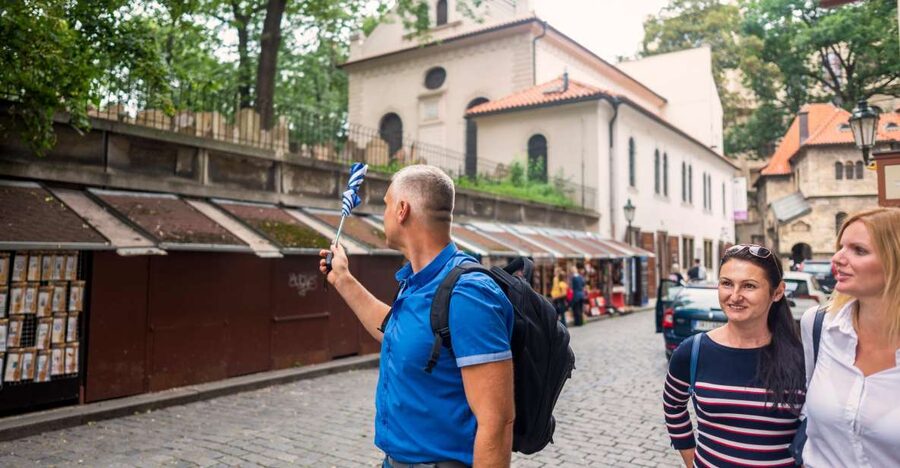
The Old Town section is not just a hunt for plaques. Your guide connects places with the different stages of Kafka’s life, including his schooling, university years, family life, and relationships.
You learn where he went to school and university, then walk near residences linked to his family. These details make Kafka less like an isolated genius and more like a Prague citizen moving through familiar neighborhoods, obligations, and social circles.
One especially personal stop concerns the house where Kafka met his fiancée, Felice Bauer. It is a small detail, but it changes the tone of the tour. Kafka’s life was not only books and philosophical questions. His letters, romantic difficulties, family pressures, and uncertainty about marriage all shaped the private world behind the famous fiction.
Your guide may also discuss the salons and cafés where educated Prague residents met and exchanged ideas. The point is not that each building directly appears in a novel. Rather, you begin to see the setting that gave Kafka his subjects: crowded institutions, formal social rules, intellectual debate, and the pressure to fit into a prescribed role.
The walk also gives you a chance to ask questions. Several guides have been praised for answering difficult questions about Kafka’s life, work, and the city around him. For readers who already know The Metamorphosis, The Trial, or The Castle, this extra conversation can be more useful than a basic timeline.
If you have never read Kafka, do not assume you will be lost. The tour explains the main points in accessible terms, and its Prague material carries much of the experience. You may not leave as a Kafka scholar, but you should understand why the city belongs in any serious discussion of his writing.
Josefov and the city behind the books
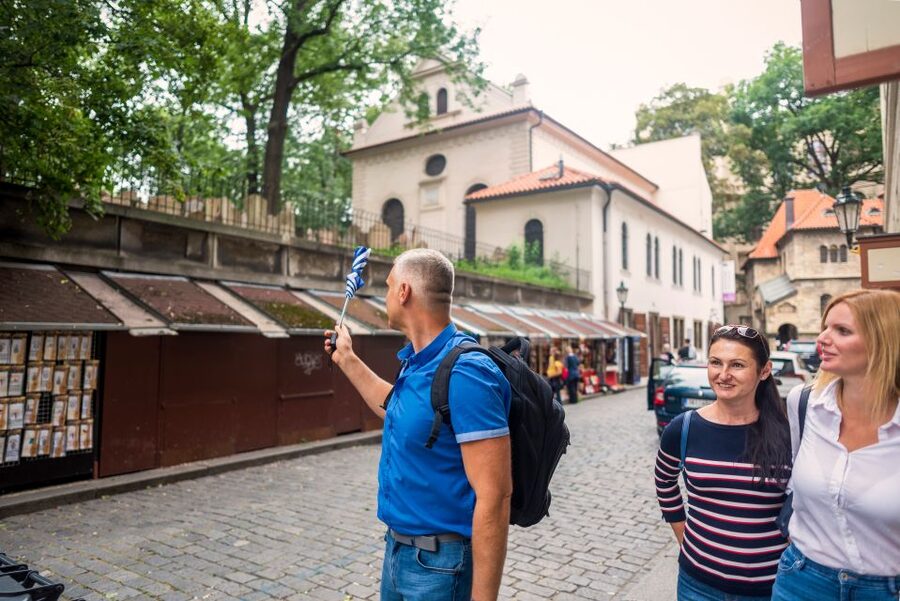
The Josefov portion is where the tour gains its strongest historical purpose. Kafka spent much of his life and wrote many of his works in and around Prague’s former Jewish Ghetto. Your guide explains the area’s Jewish past and the changing conditions faced by its community.
This is important context. Kafka’s identity cannot be reduced to a simple label. He lived in a city shaped by several languages and cultural groups, and his work often reflects uncertainty about belonging. Walking through Josefov while hearing about that setting gives his writing a clearer human and civic context.
You pass near synagogues and other sites connected with Prague’s Jewish life. The route does not promise admission to the Jewish Museum or any other interior, and entrance tickets are not included. That is both a limitation and a practical advantage. You can take this tour without paying extra for a museum visit, then decide separately if you want a longer look inside Josefov’s religious and cultural sites.
I would not book this experience expecting a conventional sightseeing tour with grand interiors at every stop. Much of the value comes from standing in an ordinary street while your guide explains who lived there, what the neighborhood meant, and how the city’s cultural divisions affected Kafka.
The tour also discusses Prague’s wider relationship with art and literature. That makes Josefov more than a backdrop. It becomes a place where questions about language, faith, class, nationality, and public life come together.
A completely different kind of day out in Prague:
- Prague Castle 2.5-Hour Tour Including Admission Ticket
★ 4.7 · 8,927 reviews - Prague: Oldtown, Medieval Underground & Dungeon History Tour
★ 4.2 · 8,244 reviews - Prague: Vltava River Night Cruise with Buffet
★ 4.3 · 7,338 reviews - Prague: Panoramic Vltava River Cruise
★ 4.1 · 7,311 reviews
Cafés, coffee, and Kafka’s working world
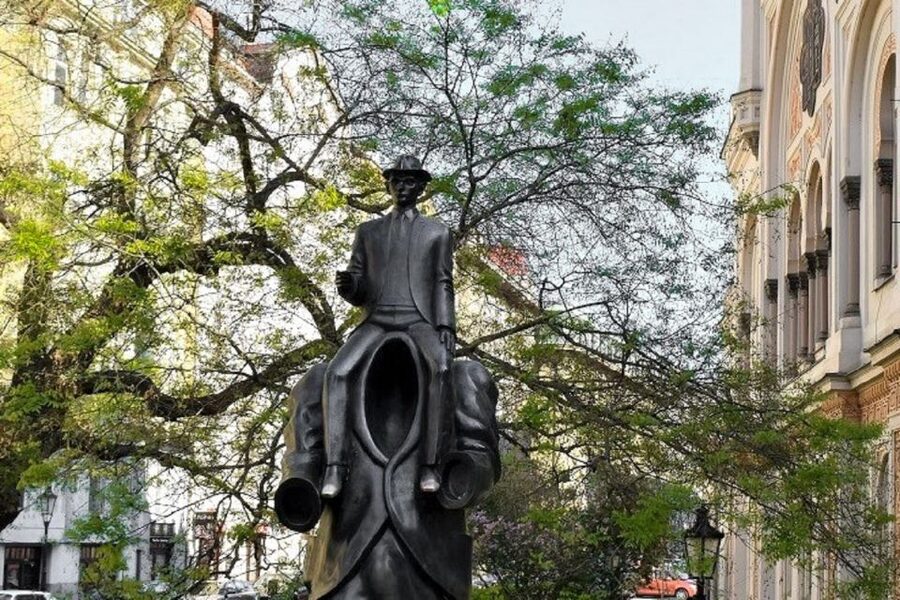
The final 30 minutes take place in a local café, with tea or coffee included. This is a smart ending for a walking tour. You get to sit down, continue the conversation, and let the material settle instead of finishing abruptly on a pavement.
The café has a genuine connection to the city’s coffeehouse culture. Past visits have included a traditional and famous coffee house, while another account identifies a Cubist café as the setting. The exact venue may vary, so treat the café as part of the guide-led experience rather than a guaranteed landmark with a fixed name.
This stop can be especially useful if you want to talk about Kafka’s writing rather than simply hear facts. A guide may explain how a particular place relates to Prague’s literary life, or discuss Kafka as a person rather than only as the author of difficult novels.
One past guide-led visit even included reading a short Kafka text over coffee. That is not listed as a guaranteed feature, so I would not count on it, but it shows how the final stop can become more than a drink break when the guide is engaged and well prepared.
The included beverage adds a little value to the $40 price. More importantly, it changes the rhythm of the afternoon. You walk for roughly two hours, then have a chance to rest and ask questions in a less formal setting.
What the guides do best
The strongest praise is aimed at the guides. Peter has been described as passionate and deeply informed, with the ability to explain Prague’s wider story beyond Kafka. Martina has been praised for clear storytelling that avoids overloading you with facts. Argel received especially warm comments for his command of Kafka’s letters, novels, fragments, family, loves, and struggles.
Those names do not guarantee who will lead your tour. The advertised languages are English and German, and the guide assigned to your departure may be different. Still, the pattern is clear: this experience depends heavily on the person holding the conversation together.
That is not a criticism. Literary walking tours succeed or fail through interpretation. The addresses themselves are not always visually dramatic, and the buildings may have changed since Kafka’s day. A strong guide fills that gap with context, humor, anecdotes, and a sense of how the city worked.
The best guides also avoid turning the walk into a lecture. Past descriptions praise friendly leaders who kept teenagers engaged, answered hard questions, and explained local politics, art, Judaism, economics, and architecture alongside Kafka. That broad approach is valuable because Kafka’s world was not separated into neat subjects.
If you are traveling with older children or teenagers who can handle a history-based walk, this may work well. One guide reportedly held the attention of a group of students even after a warm day and an earlier visit to the Jewish Museum. That suggests the storytelling can carry the experience when energy is low.
Is $40 good value for 150 minutes?
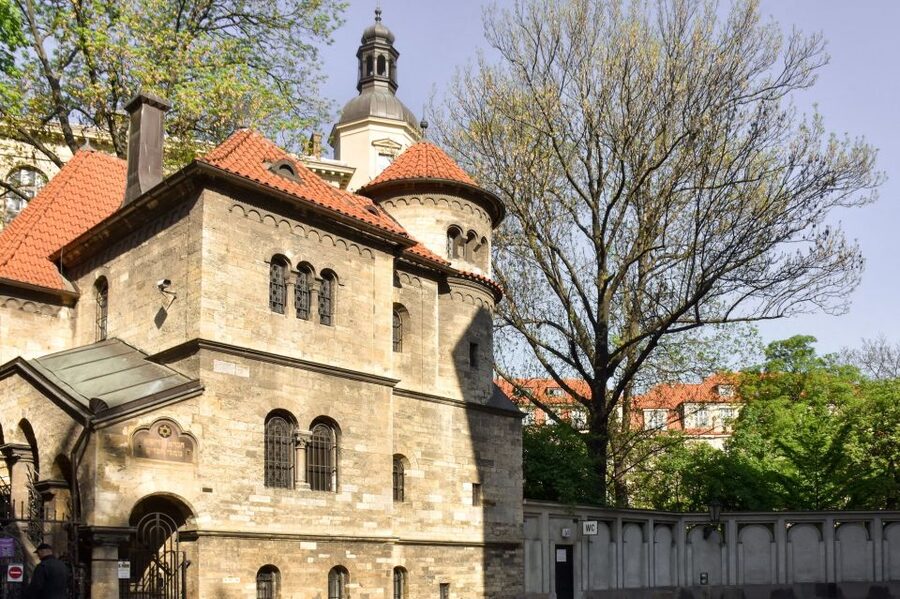
At $40 per person, the tour costs more than a basic city stroll, but the comparison is not quite fair. You are paying for a licensed live guide with a focused subject, two hours of site-based interpretation, and a tea or coffee at the end.
For a Kafka reader, the value is strong. You can spend days walking past buildings without realizing their connection to his family, education, friendships, and literary concerns. A guide organizes those details into a usable story and adds the social history that is difficult to reconstruct on your own.
The value is also good for someone who wants an introduction to Prague’s Jewish and German-speaking past without committing to a full museum program. You will not receive admission tickets, and you should budget separately for any interior attractions you visit later. But the tour itself does not require extra entry fees.
The price is less attractive if you want only major sights or a fast photo route. This is a talk-heavy experience. Its rewards are strongest when you enjoy literature, biography, city history, or careful observation of places that do not announce their importance.
The 150-minute length feels sensible on paper. One hour in Old Town, one hour in Josefov, and 30 minutes at a café gives the tour a clear shape. It is long enough to develop a theme without taking your entire day, although standing and walking in poor weather may make it feel longer.
Who should book this Kafka tour?
I would recommend it most strongly to:
- Readers of Kafka who want to place his fiction in a real city.
- First-time Prague visitors who want history beyond the Charles Bridge and Old Town Square.
- People interested in Jewish Prague, language, literature, and cultural identity.
- Couples or small groups who enjoy conversation rather than a checklist of sights.
- Families with older teenagers who can appreciate a story-led historical walk.
- Visitors who prefer a guide with room for questions and discussion.
You do not need extensive prior knowledge of Kafka. The tour works for newcomers because it explains his life and setting from the beginning. Still, reading a short Kafka story before you go would give the stops more force, especially The Metamorphosis or a passage from The Trial.
I would be more cautious if you have limited mobility, dislike walking in all weather, or want to enter historic buildings. The supplied information does not describe accessibility arrangements, walking distances beyond the 150-minute duration, or guaranteed indoor stops. Ask the provider before booking if those details matter to you.
Cancellation is free up to 24 hours before the start, and you can reserve now and pay later. Those terms are useful if your Prague schedule is still shifting, but the main booking decision should be your interest in the subject, not the flexibility alone.
My verdict: a thoughtful way to meet Kafka’s Prague
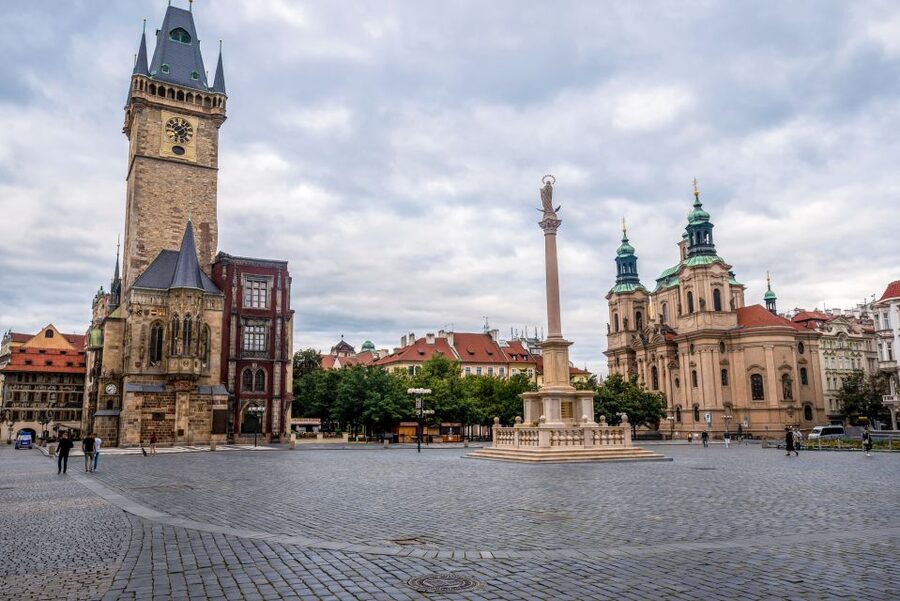
This is a strong choice if you want to understand how Prague shaped Franz Kafka, and how Kafka can help you understand Prague in return. The walk connects family homes, education, romance, cafés, synagogues, and the Jewish Quarter, then gives you time to talk over coffee.
I especially like its wider reach. The tour is about Kafka, but it also explains the city’s social divisions, cultural mix, Jewish community, art, literature, and political setting. That makes it suitable even if your Kafka shelf is still mostly empty.
Book it if you enjoy stories attached to real places and want a guide who can explain more than dates. Skip it if you prefer grand interiors, independent wandering, or a tour with little commentary. At $40, it is a fair buy for a 2.5-hour literary and historical walk, particularly when you get a guide such as Peter, Martina, Argel, or Filip who brings the material to life.
FAQ
Where does the Franz Kafka tour meet?
Meet at the Get Prague Guide office at Maiselova 5, 110 00 Prague 1, near Old Town Square.
How long does the tour last?
The tour lasts 150 minutes, or two and a half hours. The walking portions cover about two hours, followed by approximately 30 minutes at a local café.
What places are included in the walk?
The route covers parts of Old Town and Josefov. You walk near apartments linked with Kafka’s family, his school and university, the house where he met Felice Bauer, cafés, salons, and synagogues connected with the city’s literary and cultural life.
Is coffee or tea included?
Yes. Tea or coffee at the local café is included in the tour price.
Are admission tickets included?
No. Admission tickets are not included. The supplied tour information describes a guided walk and café stop, but it does not include entry to museums or other attractions.
Which languages are available?
The live tour guide is available in English or German.
Does the tour operate in bad weather?
Yes. The tour operates in all weather conditions, so dress appropriately for rain, cold, heat, or other conditions on the day.
Just added around Prague
- Private Day trip from Prague to Kutná Hora★ 5.0 · 3 reviews
- PRAGUE AIRSOFT SHOOTING GAMES★ 4.7 · 3 reviews
- Private 4-hour City Tour of Prague with driver & official guide w/ Hotel pick up★ 5.0 · 3 reviews
- Glass blowing in Prague★ 4.6 · 3 reviews
- Prague to Karlovy Vary Private Transfer★ 4.5 · 3 reviews
- Disney’s Tarzan Musical★ 5.0 · 3 reviews
- Prague Private Tour★ 5.0 · 3 reviews
- Private Bohemian Glass and Czech Crystal Tour with lunch included★ 5.0 · 3 reviews
Tours, compared.
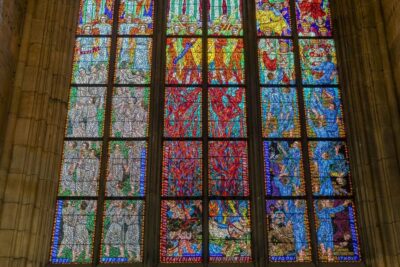
Castle Tour with Local Guide and Entry Ticket
Read our review →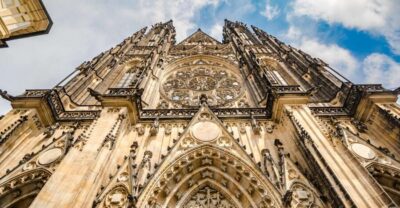
Prague Castle 2.5-Hour Tour Including Admission Ticket
Read our review →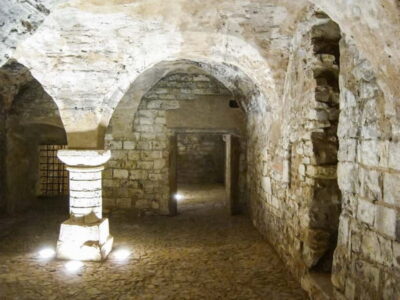
Oldtown, Medieval Underground & Dungeon History Tour
Read our review →
3-Hour Walking Tour of Old Town & Prague Castle
Read our review →
3-Hour Old Town and Prague Castle Tour in German
Read our review →
Ghost Walking Tour Where Legends Come To Life
Read our review →Ghosts, Legends, Medieval Underground & Dungeon Tour
Read our review →