
REVIEW · WALKING TOURS
Prague Renaissance & Baroque Gardens Walking Tour
Prague hides its best stories behind garden walls. This three-hour small-group walk links royal gardens, myth-filled statues, fountains, peacocks, and sweeping city views in a way that gives Prague’s famous sights a fresh setting. I especially like the maximum group size of eight, which gives your guide room to answer questions, and the focus on art, politics, plants, and architecture rather than simple sightseeing. The 22 tram ride to Prague Castle is part of the shared route, too, so you do not need to work out the castle connection yourself.
I also like the unusual stops: the early growing grounds for figs, almonds, oranges, and lemons, plus Vrtbovská Garden, a compact Baroque garden dating from 1720. The main caution is cost. At $126.03 per person, you will still pay separately for Vrtbovská Garden and the gardens beneath Prague Castle, and steep stairs make the final garden less comfortable for anyone with mobility concerns.
In This Review
- Key points at a glance
- Why Prague’s gardens deserve three hours
- Meeting at Malostranská and riding tram 22
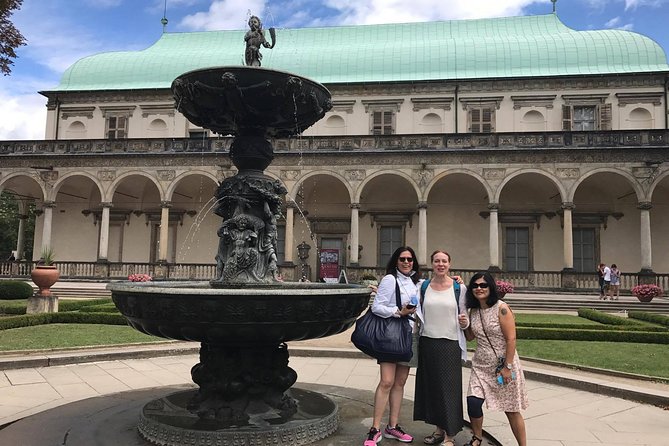
- The Royal Garden and Queen Anne’s Summer Palace
- Fig House, Orangery, and Prague’s early exotic plants
- The Ball Game Hall above the Stag Moat
- Wallenstein Garden’s statues, grotto, and peacocks
- Vrtbovská Garden and the climb to Prague’s best views
- What the small group changes
- Timing, tickets, and the real value of $126.03
- Who should book this garden walk?
- Should you book the Prague gardens tour?
- FAQ
- How long does the Prague Renaissance and Baroque Gardens tour last?
- Where does the tour begin?
- What departure times are available?
- Is Vrtbovská Garden admission included?
- Does the tour include the gardens beneath Prague Castle?
- How large is the tour group?
Key points at a glance
- A group of no more than eight: Expect a quieter, more personal walk than a large city tour.
- Four centuries of garden design: Renaissance geometry and Baroque drama appear side by side.
- Prague Castle by tram: The group rides tram 22 from Malostranská to reach the castle gardens.
- Vrtbovská Garden’s upper terrace: Climb for some of the finest views of Prague and Prague Castle.
- Mythology explains the statues: Your guide connects Greek and Roman figures with political messages.
- Two departure choices: Pick a 10 a.m. or 2 p.m. start, depending on your sightseeing plans.
Why Prague’s gardens deserve three hours
Prague’s big attractions can feel crowded and familiar. Its gardens offer a different kind of sightseeing. Here, the city’s past appears in clipped paths, royal summer buildings, allegorical statues, artificial grottoes, fountains, and carefully chosen plants.
I like this tour because it treats gardens as historical documents. A statue is not just decoration. A fountain is not merely a pleasant place for a photograph. The design can show how a noble family wanted to be seen, how rulers borrowed ideas from Italy, or how classical mythology was used to support political power.
That approach received especially strong praise from people who already knew Prague well. Local participants found that the tour changed how they looked at familiar spaces. This matters if you have already toured Prague Castle, crossed Charles Bridge, and wandered Malá Strana. You may recognize the buildings, but the garden setting gives them new meaning.
The pace is also appealing. Three hours is long enough to connect the sites without turning the outing into an all-day commitment. You get a guided history walk, but you still have most of the day left for museums, cafés, or another part of Prague.
More walking tours:
- Prague: 3-Hour Walking Tour of Old Town & Prague Castle
★ 4.7 · 5,696 reviews - Prague: Ghost Walking Tour Where Legends Come To Life
★ 4.4 · 5,253 reviews - Prague: Jewish Quarter Walking Tour with Admission Tickets
★ 4.7 · 3,729 reviews
Meeting at Malostranská and riding tram 22
The tour begins at Bagel Lounge Malostranská, at Letenská 118/1 in Malá Strana, near Malostranská Metro station. This is a practical meeting point because the area is served by public transportation, and the group rides tram 22 together toward Prague Castle.
That shared tram ride helps the tour feel like a connected route rather than a collection of unrelated garden visits. You start near the river and the Lesser Town, then move uphill toward the castle grounds. Your guide can begin setting the scene before you reach the first garden.
You should arrive ready for a walking tour with some stairs. The experience requires moderate physical fitness, and Vrtbovská Garden includes a steep climb to its highest terrace. If you prefer the 10 a.m. departure, you can spend the afternoon exploring elsewhere. The 2 p.m. option works well if you want a slower morning or are pairing the tour with an earlier castle visit.
The Royal Garden and Queen Anne’s Summer Palace
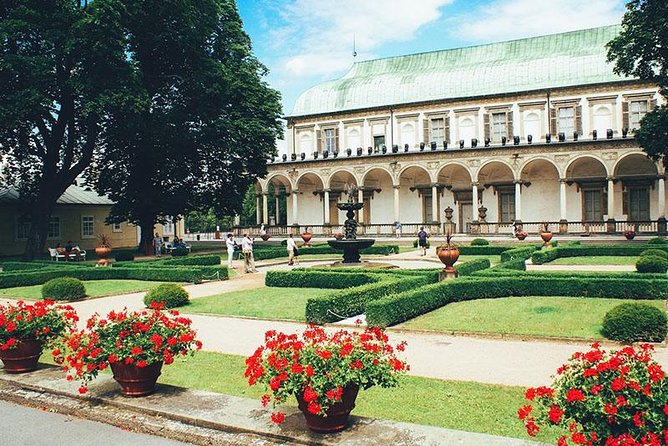
The first major section takes you through the Royal Garden at Prague Castle. It was created in the 1500s on land once used for medieval vineyards, then developed as a Renaissance garden with rare plants and specimens brought from distant places.
The garden’s appeal comes from its mix of nature and royal ambition. This was not simply a patch of lawn beside a palace. It was a controlled setting where rulers could display taste, curiosity, money, and contact with the wider world.
Queen Anne’s Summer Palace gives the garden its clearest Renaissance focus. Finished in the middle of the 16th century, it is described as one of the purest examples of Renaissance architecture outside Italy. Its arcades, Tuscan-style column details, and ornamental frieze reward a slow look.
Pay attention to the carved scenes on the walls. They include mythology, hunting, and warfare, along with Ferdinand I wearing the Order of the Golden Fleece. One relief shows him offering Queen Anna a fig-tree blossom, a small detail that links the building to the garden’s plant culture.
The stop at the summer palace is brief, listed at about five minutes, so do not expect an interior tour. The value comes from hearing how the building and garden worked together, then getting enough time to observe the outside architecture.
Fig House, Orangery, and Prague’s early exotic plants
The route continues toward the Fig House and Orangery. This is one of the tour’s most distinctive details because it connects royal gardening with the movement of food plants across Europe.
Figs, almonds, oranges, and lemons were grown here at a time when such plants were unusual in central Europe. The structures and growing grounds show how much effort went into protecting plants that did not naturally suit Prague’s climate.
You also hear about the arrival of tulips in Prague. That story gives the gardens a wider European context. Plants were not only decorative. They were signs of trade, scientific interest, wealth, and contact with distant places.
I find this section especially useful for people who usually skip gardens because they are not passionate about flowers. You do not need to know botany to enjoy the story. The plants help explain how Renaissance and Baroque courts wanted to collect, display, and control the natural world.
A completely different kind of day out in Prague:
- Prague: 50-Minute Sightseeing Evening Cruise
★ 4.2 · 33,780 reviews - Prague: Medieval Dinner with Unlimited Drinks
★ 4.4 · 19,847 reviews - Prague: Castle Tour with Local Guide and Entry Ticket
★ 4.6 · 10,422 reviews - Prague Castle 2.5-Hour Tour Including Admission Ticket
★ 4.7 · 8,927 reviews
The Ball Game Hall above the Stag Moat

The Ball Game Hall sits on the south side of the Royal Garden, directly above the Stag Moat. Built in the middle of the 1500s, it first served as a place for ball games before later being used as a riding school and stables.
Again, this is a short stop, listed at roughly five minutes. Its importance lies less in an extended visit and more in the way it completes the picture of court life. The castle grounds were not only ceremonial. They also provided space for sport, animals, training, and leisure.
The building adds another layer to the Royal Garden. You see how Renaissance planning brought architecture, recreation, horticulture, and royal display into one estate.
Wallenstein Garden’s statues, grotto, and peacocks
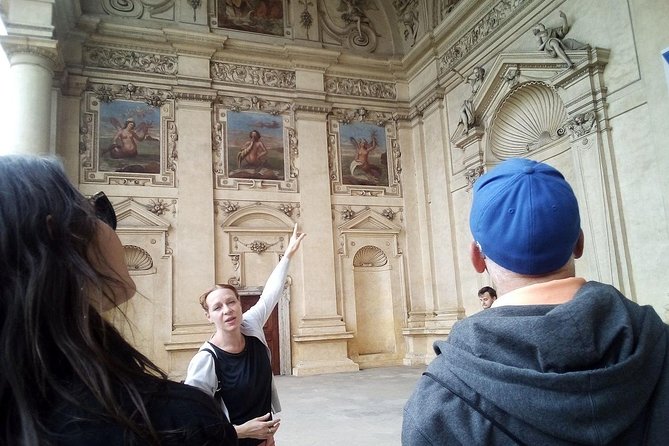
Wallenstein Garden, also called Waldstein Garden, brings a different mood. Built in the 1600s for Wallenstein Palace, it now serves as the public garden of the Czech Republic’s Senate.
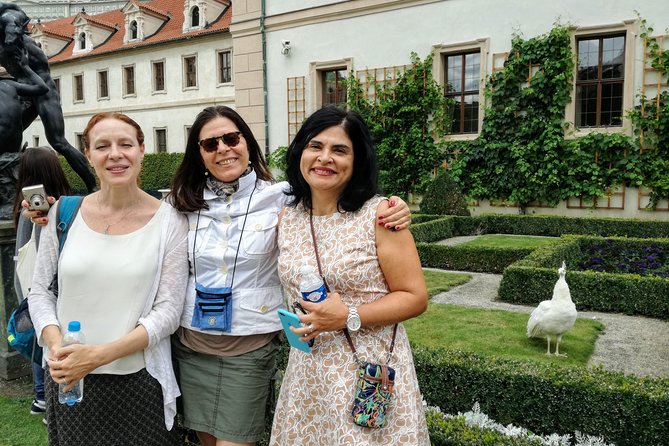
The garden uses an Italian-inspired design with broad paths, formal planting, and dramatic sculpture. Its most memorable features include an aviary, an artificial grotto, a gallery of mythological heroes, and a fountain by Adrian de Vries.
The statues deserve more than a quick photograph. The tour’s art and history focus helps explain why Greek and Roman gods and heroes appear in these gardens. Their stories were chosen carefully, often to support ideas about military power, virtue, authority, and noble status.
This is where guide quality matters most. Bonita is praised for her storytelling, and her background in Greek and Roman mythology gives the sculptures extra force. Instead of seeing a row of marble figures, you get clues about the political messages built into the garden.
The peacocks add a touch of theatrical fun. They are not the historical reason to visit, but they make the garden feel alive and give you something unexpected to watch while your guide explains the palace and sculpture.
The listed visit lasts about 25 minutes. That is enough for an introduction, though anyone who loves gardens may wish for more time to wander independently. You should think of Wallenstein Garden as one chapter in a larger walk, not a full garden study.
Vrtbovská Garden and the climb to Prague’s best views
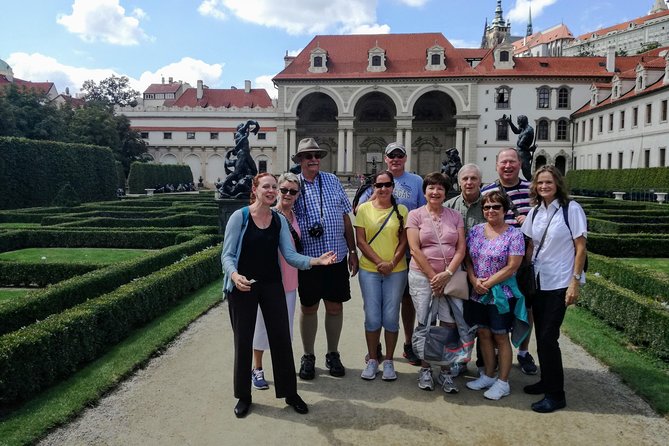
Vrtbovská Garden is the final stop and perhaps the tour’s strongest visual payoff. This walled Baroque garden dates from 1720 and is known for original statuary, sculptural decoration, formal terraces, and views across Prague.
Its compact size is part of its charm. You enter through a city wall and suddenly find a carefully arranged sequence of terraces. The garden rises toward a high point, turning the city into a backdrop for the Baroque design.
The climb is steep in places. If stairs are difficult, you can wait on the second terrace while the group continues to the top, then rejoins you after about ten minutes. A private tour may allow the route to be modified for your personal group, but the standard small-group tour still provides this practical option.
The upper terrace is worth the effort if you are comfortable climbing. You get views toward Prague Castle and across the city, with the garden’s sculpture and geometry framing the scene. This is an excellent place for photographs, but the views also help you understand the original purpose of the garden. Noble gardens were designed to control what you saw, both inside the walls and beyond them.
Admission to Vrtbovská Garden is not included. The listed price is CZK 130 for an individual, or CZK 100 for students and seniors. The itinerary gives this stop about 25 minutes, so you receive a focused visit rather than unlimited free time.
The tour information says the guide leaves you at Vrtbovská Garden, while the meeting details also list the activity as ending back at the meeting point. Because those details do not perfectly match, confirm the end point before booking. Either way, plan your afternoon around the final garden rather than assuming you will immediately return to Malostranská.
What the small group changes
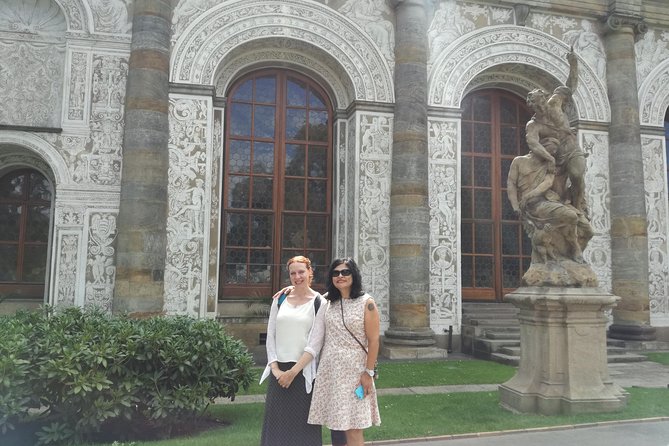
A maximum of eight people is one of the tour’s strongest practical features. In a garden, a large group can block paths, lose the guide among statues, or make questions awkward. A small group lets you stay close to the explanation without turning the walk into a private tour price.
The format also suits people who like conversation. The guide can adjust the emphasis toward architecture, plants, sculpture, Prague politics, or mythology. Several highly positive assessments focus on the personal attention and the ability to look at familiar places from a new angle.
Bonita is singled out for her storytelling and enthusiasm, while Vadim is also praised for strong subject knowledge. The experience appears best suited to curious people who want more than a quick list of dates and buildings. If you prefer a simple orientation walk with minimal explanation, this may feel too academic.
That is not a criticism. The tour’s main strength is its substance. You are expected to look closely and think about why a statue, plant, or building appears where it does.
Timing, tickets, and the real value of $126.03
The price is $126.03 per person. That is a significant amount for a three-hour walk, especially because two admission charges remain separate:
- Vrtbovská Garden: CZK 130, or CZK 100 for students and seniors
- Gardens beneath Prague Castle: CZK 90, or CZK 60 for students and seniors
The tour does include the other listed garden admissions and the professional scholar guide. Group discounts may be available, and confirmation arrives at booking. The mobile ticket makes the practical side simple.
I would judge the value by the guide’s subject rather than by the number of sites. You are paying for access to a carefully connected history of Prague’s garden culture, not merely transportation between pretty spaces. The cost makes more sense if you care about architecture, sculpture, plant history, or Prague’s noble past.
It is less compelling if you only want photographs or a general introduction to the city. You can see several gardens independently for less, but you will need to manage the route, transport, opening arrangements, and interpretation yourself.
The average booking lead time is 48 days, so popular dates may fill early. That is worth noting if you are visiting in peak season or need a specific 10 a.m. or 2 p.m. departure.
Who should book this garden walk?
I would recommend it to first-time visitors who want a quieter side of Prague after seeing the major landmarks. It also works surprisingly well for repeat visitors and locals. The strongest praise comes from people who already knew the city but still learned new stories and saw familiar places differently.
Garden lovers will enjoy the formal design and plant history. Art lovers will appreciate the sculpture and mythological themes. History fans will find plenty to discuss, from Renaissance royal culture to Baroque political symbolism.
Families with older children may enjoy the peacocks, grotto, fountains, and palace stories, but the steep stairs and three-hour format may not suit very young children. Anyone with mobility concerns should consider the Vrtbovská climb carefully. You can wait on the second terrace, but the highest viewpoint requires stairs.
The tour is offered in English. Since the guide’s storytelling and explanation are central to the experience, you should be comfortable following a detailed English discussion.
Should you book the Prague gardens tour?
Book it if you want Prague explained through art, plants, architecture, and power rather than through a standard checklist of landmarks. The Royal Garden, Wallenstein Garden, and Vrtbovská Garden each feel different, and the small group gives the guide room to make those differences clear.
Skip it if you are watching every koruna, dislike stairs, or want plenty of free time at each garden. The separate admission fees and high base price are real considerations.
For the right audience, this is a thoughtful and unusual three-hour outing. You may arrive expecting flowers and fountains, then leave noticing the political messages carved into every statue.
FAQ
How long does the Prague Renaissance and Baroque Gardens tour last?
The guided walking tour lasts approximately three hours.
Where does the tour begin?
It begins at Bagel Lounge Malostranská, Letenská 118/1, in Prague’s Malá Strana, near Malostranská Metro station.
What departure times are available?
You can choose between a 10 a.m. departure and a 2 p.m. departure.
Is Vrtbovská Garden admission included?
No. Admission costs CZK 130 for individuals, or CZK 100 for students and seniors.
Does the tour include the gardens beneath Prague Castle?
The garden admission is listed separately at CZK 90 for individuals, or CZK 60 for students and seniors.
How large is the tour group?
The activity has a maximum of eight participants.
Just added around Prague
- Private Day trip from Prague to Kutná Hora★ 5.0 · 3 reviews
- PRAGUE AIRSOFT SHOOTING GAMES★ 4.7 · 3 reviews
- Private 4-hour City Tour of Prague with driver & official guide w/ Hotel pick up★ 5.0 · 3 reviews
- Glass blowing in Prague★ 4.6 · 3 reviews
- Prague to Karlovy Vary Private Transfer★ 4.5 · 3 reviews
- Disney’s Tarzan Musical★ 5.0 · 3 reviews
- Prague Private Tour★ 5.0 · 3 reviews
- Private Bohemian Glass and Czech Crystal Tour with lunch included★ 5.0 · 3 reviews
Walking Tours, compared.

3-Hour Walking Tour of Old Town & Prague Castle
Read our review →
Ghost Walking Tour Where Legends Come To Life
Read our review →
Jewish Quarter Walking Tour with Admission Tickets
Read our review →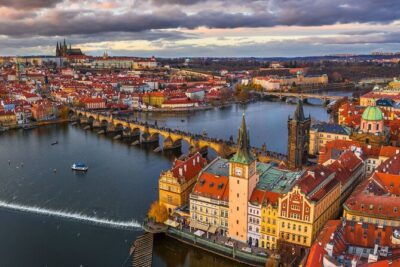
Prague Guided Walking Tour and Cruise with Authentic Czech Lunch
Read our review →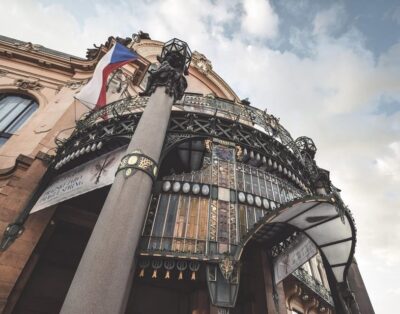
Old Town and Jewish Quarter Guided Walking Tour
Read our review →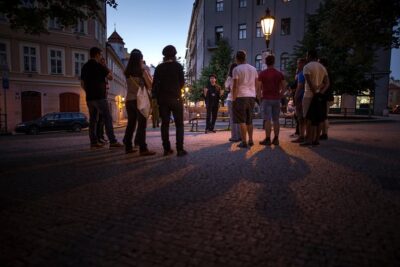
Prague Ghost and Legend of Old Town Walking Tour
Read our review →
Prague 3-hour Afternoon Walking Tour including Prague Castle
Read our review →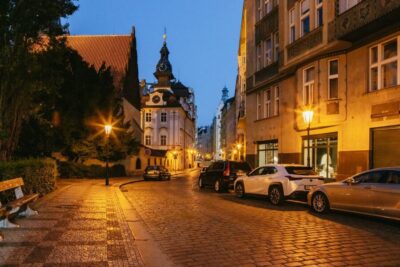
Ghosts and Legends Nighttime Guided Walking Tour
Read our review →Browse the lists this tour appears in