
REVIEW · WALKING TOURS
Prague Renaissance and Baroque Gardens Walking Tour
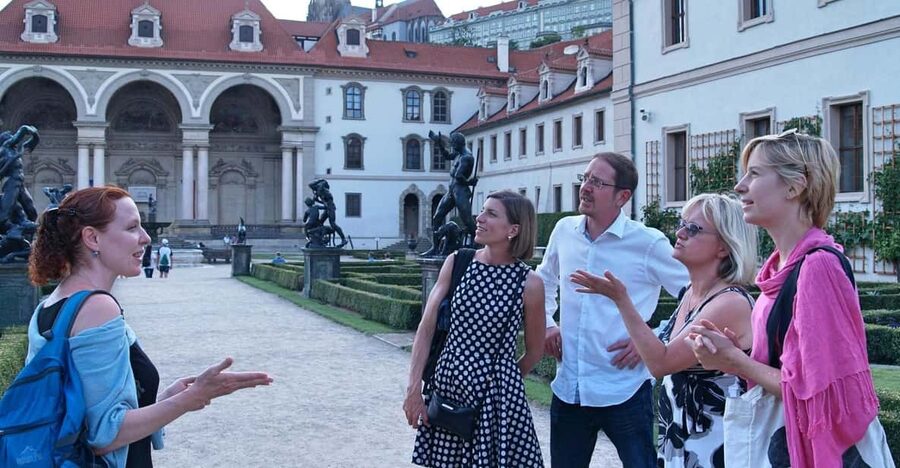
Prague’s best stories grow between palace walls. This three-hour walk links the city’s finest Renaissance and Baroque gardens with sharp historical context, Italian design, royal ambition, and a few wonderfully odd details. I especially like the Singing Fountain, which rings when water strikes its bronze bowl, and the albino peacocks and mythical fountains of Wallenstein Garden. The main caution is practical: steep paths, narrow stairs, and separate garden admission fees make this a better fit for walkers who can handle uneven ground.
The tour also gives you a useful way to read Prague. You are not just looking at flowers and statues. You are seeing how emperors, noblemen, religion, trade, and fashion shaped the city. Guide Miriam earned especially strong praise for being informative and relaxed, a good combination for a three-hour walk. English is the tour language, and private or small-group options are available.
In This Review
- Key points to know before you go
- Why Prague’s gardens tell a bigger story
- Belvedere and the Royal Gardens
- The Fig House and Orangery
- The stag moat, castle courtyard, and South Gardens
- Wallenstein Garden and the theatrical Baroque turn
- Vrtba Garden, a Baroque garden above Malá Strana
- What the $123 price gives you
- The guide makes the difference
- Who should book this garden walk?
- Practical details for a smoother visit
- Should you book the Prague garden tour?
- FAQ
- How long is the Prague Renaissance and Baroque Gardens Walking Tour?
- What language is the tour offered in?
- Where does the tour meet?
- Is a historian guide included?
- Are garden entrance fees included?
- Is the tour private or shared?
- What gardens are visited?
- Does the tour include the Singing Fountain?
- Is the walking route suitable for people with mobility issues?
- Can I cancel for a full refund?
Key points to know before you go
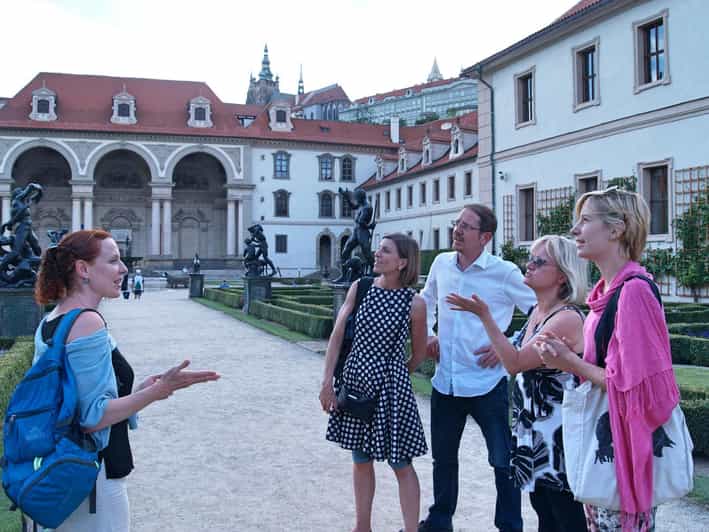
- Italian design in Prague: Learn why Emperor Ferdinand I brought Italian gardeners and architects north of the Alps.
- Belvedere and the Singing Fountain: See Ferdinand’s Renaissance summer palace and hear how water makes the 1564 fountain resonate.
- First Central European citrus crops: Visit the Fig House and Orangery, linked with early cultivation of figs, almonds, oranges, and lemons.
- Wallenstein’s theatrical garden: Look for albino peacocks, Mannerist statues, a grotto wall, and fountains drawn from myth.
- Vrtba Garden’s city views: Climb through a Baroque walled garden from 1720 to reach a marine-themed grotto and broad views over Prague.
- Steep walking route: Expect stairs, including narrow and sometimes steep sections, with admission to some gardens paid separately.
Why Prague’s gardens tell a bigger story
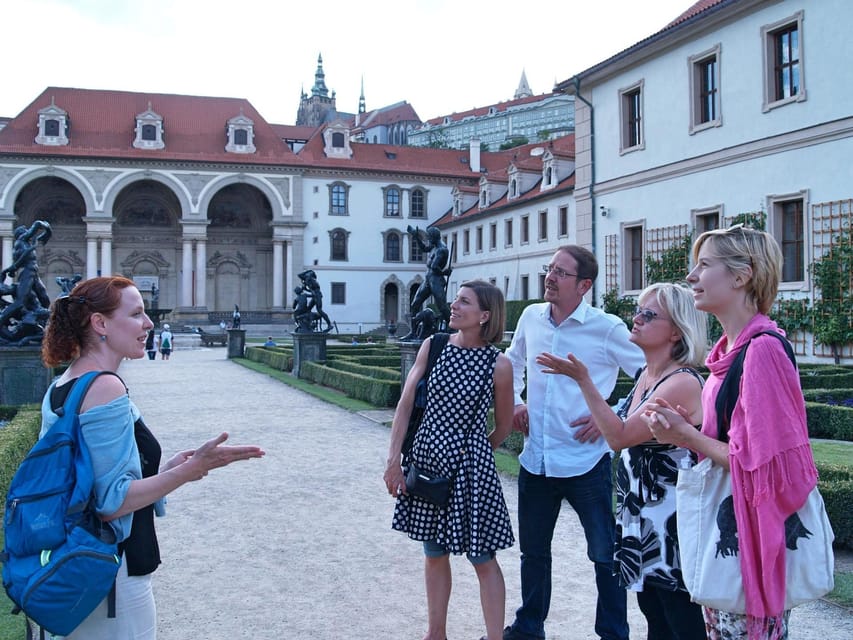
I like garden tours when they explain more than planting styles. Here, the gardens become a timeline of Prague’s changing tastes and power structures.
Medieval gardens were usually practical places. Herbs served cooking and medicine, while vineyards covered the hills around Prague long before the grand palace gardens appeared. Those early gardens survive only in select Gothic cloisters, so this tour helps you understand what disappeared as the city changed.
The major shift came in the 1500s, when Emperor Ferdinand I wanted Prague to match the courtly culture of Renaissance Italy. He brought Italian gardeners, architects, and classical ideas to Bohemia. Gardens became places for display, leisure, diplomacy, and royal identity.
That background adds meaning to every staircase and formal terrace. A clipped hedge is no longer just decoration. It reflects order. A statue drawn from classical mythology signals education and status. A distant view across Prague shows how a garden could frame the city as part of a nobleman’s world.
More walking tours:
- Prague: 3-Hour Walking Tour of Old Town & Prague Castle
★ 4.7 · 5,696 reviews - Prague: Ghost Walking Tour Where Legends Come To Life
★ 4.4 · 5,253 reviews - Prague: Jewish Quarter Walking Tour with Admission Tickets
★ 4.7 · 3,729 reviews
Belvedere and the Royal Gardens
The walk begins around Prague Castle’s gardens, where Ferdinand I’s Italian ambitions are easiest to see. The Belvedere Summer Palace was commissioned as a gift for Queen Anne, although she died before its completion.
The building is associated with architect Paola della Stella and is often described as the finest Renaissance structure outside Italy. You can also look for a relief showing Ferdinand presenting his wife with a flower from the Royal Gardens. It is a small scene, but it gives the palace a personal touch beneath all the imperial grandeur.
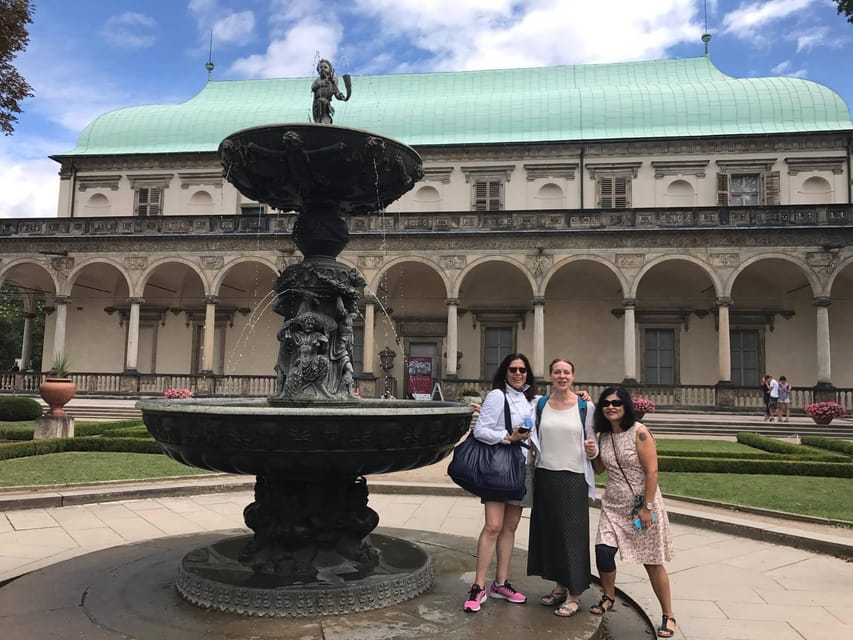
In front of the Belvedere is a Giardinetto, a compact pleasure garden arranged to complement the palace. Its most memorable feature is the Singing Fountain, cast in bell bronze in 1564.
Water drops into the bowl and causes it to resonate. I love this sort of detail because it rewards patience. The fountain is not merely something to photograph. It is a piece of Renaissance engineering designed to surprise the ear as well as the eye.
The Royal Gardens also provide the clearest introduction to imported Mediterranean plants. The court wanted crops and flowers that were unfamiliar in Central Europe, which meant experimenting with protected growing spaces and careful cultivation.
The Fig House and Orangery
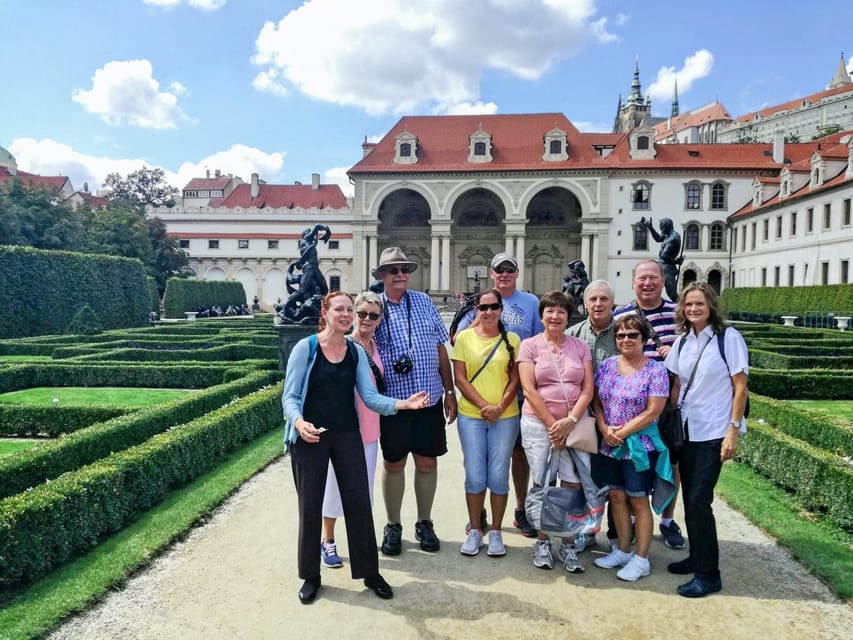
The Fig House and Orangery show how royal gardens worked as laboratories as well as pleasure grounds. Figs, almonds, oranges, and lemons were grown here for the first time in Central Europe.
You will hear how gardeners protected plants that were poorly suited to the local climate. That story gives the tour a practical edge. Palace gardens were not only about symmetry and beauty. They were also places where the court tested new plants, displayed rare produce, and copied fashionable Italian customs.
The route also touches on the arrival of tulips in the Royal Gardens. At the time, tulips were unknown in Europe and reached the gardens as an exotic gift from the Sultan of Constantinople.
This is one of the tour’s useful reminders: plants can travel through diplomacy and trade just as ideas do. A flower now associated with European gardens once represented distant connections and considerable novelty.
The stag moat, castle courtyard, and South Gardens
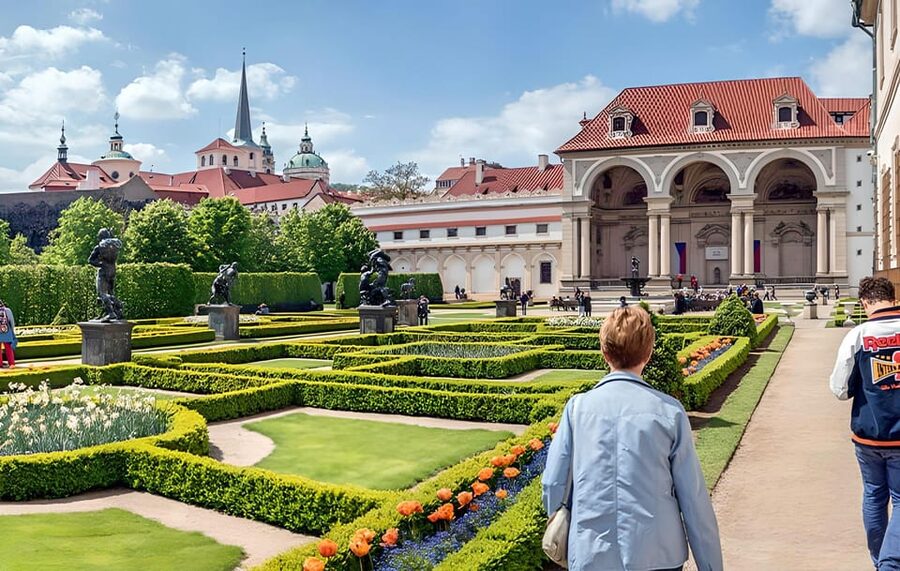
From the Royal Gardens, the walk continues toward the stag moat. The route then crosses a castle courtyard before descending the Bull Stairs to the South Gardens.
This section changes the pace. Instead of staying in one formal garden, you move through connected parts of the castle complex and down the hill. The stairs are part of the experience, but they are also where the physical demands become clear.
The South Gardens include the Garden of Paradise and the Garden on the Bulwark. Their names suggest the symbolic language of court gardens, where planting, architecture, and elevated views worked together.
You then continue through terraced gardens below the castle. I find this part valuable because it shows how Prague’s gardens are tied to the city’s slope. The route is not a flat stroll across one park. It moves from the castle heights toward Malá Strana, using terraces and stairs to connect different levels of the city.
If you have knee, balance, or mobility concerns, take the warning seriously. The route includes narrow and steep stairs. A private tour may be the smarter choice because the guide can adjust the pace, skip some sites, and focus on places that suit your limits.
A completely different kind of day out in Prague:
- Prague: 50-Minute Sightseeing Evening Cruise
★ 4.2 · 33,780 reviews - Prague: Medieval Dinner with Unlimited Drinks
★ 4.4 · 19,847 reviews - Prague: Castle Tour with Local Guide and Entry Ticket
★ 4.6 · 10,422 reviews - Prague Castle 2.5-Hour Tour Including Admission Ticket
★ 4.7 · 8,927 reviews
Wallenstein Garden and the theatrical Baroque turn
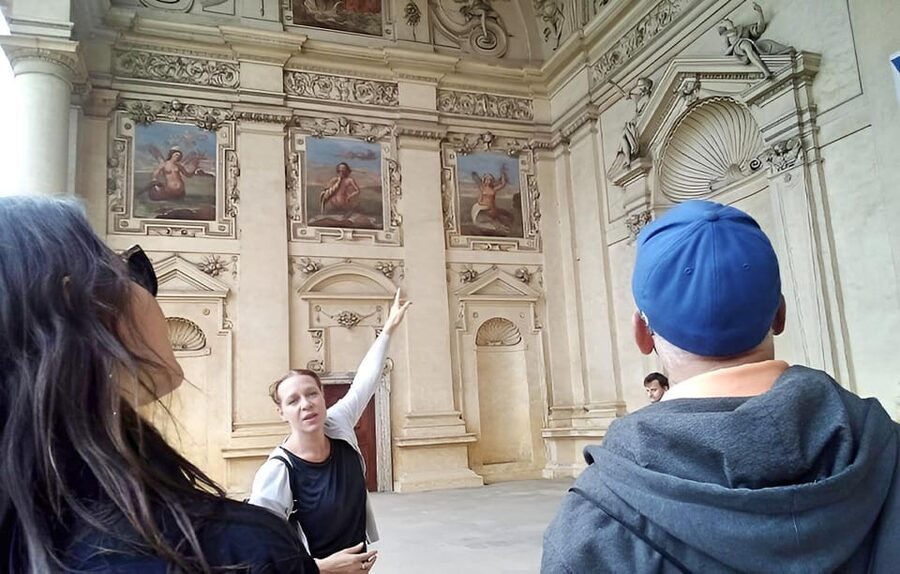
At the bottom of the hill, Wallenstein Garden feels grander and more theatrical. It was created for Albrecht von Wallenstein, a powerful and dramatic figure whose life adds plenty of human interest to the design.
The garden helps explain the move from Renaissance classicism toward Baroque ideas. Renaissance design favored balance, proportion, and a controlled relationship with classical forms. Baroque gardens pushed harder for spectacle, surprise, movement, and emotional impact.
Wallenstein Garden gives you that sense of theater. Albino peacocks add an unexpected flash of color and motion. Mannerist statues fill the garden with figures from mythology and classical imagination. A grotto wall introduces a deliberately artificial world of stone, shadow, and fantasy.
The mythical fountains continue that theme. They are not quiet ornaments placed at the edge of a lawn. They help turn the garden into a stage set, where noble power could appear larger than ordinary life.
The garden’s design also invites you to think about its commissioner. Wallenstein was not simply building a pleasant retreat. He was creating a setting that expressed ambition and rank. The scale and decoration tell you something about how he wanted to be seen.
I would allow time here to look up and around instead of rushing from one feature to the next. The value is in the relationship between the statues, walls, fountains, and open space.
Vrtba Garden, a Baroque garden above Malá Strana
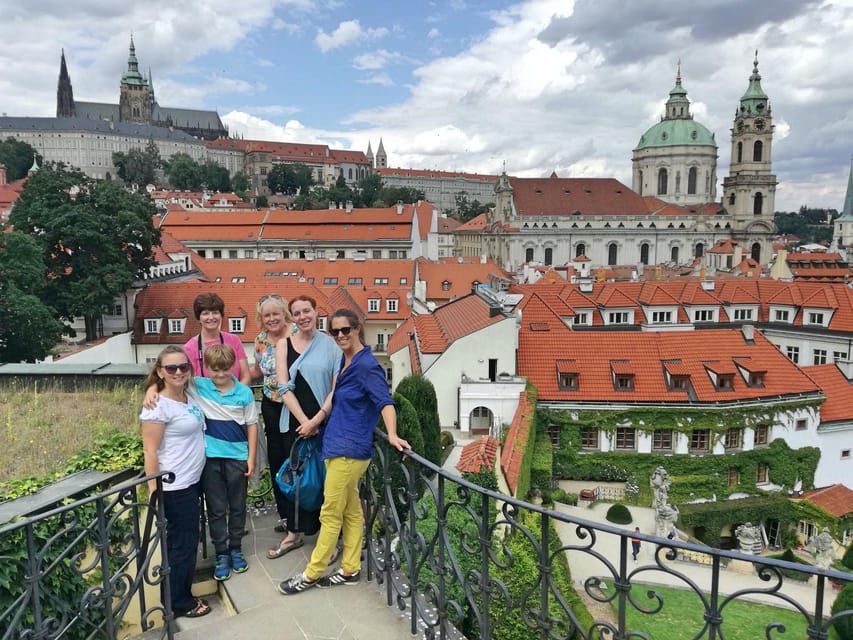
The final major stop is Vrtba Garden, a walled Baroque garden dating from 1720. It is located in Malá Strana and offers a more intimate contrast to the broad Royal Gardens and formal scale of Wallenstein.
The garden gives you a glimpse of noble life in the 18th century. Its enclosed setting feels more private, while the terraces show how Baroque design could make a relatively compact space feel elaborate and layered.
The climb to the upper courtyard is worth noting. At the top, a marine-themed grotto adds another playful touch, and the reward is a broad view across Prague’s cityscape.
This is one of the strongest photo stops, but the view is not the only reason to come. Vrtba helps complete the tour’s story by showing how garden design moved from royal and military power toward refined aristocratic display.
Admission to Vrtba Garden is not included, so remember that the tour price does not cover every entry ticket. The same applies to the gardens under Prague Castle. That is not unusual for a guided city walk, but you should budget for the additional fees before deciding if the price feels right.
What the $123 price gives you
At $123 per person, this is not a budget stroll. The price makes the most sense if you value a private or small-group experience led by a historian guide rather than a general sightseeing loop.
You are paying for a focused three-hour route and historical interpretation. The guide connects the gardens through the arrival of Italian design, early plant cultivation, courtly fashion, Baroque theater, and noble ambition. Without that context, several stops could look like attractive but disconnected green spaces.
The value also depends on your interest. If you mainly want Prague’s famous churches, bridges, and castles, this tour takes time away from those sights. If you have already seen the major landmarks, or you want a quieter subject with strong architectural detail, the gardens offer a fresh side of the city.
The separate admission fees reduce the all-in value slightly. Still, the tour reaches several places that are easy to miss on your own, especially the Vrtba Garden. A private booking may be worth the added cost for a group with mobility concerns or a strong interest in garden design.
The guide makes the difference
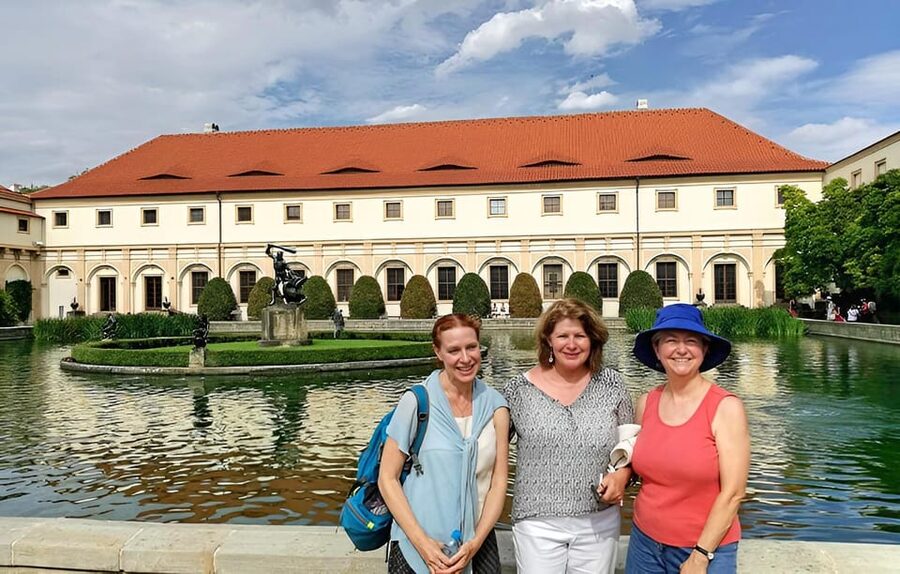
The best praise for this experience centers on the guide’s style. Miriam was described as excellent, informative, and relaxed, which is exactly what this subject needs.
A garden tour can become a list of dates and names if the guide treats it like a lecture. A calm guide who explains the political and artistic choices in plain language makes the walk much easier to enjoy. You can take in the statues, fountains, and views without feeling buried under facts.
Bonita Rhoads was also singled out for excellent guiding in an earlier booking. Since guide assignments can change, you should not assume either person will lead your departure, but the feedback points to a tour style that values warmth and clear explanation.
Because the tour is offered in English, it suits you best if you are comfortable following a history-focused discussion while walking. Private and small-group formats can give you more room to ask questions and set a manageable pace.
Who should book this garden walk?

I would choose this tour if you enjoy architecture, royal stories, old plants, sculpture, and city views. It is also a strong choice if you have already spent time around Prague Castle and want to see the grounds with a clearer purpose.
It suits couples, history-minded groups, and anyone who prefers a guided walk to an audio guide. The three-hour length is long enough to connect the sites but short enough to fit into a full Prague day.
You may want to skip it if stairs are a serious problem and you do not want to arrange a private route. The regular walk goes up and down narrow and steep sections, so comfortable walking ability matters more here than on a typical flat city tour.
I would also think twice if you dislike paying extra entrance fees after booking. The tour price covers the guide and the three-hour history walk, but admission to the gardens under Prague Castle and Vrtba Garden is separate.
Practical details for a smoother visit
Meet at the door of Bagel Lounge Malostranska. Check the available starting times when booking, since the tour lasts three hours and departure options can vary.
Wear shoes suited to stairs and uneven routes. The route descends from the castle area toward Malá Strana, then includes more garden paths and climbs, particularly at Vrtba Garden.
Plan your timing with care. Three hours is the stated duration, but you will still need time before or after the walk if you want to explore the castle complex, Malá Strana, or nearby sights independently.
You can cancel up to 24 hours in advance for a full refund, and the reserve-now, pay-later option keeps your plans flexible. Those policies are useful if your Prague schedule is still changing.
Should you book the Prague garden tour?
Book it if you want Prague beyond the standard postcard route. The Belvedere, Singing Fountain, Fig House, Wallenstein Garden, and Vrtba Garden create a strong sequence, moving from Renaissance court culture to Baroque spectacle.
At $123, I would treat it as a specialist tour rather than an inexpensive walk. The price is easier to justify in a private or small group, especially if you care about history and want a guide who can adapt the pace.
My main advice is simple: be ready for stairs, allow for separate admission fees, and choose this tour for its ideas as much as its flowers. If that sounds appealing, it offers an unusually thoughtful way to see Prague’s gardens and the people who shaped them.
FAQ
How long is the Prague Renaissance and Baroque Gardens Walking Tour?
The tour lasts three hours.
What language is the tour offered in?
The live tour guide speaks English.
Where does the tour meet?
Meet at the door of Bagel Lounge Malostranska.
Is a historian guide included?
Yes. The experience includes a three-hour guided history walk with a historian guide.
Are garden entrance fees included?
No. Admission to the gardens under Prague Castle and admission to Vrtba Garden are not included.
Is the tour private or shared?
Private and small-group options are available.
What gardens are visited?
The route includes gardens around Prague Castle, the Fig House and Orangery, the South Gardens, Wallenstein Garden, and Vrtba Garden.
Does the tour include the Singing Fountain?
Yes. The route visits the Giardinetto in front of the Belvedere, where you can see the Singing Fountain cast in 1564.
Is the walking route suitable for people with mobility issues?
The regular route includes stairs that can be narrow, steep, and difficult. A private tour may allow the guide to adjust the route, omit some sites, and set a more suitable pace.
Can I cancel for a full refund?
Yes. You can cancel up to 24 hours in advance for a full refund.
Just added around Prague
- Private Day trip from Prague to Kutná Hora★ 5.0 · 3 reviews
- PRAGUE AIRSOFT SHOOTING GAMES★ 4.7 · 3 reviews
- Private 4-hour City Tour of Prague with driver & official guide w/ Hotel pick up★ 5.0 · 3 reviews
- Glass blowing in Prague★ 4.6 · 3 reviews
- Prague to Karlovy Vary Private Transfer★ 4.5 · 3 reviews
- Disney’s Tarzan Musical★ 5.0 · 3 reviews
- Prague Private Tour★ 5.0 · 3 reviews
- Private Bohemian Glass and Czech Crystal Tour with lunch included★ 5.0 · 3 reviews
Walking Tours, compared.

3-Hour Walking Tour of Old Town & Prague Castle
Read our review →
Ghost Walking Tour Where Legends Come To Life
Read our review →
Jewish Quarter Walking Tour with Admission Tickets
Read our review →
Prague Guided Walking Tour and Cruise with Authentic Czech Lunch
Read our review →
Old Town and Jewish Quarter Guided Walking Tour
Read our review →
Prague Ghost and Legend of Old Town Walking Tour
Read our review →
Prague 3-hour Afternoon Walking Tour including Prague Castle
Read our review →
Ghosts and Legends Nighttime Guided Walking Tour
Read our review →Browse the lists this tour appears in