
REVIEW · OLD TOWN & JEWISH QUARTER TOURS
Prague Old Town and Jewish Quarter Walking Tour
Prague rewards a good first walk. This two-hour route links the Old Town’s grand square, medieval lanes, Jewish Quarter landmarks, and Franz Kafka’s Prague in one tidy outing. I like the easy Old Town meeting point and the way the tour mixes famous sights with smaller details, such as the hand hanging inside St. James Church and the customs courtyard at Ungelt. The main drawback is that most stops are exterior views, and the tour may be canceled if fewer than two people book.
This is a strong way to get your bearings fast, especially if your time in Prague is short. Guides such as Allen, Vojta, Radek, Martin, and Vojtech have been praised for clear English, humor, historical detail, and helpful local tips. Still, the pace is built around explanation rather than long interior visits, so you should add a separate Jewish Museum visit if you want to go inside the synagogues and cemetery.
In This Review
- Key points at a glance
- Starting at Týnská 627/7 in Prague’s Old Town
- Old Town Square and the Astronomical Clock
- University, Mozart, and Prague Cubism
- Ungelt, the medieval customs yard
- Entering the Jewish Quarter through its synagogues
- Kafka and the final Prague story
- The guide makes the biggest difference
- Is $24.19 good value?
- Who should book this walking tour?
- FAQ
- How long is the Prague Old Town and Jewish Quarter Walking Tour?
- What time does the tour begin?
- Where does the tour start?
- Where does the tour finish?
- Is hotel pickup included?
- Is admission to the Old Jewish Cemetery included?
- Can children join the tour?
- Is the tour offered in English?
- What is the maximum group size?
- Can the tour be canceled because of low bookings?
- Should you book the Prague Old Town and Jewish Quarter Walking Tour?
Key points at a glance
- Two historic districts in two hours: Cover Old Town Square, the Astronomical Clock, Ungelt, the Jewish Quarter, and the Kafka statue without a full-day commitment.
- A guide-led history lesson: Learn about Jan Hus, Charles IV, Jewish customs, Prague’s medieval trade, Mozart, Cubist architecture, and Kafka.
- Mostly exterior sightseeing: The route shows the outside of many major buildings, while admission to the Old Jewish Cemetery is not included.
- Small groups can be excellent: The maximum is 30 people, but some departures have had only three to five participants.
- Useful for a first day: The route gives you a map in your head before you explore Prague on your own.
- One practical risk: A minimum of two people is required, so a solo booking can be canceled close to departure.
Starting at Týnská 627/7 in Prague’s Old Town
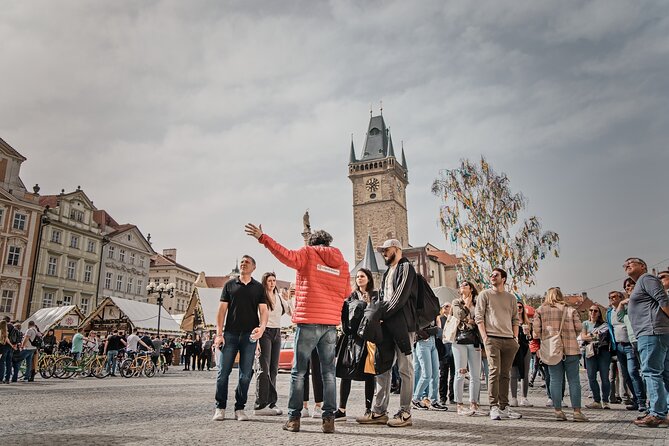
The walk begins at 10:30 a.m. in front of Týnská 627/7, Prague 1, near McGee’s Trips & Tickets. This is a practical location in the Old Town, and the activity returns to the same meeting point at the end.
That start and finish matter. You do not need to find a distant hotel pickup point, arrange a transfer, or worry about being left in an unfamiliar district. You can reach the meeting place by public transportation, and confirmation arrives when you book.
The opening stop is brief, but the tour quickly moves to Staroměstské náměstí, Prague’s main Old Town Square. Here your guide sets out the basic story of Czech history before the buildings begin competing for your attention. That introduction helps the rest of the walk make sense, since many of Prague’s monuments connect to religious reform, royal power, trade, war, and cultural change.
The route is listed at about two hours, though one guide described a departure as closer to an hour and a half. Think of it as a compact morning walk, not a slow architectural seminar. You will stop often, listen, take photos, and move on.
More Old Town and Jewish Quarter walks:
- Prague: Old Town Hall Tower Entry Ticket
★ 4.5 · 6,749 reviews - Prague: 3-Hour Walking Tour of Old Town & Prague Castle
★ 4.7 · 5,696 reviews - Prague: 3-Hour Old Town and Prague Castle Tour in German
★ 4.8 · 5,671 reviews
Old Town Square and the Astronomical Clock
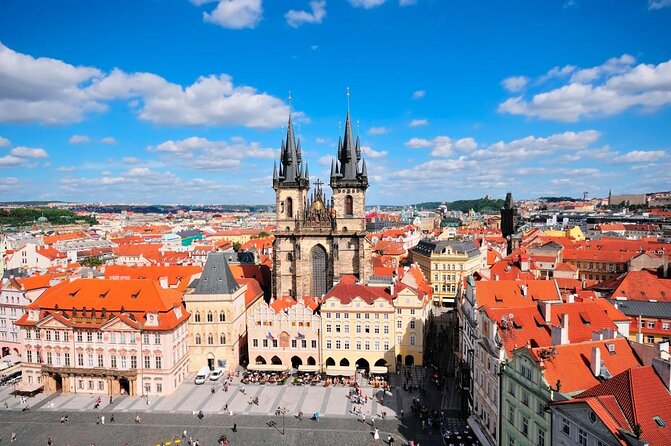
Old Town Square is the visual centerpiece of the first part of the walk. Your guide introduces the square and its place in Czech history before pointing out the Church of Our Lady before Týn, the Stone Bell House, the Jan Hus Monument, and the Old Town Hall.
The twin towers of Our Lady before Týn are among Prague’s most familiar sights. The stop here is short, only about three minutes, so expect an explanation from outside rather than a church visit. The same applies to the palace in the square, which is viewed from the exterior.
The Stone Bell House is a fine Gothic building, and the guide explains its link with Charles IV, one of the most important rulers in Czech history. The claim that Charles IV was born here is presented as a possibility, not an absolute certainty. That small distinction is useful: Prague’s stories often come with layers of legend and tradition.
At the Jan Hus Monument, you hear about the Czech religious reformer whose criticism of the Catholic Church led to his execution. The comparison to Martin Luther gives you a quick reference point, but the story is specifically Czech and helps explain the country’s long religious and political tensions.
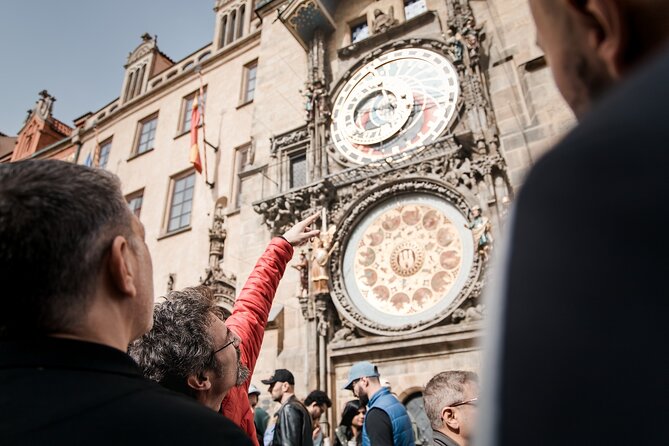
Then comes the Old Town Hall and its Astronomical Clock. This is one of the places where a good guide earns the tour price. The clock is not just a pretty face on a building. Your guide explains its medieval design, its display of stars, Moon, and Sun, and the unusual way it shows three systems of measuring time at once.
The stop lasts about five minutes, which is enough for a clear explanation but not for an extended technical lecture. Guides Allen and Vojta have received special praise for making the clock understandable and entertaining. If you have only seen people waiting for the hourly display, this explanation gives the mechanism and symbolism some meaning.
University, Mozart, and Prague Cubism
The walk then shifts from medieval power to education, music, and modern architecture. At Karolinum, you see the exterior of the historic building linked to the first university in Central Europe. The stop is short, but it gives you a useful reminder that Prague has long been a center of learning as well as royal and religious life.
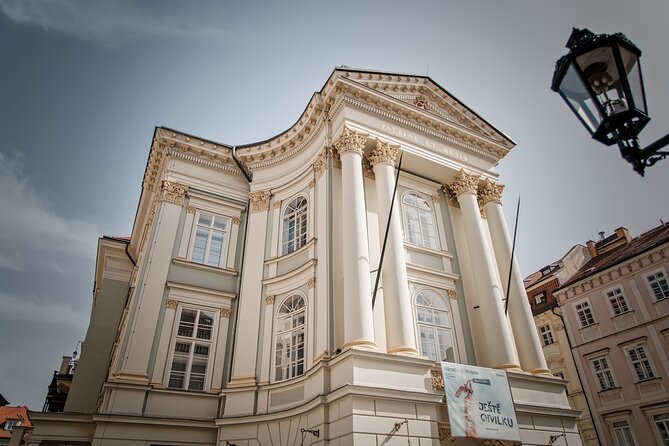
At the Theatre of the Estates, the guide explains the theater’s history and its connection with Mozart’s Don Giovanni, which premiered here. This is a worthwhile stop for music fans, but even if opera is not your thing, it adds a human touch to the route. The building is not simply another old facade. It connects Prague with Europe’s wider musical story.
The House of the Black Madonna offers a sharp change in style. It is described as the only pure Cubist building in Prague, and Czech Cubism is unusual because it became especially important in the Czech lands. The short stop helps you spot the angular forms and geometric design that you might otherwise walk past.
St. James Church adds one of the tour’s stranger details. It began as a Gothic church, burned, and was rebuilt in the Baroque style. Inside, a hand hangs from the ceiling near the main entrance, tied to a famous Prague legend. This is the kind of quick, memorable story that can make a walking route stick in your mind.
One caution: the tour includes stairs, and one participant counted 82 steps up and down. Most people can take part, but if stairs are difficult for you, ask your guide about the route at the start. The activity allows service animals, and children must be accompanied by an adult.
Ungelt, the medieval customs yard
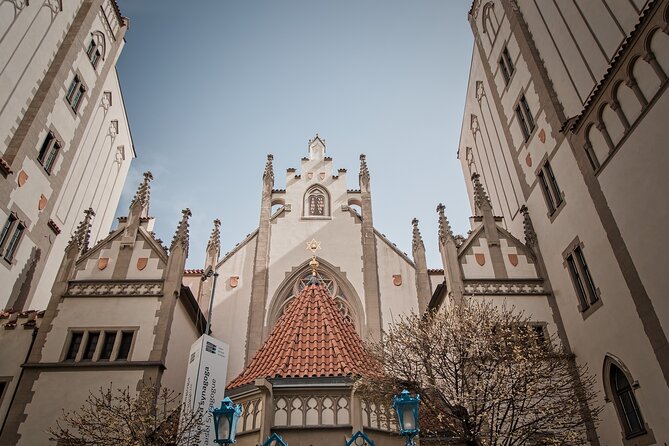
Týn Yard, also called Ungelt, is one of the most appealing stops on the Old Town portion. This enclosed medieval courtyard sits close to the busy center but feels more tucked away than the main square.
Ungelt once served as a place where foreign merchants paid customs on goods brought into Prague. That detail turns a quiet courtyard into a window on medieval commerce. It also gives you a break from the grand monuments. Instead of royal statues or tall church towers, you get a sense of how business worked in the city.
The stop lasts around five minutes. You will not spend long wandering through the courtyard, but the guide’s context is what makes it worthwhile. This is a good example of why a local-led walk can add value beyond a photo stop. A guide points out the meaning behind a place that might otherwise look like a pleasant passageway.
More walking tours:
- Prague: Ghost Walking Tour Where Legends Come To Life
★ 4.4 · 5,253 reviews - Prague: Jewish Quarter Walking Tour with Admission Tickets
★ 4.7 · 3,729 reviews - Prague Guided Walking Tour and Cruise with Authentic Czech Lunch
★ 5.0 · 3,627 reviews - Prague: Old Town and Jewish Quarter Guided Walking Tour
★ 4.6 · 2,847 reviews
Entering the Jewish Quarter through its synagogues
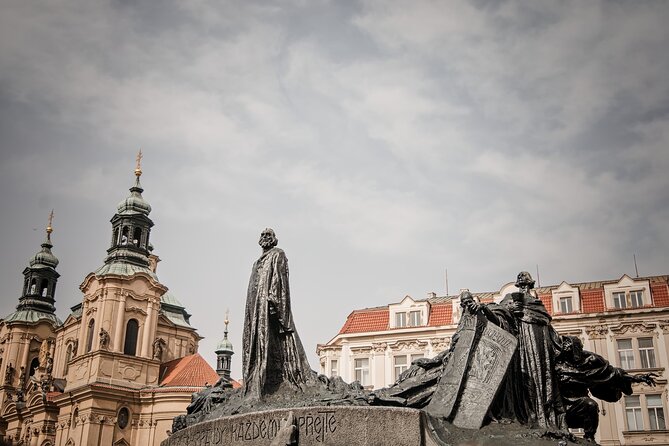
The second half of the route focuses on Prague’s Jewish Quarter, known historically as Josefov. The walk begins with the exterior of the Maisel Synagogue and a short account of Jewish life and history in the Czech lands.
At the Old Jewish Cemetery, the route reaches its most powerful historical site. The cemetery is known for its layers of graves and tightly packed gravestones, which reflect the limited space available to the Jewish community over many generations. Admission is not included, and the stop is mainly an introduction from outside unless you arrange a separate visit.
This distinction is important. The tour gives you orientation and historical context, but it is not a ticketed Jewish Museum tour. The Maisel Synagogue, Klausen Synagogue, Old-New Synagogue, and Spanish Synagogue are presented from the outside.
The Klausen Synagogue is described as the largest synagogue in the former Prague Jewish ghetto. Here the guide talks about Jewish customs and burial ceremonies. That subject matter can be solemn, so do not expect a light sightseeing stop. The route asks you to consider how religious practice, community life, and death were handled in a confined urban district.
The Old-New Synagogue is one of Prague’s earliest Gothic buildings and the oldest surviving medieval synagogue of its twin-nave design. Your guide also shares the tradition that its stones came from Solomon’s Temple in Jerusalem. Treat that as a long-held legend rather than a verified building record. It is exactly the sort of story that gives Prague’s monuments their unusual atmosphere.
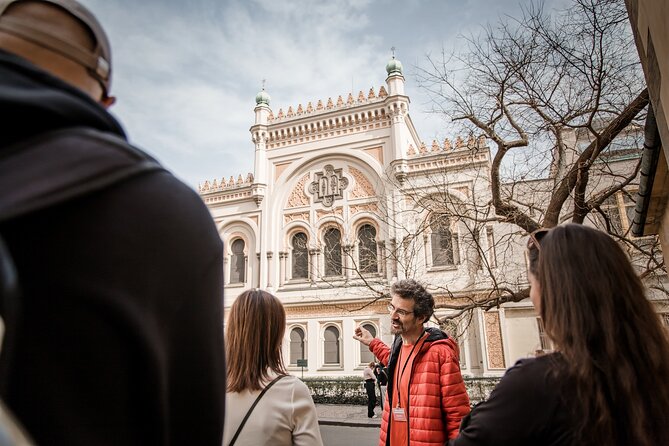
The Spanish Synagogue comes near the end of the Jewish Quarter section. Its Moorish exterior and interior design, influenced by Granada’s Alhambra, make it one of the district’s most striking buildings. On some dates, the interior may be closed, including during Jewish holidays, so you should not book this walk expecting guaranteed entry.
The route’s Jewish Quarter coverage is broad but brisk. You see several major buildings and hear the basic story behind them. If you want to study the exhibits, read inscriptions, or spend time inside the synagogues, plan a separate visit with admission purchased independently.
Kafka and the final Prague story
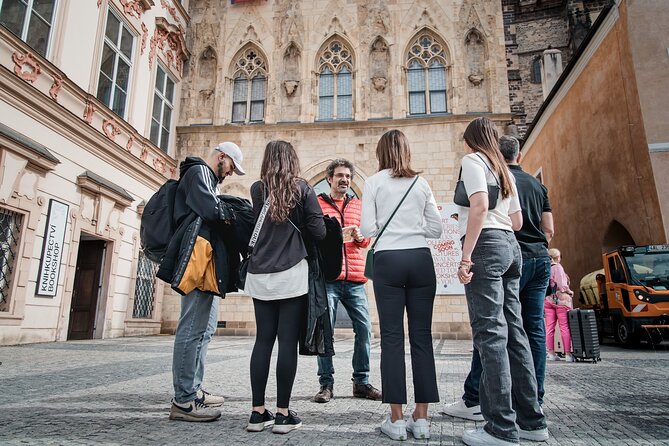
The final stop is the statue of Franz Kafka by Czech sculptor Jaroslav Róna. Kafka’s work is often associated with anxiety, bureaucracy, and a sense of unease, so the statue makes a fitting ending after the Gothic legends and Jewish Quarter stories.
The guide links Kafka to Prague and adds a little humor. That balance matters. This is not a solemn lecture from start to finish. The best departures have mixed serious history with odd tales, local jokes, and personal observations.
At the end, you return to Týnská 627/7. That makes it easy to continue exploring the Old Town, return to your hotel, or find lunch nearby. Since the tour begins and ends in the same area, it works particularly well on your first morning in Prague.
The guide makes the biggest difference
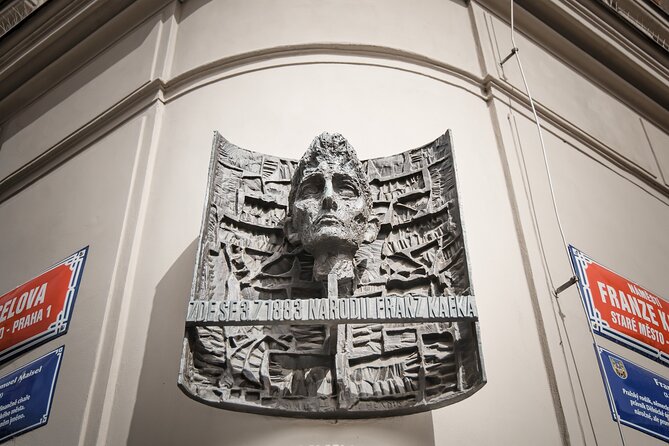
This route covers plenty of ground, but the guide determines how much you take away. The strongest feedback has centered on clear English, enthusiasm, humor, and the ability to explain why a site matters.
Allen has been praised for detailed explanations, funny stories, and an impressive account of the Astronomical Clock. Vojtech and Vojta have been described as engaging and energetic, with Vojta also answering questions readily. Radek has received praise for his friendly manner and strong command of the material, while Martin has been valued for local suggestions about cafés and places to eat.
Small groups can make this experience much better. Some departures have had only three or five people, which makes it easy to hear and ask questions. The maximum group size is 30, so you should be prepared for a larger gathering on a popular date. One departure was described as informative but low-energy, and another was considered too heavy on history for children.
That is a fair warning. This walk is built around historical explanation. Children who enjoy legends, strange stories, and buildings may have fun, but younger children may find the number of dates and names tiring.
Is $24.19 good value?
At $24.19 per person, this is a reasonably priced introduction to two of Prague’s most important central districts. You are paying for a local guide, a planned route, and two hours of explanation, not for admission to a series of interiors.
The value is best if you are new to Prague and want a clear framework for later sightseeing. A good guide can save you from looking at the Astronomical Clock, Ungelt, or the Old-New Synagogue without understanding what you are seeing. The price is also modest compared with a full-day tour, and you can spend the rest of the day at your own pace.
The value is weaker if you want museum entry, long photo breaks, or a relaxed pace. The Old Jewish Cemetery admission is not included, and the route does not provide hotel pickup or drop-off.
You can cancel free of charge up to 24 hours before the 10:30 a.m. start for a full refund. The minimum group requirement is the bigger practical issue. If you are the only person booked, the operator may cancel after confirmation, offer another option, or issue a full refund. One last-minute cancellation caused frustration because the notice arrived at 8:48 a.m. for a 10:30 a.m. departure. Solo bookers should keep a backup plan for that morning.
Who should book this walking tour?
I would choose this tour if you want a short, history-focused introduction before exploring Prague on your own. It suits couples, first-time visitors, families with older children, and anyone who prefers a guide to connect the buildings into a story.
It is also a good fit if you have already seen Charles Bridge and want to focus on the Old Town and Jewish Quarter instead. The route avoids making the day feel like a marathon while still covering a long list of important sites.
I would look elsewhere if you need guaranteed synagogue entry, hotel transportation, or a very gentle pace. A full-day Prague tour with a river cruise may suit you better if you want a wider city overview. For the Jewish Quarter itself, pair this walk with a separate Jewish Museum visit.
FAQ
How long is the Prague Old Town and Jewish Quarter Walking Tour?
The tour lasts approximately two hours. One departure was described as taking between an hour and a half and two hours.
What time does the tour begin?
The scheduled start time is 10:30 a.m.
Where does the tour start?
It starts in front of Týnská 627/7 in Prague’s Old Town, near McGee’s Trips & Tickets.
Where does the tour finish?
The activity ends back at the same meeting point at Týnská 627/7.
Is hotel pickup included?
No. Hotel pickup and drop-off are not included.
Is admission to the Old Jewish Cemetery included?
No. Admission to the Old Jewish Cemetery is not included.
Can children join the tour?
Yes. Children up to six years old are free, and children must be accompanied by an adult.
Is the tour offered in English?
Yes. The tour is offered in English.
What is the maximum group size?
The maximum group size is 30 people.
Can the tour be canceled because of low bookings?
Yes. The tour requires a minimum number of participants. If that minimum is not reached, you may be offered another date or experience, or receive a full refund.
Should you book the Prague Old Town and Jewish Quarter Walking Tour?
Book it if you want a compact, affordable introduction with real historical substance. The best guides make the Astronomical Clock clearer, the cemetery more meaningful, and the Old Town’s odd details easier to spot.
Skip it if your priority is going inside every synagogue or spending a long time at each monument. For most first visits, though, this is a sensible morning walk, especially when you can join a small group led by a guide such as Allen, Radek, Martin, Vojta, or Vojtech.
Just added around Prague
- Private Day trip from Prague to Kutná Hora★ 5.0 · 3 reviews
- PRAGUE AIRSOFT SHOOTING GAMES★ 4.7 · 3 reviews
- Private 4-hour City Tour of Prague with driver & official guide w/ Hotel pick up★ 5.0 · 3 reviews
- Glass blowing in Prague★ 4.6 · 3 reviews
- Prague to Karlovy Vary Private Transfer★ 4.5 · 3 reviews
- Disney’s Tarzan Musical★ 5.0 · 3 reviews
- Prague Private Tour★ 5.0 · 3 reviews
- Private Bohemian Glass and Czech Crystal Tour with lunch included★ 5.0 · 3 reviews
Old Town & Jewish Quarter Tours, compared.
3-Hour Walking Tour of Old Town & Prague Castle
Read our review →
3-Hour Old Town and Prague Castle Tour in German
Read our review →
Jewish Quarter Walking Tour with Admission Tickets
Read our review →
Prague Old Town, Medieval Underground and Dungeon Historical Tour
Read our review →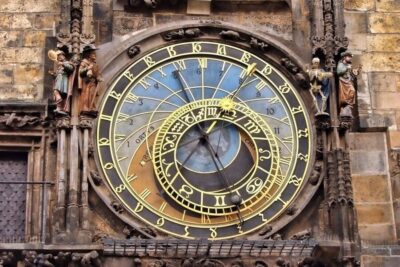
Old Town and Jewish Quarter Guided Tour in German
Read our review →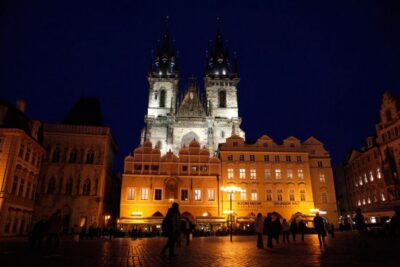
Ghosts and Legends of the Old Town Evening Tour
Read our review →
Old Town and Jewish Quarter Guided Walking Tour
Read our review →Browse the lists this tour appears in