
REVIEW · AUDIO TOURS
Prague: Lobkowicz Palace Ticket & Audio Guide
Europe’s past feels personal here. At Lobkowicz Palace, I like the chance to see major works by Brueghel, Canaletto, and Velázquez in a private family collection, then hear the Lobkowicz story through an audio guide narrated by two generations of the family and the collection’s chief curator. I also like the music rooms, where original scores by Mozart and Beethoven bring famous compositions close to hand.
The main caution is time. The ticket is valid for one day, but the museum may close earlier than the advertised schedule, with some visitors finding the doors closing around 5 PM rather than 6 PM. At about $17 per person, the price is fair for art and music lovers, but less tempting if you want a large palace tour or expect entry to all of Prague Castle.
In This Review
- Key points to know before you go
- Arriving at the far end of Prague Castle
- Twenty-two galleries with a family point of view
- Brueghel, Canaletto, and Velázquez
- The Lobkowicz family story, told through objects
- Mozart, Beethoven, and the power of the music rooms
- Weapons, porcelain, and the less expected displays
- Prague views and the terrace café
- How much time should you allow?
- Is $17 a good value?
- Who should book Lobkowicz Palace?
- Should you book Lobkowicz Palace?
- FAQ
- Where is Lobkowicz Palace?
- Does the ticket include Prague Castle?
- What does the Lobkowicz Palace ticket include?
- What languages are available for the audio guide?
- What famous artists are represented?
- Can I see Mozart and Beethoven material?
- Is there a concert option?
- Is Lobkowicz Palace wheelchair accessible?
- Can I bring luggage or a pet?
- Can I cancel the booking?
Key points to know before you go
- The collection covers 16th to 20th-century Europe: You will see paintings, royal portraits, porcelain, decorative arts, weapons, instruments, and manuscripts in 22 galleries.
- The audio guide is part of the visit: It is available in English, Spanish, Czech, French, German, Italian, Japanese, Russian, Ukrainian, Korean, and Chinese.
- The music collection is unusually strong: Original material includes Beethoven’s Fourth and Fifth Symphonies and Mozart’s re-orchestration of Handel’s Messiah.
- The palace sits at Prague Castle’s eastern end: You can reach it by foot, tram, or metro, but your Lobkowicz ticket does not include entry to Prague Castle itself.
- The terrace café adds a welcome pause: It is a good place to enjoy the views after the galleries.
- A concert upgrade is available: You can add a classical concert beginning at 1 PM daily.
Arriving at the far end of Prague Castle
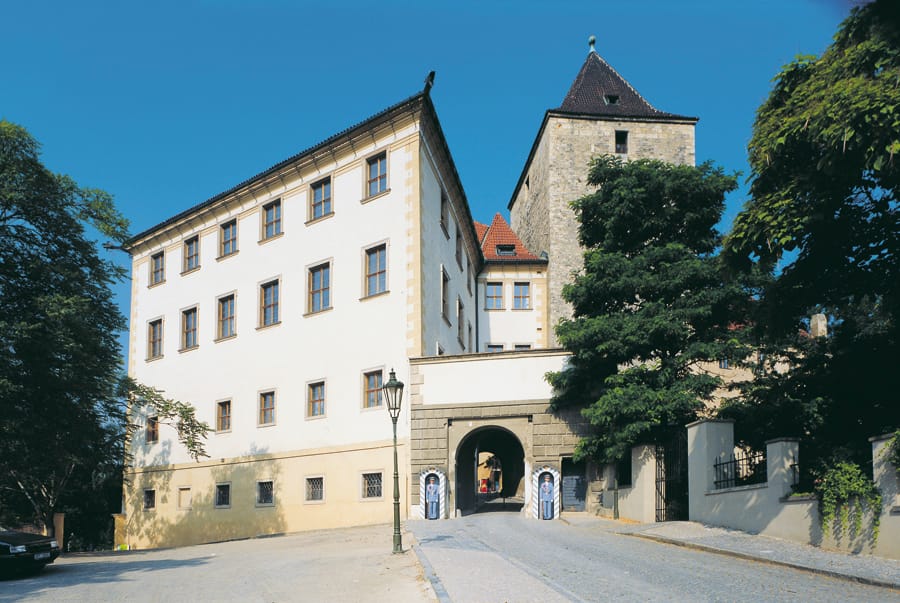
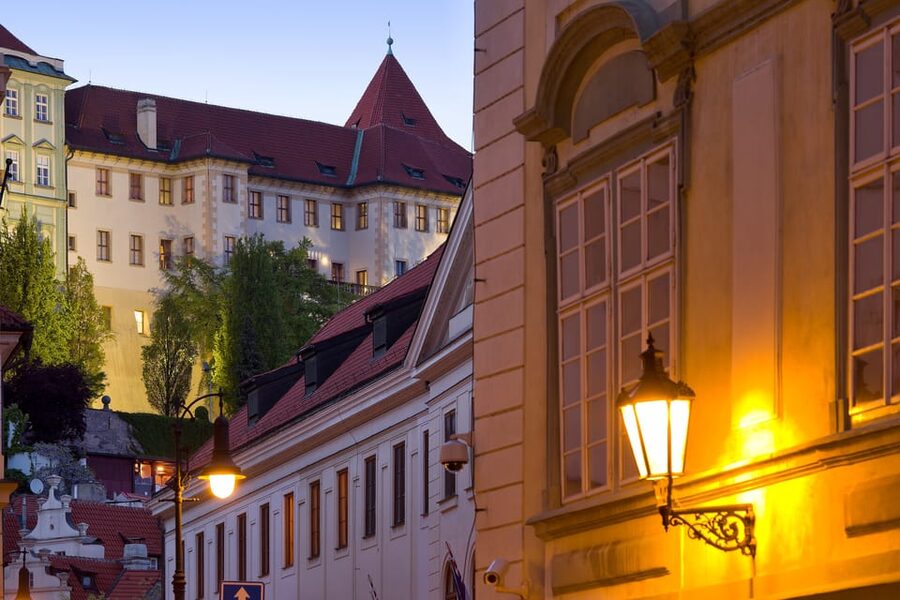
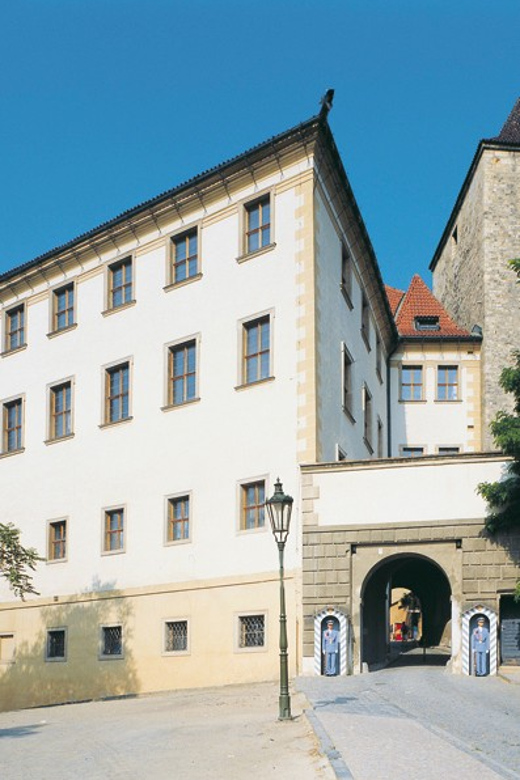
Lobkowicz Palace is at Jiřská 3, at the far eastern end of the Prague Castle complex. That location matters because the palace is not a quick stop beside the main castle entrance. Plan your route so you are not rushing across the complex just before closing.
You can get there on foot, by tram, or by metro. The exact walk depends on where you begin, but the useful point is simple: allow enough time to reach the eastern end before your selected entry time. Once inside the palace, you can move through the museum at your own pace during the valid day.
Your ticket covers Lobkowicz Palace only. It does not include admission to Prague Castle, so do not assume that this ticket gives you access to every building in the castle complex. If you plan to see several castle sights, treat the palace as one separate stop within a larger Prague day.
The palace is wheelchair accessible according to the activity information. At the same time, the experience is marked as not suitable for people with mobility impairments. That is a confusing combination, so I would confirm the current route and any access needs before booking.
More self-guided routes and city games:
- From Prague: Terezin Concentration Camp Guided Tour w/ Audio
★ 4.5 · 1,959 reviews - Prague: Astronomical Clock Tower Entry Ticket & Audio Guide
★ 4.4 · 641 reviews - Prague: Prague Castle Complex Smartphone Audio Guide
★ 3.8 · 163 reviews
Twenty-two galleries with a family point of view
The collection is presented as the largest and oldest private art collection in Central Europe. That claim is less important than what you actually see: a broad family collection that combines fine art with objects used in court life, military life, music, and the home.
The galleries cover the 16th through 20th centuries. You are not looking at one narrow school of painting. Instead, the visit moves through several kinds of objects:
- Paintings by Brueghel the Elder, Canaletto, and Velázquez
- Family and royal portraits
- Porcelain and ceramics
- Decorative arts
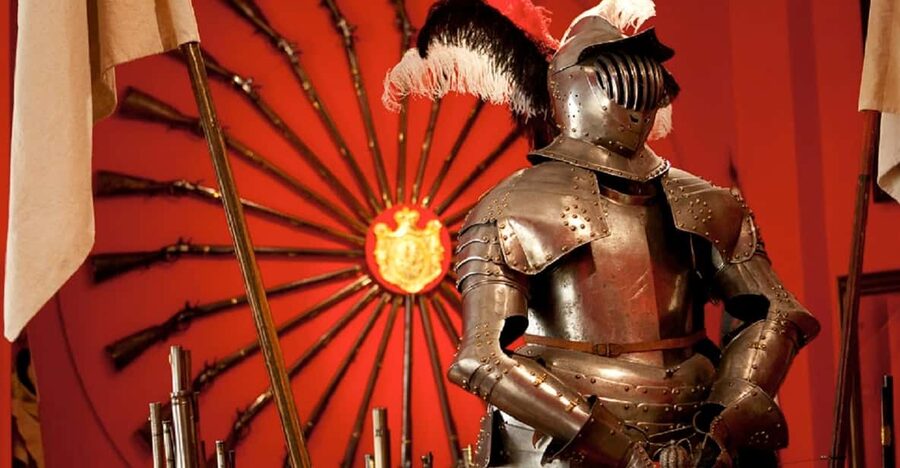
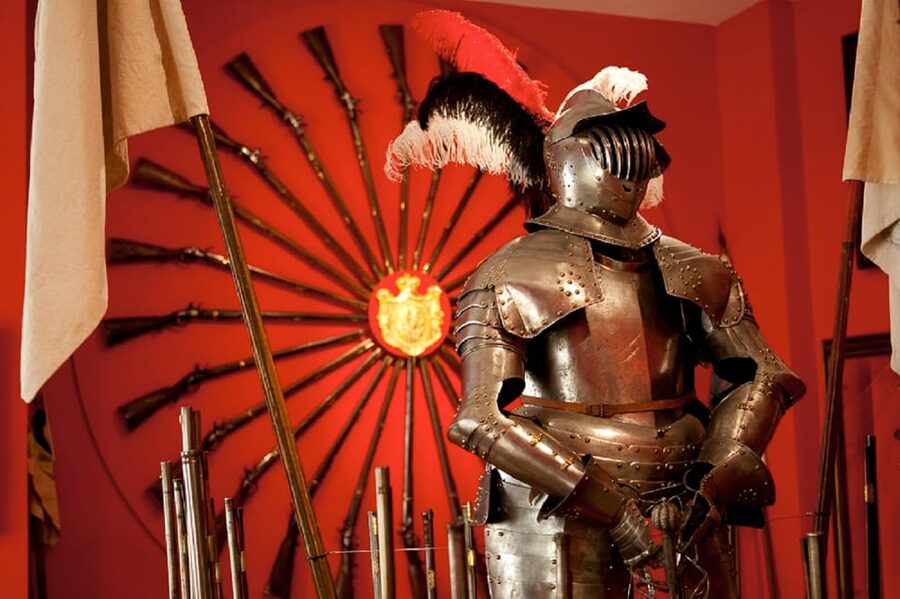
- Military and sporting rifles from the 16th to 18th centuries
- Musical instruments
- Original musical scores and manuscripts
That range gives the museum its appeal. You might pause for a famous painting, then find yourself studying a rifle, a piece of porcelain, or a handwritten score. It feels like a record of how a major European family collected, lived, traveled, and preserved its possessions.
The drawback is that a collection this broad can feel uneven. If your main goal is a large painting museum, 22 galleries may feel compact. One particularly negative response described the museum as small and not worth the price. I can understand that reaction if you compare it with Prague’s larger institutions or expect a full palace route.
Brueghel, Canaletto, and Velázquez
The three headline painters give the visit clear focus. Brueghel the Elder brings the detail and busy human activity associated with his work. Canaletto offers a strong connection to city views and architectural scenes, while Velázquez gives the collection a major Spanish name.
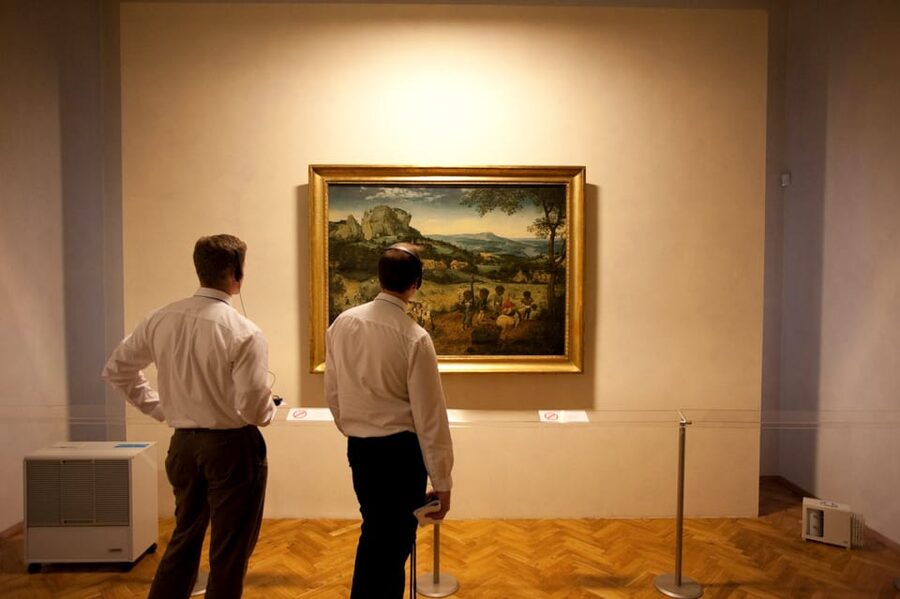
The value here is not just ticking off famous artists. The paintings sit within a private family collection, alongside portraits and household objects. That setting changes the way you read them. You are not simply moving from one famous canvas to another in a public gallery. You are seeing works that formed part of a family’s possessions and identity.
The palace also presents family and royal portraits. These can be useful for visitors who want faces and relationships to connect with the broader political story of Europe. The audio guide helps by tying the objects to the Lobkowicz family’s 600-year story instead of leaving you with isolated labels.
Audio guides can be hit or miss, but this one is central to the visit. The narration comes from two generations of the Lobkowicz family and the chief curator of the collections. That gives the tour a personal angle, particularly when the family’s losses and recovery are explained.
The Lobkowicz family story, told through objects
The family narrative is one of the strongest reasons to choose this museum over a standard art stop. The Lobkowiczes lost everything and recovered it twice, a dramatic story that gives the collection real stakes.
The galleries let you see the results of that long history. Paintings, instruments, weapons, decorative arts, and manuscripts are not simply beautiful objects. They are also pieces that survived major changes in Europe and the repeated disruption of the family’s life.
I appreciate the way the audio guide places the collection in that personal frame. You can listen in your preferred language while looking at the objects, rather than reading a wall of general background. The available languages are English, Spanish, Czech, French, German, Italian, Japanese, Russian, Ukrainian, Korean, and Chinese.
The Spanish option received particularly warm feedback from a Spanish-speaking visitor, who found the palace well cared for and the audio guide helpful. That is useful if you worry about missing the family story because English is not your first language.
Do not rush this part. If you enter late, you may have enough time to pass through every room but not enough time to stop for the audio explanations. A visit around 4 PM led to an early departure request at 5 PM, even though the visitor had expected the museum to remain open until 6 PM. I would arrive earlier in the day if the collection is a priority.
A few more trips of this kind worth comparing:
- Prague: Prague Zoo Audio Guide with E-Ticket
★ 4.6 · 158 reviews - Prague: Clam-Gallas Palace Entry Ticket with Audio Guide
★ 4.6 · 115 reviews - Prague: Castle Circuit Entry Tickets with Audio Guide
★ 3.1 · 56 reviews - Prague Jewish Quarter Online Audio Guide
★ 3.9 · 55 reviews
Mozart, Beethoven, and the power of the music rooms
The music material may be the most distinctive part of the palace. Many art museums have paintings and decorative objects. Far fewer let you see original scores and manuscripts connected with Mozart and Beethoven.
The collection includes original scores and manuscripts by both composers. Among the named items are Beethoven’s Fourth and Fifth Symphonies and Mozart’s re-orchestration of Handel’s Messiah. These are not just printed souvenirs. Original notation gives you a physical link to the process behind music you may already know.
You will also see musical instruments. That helps place the manuscripts in a wider setting. The collection is not presenting composers as distant names in a textbook. It shows music as part of the family’s cultural life and collecting tradition.
This section suits you best if you enjoy music history, even if you are not a specialist. The audio guide can explain why the documents matter, while the objects themselves keep the visit from becoming a purely literary lesson.
The daily concert upgrade is worth considering if classical music is high on your Prague plans. The concert starts at 1 PM, so it works best as an early afternoon centerpiece. Check the option when booking, since the standard ticket includes the palace and audio guide but not the concert.
Weapons, porcelain, and the less expected displays
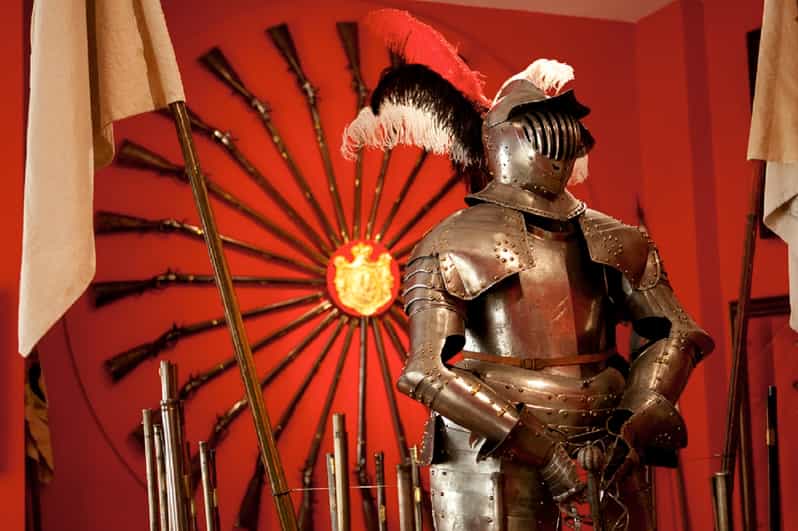
The military and sporting rifles from the 16th to 18th centuries add a different note. They show that the family collection was not built only around paintings and music. These objects reflect courtly interests, sport, warfare, and craftsmanship.
Porcelain ceramics and decorative arts do similar work. They can be easy to skip when you are eager to reach a famous painting, but they help explain how interiors were furnished and how status was displayed. If you like design, materials, and small details, these rooms may hold your attention longer than expected.
This mix is also why I would not recommend the palace only to fine-art specialists. You can build your own route through the collection. A painting lover can focus on the masters, a music fan can linger over the scores, and anyone interested in aristocratic life can spend time with portraits, ceramics, arms, and household objects.
The flip side is that the museum asks you to shift gears often. It is not a single-theme exhibition. Some visitors will enjoy that variety, while others may prefer a tighter presentation.
Prague views and the terrace café
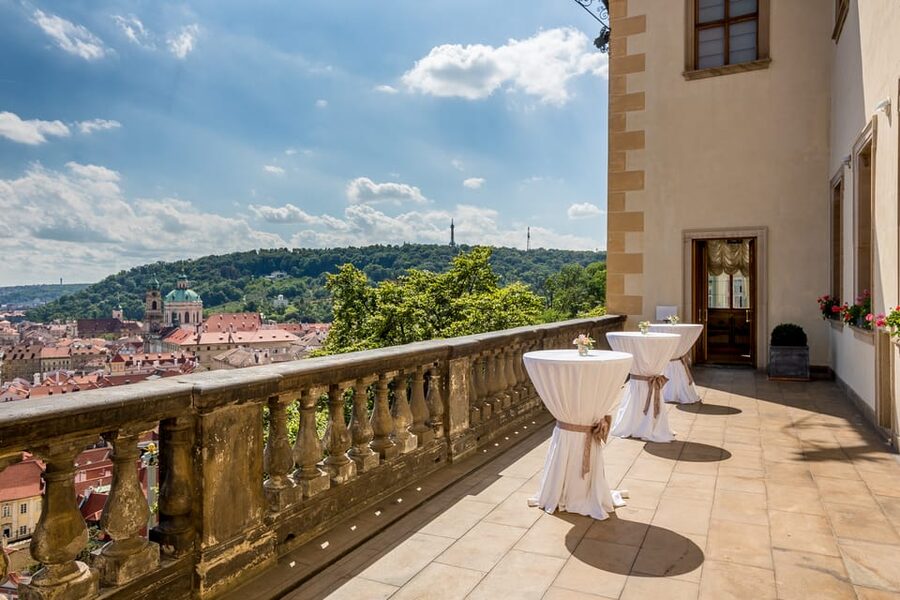
One of the simple pleasures of the palace is the view over Prague. The high position within the castle complex gives you a chance to look out across the city after spending time indoors.
The terrace café is a natural place to pause. I like that the visit includes more than a sequence of galleries. You can sit down, enjoy the view, and let the palace’s art and family story settle before continuing with Prague Castle or another part of the city.
The café is not a reason to buy the ticket by itself, but it improves the overall rhythm of the stop. Art museums can become tiring, especially when you use an audio guide in every room. A terrace break gives you a practical reset.
Keep your expectations measured. The information confirms the café and fantastic city views, but it does not promise a meal, special menu, or reserved seating. Think of it as a pleasant pause rather than a full dining experience.
How much time should you allow?
The ticket is valid for one day, but the useful visit length depends on how closely you listen. You can move through the galleries quickly, yet the audio guide and the family story reward a slower pace.
I would plan the palace as a substantial stop within a Prague Castle visit, not as a five-minute add-on. Give yourself time for:
- The major paintings
- Family and royal portraits
- Porcelain and decorative arts
- Weapons and sporting rifles
- Instruments and original music documents
- The audio narration
- The terrace café and views
Arriving early is the safest choice. The museum has a stated daily schedule, but actual closing arrangements can be earlier. Recent booking feedback described the doors closing at 5 PM, despite an expectation of 6 PM. Staff also asked people who entered around 4 PM to leave at 5 PM.
That does not mean every visit will end at 5 PM, but it is enough reason not to plan the palace as your final stop at the end of a packed day. If you want the concert, the 1 PM start gives you a fixed anchor. If you prefer a quiet museum visit, avoid leaving the whole experience until late afternoon.
Is $17 a good value?
At about $17 per person, this is a moderate-priced museum ticket for central Prague. The value depends on what you want from a palace visit.
I think the ticket earns its price if you care about at least two of these: European painting, aristocratic family history, classical music, decorative arts, or Prague views. The audio guide is included, and its family narration adds more than a basic room-by-room description.
The ticket is less convincing if you expect entry to Prague Castle itself, a huge palace complex, or a full day of attractions. You must pay separately for Prague Castle admission, and the Lobkowicz museum occupies 22 galleries rather than an enormous series of rooms.
The concert upgrade can improve the value for music lovers. It turns the palace from a museum visit into a combined art and music outing. For everyone else, I would compare the added price with the rest of your Prague concert plans before choosing it.
Free cancellation up to 24 hours before the visit and a reserve-now, pay-later option make planning easier. The ticket is also valid for one day, so you have some flexibility within your chosen date.
Who should book Lobkowicz Palace?
I would recommend this experience to you if you enjoy museums that mix major art with personal stories. It is especially appealing for classical music fans, since the Beethoven and Mozart manuscripts give the palace a focus you will not find in every Prague collection.
Families and mixed-interest groups may also like the variety. One person can study the paintings, another can listen to the music history, and someone else can focus on weapons, portraits, or ceramics. The café and views help keep the stop from feeling like a long march through display cases.
I would be more cautious if you have limited time in Prague and have not yet seen the city’s essential sights. I would also think twice if your main interest is a grand architectural tour rather than a private collection inside the castle complex.
Bring no pets, smoking is not allowed, and large bags or luggage are not permitted. Those rules are easy to manage, but they matter if you are arriving directly from a train station or airport with heavy bags.
Should you book Lobkowicz Palace?
Book it if you want a focused, personal museum visit with excellent music material, notable European paintings, and a fine view over Prague. The audio guide is a real part of the experience, not a small extra, and the Lobkowicz family story gives the collection a clear human thread.
Skip it if you want a broad ticket to Prague Castle or a huge palace with grand rooms at every turn. To get the best value, arrive well before late afternoon, allow time for the audio guide, and add the 1 PM concert only if classical music is one of your main interests.
FAQ
Where is Lobkowicz Palace?
Lobkowicz Palace is at Jiřská 3, at the far eastern end of the Prague Castle complex in Prague.
Does the ticket include Prague Castle?
No. The entrance ticket covers Lobkowicz Palace, but it does not include admission to Prague Castle.
What does the Lobkowicz Palace ticket include?
The ticket includes entrance to Lobkowicz Palace and an audio guide. A midday concert is included only when you select the concert option.
What languages are available for the audio guide?
The audio guide is available in Spanish, Czech, English, French, German, Italian, Japanese, Russian, Ukrainian, Korean, and Chinese.
What famous artists are represented?
The collection includes works by Brueghel the Elder, Canaletto, and Velázquez.
Can I see Mozart and Beethoven material?
Yes. The collection includes original scores and manuscripts by Beethoven and Mozart, including Beethoven’s Fourth and Fifth Symphonies and Mozart’s re-orchestration of Handel’s Messiah.
Is there a concert option?
Yes. You can upgrade to include a classical music concert beginning at 1 PM daily.
Is Lobkowicz Palace wheelchair accessible?
The activity information describes the palace as wheelchair accessible, but it also says the experience is not suitable for people with mobility impairments. Confirm current access arrangements before booking if you have specific mobility needs.
Can I bring luggage or a pet?
No. Pets, smoking, luggage, and large bags are not allowed.
Can I cancel the booking?
Yes. You can cancel up to 24 hours in advance for a full refund. A reserve-now, pay-later option is also available.
Just added around Prague
- Private Day trip from Prague to Kutná Hora★ 5.0 · 3 reviews
- PRAGUE AIRSOFT SHOOTING GAMES★ 4.7 · 3 reviews
- Private 4-hour City Tour of Prague with driver & official guide w/ Hotel pick up★ 5.0 · 3 reviews
- Glass blowing in Prague★ 4.6 · 3 reviews
- Prague to Karlovy Vary Private Transfer★ 4.5 · 3 reviews
- Disney’s Tarzan Musical★ 5.0 · 3 reviews
- Prague Private Tour★ 5.0 · 3 reviews
- Private Bohemian Glass and Czech Crystal Tour with lunch included★ 5.0 · 3 reviews
Audio Tours, compared.
Terezin Concentration Camp Guided Tour w/ Audio
Read our review →
Jewish Quarter Ticket with optional Audio Guide
Read our review →
Astronomical Clock Tower Entry Ticket & Audio Guide
Read our review →
Clam-Gallas Palace Entry Ticket with Audio Guide
Read our review →
Browse the lists this tour appears in