
REVIEW · PRAGUE
Prague: A. Vivaldi Four Seasons at St. Salvator Church
Prague sounds better by candlelight. This one-hour concert brings the Royal Czech Orchestra and Prague soloists into St. Salvator Church, the main church of the Klementinum complex, for a polished program of Vivaldi, Bach, Beethoven, Dvořák, Smetana, and seasonal music. I especially like the grand church setting and the mix of strings, organ, and soprano, which gives the evening more variety than a standard chamber concert. At $34, it is also an easy cultural night out.
My two favorite features are the church’s powerful acoustics and the program’s familiar music. Hearing Bach’s Toccata and Fugue on a full church organ can raise the hairs on your arms, while Vivaldi’s Spring and Winter give the orchestra its main showcase. The main drawback is comfort: the wooden pews can feel hard after 30 minutes, and the church may be chilly, especially in colder months.
In This Review
- Key points at a glance
- Why this concert works so well in Prague
- Inside St. Salvator Church
- The program, piece by piece
- How the one-hour schedule feels
- Seats, ticket exchange, and arrival advice
- Is $34 a fair price?
- Who should book this experience?
- Tips for getting the most from the evening
- Should you book it?
- FAQ
- How long does the concert last?
- How much does admission cost?
- Where does the concert take place?
- Which Vivaldi works are performed?
- Is the full Four Seasons performed?
- What other music is included?
- Is there a dress code?
- When should I arrive?
- Can I cancel my booking?
Key points at a glance
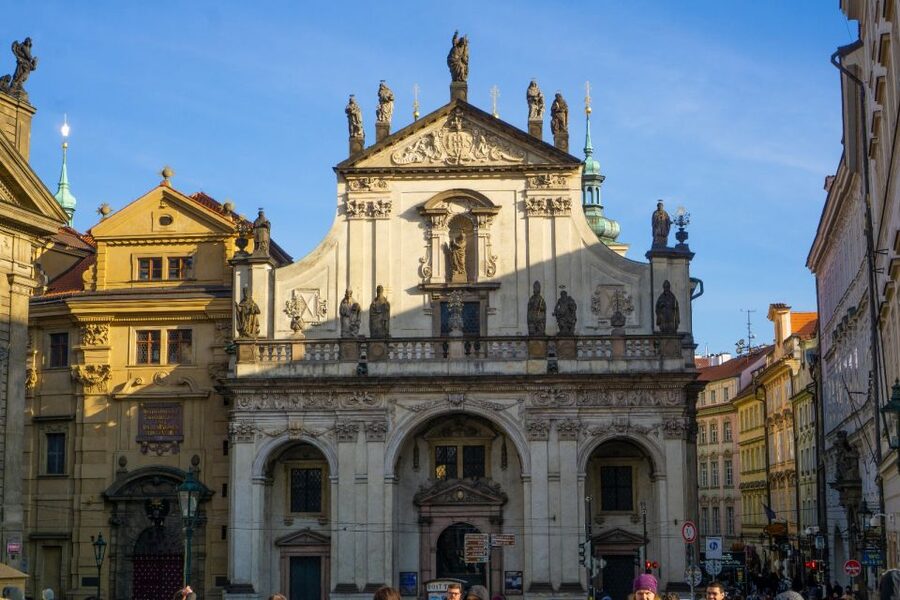
- A famous Prague setting: St. Salvator Church is the principal church of the Klementinum complex, one of central Prague’s major historic landmarks.
- More than Vivaldi: The program includes Bach’s Toccata and Fugue, Smetana’s The Moldau, Beethoven’s Fifth, Schubert’s Ave Maria, and Christmas music.
- A strong organ performance: The church organ adds the biggest bursts of sound, particularly during Bach’s dramatic work.
- One hour, well judged: The short running time fits neatly before dinner and works well for people new to classical music.
- Arrive early for better seats: Your ticket is exchanged at the box office, and seats are assigned within your purchased section.
- Prepare for church conditions: There is no official dress code, but pews may be uncomfortable and the interior can be cold.
Why this concert works so well in Prague
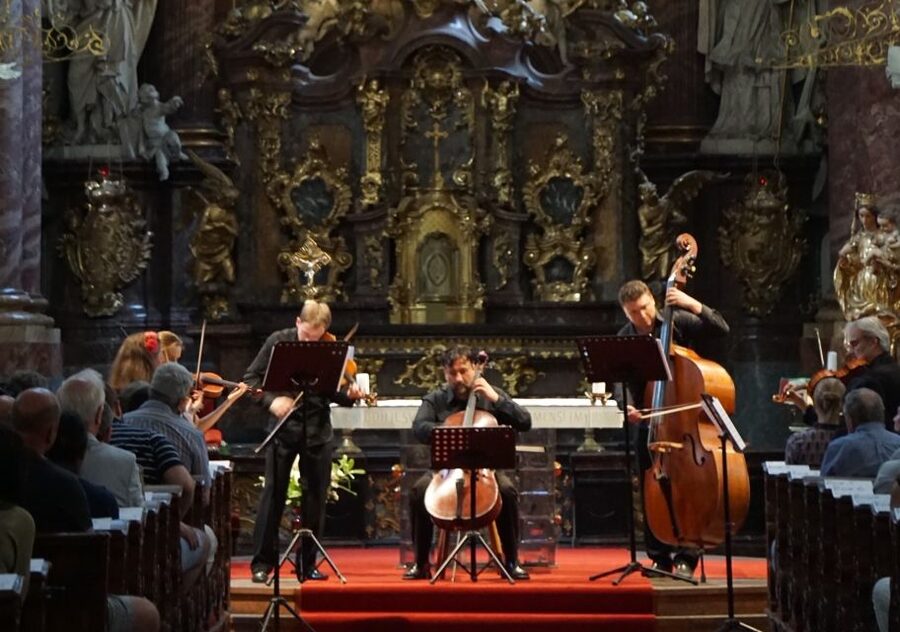
Prague has no shortage of classical music, but this concert gets an important thing right: it pairs well-known pieces with a memorable place. You are not sitting in a plain hall waiting for the music to create all the atmosphere. The ornate interior of St. Salvator Church does much of that work before the first note.
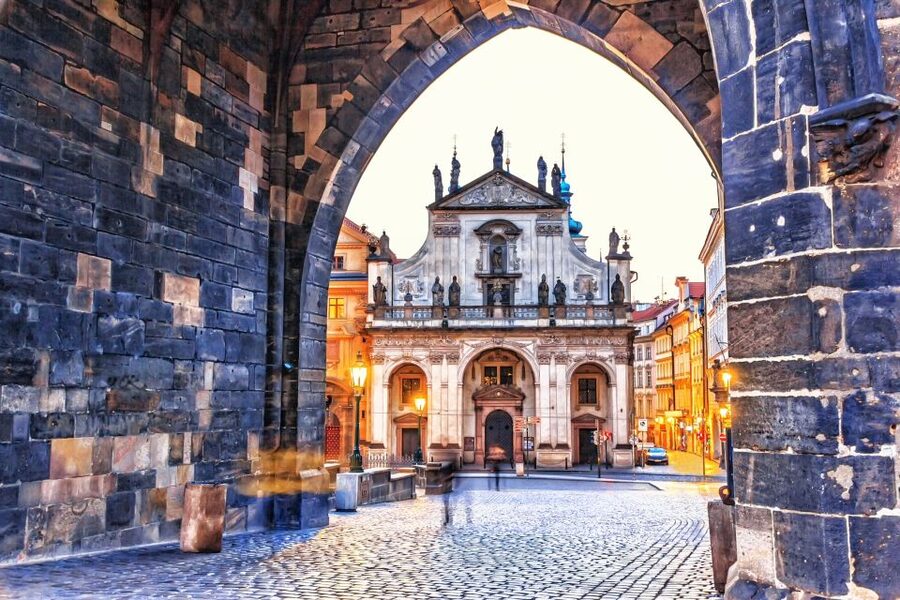
The church is part of the Klementinum, a large historic complex in central Prague. St. Salvator serves as its main church and gives the concert a sense of occasion without requiring a full evening at the opera. You can spend an hour listening, then step back into central Prague for dinner or an evening walk.
I also like the program’s broad appeal. It does not assume that you know the difference between Vivaldi and Dvořák. Most people will recognize at least several melodies, and the familiar music makes this a comfortable first classical concert.
The Royal Czech Orchestra performs alongside three named Prague soloists: Eva Müllerová, Robert Hugo, and Viktor Mazáček. The exact balance of performers depends on the piece, but the program brings together orchestral strings, organ, and vocal solo work. That changing texture keeps the concert moving.
Other days out in Prague people book alongside this one:
- Prague: 50-Minute Sightseeing Evening Cruise
★ 4.2 · 33,780 reviews - Prague: Medieval Dinner with Unlimited Drinks
★ 4.4 · 19,847 reviews - Prague: Castle Tour with Local Guide and Entry Ticket
★ 4.6 · 10,422 reviews
Inside St. Salvator Church
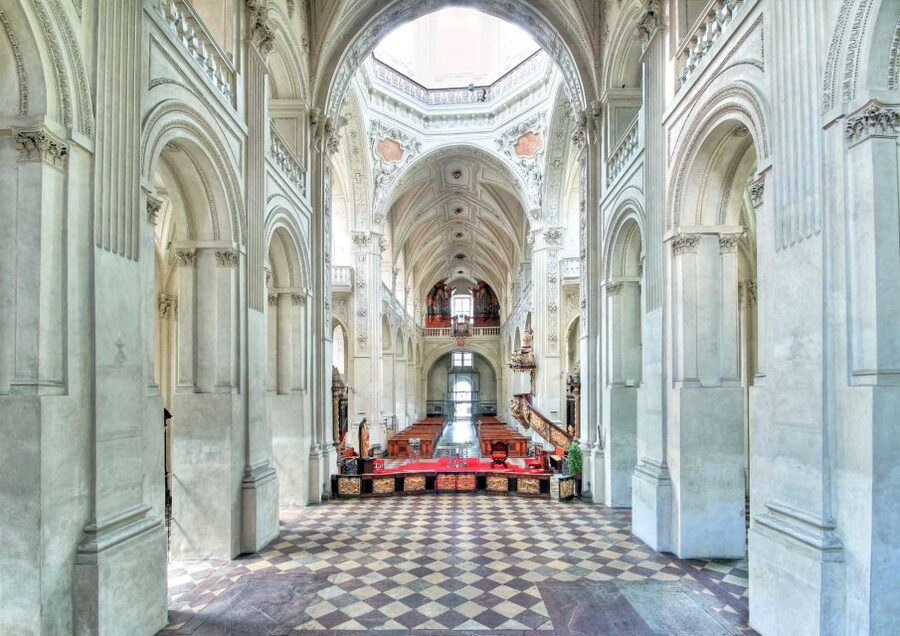
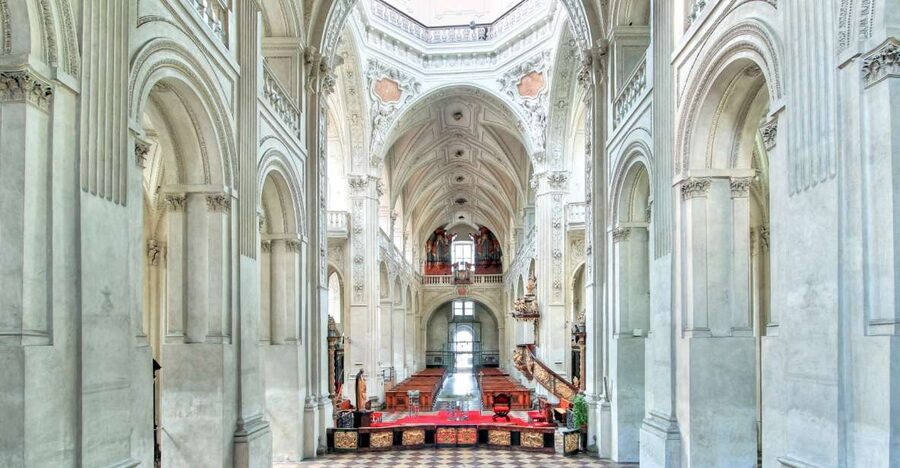
The church is the real visual anchor. You enter a historic religious building rather than a purpose-built concert venue, so the experience feels more connected to Prague itself. The architecture, high interior, and decorative details give your eyes plenty to study while the musicians prepare.
The acoustics are equally important. Church interiors allow sound to linger, and that helps the organ and larger orchestral passages feel especially forceful. Bach’s Toccata and Fugue in D minor is the obvious example. The organ can fill the room in a way that a smaller concert hall simply cannot match.
That echo also changes the character of the strings. Vivaldi’s fast passages can sound bright and sweeping, while slower vocal pieces gain a soft halo around the notes. The effect is atmospheric, though not always perfectly crisp. If you want highly separated, studio-like sound, a church is not the place. If you want scale and mood, it is a fine choice.
The setting has practical limits. The pews are traditional church seating, not padded theater chairs. Several audience members found them uncomfortable by the final part of the hour. That is not a reason to avoid the concert, but it is worth knowing if you have trouble sitting on hard benches.
The program, piece by piece
The concert opens with J. F. Wade’s Adeste Fideles, better known in English as O Come, All Ye Faithful. It sets a ceremonial tone and fits the church naturally, especially during the Christmas season.
Vivaldi’s Four Seasons is the headline performance, but the program features Spring and Winter rather than the full four-concerto cycle. Spring offers the familiar bright energy people expect, with quick string movement and a sense of lift. Winter is more dramatic, with sharper contrasts and a colder mood.
The selection works well in a one-hour format. You get the best-known parts of Vivaldi without sitting through the entire cycle. If you are specifically hoping to hear all four seasons from beginning to end, check the exact program before booking, since this version lists Spring and Winter only.
Antonín Dvořák’s Fuga in G minor shifts the mood toward a more formal and intricate piece. It may be less familiar than Vivaldi, but it gives the musicians a chance to show control beyond famous melodies.
The Handel selection comes from Messiah and includes a famous aria. This is where the vocal soloist becomes a major part of the evening. The soprano has earned especially strong praise for power, pitch, and clarity, making this more than an instrumental concert with a short vocal interruption.
Bach’s Toccata and Fugue in D minor is often the crowd favorite. The organ gives the piece weight and drama, and the church’s acoustic makes each large chord feel physical. If you have never heard this work performed on a full church organ, this may be the most memorable part of the program.
Schubert’s Ave Maria provides a calmer pause. In the church, the piece can feel intimate despite the large room, particularly when the vocal line is allowed to float above the accompaniment.
Smetana’s The Moldau, or Vltava, brings a distinct Czech note to the program. It is a natural choice in Prague, since the music is closely tied to the Vltava River and Czech national identity. Even if you do not know the title, the flowing melody is easy to follow.
Beethoven’s Symphony No. 5, listed with the famous Destiny theme and Allegro movement, supplies another burst of familiar drama. The concert does not present the full symphony, so think of this as a concentrated excerpt rather than a complete Beethoven performance.
The closing stretch includes Czech and European Christmas carols, followed by Franz Xaver Gruber’s Silent Night. During the holiday period, this gives the concert a warm finish. Outside December, the program may feel more seasonal than expected, so check the date and advertised music if Christmas songs are not your preference.
How the one-hour schedule feels
One hour is just about right for this format. Classical concerts can feel intimidating if you do not attend them often, and a short program removes much of that pressure. You can enjoy the music without committing an entire evening or worrying about a late finish.
The timing also suits Prague’s dinner rhythm. Several scheduled starting times may be available, so check the date carefully. A concert before dinner gives you a pleasant transition from sightseeing to evening plans.
The short length does mean the music is presented as a selection of highlights. You get Vivaldi, Bach, Beethoven, Dvořák, Smetana, Schubert, Handel, and Christmas songs in quick succession. That variety is entertaining, but it does not allow long development of any single work.
I would choose this concert for atmosphere and access, not for a deep study of one composer. It is a sampler with strong visual and acoustic appeal.
A completely different kind of day out in Prague:
- Prague Castle 2.5-Hour Tour Including Admission Ticket
★ 4.7 · 8,927 reviews - Prague: Oldtown, Medieval Underground & Dungeon History Tour
★ 4.2 · 8,244 reviews - Prague: Vltava River Night Cruise with Buffet
★ 4.3 · 7,338 reviews - Prague: Panoramic Vltava River Cruise
★ 4.1 · 7,311 reviews
Seats, ticket exchange, and arrival advice
Your online reservation is not the final seat assignment. You need to visit the box office a few steps to the right of the church entrance and exchange your ticket for an assigned seat. Arrive about 30 minutes early, since the quality of your view can depend on when you complete this step.
Doors open 15 minutes before the performance. Arriving early matters most if you bought a front, middle, or back section and want the best available place within that section. Several audience members found that early arrival helped them sit nearer the center aisle or closer to the front.
Front seating can improve your view of the first violinist, vocalist, and other performers. It may also make the performance feel more personal. But the first row is not perfect for everyone. A seat near the edge can give you a partly blocked view, especially if a performer or concert leader is directly in front of you.
Back seating still works well for sound. The church’s acoustics carry the music across the room, and people seated farther back have still found the concert powerful. If you care more about the overall sound than watching hands and facial expressions, a rear section can offer good value.
There is no official dress code. You can dress comfortably, and smart casual clothing is perfectly reasonable. For a winter performance, bring a warm layer. The church has sometimes felt distinctly cold, though warming pads on the benches have been provided at some performances.
Also plan ahead for facilities. There are no toilets inside the venue according to audience feedback, so use facilities before you arrive. That small detail can matter during an evening out.
Is $34 a fair price?
At $34 per person, I consider this a good value if you want live classical music in a major Prague landmark. You are paying for the performance and the setting, not just a seat in a room. The printed concert program is included, and the one-hour length keeps the price manageable for a short cultural stop.
The value is strongest for first-time concertgoers. You hear famous works, a soprano, an organist, and an orchestra in one compact program. You do not need prior knowledge to enjoy it, and you can recognize much of the music as it unfolds.
For serious classical listeners, the calculation is a little different. Since the program uses selected movements and excerpts rather than complete major works, it may not replace a full symphony or opera. You are buying a polished introduction and a beautiful environment, not an all-night concert season experience.
Paying more for a front section can make sense if the visual side matters to you. Still, the sound reaches the rear of the church, so a back or middle ticket can be the sensible choice for a budget-conscious evening.
Who should book this experience?
I would recommend it to couples, solo visitors, families with older children, and anyone who wants a low-effort cultural evening in Prague. It is especially friendly to people who have never attended a classical concert. The recognizable music and one-hour schedule make it easy to enjoy without preparation.
It also suits a busy sightseeing plan. You can fit it between an afternoon in the Klementinum area and dinner. The central location means you finish in the middle of Prague rather than far out of town.
This may not be ideal for very young children, since unaccompanied minors are not allowed and the music requires quiet attention. The supplied information does not specify an age limit for children with an adult, so check the booking conditions if you are bringing a child.
You should also think twice if hard pews or cool interiors are a serious concern. Bring a coat and, if useful, a small cushion. The music is the main event, but comfort affects how much you enjoy it.
Tips for getting the most from the evening
- Arrive 30 minutes early for the box office exchange and seat assignment.
- Ask for a central position within your purchased section if possible.
- Choose a front section if you want a closer view of the musicians and vocalist.
- Bring a warm layer in autumn and winter, since the church can be cold.
- Use a restroom before arrival because there are no toilets inside the venue.
- Read the printed program so you can follow the changes from Vivaldi to Bach, Czech composers, and seasonal music.
- Expect a one-hour selection, not the complete Four Seasons or complete Beethoven Fifth Symphony.
- Keep filming and conversation to a minimum so the people behind you can see and listen.
Should you book it?
Book this concert if you want familiar classical music in a memorable Prague church without giving up a whole evening. The Royal Czech Orchestra, strong soloists, dramatic organ, and excellent acoustics create a satisfying experience for the price.
I would be more cautious only if you require plush seating, indoor warmth, or complete performances of every work named. For everyone else, the combination is persuasive: a central landmark, a carefully varied hour, and music that ranges from Vivaldi’s bright strings to Bach’s thunderous organ. Reserve early enough to handle the ticket exchange, choose your seating section with care, and let St. Salvator provide the atmosphere.
FAQ
How long does the concert last?
The concert lasts one hour.
How much does admission cost?
The listed price is $34 per person.
Where does the concert take place?
It takes place at St. Salvator Church, the main church of the Klementinum complex in central Prague.
Which Vivaldi works are performed?
The program lists Spring and Winter from Vivaldi’s Four Seasons.
Is the full Four Seasons performed?
No. The advertised program lists Spring and Winter, not all four concertos.
What other music is included?
The program includes Adeste Fideles, Dvořák’s Fuga in G minor, an aria from Handel’s Messiah, Bach’s Toccata and Fugue in D minor, Schubert’s Ave Maria, Smetana’s The Moldau, Beethoven’s Fifth Symphony, Czech and European Christmas carols, and Silent Night.
Is there a dress code?
There is no official dress code.
When should I arrive?
Arrive about 30 minutes early to exchange your ticket at the box office and receive your assigned seat. The doors open 15 minutes before the concert.
Can I cancel my booking?
You can cancel up to 24 hours in advance for a full refund. A reserve now and pay later option is also available.
Just added around Prague
- Private Day trip from Prague to Kutná Hora★ 5.0 · 3 reviews
- Private 4-hour City Tour of Prague with driver & official guide w/ Hotel pick up★ 5.0 · 3 reviews
- PRAGUE AIRSOFT SHOOTING GAMES★ 4.7 · 3 reviews
- Glass blowing in Prague★ 4.6 · 3 reviews
- Prague to Karlovy Vary Private Transfer★ 4.5 · 3 reviews
- Disney’s Tarzan Musical★ 5.0 · 3 reviews
- Prague Private Tour★ 5.0 · 3 reviews
- Private Bohemian Glass and Czech Crystal Tour with lunch included★ 5.0 · 3 reviews