
REVIEW · OLD TOWN & JEWISH QUARTER TOURS
Prague: 2-Hour Old Town and Jewish Ghetto Walking Tour
Prague reveals itself one story at a time. This two-hour walk links the city’s grandest Old Town sights with the surviving synagogues of Josefov, giving you a useful first look at Czech history, architecture, religion, and daily life. I especially like the route’s strong mix of Christian and Jewish Prague, and the way it includes famous sights such as the Astronomical Clock without ignoring lesser-known places like the House of the Black Madonna.
I also like the small maximum group of 15 people, which gives the guide a fair chance to answer questions. Guides including Allen, Krystoff, Radek, Dana, Martin, and Allan have been praised for clear explanations, humor, and enthusiasm. The main limitation is time: two hours is enough for an introduction, but not enough for interior visits or a detailed study of every synagogue.
In This Review
- Key things to know before you book
- Starting behind Týn Cathedral in Old Town
- Old Town Square, Jan Hus, and the Astronomical Clock
- Charles University and Prague’s culture of learning
- Estates Theatre and the city’s performance tradition
- The Black Madonna, St. James, and architectural contrasts
- Entering Josefov, Prague’s former Jewish Ghetto
- Franz Kafka’s Prague
- What the guide adds to the experience
- Is $23 good value for two hours?
- Timing, group size, and practical planning
- Who should take this Prague walking tour?
- Should you book it?
- FAQ
- How long is the Prague Old Town and Jewish Ghetto Walking Tour?
- Where does the tour start?
- Where does the tour finish?
- Which language is the tour offered in?
- Are entrance tickets included?
- How large is the group?
Key things to know before you book
- The route covers a lot: You see Old Town Square, Charles University, Estates Theatre, several churches, Franz Kafka sites, and the main Josefov synagogues.
- It is an outdoor sightseeing walk: Interior visits are not included, so you will view the synagogues and monuments from outside.
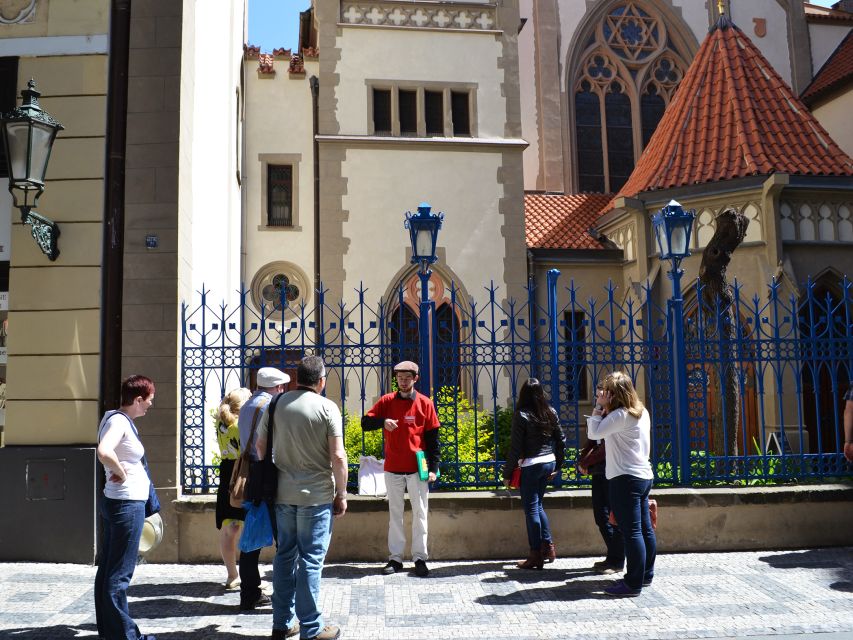
- The meeting point is precise: Go behind Týn Cathedral and find the large wooden door at building number 7, Týnská 627/7.
- The Jewish Quarter gives the tour extra weight: Maisel, Klausen, Old-New, and Spanish Synagogues help explain Prague’s Jewish past and the former ghetto’s cramped conditions.
- It suits first-time visitors best: One past participant described it as a useful introduction to Prague, while repeat visitors may prefer a more specialized tour.
- The price is modest for a guided orientation: At $23 per person, you are paying mainly for interpretation, route planning, and local context rather than admissions.
Starting behind Týn Cathedral in Old Town
The walk begins at Týnská 627/7, behind the Church of Our Lady before Týn. Look for the large wooden door marked number 7. This is worth locating before the start time, since the narrow Old Town lanes can be confusing and the meeting point is not simply the middle of Old Town Square.
The setting immediately puts you in Prague’s historic center. From here, your guide leads you toward the monuments that shaped the city’s public life. The route is compact, but the streets are packed with buildings from different centuries, so you will want comfortable shoes and enough attention for uneven paving and frequent stops.
The guide is the main reason to choose this walk instead of simply following a map. The sights are close together, but their stories are not obvious. A good explanation connects a church façade, a university courtyard, a theater, and a monument into a broader account of Bohemia and the Czech Republic.
More Old Town and Jewish Quarter walks:
- Prague: Old Town Hall Tower Entry Ticket
★ 4.5 · 6,749 reviews - Prague: 3-Hour Walking Tour of Old Town & Prague Castle
★ 4.7 · 5,696 reviews - Prague: 3-Hour Old Town and Prague Castle Tour in German
★ 4.8 · 5,671 reviews
Old Town Square, Jan Hus, and the Astronomical Clock
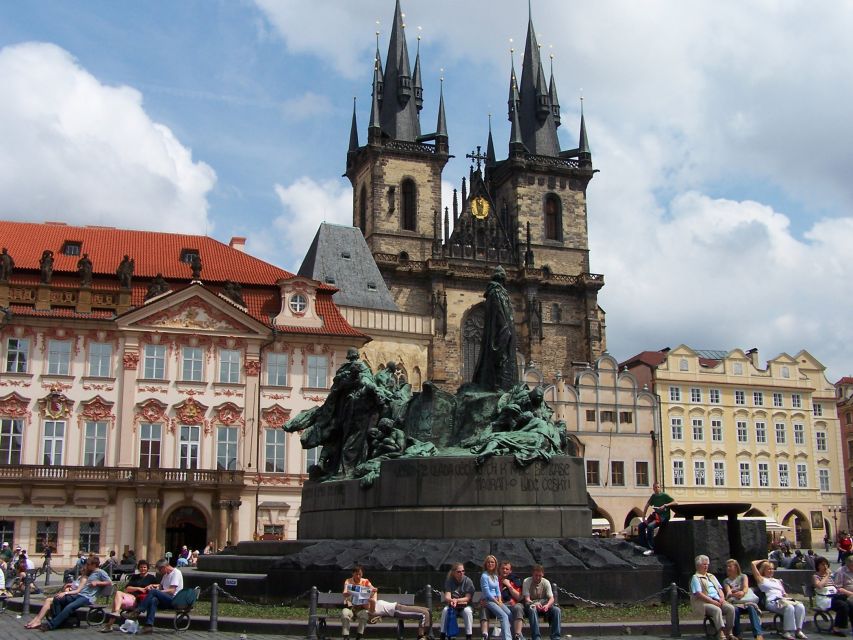
The first major stretch centers on Old Town Square, Prague’s great civic stage. Here you see the Jan Hus Monument and the Prague Astronomical Clock, two sights that can look decorative or familiar until someone explains what they mean.
Jan Hus is one of the key figures in Czech national memory. Your guide explains the man represented by the large monument and why his religious ideas mattered to Bohemia. This is one of the better stops for understanding that Czech history was shaped not only by kings and emperors, but also by arguments over faith, reform, education, and political power.
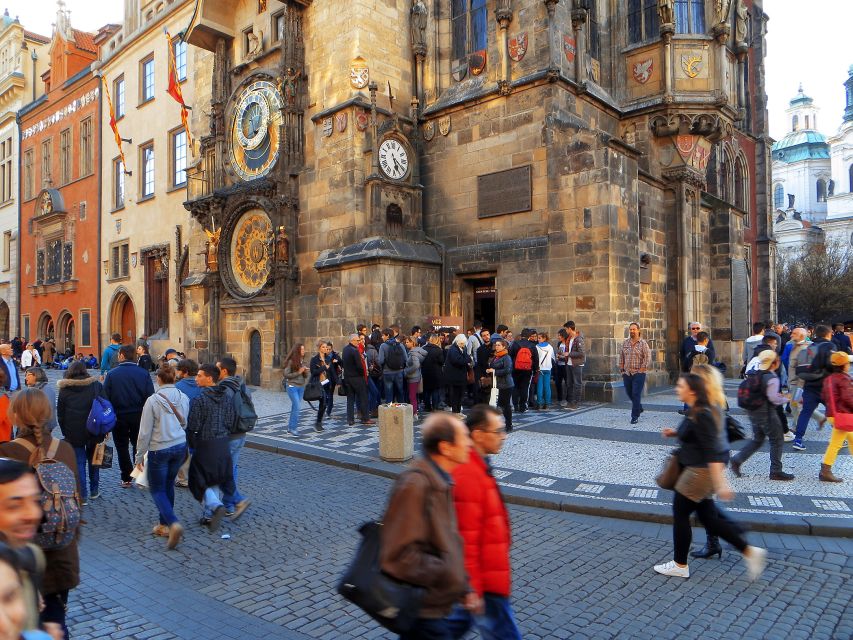
The Astronomical Clock receives a more focused explanation than you usually get from simply waiting for its hourly show. You learn about its curious symbols and the meanings built into the clock’s design. The value here is interpretive: the clock is easy to photograph, but much harder to read without help.
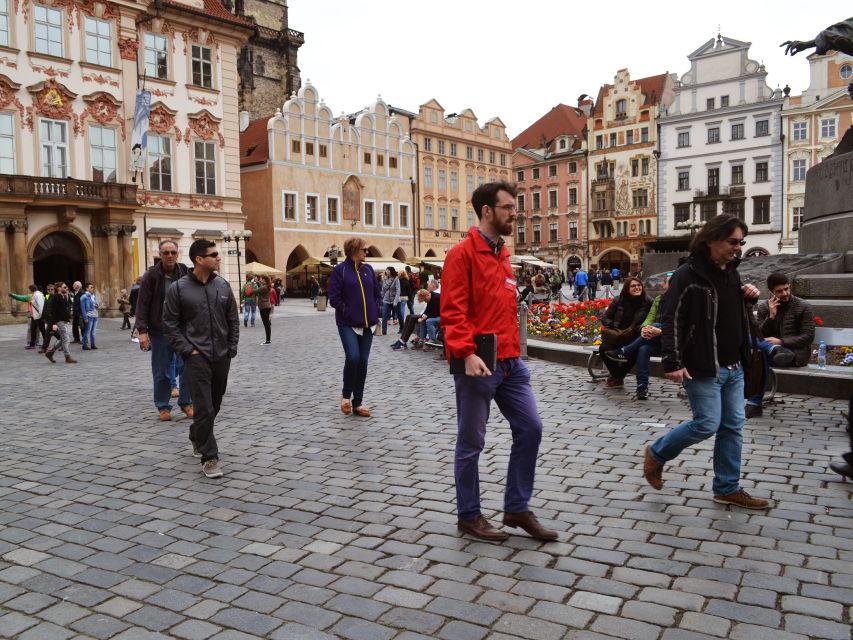
You should expect the square to be the most exposed and popular part of the route. It can feel crowded, and the guide may need to position the group carefully so everyone can hear. Still, this is an essential introduction to Prague, and the tour gives the square a useful historical frame instead of treating it as a photo stop.
Charles University and Prague’s culture of learning
The route continues past the Karolinum complex, connected with Charles University. The buildings date from the 15th century and point to Prague’s role as a center of education in Central Europe.
This stop adds welcome depth to the usual Old Town sightseeing circuit. Prague is often presented through castles, bridges, and churches, but education was just as important to the city’s development. Your guide places the university in the story of Bohemia and explains why it matters to Czech culture.
You will not be taking a university tour or entering every building. Think of this as a street-level explanation of how the city’s intellectual life shaped its identity. If you enjoy connecting architecture with politics and education, this part of the walk earns its place.
Estates Theatre and the city’s performance tradition
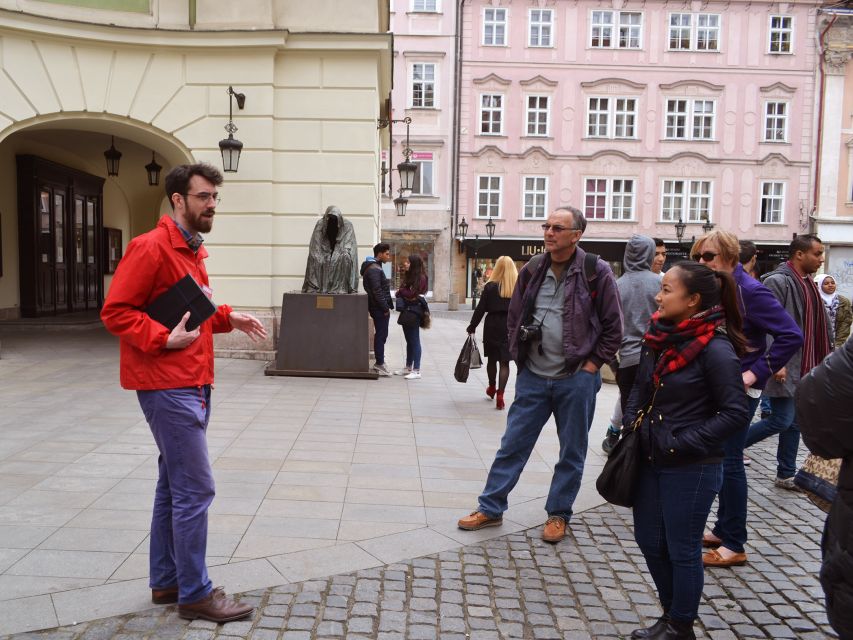
At the Estates Theatre, you pause to admire the façade of the 18th-century theater. The building belongs to Prague’s historic theater district and adds a cultural stop between the university and the Jewish Quarter.
The tour does not include an interior performance or theater admission. Its purpose is to show you the exterior and explain the place’s role in Prague’s cultural life. That distinction matters: if you want to see inside, you will need a separate plan.
I like this stop because it breaks up the monument-heavy rhythm of Old Town Square. It shows that Prague’s identity was also formed in theaters and public institutions, not only in religious buildings and royal spaces.
More walking tours:
- Prague: Ghost Walking Tour Where Legends Come To Life
★ 4.4 · 5,253 reviews - Prague: Jewish Quarter Walking Tour with Admission Tickets
★ 4.7 · 3,729 reviews - Prague Guided Walking Tour and Cruise with Authentic Czech Lunch
★ 5.0 · 3,627 reviews - Prague: Old Town and Jewish Quarter Guided Walking Tour
★ 4.6 · 2,847 reviews
The Black Madonna, St. James, and architectural contrasts
The House of the Black Madonna gives you a quick look at Prague’s modernist architecture. Its name comes from the black Madonna sculpture on the building, and its unusual design feels different from the Gothic and Baroque façades nearby.
This is a good example of the tour’s wider approach. You are not only taken to the most famous postcard views. You also get a short look at how Prague’s architecture changed over time, even within a small central area.
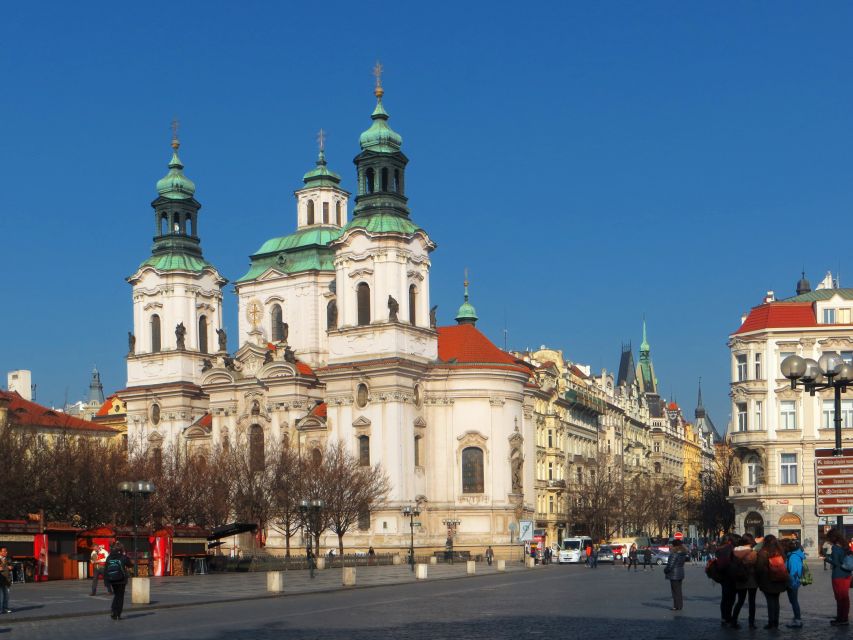
The Church of St. James follows as another important city church. From the outside, it adds another layer to Prague’s religious architecture. Your guide explains the building’s place in the city rather than rushing past it as background scenery.
These stops are brief, so do not expect a full architectural lecture. Their value comes from comparison. After seeing them alongside the Old Town churches and civic buildings, you get a clearer sense of how many periods share the same few streets.
Entering Josefov, Prague’s former Jewish Ghetto
The strongest section for many people is the walk through Josefov, the tiny former Jewish Ghetto surrounded by Old Town. Here the guide explains the cramped conditions that once defined the quarter and discusses how much of the area was destroyed in the early 20th century.
That context is important. Modern Josefov can look orderly and spacious, but its present appearance does not easily reveal the pressure and restrictions that shaped Jewish life there. The guide helps you understand the difference between the quarter’s surviving religious buildings and the urban fabric that disappeared.
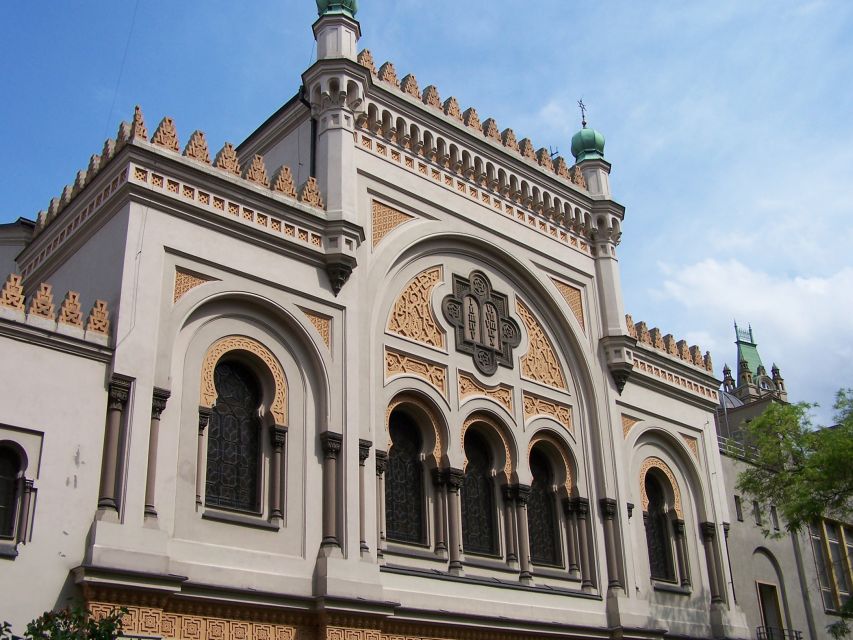
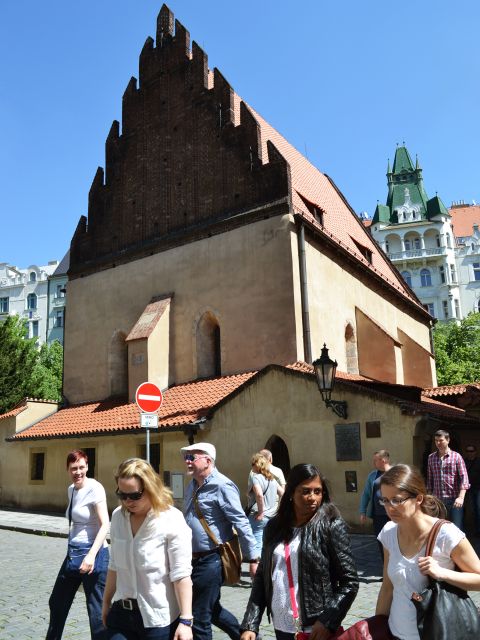
The route includes the Maisel Synagogue, Old Jewish Cemetery, Klausen Synagogue, Old-New Synagogue, and Spanish Synagogue. You see these sites from outside, since interior visits are not part of the $23 tour. Still, the collection of buildings makes the history tangible, particularly when the guide explains how the synagogues served different roles within the community.
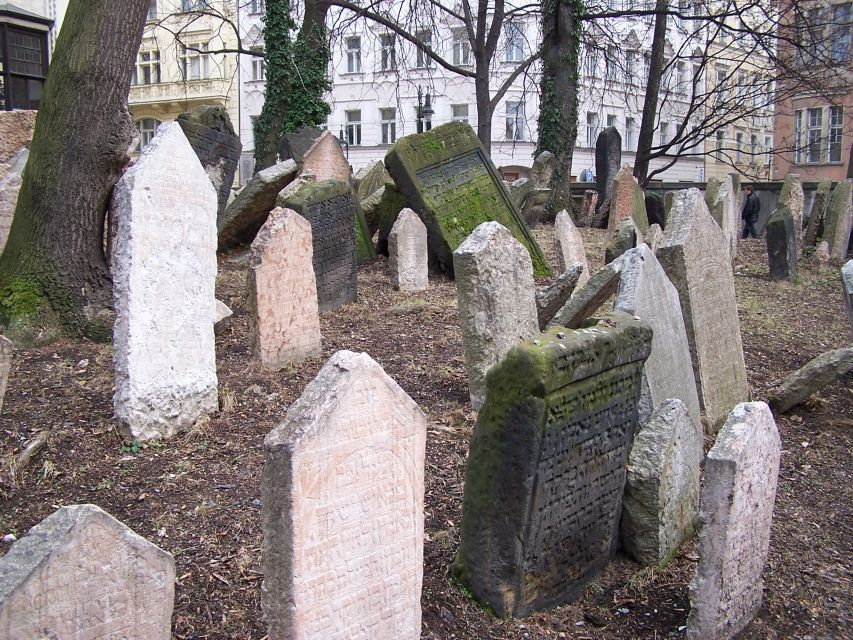
The Old Jewish Cemetery is especially significant because it offers a visible reminder of the limited space available to the Jewish population. You will not be entering the cemetery on this walk, but seeing it as part of the quarter helps you understand the area’s density and long development.
The Old-New Synagogue is another major stop, with a name that sounds almost comic until you learn how old the building is. The guide may also discuss Prague’s famous Golem traditions, which are closely linked with the city’s Jewish folklore. Treat those stories as part of Prague’s cultural memory, alongside the documented history.
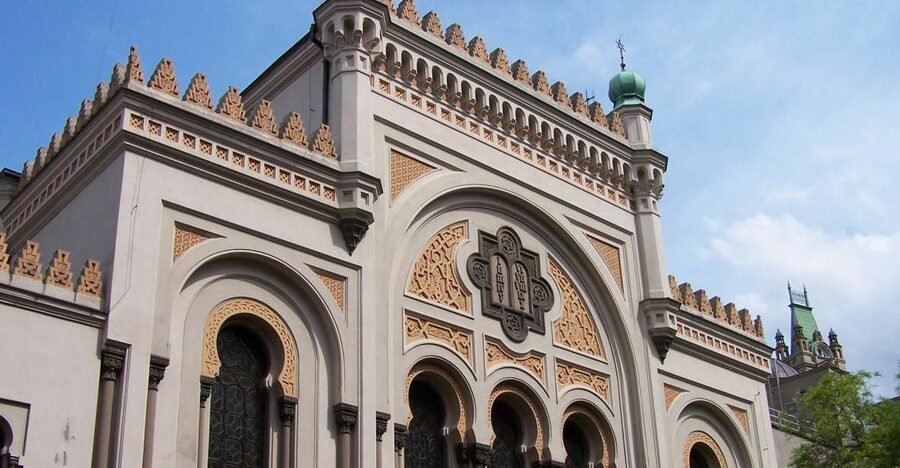
The Spanish Synagogue brings a different architectural note to the route. Its ornate exterior helps show the variety within Josefov, rather than presenting the quarter as one uniform style. Again, you are looking from outside, but the explanation gives the façade a purpose beyond decoration.
Franz Kafka’s Prague
The walk includes both Franz Kafka’s birthplace and the Franz Kafka Monument. These stops help connect Prague’s streets with one of its best-known writers.
Kafka’s birthplace is a particularly useful detail because it turns a literary figure into a local one. You are not simply hearing that Kafka lived in Prague. You are seeing the place associated with his beginnings within the same compact district as the synagogues and Old Town monuments.
The monument offers a second point of reference and a chance to discuss Kafka’s connection to the city. The tour does not promise a literary seminar, so this section remains part of the larger city introduction. It is ideal if you want a little culture added to your sightseeing without booking a separate Kafka-focused walk.
What the guide adds to the experience
The best version of this tour depends heavily on the guide. Allen has been praised for explaining roughly 1,000 years of Prague’s past, including the Astronomical Clock and the Jewish Quarter. Krystoff is described as friendly and very well informed, while Allan is noted for enthusiasm.
Radek has led particularly personal walks, including one that became a private experience for the participants. His approach combined architecture, history, funny stories, and practical restaurant suggestions. Dana was praised for clear explanations, and Martin for using a notepad with maps, photographs, and images to make difficult points easier to understand.
These details suggest a useful range of guiding styles. You may get a guide who focuses on dates and political changes, or one who leans more toward stories, architecture, and humor. The common thread is strong command of Prague’s past and an effort to make the city understandable rather than merely impressive.
The English-language format is also worth noting. The tour is offered in English, and the high rating of 4.9 from 78 ratings points to consistently strong satisfaction. Still, a two-hour walk cannot cover every detail, and a guide’s pace may feel quick if you want long pauses for photographs.
Is $23 good value for two hours?
At $23 per person, this is a fair price for a compact guided introduction to central Prague. You are not paying for entrance tickets, hotel pickup, or private transportation. You are paying for a planned route and the explanations that turn a series of famous buildings into a connected story.
The value is strongest on a first visit. In two hours, you can get your bearings, learn the basic outline of Bohemian and Czech history, and identify places you may want to revisit. The Jewish Quarter section adds subject matter that can be difficult to understand from guidebook captions alone.
The price is less attractive if you already know Prague’s Old Town well or intend to visit the interiors independently. In that case, the walk may repeat familiar views, and you might prefer a specialist tour focused only on Jewish history, architecture, or Kafka.
Because admissions are not included, budget separately if you want to enter the synagogues, cemetery, or other historic sites. This walking tour works best as an outdoor introduction, not as a complete Josefov museum visit.
Timing, group size, and practical planning
The tour lasts two hours and has a maximum group size of 15. That is small enough for a more personal feel, though it is not the same as having a private guide. A private group option is available if you want more control over the pace and discussion.
There is no hotel pickup, so plan to reach Týnská 627/7 on your own. Start behind Týn Cathedral and find the large wooden door at number 7. Since the tour finishes at Staroměstské náměstí, you end in Old Town Square, a convenient place to continue sightseeing.
Wear shoes suited to a city walk and allow time to stop, listen, and look upward. Prague’s central streets reward slow observation, but the tour covers many places in only 120 minutes. If photography matters to you, take quick shots and return later for longer visits.
You can cancel up to 24 hours before the start for a full refund, and the reserve-now, pay-later option keeps your plans flexible. Availability and starting times vary, so check the schedule before building the rest of your day around it.
Who should take this Prague walking tour?
I would recommend it most to first-time visitors who want a clear introduction without spending half a day on a large bus tour. It also suits anyone who wants both Christian and Jewish history in one outing, rather than treating Josefov as a separate subject.
Families with older children may appreciate the short duration and variety of stops. The route includes clocks, churches, theaters, a university, cemeteries, synagogues, and Kafka, so the subject changes often enough to keep the walk from feeling like one long lecture.
History-minded visitors will get the most from the explanations of Jan Hus, Charles University, the former ghetto, and Czech identity. Food-focused visitors may also appreciate the practical restaurant suggestions that Allan has offered during tours, though restaurant advice is a bonus rather than a promised feature.
I would hesitate if you want extensive interior access, a slow photography walk, or specialist-level detail. The tour is designed to introduce Prague, not exhaust it. As one past participant put it, it works especially well as an accessible first look; if you already know the city, choose something more advanced.
Should you book it?
Book this tour if you have two hours, want a well-planned route, and prefer understanding Prague’s monuments rather than simply collecting photographs. The combination of Old Town Square, Jan Hus, the Astronomical Clock, Charles University, Kafka, and Josefov gives you a broad picture for $23.
Skip it if your priority is entering every synagogue or studying one subject in depth. For everyone else, it is a sensible first-day choice, especially with the small group limit, strong guide feedback, free cancellation up to 24 hours ahead, and the chance of a private group. Just arrive ready to walk, listen closely, and return later to the interiors that catch your interest.
FAQ
How long is the Prague Old Town and Jewish Ghetto Walking Tour?
The tour lasts two hours.
Where does the tour start?
It starts at Týnská 627/7. Once you are behind Týn Cathedral, look for the large wooden door of building number 7.
Where does the tour finish?
The walk finishes at Staroměstské náměstí, or Old Town Square.
Which language is the tour offered in?
The tour is offered in English with a live guide.
Are entrance tickets included?
No. Interior visits are not included, and the tour price includes the guide only.
How large is the group?
The group has a maximum of 15 people. A private group option is also available.
More 2-Hour Experiences
- Prague: Pub Crawl with 2-Hour Open Bar at Drunken Monkey
★ 3.9 · 670 reviews - Prague Boats 2-hour Lunch Cruise
★ 4.0 · 352 reviews - 2-Hour Old Town and Jewish Quarter Tour in Prague
★ 5.0 · 310 reviews - From Old Town: 2-Hour Prague Bus Tour with Top Sights
★ 4.2 · 219 reviews
Just added around Prague
- Private Day trip from Prague to Kutná Hora★ 5.0 · 3 reviews
- PRAGUE AIRSOFT SHOOTING GAMES★ 4.7 · 3 reviews
- Private 4-hour City Tour of Prague with driver & official guide w/ Hotel pick up★ 5.0 · 3 reviews
- Glass blowing in Prague★ 4.6 · 3 reviews
- Prague to Karlovy Vary Private Transfer★ 4.5 · 3 reviews
- Disney’s Tarzan Musical★ 5.0 · 3 reviews
- Prague Private Tour★ 5.0 · 3 reviews
- Private Bohemian Glass and Czech Crystal Tour with lunch included★ 5.0 · 3 reviews
Old Town & Jewish Quarter Tours, compared.
3-Hour Walking Tour of Old Town & Prague Castle
Read our review →
3-Hour Old Town and Prague Castle Tour in German
Read our review →
Jewish Quarter Walking Tour with Admission Tickets
Read our review →
Prague Old Town, Medieval Underground and Dungeon Historical Tour
Read our review →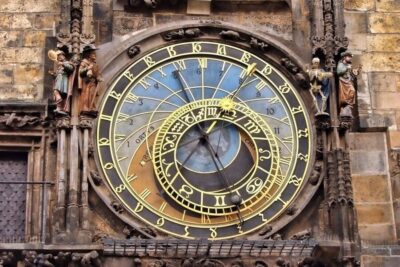
Old Town and Jewish Quarter Guided Tour in German
Read our review →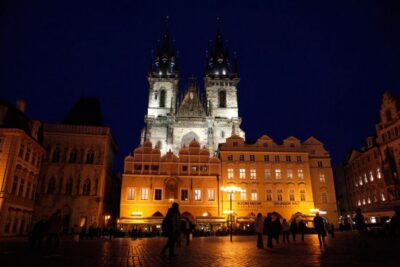
Ghosts and Legends of the Old Town Evening Tour
Read our review →
Old Town and Jewish Quarter Guided Walking Tour
Read our review →Browse the lists this tour appears in