
REVIEW · BEER & BREWERY TOURS
Pilsen: Brewery Museum Entrance with a Glass of Beer
Beer has a long memory. At Plzeň’s Brewery Museum, you follow Czech brewing from medieval drinking customs to early 20th-century pubs, all inside a preserved 15th-century house. I like the compact setting and the chance to see real brewing spaces rather than only polished displays. I also like that the ticket includes a 0.3-liter Pilsner Urquell, though the audio guide may take a little effort to activate.
The museum is a good match for anyone already visiting Plzeň, especially if you want more context before or after seeing the famous Pilsner Urquell brewery. At about $7 per person, the admission is easy to justify, but this is not an all-day attraction in the usual sense. The ticket remains valid for one day, giving you flexibility, yet the visit itself is best treated as a focused historical stop.
In This Review
- Key Points Before You Go
- What the $7 Admission Really Buys You
- Starting Inside a 15th-Century House
- Medieval Beer, Reed Drinking, and Underground Cellars
- The Late Gothic Malt House
- What Czech Pubs Looked Like in the Early 1900s
- The Pilsner Urquell Tasting at the End
- Using SmartGuide in English or German
- Timing, Location, and Access
- Who Will Enjoy This Museum Most
- Is the Brewery Museum Worth Booking?
- FAQ
- Where is the Brewery Museum located?
- How much does admission cost?
- How long is the ticket valid?
- Is the beer tasting included for visitors under 18?
- Where can I redeem the beer voucher?
- Is an English tour available?
- Is the museum suitable for wheelchair users?
Key Points Before You Go
- A preserved 15th-century brewing house: The museum occupies an original building rather than a modern exhibition hall.
- Medieval cellars beneath the house: You can see underground spaces connected with brewing and beer storage.
- A late Gothic malt house: This area shows where grain was steeped and allowed to germinate.
- Old Czech pub interiors: The museum includes pub settings from the beginning of the 20th century.
- A 0.3-liter Pilsner Urquell included: Visitors aged 18 and over receive a voucher after the tour.
- SmartGuide adds language help: Foreign visitors can use the application in English or German by scanning a QR code.
What the $7 Admission Really Buys You
The price is one of this experience’s strongest points. For roughly $7, you get museum admission plus a tasting voucher for a small glass of Pilsner Urquell. That makes the cost feel less like an entrance fee and more like a modest history lesson with a local drink at the end.
You should keep the scale in mind. The museum is not presented as a giant collection that will occupy your entire day. It is a compact, specialized museum focused on beer, brewing, pubs, and the spaces that supported them. If you are looking for a major cultural attraction with many galleries, this may feel brief.
For beer fans, though, the value is clear. You are not only drinking a famous Czech lager. You are seeing the places and tools connected to the older customs that made beer part of daily life. The tasting gives the visit a practical finish, rather than leaving you with labels and photographs but nothing to sample.
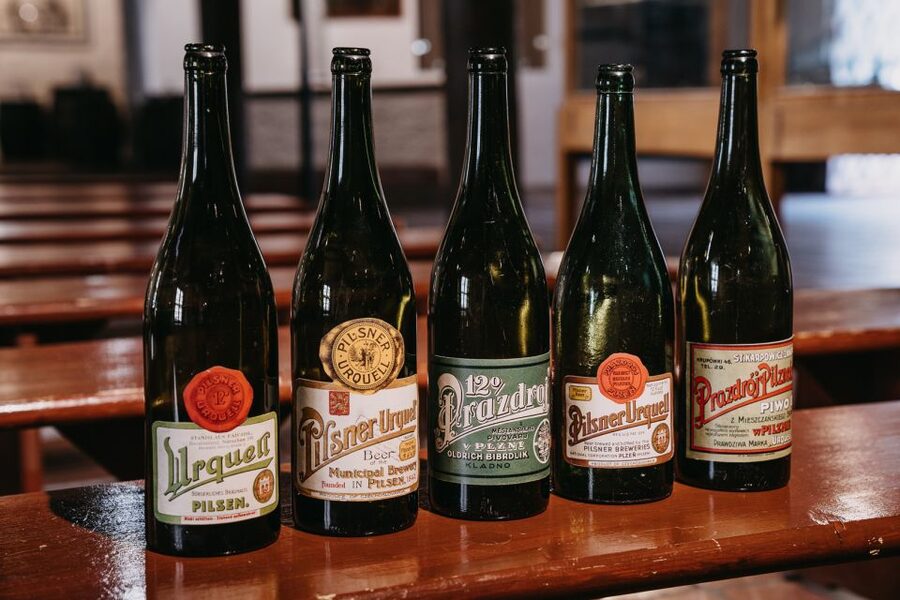
The voucher is not necessarily redeemed inside the museum. After the tour, you can exchange it for 0.30 liters of Pilsner Urquell at Na Spilce, U Salzmannů, or Na Parkánu. That detail matters because you should plan to visit one of those restaurants if you want the included beer. The tasting is not simply handed to you as you leave.
More beer and brewery tours:
- Prague: Pilsner Urquell Experience & Beer Tasting
★ 4.7 · 3,480 reviews - Pilsen: Pilsner Urquell Brewery Tour with Beer Tasting
★ 4.7 · 2,419 reviews - Prague Pilsner Urquell Experience with 3 Free Beer Tastings
★ 5.0 · 736 reviews
Starting Inside a 15th-Century House
The setting does much of the work. The Brewery Museum occupies a preserved 15th-century house that has retained its original form. That gives the visit a useful sense of place from the moment you enter.
Instead of learning about brewing only through modern panels, you move through a building that was itself part of the old urban beer world. Walls, cellars, and working areas help explain how brewing fit into everyday life. The museum’s subject is beer, but the building also tells you something about medieval town life.
The museum describes itself as a professional institution, yet the visit does not require specialist knowledge. You do not need to understand Czech brewing terms before arriving. The displays and signs provide a path through the subject, and English and German information is available through the SmartGuide application.
One practical point: the English audio guide has not always been easy to access. If you use it, scan the SmartGuide QR code at the ticket office with your ticket or e-ticket and follow the activation instructions. You may also find enough written information in English, Czech, and German to enjoy the museum without relying on audio.
That makes this a reasonable self-guided stop. You can move at your own pace, spend extra time in the cellars, and avoid being tied to a fixed tour group. The tradeoff is that you will not have a guide standing beside you to explain every object or answer questions as you go.
Medieval Beer, Reed Drinking, and Underground Cellars
The historical section reaches back to medieval times, when beer was drunk through a reed. That small detail gives you a useful sense of how different beer culture once was. The drink may be familiar, but the habits around it were not the same as those in a modern pub.
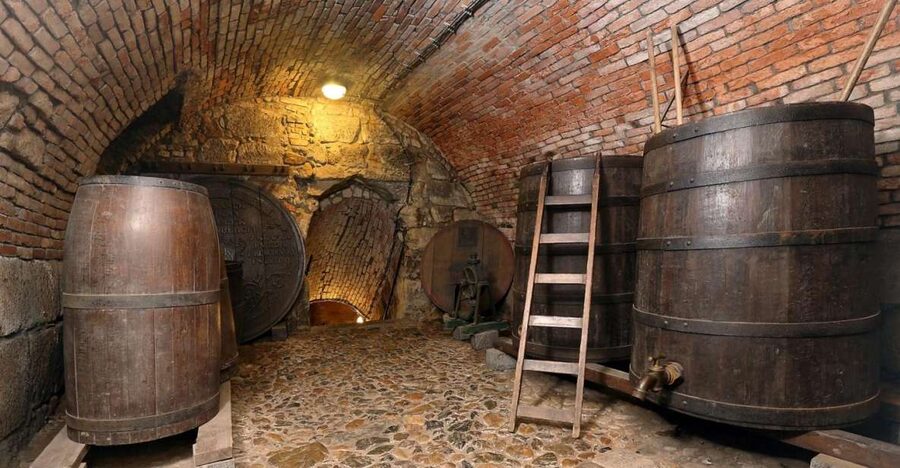
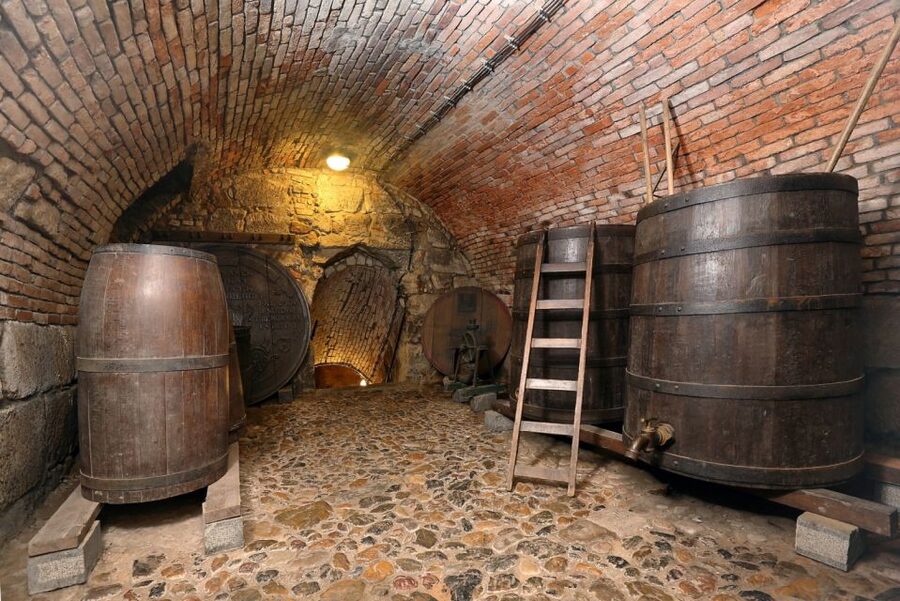
The medieval cellars are among the museum’s most appealing features. They lie beneath the 15th-century brewing house and show the practical side of the trade. These underground spaces were not built as decorative rooms for tourists. They were part of the working environment connected with brewing and storage.
I like this part because cellars make history easier to picture. A text panel can explain how beer was handled, but walking below the house gives the information physical weight. You can see how much brewing depended on solid buildings, cool storage areas, and careful handling long before industrial production changed the process.
The museum also points out the smallest jug in the world. The supplied information does not give its exact dimensions, so do not expect a large display devoted to measurements and technical detail. Still, it is the sort of odd object that gives a focused museum personality. Beer history is not only about large vats and famous breweries. It also includes the small vessels used to serve and drink it.
The Late Gothic Malt House
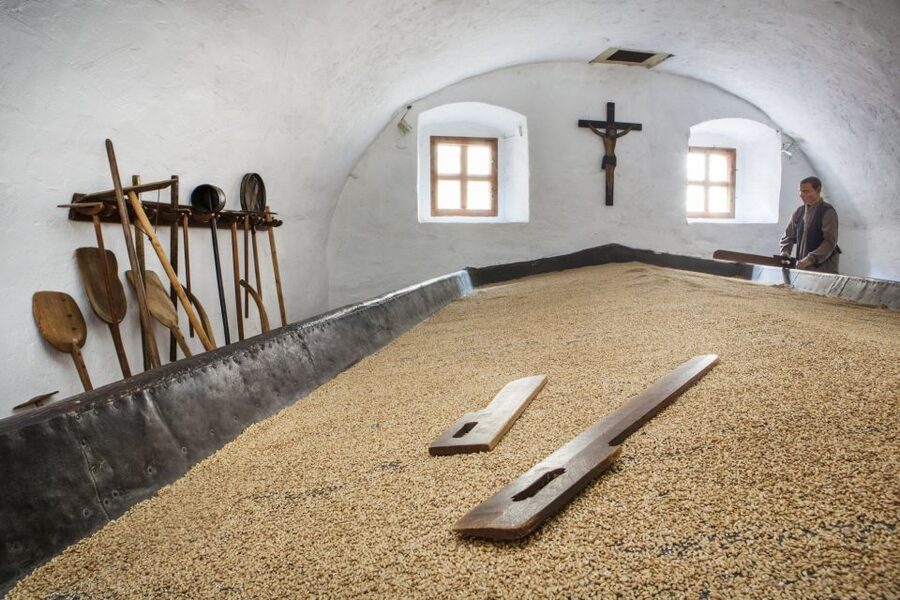
One of the more unusual parts of the visit is the late Gothic malt house. It formed part of a threshing yard, where grain steeping and germination took place. This is important because malt is one of the basic building blocks of beer, yet many brewery visits rush past this stage in favor of fermentation and bottling.
Here, you get a clearer view of what happened before the beer became liquid. Grain had to be prepared, and the malt house provided a dedicated space for that work. The Gothic structure also helps connect the brewing process to the architecture of the period.
You might find this section more interesting if you enjoy process and craftsmanship. If your main goal is simply to taste Pilsner Urquell, the malt house may feel more technical and less immediately exciting than the tasting at the end. I would still give it time, since it explains a part of brewing that is easy to overlook.
The museum’s strength is this link between ordinary material and finished drink. Grain, cellars, jugs, pubs, and serving customs all belong to the same story. That is more useful than treating beer as a brand alone.
More Pilsen and Pilsner Urquell trips:
- Prague Beer Pouring Class at Pilsner Urquell
★ 5.0 · 129 reviews - Pilsner Urquell Brewery Tour with Beer Tasting
★ 4.5 · 68 reviews - Pilsen: Old Town Gastronomy Tour
★ 4.5 · 51 reviews - Pilsen: Pub and Club Crawl
★ 4.9 · 41 reviews
What Czech Pubs Looked Like in the Early 1900s
The museum also includes authentic beer pubs from the beginning of the 20th century. These interiors shift the focus from production to consumption. You see how beer was served and what a drinking place looked like before modern restaurant design took over.
For many people, this will be the most immediately approachable portion of the museum. Pub interiors are easy to understand even if you are not a beer expert. They show the social side of brewing and remind you that beer has always been connected with conversation, meals, and local routines.
The older pub settings also give context to the final tasting. You are not simply handed a glass with no explanation. You have just seen how beer was served in earlier periods, so the drink becomes part of a longer Czech tradition.
Do not expect a full meal or a pub crawl as part of the museum entry. The included benefit is a 0.30-liter Pilsner Urquell voucher, redeemable at the three named restaurants. If you want more beer or food, those would be separate purchases.
The Pilsner Urquell Tasting at the End
The tasting is small but well judged. A 0.3-liter glass is enough to give you the flavor of Pilsner Urquell without turning a museum visit into a drinking session. It also keeps the admission price attractive for people who want one local sample rather than a full brewery tour.
You must be at least 18 to receive the voucher and alcohol. The museum follows Czech law and does not serve alcohol to anyone under 18. A school group containing one or more minors will not receive beer tasting vouchers, so families and organized youth groups should plan around that rule.
The three redemption options are Na Spilce, U Salzmannů, and Na Parkánu. The information provided does not specify opening hours, reservation requirements, or how long the voucher remains accepted, so check those practical details locally before setting your plans around the drink.
The beer is a fitting conclusion because Pilsner Urquell is closely tied to Plzeň’s brewing identity. Still, keep expectations sensible. This is a single included glass, not a guided tasting comparing several styles or serving methods.
Using SmartGuide in English or German
Foreign visitors can download the SmartGuide application for an English or German tour. To activate the content, scan the SmartGuide QR code supplied at the ticket office with your ticket or e-ticket.
The application can be useful if you want more explanation than the printed signs provide. It is especially helpful for understanding the sequence from grain preparation to brewing, storage, serving, and drinking. At the same time, audio access may not work perfectly on the first attempt.
I suggest arriving with your phone charged and having the application ready to download. If the audio guide proves awkward, do not let that spoil the visit. Written signs are available in English, Czech, and German, and one recent English-language visit found the signs sufficient without the audio.
This self-guided format suits independent visitors. You can pause, reread, and move on when you are ready. The downside is that the experience depends more on your own attention than a live guide would.
Timing, Location, and Access
The museum is at Veleslavínova 58/6 in Plzeň’s Vnitřní Město district, postal code 301 00. The meeting point is the Brewery Museum itself, so there is no separate departure point or transport arrangement to manage.
The ticket is valid for one day from first activation. That wording gives you some flexibility, but it does not mean you need to spread the visit over a full day. Most people will likely use it as one stop during time in central Plzeň, then redeem the beer voucher afterward.
Wheelchair users should note that the experience is not suitable for them. The historic house and underground cellars create access limits, and the provided information does not indicate an accessible alternative route.
Free cancellation is available up to 24 hours in advance, with a full refund. You can also reserve now and pay later, which is useful if your Plzeň plans are still shifting.
Who Will Enjoy This Museum Most
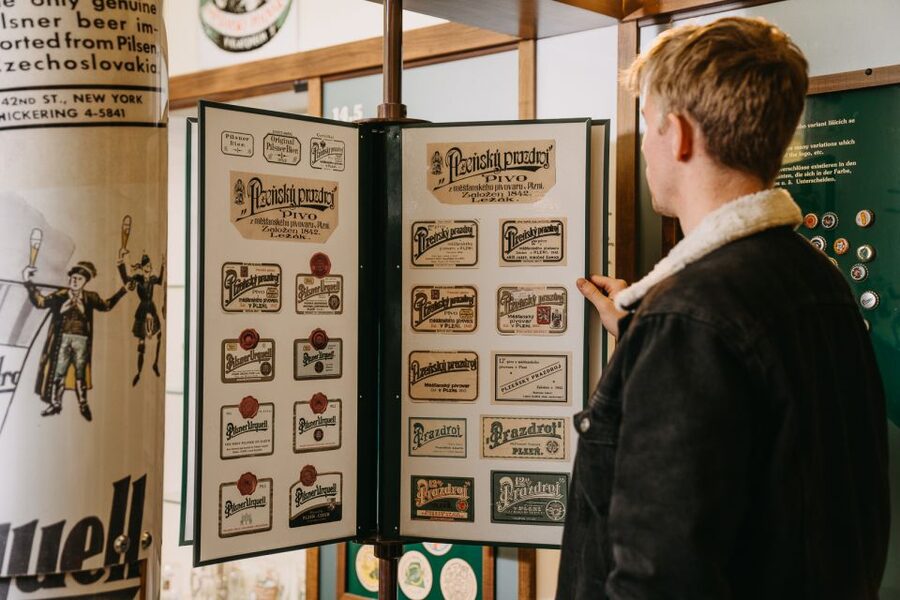
I would recommend the Brewery Museum to:
- Beer drinkers who want local context with their glass of Pilsner Urquell
- History fans interested in medieval buildings and working spaces
- Visitors who enjoy compact museums with a clear subject
- Independent visitors comfortable using written signs or a phone-based guide
- People spending time in Plzeň who want an easy cultural stop
It is less suitable if you want a large, highly interactive attraction, a long guided brewery tour, or a broad survey of Czech culture. It may also disappoint visitors expecting several beer samples. The included drink is one 0.3-liter glass, not a flight.
Families should pay attention to the alcohol rule. Children can visit the museum only within the stated conditions, but anyone under 18 will not receive or be served the beer tasting. School groups with minors do not receive the tasting vouchers.
Is the Brewery Museum Worth Booking?
For about $7, yes, if you are already in Plzeň and have an interest in beer, old buildings, or local history. The medieval cellars, late Gothic malt house, old pub interiors, and included Pilsner Urquell make this a good-value stop with more substance than its low price suggests.
Book it if you want a self-guided experience and do not mind handling the audio guide through SmartGuide. Skip it if you need step-free access, want a large museum, or expect an extended tasting session.
My practical choice would be to visit the museum earlier in your day, take time with the cellars and malt house, then use the voucher at one of the three named restaurants. That way, the beer is not an afterthought. It becomes the final piece of a short, well-focused look at how Plzeň made beer part of its identity.
FAQ
Where is the Brewery Museum located?
The museum is at Veleslavínova 58/6, Vnitřní Město, 301 00 Plzeň, Czech Republic. The meeting point is at the Brewery Museum.
How much does admission cost?
The listed price is $7 per person. Admission includes entry to the museum and a 0.3-liter Pilsner Urquell beer tasting for eligible visitors.
How long is the ticket valid?
The ticket is valid for one day from first activation.
Is the beer tasting included for visitors under 18?
No. Beer vouchers are issued only to visitors aged 18 or older, and alcohol is not served to anyone under 18.
Where can I redeem the beer voucher?
The voucher can be exchanged for 0.30 liters of Pilsner Urquell at Na Spilce, U Salzmannů, or Na Parkánu.
Is an English tour available?
Foreign visitors can use the SmartGuide application for a tour in English or German. The content is activated by scanning the SmartGuide QR code received with the ticket or e-ticket. Written signs are also available in English, Czech, and German.
Is the museum suitable for wheelchair users?
No. The experience is not suitable for wheelchair users.
More Bar and Pub Tours
- Pilsen: 1.5-Hour Beer Bike with Unlimited Beer
★ 4.7 · 38 reviews - Prague: Beer Pouring Class at Pilsner Urquell Experience
★ 4.9 · 30 reviews - Scenic Transfer from Prague to Munich with 2h stop in Plzen Beer Factory
★ 5.0 · 15 reviews - Sightseeing Tour in the Czech Republic: Beer Bike in Pilsen
★ 5.0 · 10 reviews
More Brewery Visits
- Day trip to Pilsner Urquell brewery and Bohemian glassworks
★ 5.0 · 25 reviews - Pilsen Highlights Small-Group Tour and Pilsner Brewery Tour including Lunch and Beer Tasting
★ 5.0 · 18 reviews - Private Pilsner brewery and Pilsen tour from Prague All-Inclusive
★ 5.0 · 16 reviews - Brewery Museum Entrance including a Glass of Beer
★ 4.5 · 7 reviews
Just added around Pilsen
- Pilsner Urquell brewery Private day trip, Pilsen City and Chateau tour + Lunch★ 5.0 · 4 reviews
- Private Pilsen & Pilsner Urquell Brewery Tour Prague★ 4.9 · 5 reviews
- Pilsen: Old Town Guided Walking Tour★ 4.7 · 5 reviews
- Private Tour to Pilsner Urquell from Prague★ 4.2 · 6 reviews
- PUB und CLUB Crawl in the Czech Republic: Pilsen★ 4.5 · 7 reviews
- Brewery Museum Entrance including a Glass of Beer★ 4.5 · 7 reviews
- Pilsen Historic Underground Tour with a Glass of Beer★ 4.5 · 9 reviews
- Sightseeing Tour in the Czech Republic: Beer Bike in Pilsen★ 5.0 · 10 reviews
Beer & Brewery Tours, compared.
Bernard Beer Spa with Beer and Massage Option
Read our review →
Pilsner Urquell Brewery Tour with Beer Tasting
Read our review →
Staropramem Brewery Self-Guided Tour with Tasting
Read our review →
Eating Prague Food & Beer Tour by Eating Europe
Read our review →
Prague Pilsner Urquell Experience with 3 Free Beer Tastings
Read our review →

Browse the lists this tour appears in