
REVIEW · PRAGUE
Jewish Prague With a Local Historian
Prague’s Jewish story is impossible to see from a tram window. This private walking tour connects Josefov’s synagogues and cemetery with Holocaust memorials, Franz Kafka, and Nicholas Winton’s rescue of 669 children. I like the small maximum of six people, which gives the historian room to answer questions, and I like that the route reaches places beyond the usual Jewish Quarter visit. The main drawback is that entry to the Jewish Museum and Jerusalem Synagogue is not included, so your $64 covers guiding and transport rather than every admission.
The tour also moves beyond Josefov. You begin near Franz Kafka Square, continue through New Town, visit Bubny and Prague’s main railway station, then finish at Jerusalem Synagogue. Historian Jiri, who holds a PhD, is praised for giving detailed answers and keeping a comfortable walking pace. Still, this is a serious subject, with persecution, deportation, and concentration camps at its center. It may feel heavy if you are looking for a light sightseeing stroll.
In This Review
- Key Points Before You Book
- Why This Route Gives You More Than Josefov
- Starting Near Franz Kafka Square
- Josefov: Synagogues, Cemetery, and Places You Might Miss
- New Town: Three Less Obvious Jewish Sites
- Bubny: The Tour’s Most Difficult Stop
- Prague Main Railway Station and Nicholas Winton
- Finishing at Jerusalem Synagogue
- What the $64 Price Really Covers
- Who Will Get the Most From This Tour?
- FAQ
- How long does Jewish Prague With a Local Historian last?
- How many people can join the tour?
- Is the Jewish Museum included?
- Is admission to Jerusalem Synagogue included?
- What is included in the $64 price?
- Where does the tour start and finish?
- Can I cancel for a full refund?
- Should You Book It?
Key Points Before You Book
- A six-person maximum keeps the walk personal: You should be able to hear the historian clearly and ask questions without shouting across a large group.
- Josefov is only the beginning: The route adds New Town, Bubny, Prague’s main railway station, and Jerusalem Synagogue.
- The Holocaust is treated directly: Bubny was the departure point for Czech Jews sent to concentration camps, and the tour places that history in the city itself.
- Franz Kafka and Nicholas Winton add human detail: The walk links Jewish Prague to one of its best-known writers and to the man who helped save 669 Jewish children.
- Public transport is included: A Prague public transport ticket is provided, along with bottled water and all listed fees and taxes.
- Museum entry costs extra: The Jewish Museum can be arranged with the guide, but it is not part of the standard tour, and Jerusalem Synagogue admission is also separate.
Why This Route Gives You More Than Josefov
Many visitors think of Jewish Prague as a compact visit to Josefov, with a few synagogues and the Old Jewish Cemetery. This tour takes a broader view. It begins in the historic center but follows Jewish stories into New Town and toward the railway station, where the past becomes more personal and immediate.
I like that structure. You are not simply shown one religious building after another. Instead, the walk connects medieval Jewish life, modern Prague, Nazi persecution, rescue efforts, and the work of Franz Kafka. The result should feel more like a guided conversation about people and places than a checklist of sights.
The three-hour length is useful here. A shorter walk could cover Josefov, but it would have little time for Bubny, the railway station, or the Winton story. At the same time, three hours on foot is long enough that comfortable shoes matter. The route is divided into several stops, and the included public transport ticket helps with the movement between areas.
The group limit matters just as much as the timing. With no more than six people, you get a better chance to ask about family stories, religious life, architecture, or wartime events. A large group often turns a history walk into a lecture. This format should feel more like a private lesson in the streets.
Other days out in Prague people book alongside this one:
- Prague: 50-Minute Sightseeing Evening Cruise
★ 4.2 · 33,780 reviews - Prague: Medieval Dinner with Unlimited Drinks
★ 4.4 · 19,847 reviews - Prague: Castle Tour with Local Guide and Entry Ticket
★ 4.6 · 10,422 reviews
Starting Near Franz Kafka Square
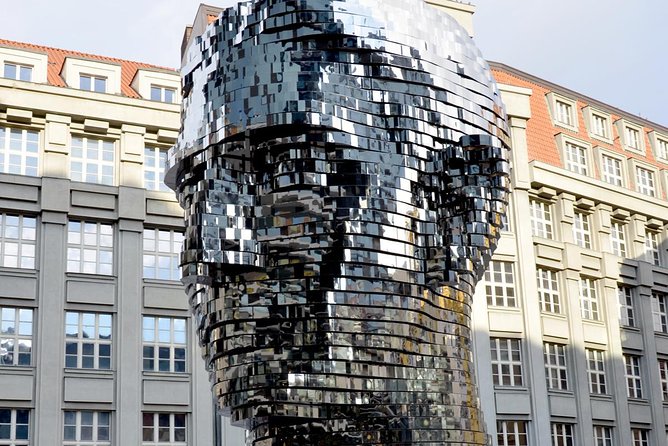
The meeting point is Náměstí Franze Kafky, near Franz Kafka Square in Prague’s Old Town. That location sets the tone immediately. Kafka was born into Prague’s Jewish community and remains one of the city’s most famous Jewish cultural figures.
The tour includes stories about his life and writings, so the starting point is more than a convenient address. It gives you an early reminder that Jewish Prague is not only about monuments and loss. It is also about literature, language, family, and the complicated identity of a German-speaking Jewish writer living in Prague.
You should arrive with the exact meeting address saved on your phone because the starting point is given as Nám. Franze Kafky 24/3. A mobile ticket is accepted, and confirmation is sent within 48 hours of booking, subject to availability.
Morning and afternoon departures are available. I would choose the time that fits your wider Prague plans rather than assuming one is better. The tour ends in New Town, so it can work as a bridge between Old Town sightseeing and an afternoon or evening around Prague’s central railway station and Wenceslas Square area.
Josefov: Synagogues, Cemetery, and Places You Might Miss
The first and longest section takes about 90 minutes in Josefov. You walk through the Jewish Quarter, passing synagogues, the Jewish Cemetery, and less obvious locations that are difficult to find without a guide.
The route includes views of the Klausen Synagogue and the Jewish Cemetery. These are among the key places in Prague’s Jewish Quarter, but the value of seeing them with a historian is the context between the buildings. A guide can explain what you are looking at, why the site matters, and how the neighborhood changed over time.
The Jewish Cemetery deserves time and care. It is not simply an old burial ground to photograph. Its crowded appearance reflects centuries of limited space and the long presence of Prague’s Jewish community. The tour description does not promise a full cemetery visit or museum admission, so you should clarify the exact access arrangements when booking.
The Jewish Museum is not included in the standard walk. The guide can arrange a visit together, but any extra admission should be treated as an addition to the advertised $64 price. This is important if you want to enter the synagogues rather than view them from the route.
I see this as both a strength and a limitation. The tour gives you a guided introduction without forcing you into a museum schedule. You can decide later if you want to spend more time inside the Jewish Museum complex. On the other hand, if interior visits are your main reason for coming, you should arrange that ahead of time instead of assuming the ticket is included.
New Town: Three Less Obvious Jewish Sites
After Josefov, the walk continues into Nove Mesto, or New Town, for about 30 minutes. Here the focus shifts to three Jewish-related places that are less likely to appear on a standard first-time Prague route.
One example is described as the oldest known Jewish cemetery in Prague. The supplied information does not give the exact address or provide a full description of each of the three sites, so you should think of this section as a guided search for overlooked traces rather than a list of major monuments.
That makes the historian especially useful. In New Town, the Jewish story is not always marked by grand facades or obvious signs. You may pass ordinary streets and need someone to point out why a particular location matters. This is the kind of detail that is easy to miss when walking alone with a guidebook.
The short 30-minute section also helps keep the tour moving. You do not spend the entire afternoon in one district, and the route shows how Jewish history reaches beyond the formal boundaries of Josefov. If you prefer a tightly focused museum visit, this part may feel less substantial. If you enjoy finding historical traces in everyday city streets, it should be one of the more rewarding portions.
A completely different kind of day out in Prague:
- Prague Castle 2.5-Hour Tour Including Admission Ticket
★ 4.7 · 8,927 reviews - Prague: Oldtown, Medieval Underground & Dungeon History Tour
★ 4.2 · 8,244 reviews - Prague: Vltava River Night Cruise with Buffet
★ 4.3 · 7,338 reviews - Prague: Panoramic Vltava River Cruise
★ 4.1 · 7,311 reviews
Bubny: The Tour’s Most Difficult Stop
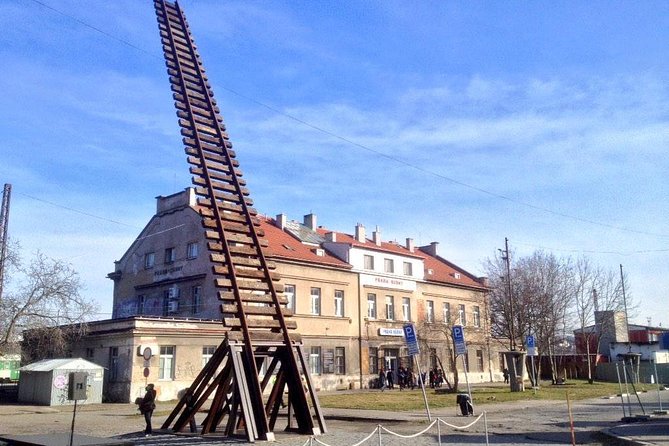
The visit to Bubny lasts about 30 minutes and deals directly with the Holocaust. Bubny was the departure place for Czech Jews sent to concentration camps, and the stop includes the Holocaust Memorial.
This is the point where the tour’s subject becomes especially painful. A memorial site can make deportation feel less abstract because it places the event in Prague, on a real route through the city. The historian’s role is important here, since dates and names alone cannot explain what the place meant to the people forced through it.
You should not expect entertainment or easy sightseeing at Bubny. The stop is valuable because it gives the tour moral weight, but it may also be emotionally demanding. If you are visiting Prague with children or with people who prefer lighter attractions, discuss the route before booking.
The three-hour walk does not treat the Holocaust as a brief footnote. It is one of the central subjects. That is a good reason to choose this experience over a general Jewish Quarter stroll, but it also means you should set aside enough quiet time afterward rather than rushing straight into another packed activity.
Prague Main Railway Station and Nicholas Winton
The next stop is Praha hlavni nadrazi, Prague’s main railway station. The tour spends about 15 minutes there telling the story of Nicholas Winton, who helped save 669 Jewish children.
This short stop offers a different angle on the wartime period. Bubny focuses on deportation and loss. The railway station introduces rescue, courage, and the practical work involved in getting children to safety. Keeping both stories in the same route gives you a fuller sense of the choices people faced.
Fifteen minutes is not long, so do not expect an extended museum-style presentation. The value comes from hearing the story at a railway station connected to movement and departure. It also gives the route a clear emotional change after Bubny.
The station is a practical part of the tour, too. You will be near one of Prague’s major transport points, and the included public transport ticket helps connect the different parts of the route. The tour is not a single compact loop, so this ticket is more useful than a simple perk.
Finishing at Jerusalem Synagogue
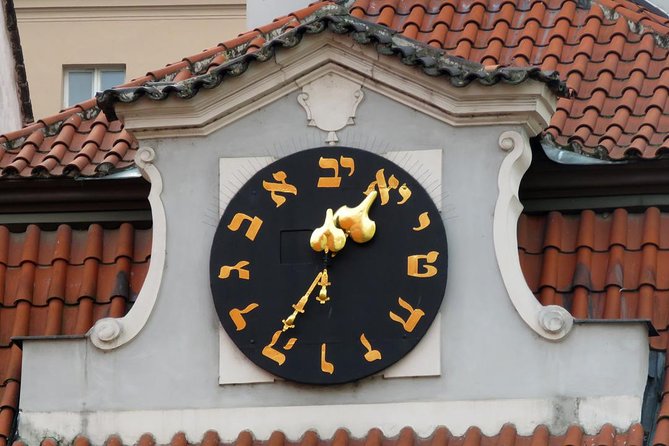
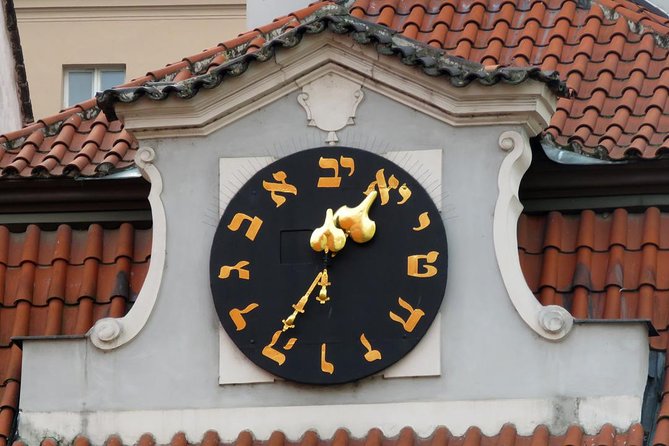
The final stop is Jerusalem Synagogue, reached in New Town. The visit lasts about 15 minutes, and admission is not included.
Jerusalem Synagogue gives the route a strong architectural finish. The itinerary does not provide further details about the interior or the entrance arrangements, so do not assume that your standard booking includes entry. You should ask the operator if you want to go inside and budget for the separate ticket.
Ending here also keeps the tour practical. You finish in a central part of Prague rather than returning to the original meeting point. That makes it easy to continue sightseeing, find a meal, or use the public transport network.
The final stop may be brief, but it rounds out the tour by returning you to Jewish religious life after the heavier wartime sections. The route begins with Kafka and the historic Jewish Quarter, passes through memory and rescue, and finishes with another synagogue. That arc gives the walk a clear shape.
What the $64 Price Really Covers
At $64 per person, this is not the cheapest way to spend three hours in Prague. You can walk through Josefov on your own for little or no cost, at least from the outside. The question is what you want your money to buy.
Here, the price pays for a private experience with a maximum of six people, a historian-led route, bottled water, a Prague public transport ticket, and all listed fees and taxes. It does not cover the Jewish Museum or Jerusalem Synagogue admission. If you want a guide who can explain difficult subjects and answer questions at your pace, the cost is easier to justify.
The strongest value comes from the route’s range. You are not paying for only one neighborhood. You get Josefov, New Town, Bubny, the main railway station, and Jerusalem Synagogue, tied together by a single story.
The guide is the other major part of the value. Jiri is identified as a PhD historian, and the praise attached to his guiding style focuses on two practical qualities: detailed answers and a walking speed that is not rushed. That combination matters on a history tour. You need enough time to look around, but you also want someone who can respond when a question takes the conversation in an unexpected direction.
The small group makes $64 more reasonable than it would be for a crowded city walk. If your group is close to six people, the price buys a more personal setting. If you are traveling alone, as a couple, or with a small family, you are paying for access to a specialist rather than for a large group spectacle.
Who Will Get the Most From This Tour?
I would recommend this experience to you if you want Jewish Prague explained in historical and personal terms. It suits people who care about the Holocaust, Prague’s Jewish community, Kafka, wartime rescue, and the stories behind places that do not announce their importance.
It is also a good match if you prefer asking questions. The small group and private format should make it easier to pause, request clarification, or focus on a subject that matters to you. Jiri’s patient, complete answers are particularly useful for a topic with complicated names, dates, and events.
You should be comfortable walking for roughly three hours. The route moves through several parts of central Prague, and a good pace is part of the experience. Wear comfortable shoes and keep some flexibility in your schedule.
I would be more cautious about booking this if you want a light introduction to Prague or a tour made mostly of interior visits. The Jewish Museum is not included, Jerusalem Synagogue admission is extra, and much of the route is outdoors. The Holocaust sections can also be hard going.
The tour requires good weather and a minimum number of participants. If poor weather cancels it, you are offered another date or a full refund. If the minimum is not met, you are offered another date or experience, or a full refund. Free cancellation is available until 24 hours before the start time, but cancellations or changes inside that window are not refunded or accepted.
FAQ
How long does Jewish Prague With a Local Historian last?
The experience lasts approximately three hours.
How many people can join the tour?
The tour has a maximum of six participants.
Is the Jewish Museum included?
No. The tour does not include a Jewish Museum visit, though a visit can be arranged together with the guide.
Is admission to Jerusalem Synagogue included?
No. Admission to Jerusalem Synagogue is not included in the tour price.
What is included in the $64 price?
The price includes all listed fees and taxes, bottled water, and a Prague public transport ticket.
Where does the tour start and finish?
The tour starts at Nám. Franze Kafky 24/3 in Prague’s Old Town and ends at Jeruzalémská in New Town.
Can I cancel for a full refund?
Yes. You can cancel at least 24 hours before the local start time for a full refund. Cancellations or changes made less than 24 hours before the start time are not refunded or accepted.
Should You Book It?
Book this tour if you want a serious, personal explanation of Jewish Prague rather than a quick walk past famous buildings. The route’s best feature is its range: Josefov’s synagogues and cemetery, lesser-known New Town sites, Bubny, the railway station, Kafka, and Nicholas Winton all appear within three hours.
The price is fair when you value a PhD historian, a group of six or fewer, and included public transport. Just budget separately for museum or synagogue entry, and be ready for difficult Holocaust material. If that sounds like the kind of history you came to Prague to understand, this is a strong choice.
Just added around Prague
- Private Day trip from Prague to Kutná Hora★ 5.0 · 3 reviews
- PRAGUE AIRSOFT SHOOTING GAMES★ 4.7 · 3 reviews
- Private 4-hour City Tour of Prague with driver & official guide w/ Hotel pick up★ 5.0 · 3 reviews
- Glass blowing in Prague★ 4.6 · 3 reviews
- Prague to Karlovy Vary Private Transfer★ 4.5 · 3 reviews
- Disney’s Tarzan Musical★ 5.0 · 3 reviews
- Prague Private Tour★ 5.0 · 3 reviews
- Private Bohemian Glass and Czech Crystal Tour with lunch included★ 5.0 · 3 reviews