
REVIEW · PRAGUE
Cook Authentic Czech with Grandma’s Recipes
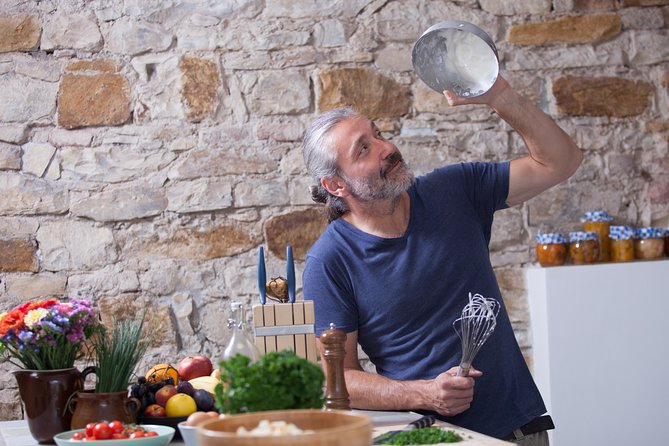
Come hungry, leave with recipes. This half-day cooking class gives you a friendly way to meet Czech food beyond restaurant menus, with hands-on preparation in a 400-year-old building. I like the small group size, capped at eight people, and the simple home-style kitchen, where the tools and methods are realistic to repeat at home.
I also like that Aida or Bret teaches the class personally. Their approach goes beyond chopping and stirring: you hear about Czech and Moravian traditions, family recipes, food rituals, and the place of shared meals in Czech life. The main drawback is the meeting point, which can be tricky to spot. The doorbell is on the right side of a locked alleyway car entrance, so allow extra time and keep the host’s contact details handy.
At $167.74 per person, this is not a cheap meal. It is a four-and-a-half-hour cooking lesson, tasting session, social evening, and full three-course dinner rolled into one. For anyone who values food and wants an experience with more personal contact than a standard sightseeing tour, the price can make good sense.
In This Review
- Key points to know before booking
- Starting in Karlín, away from Prague’s postcard center
- Opening snacks, stories, and a taste of Czech hospitality
- Making a Czech starter from broth to potato pancakes
- The main course: classic Czech comfort food
- Bread dumplings are not optional in spirit
- Desserts with fruit, poppy seeds, and cream
- Four and a half hours that move at a friendly pace
- What the $167.74 price really includes
- Who will enjoy this class most
- Booking advice and the cancellation rule
- Should you book Cook Authentic Czech with Grandma’s Recipes?
- FAQ
- Where does the Czech cooking class begin?
- What time does the experience start?
- How long does the cooking experience last?
- What language is the class offered in?
- How many people can join the class?
- What food will I prepare?
- Are drinks included?
- Can I cancel for a full refund?
Key points to know before booking
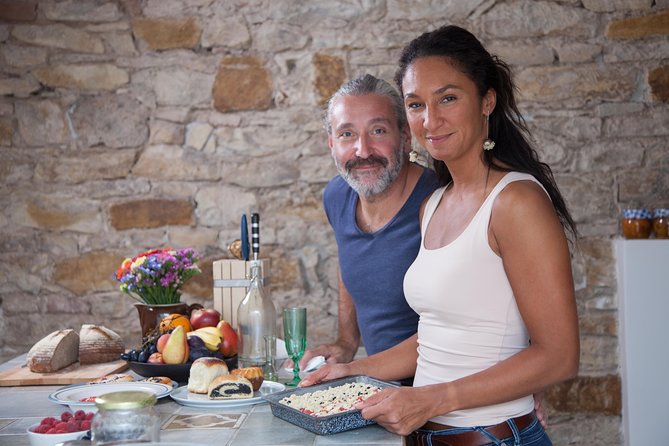
- A 400-year-old cooking setting: Good Mood Food operates from a historic building with a modern, comfortable kitchen and dining area.
- A full Czech menu: You help prepare soup or an appetizer, a traditional main dish, bread dumplings, and dessert.
- A small class: The stated maximum is eight people, allowing plenty of practical cooking time and conversation.
- Aida or Bret leads the session: Both hosts focus on food, family recipes, Czech customs, and easy techniques.
- Drinks and snacks are included: Expect water, tea, coffee, wine, and homemade pickles and marmalades, with extra tasting snacks during cooking.
- Plan for a late afternoon meal: The class begins at 2:30 pm and ends back at the meeting point after roughly four and a half hours.
Starting in Karlín, away from Prague’s postcard center
The class begins at Good Mood Food, Křižíkova 70/67 in Karlín, Prague 8. This is outside the Old Town sightseeing core, which is part of the appeal. You get a break from the usual castle, clock, and bridge circuit and spend an afternoon in a neighborhood setting instead.
The address is near public transportation, and it is also reachable by taxi or Uber. One useful warning: the entrance can be confusing. The doorbell sits on the right side of a locked alleyway car door, and one person had to call before someone came out to help. I would not arrive at 2:29 pm and hope for the best. Get there early, check the address carefully, and be ready to phone the hosts if the entrance does not seem obvious.
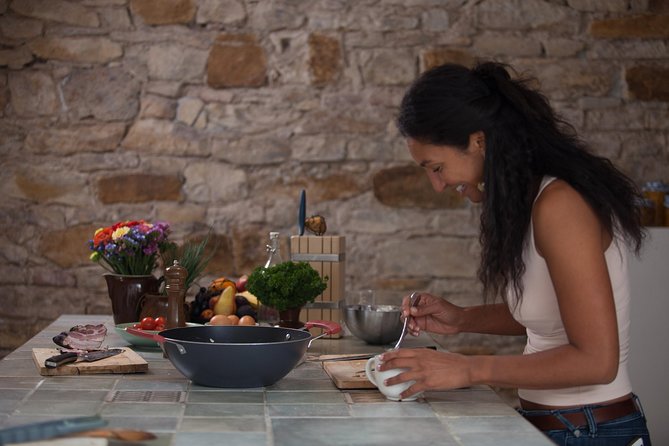
The cooking space is in a 400-year-old building. Descriptions of the room vary from a basement to an underground cave, but the useful point is clear: the setting has old-world character while the kitchen itself is modern, clean, and comfortable. It is not a polished restaurant classroom filled with equipment you will never see again. The cooking tools are deliberately ordinary, much like what you might have in your own kitchen.
That choice matters. If you learn how to make bread dumplings with familiar equipment, you have a better chance of making them again at home. The class aims for practical Czech cooking, not a stage show.
Other days out in Prague people book alongside this one:
- Prague: 50-Minute Sightseeing Evening Cruise
★ 4.2 · 33,780 reviews - Prague: Medieval Dinner with Unlimited Drinks
★ 4.4 · 19,847 reviews - Prague: Castle Tour with Local Guide and Entry Ticket
★ 4.6 · 10,422 reviews
Opening snacks, stories, and a taste of Czech hospitality
The session begins with an introduction to the food and the menu. Aida or Bret explains what you will make, then assigns tasks so everyone has a useful role. You might chop vegetables, prepare batter, work on dumplings, season meat, or help assemble dessert.
Cooking classes often have a few quiet moments while a dish simmers or bakes. Here, those gaps become part of the experience. Homemade pickled vegetables, marmalades, bread, sausages, cheeses, and other small snacks may appear during the afternoon. One especially Czech-style tasting described in the supplied material included dark bread spread with lard and topped with paprika sausage.
Wine is included, along with water, tea, and coffee. Some sessions have also included shots of local moonshine, though I would treat that as a possible extra rather than a guaranteed part of every class. This is an important practical detail: the food is substantial, and the drinks can add up over several hours. Pace yourself if you want to stay sharp enough to flip potato pancakes.
The social side is one of the strongest reasons to book. Class sizes can be very small, sometimes only two people or even one person, and the maximum is eight. That gives you far more contact with the instructor than a large demonstration class. Families, couples, friends, and solo food lovers can all fit into the format.
Making a Czech starter from broth to potato pancakes
The first course changes. You might make a traditional broth and turn it into soup with noodles and vegetables, or prepare a version with potatoes and mushrooms. Another possibility is potato-sauerkraut pancakes.
This part of the menu gives you a quick lesson in the shape of Czech home cooking. Soup is not treated as a fancy first course. It is practical, filling food built from broth, vegetables, potatoes, noodles, and careful seasoning. Potato-sauerkraut pancakes offer a different texture and a sharper, saltier flavor.
The recipes are presented as manageable rather than intimidating. That is good news if you like food but do not spend much time cooking. One particularly useful lesson involved learning to flip a potato pancake in a skillet. It is a small skill, but it is the sort of hands-on moment that makes the class feel like a real lesson rather than a meal with a token cooking demonstration.
The menu is not fixed to a single dish. That variety is helpful for repeat visitors, but it means you should not book expecting one exact starter unless the host confirms it in advance. The same applies to the main course and dessert.
The main course: classic Czech comfort food
The centerpiece is one traditional Czech dish. Possible choices include:
- Svíčková
- Beef goulash
- Roasted duck
- Rabbit with vegetables
- Beef with mushrooms
- Spanish bird
- Vegan Prejt
Some of these are familiar to anyone who has eaten in Czechia, while others may be less common outside the country. Svíčková, usually served with a creamy vegetable sauce and dumplings, is one of the country’s best-known festive dishes. Beef goulash offers the hearty paprika-and-onion side of Czech cooking. Roasted duck points toward the celebratory table, especially when paired with cabbage and dumplings.
Rabbit can be a surprise for diners who did not grow up eating it. One account described initial hesitation followed by a very positive reaction to the tender meat, vegetables, and blended flavors. That is part of the value here: you may meet an ingredient or preparation you would not choose from a familiar restaurant menu.
The class also offers a vegan main option, listed as Vegan Prejt. If you have allergies, vegetarian needs, or other dietary concerns, contact Good Mood Food ahead of time. The hosts have accommodated vegetarian diners and food allergies, but the safest approach is to share your needs before arriving rather than rely on a last-minute adjustment.
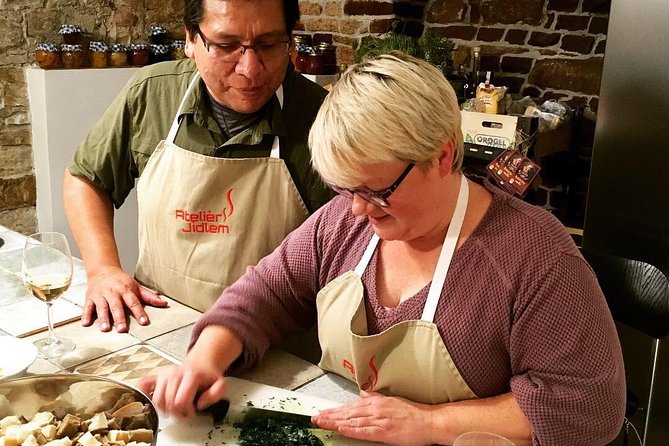
The cooking is collaborative, not simply instructor-led. Bret is often praised for keeping everyone involved and giving each person a task. Aida is described as a gracious host who makes the process relaxed and welcoming. Neither host expects professional cooking skills, and the tone is meant to work for beginners as well as people who already cook often.
A completely different kind of day out in Prague:
- Prague Castle 2.5-Hour Tour Including Admission Ticket
★ 4.7 · 8,927 reviews - Prague: Oldtown, Medieval Underground & Dungeon History Tour
★ 4.2 · 8,244 reviews - Prague: Vltava River Night Cruise with Buffet
★ 4.3 · 7,338 reviews - Prague: Panoramic Vltava River Cruise
★ 4.1 · 7,311 reviews
Bread dumplings are not optional in spirit
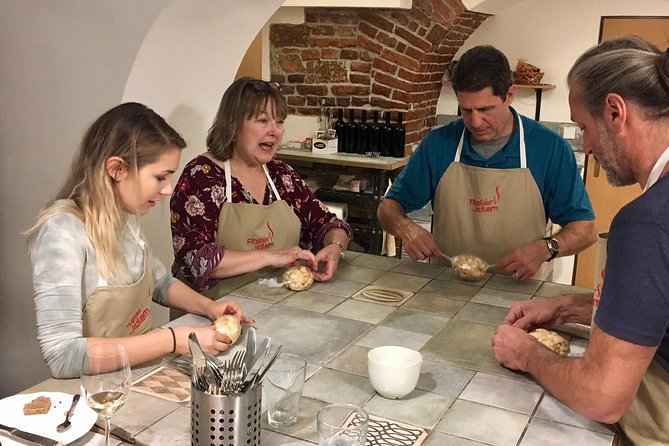
A Czech meal without bread dumplings would feel incomplete, and this class treats them as essential. These soft, sliced dumplings are a classic partner for saucy dishes such as goulash, Svíčková, and roasted meat.
They also make a good class project because the result depends on simple steps and timing. You learn how a basic dough becomes a key part of the meal, rather than treating dumplings as an anonymous side dish delivered from the kitchen.
This is one place where the ordinary equipment works in your favor. You are learning a home-style method, not a restaurant production technique. Once you return home, you can understand the process without needing a special machine or hard-to-find gadget.
Desserts with fruit, poppy seeds, and cream
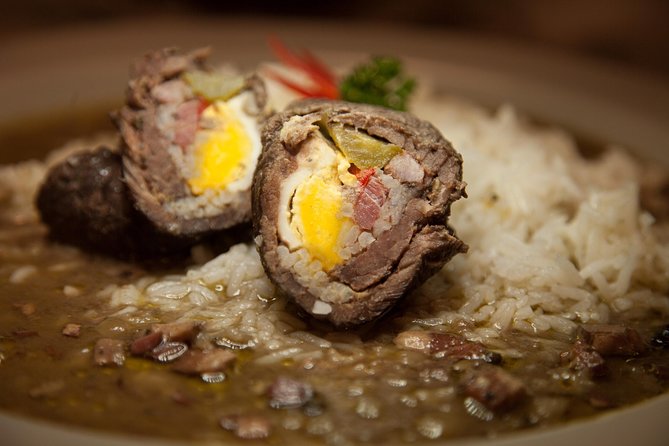
Dessert may be a fruit cake, fruit dumplings, or Kremrole, a delicate pastry filled with meringue. The fruit dumplings can include seasonal fruit, poppy seeds, and quark, a fresh cheese common in Central European cooking.
Kremrole received special praise in one class, particularly for its pastry and meringue filling. It is also a good example of why this experience works as a cultural lesson. Czech cooking is not only meat, gravy, and dumplings. It includes fruit, dairy, poppy seeds, pastry, preserves, and sweets made for family tables.
By the time dessert arrives, you have helped prepare the whole menu. That gives the final course more meaning than simply ordering cake at a restaurant. You understand the work behind it, and the recipes are described as simple enough to try again at home.
Four and a half hours that move at a friendly pace
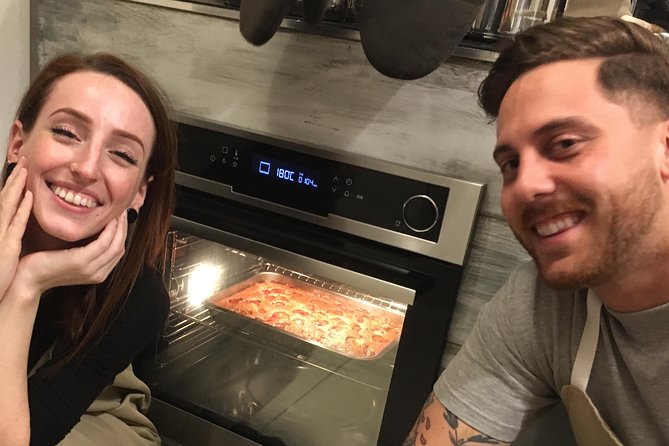
The advertised duration is about four hours and 30 minutes, beginning at 2:30 pm. Several sessions have run longer, by roughly 45 minutes in one case, because people lingered over food, wine, and conversation.
You should plan this as your main afternoon and evening activity. It is not a quick class to squeeze between the National Museum and a concert. The timing leads naturally into dinner, and the meal you prepare is substantial enough that you probably will not need another full restaurant dinner afterward.
The pace includes cooking, tasting, conversation, and waiting for food to finish. That is why the class feels social rather than rushed. Bret is often described as funny and engaging, with stories about Czech food, family traditions, and the country’s past. Aida brings the same personal approach when she leads.
English is the operating language. The hosts’ accents may be noticeable, but the experience is designed for English-speaking visitors, and the available accounts describe clear communication and patient explanations.
What the $167.74 price really includes
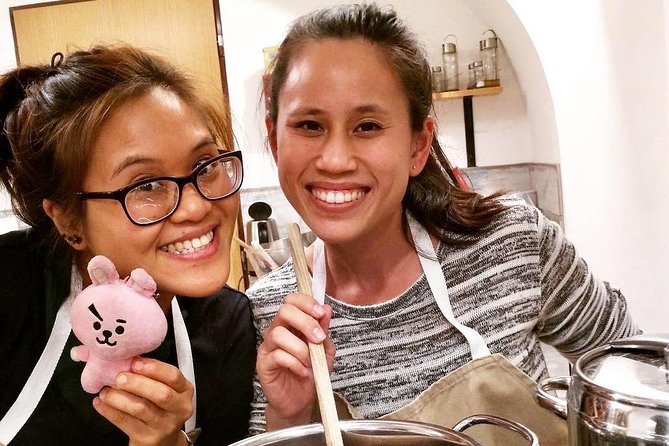
The $167.74 fee covers much more than instruction. You receive:
- About four and a half hours with a host chef
- Hands-on preparation of a complete Czech menu
- A starter or soup
- A traditional main course
- Bread dumplings or another listed side
- Dessert
- Homemade pickles and marmalades
- Snacks during the cooking
- Wine, water, tea, and coffee
- A small-group setting capped at eight people
Prague has cheaper meals, and you can certainly eat Czech food for less than this. The comparison is not really between this class and a plate of goulash. It is between a cooking lesson and a restaurant dinner.
I consider the price reasonable for someone who wants a lasting skill and a personal cultural exchange. You are paying for time, attention, food, drinks, and access to family-style recipes. If you only want to sample Czech dishes, spend the money at a restaurant. If you want to know how the dishes come together and enjoy an afternoon with an engaging local host, the calculation looks better.
The small class size is especially important. A large group would make $167.74 harder to justify, but a class of two, four, or eight can provide real participation. Solo bookings may be especially rewarding because a very small class can turn into an almost private lesson.
Who will enjoy this class most
I would recommend it to:
- Couples who want a relaxed afternoon away from standard sightseeing
- Families looking for an activity suitable for different ages
- Solo visitors who enjoy meeting people through food
- Amateur cooks who want recipes they can repeat at home
- Diners curious about Czech dishes beyond beer and goulash
- Vegetarians who arrange menu needs in advance
- Repeat Prague visitors seeking a neighborhood experience
You do not need advanced cooking skills. The tasks are shared, and the recipes are explained in a friendly way. If you already cook often, you may still enjoy the stories, techniques, and cultural background.
This is less suitable if you dislike shared meals, cannot spend most of an afternoon indoors, or want a tightly scheduled activity with a fixed menu. The class is deliberately personal and flexible. That is its strength, but it also means the exact dishes and total finish time can vary.
Booking advice and the cancellation rule
The experience is often booked well ahead, with an average booking lead time of 53 days. Since the class is small, I would reserve early if your Prague dates are fixed, especially if you want a particular afternoon.
You receive confirmation when booking, and the experience requires a minimum number of participants. If that minimum is not reached and the class is canceled, you are offered another date or experience, or a full refund.
Free cancellation is available until 24 hours before the local start time. Canceling or changing the booking within 24 hours does not qualify for a refund, so keep that deadline in mind when planning a busy Prague itinerary.
Should you book Cook Authentic Czech with Grandma’s Recipes?
Book it if food is one of the ways you like to understand a place. The best parts are the personal teaching from Aida or Bret, the small class, the old building, and the chance to prepare a full Czech meal instead of merely eating one. The recipes are practical, the conversation adds context, and the long afternoon has the easy feel of being welcomed into someone’s home.
I would especially choose this class for a first visit when you want one evening that is social, filling, and different from the usual Old Town route. Just allow extra time to find the entrance, tell the hosts about dietary needs before the class, and arrive ready for a late, generous meal.
FAQ
Where does the Czech cooking class begin?
It begins at Good Mood Food, Křižíkova 70/67, Karlín, 186 00 Praha-Praha 8, Czechia.
What time does the experience start?
The class starts at 2:30 pm.
How long does the cooking experience last?
It lasts approximately four hours and 30 minutes.
What language is the class offered in?
The experience is offered in English.
How many people can join the class?
The stated maximum is eight travelers.
What food will I prepare?
You will prepare a full traditional Czech menu with a soup or appetizer, a main dish, a side dish, and dessert. The exact choices can vary.
Are drinks included?
Yes. Water, tea, coffee, and wine are included. Homemade pickled vegetables and marmalades are also part of the tasting.
Can I cancel for a full refund?
Yes. You can cancel at least 24 hours before the local start time for a full refund. Changes or cancellations made less than 24 hours before the start are not refunded.
Just added around Prague
- Private Day trip from Prague to Kutná Hora★ 5.0 · 3 reviews
- PRAGUE AIRSOFT SHOOTING GAMES★ 4.7 · 3 reviews
- Private 4-hour City Tour of Prague with driver & official guide w/ Hotel pick up★ 5.0 · 3 reviews
- Glass blowing in Prague★ 4.6 · 3 reviews
- Prague to Karlovy Vary Private Transfer★ 4.5 · 3 reviews
- Disney’s Tarzan Musical★ 5.0 · 3 reviews
- Prague Private Tour★ 5.0 · 3 reviews
- Ebike tour in Prague – Express Tour★ 5.0 · 3 reviews